27 Minimalist Kitchen Ideas You Haven’t Seen Before
- Handleless Cabinets with Push-to-Open Hardware
- A Single Statement Material Instead of Multiple Finishes
- Integrated Appliances Behind Cabinet Panels
- Monochromatic Color Palette with Tonal Layering
- Floating Shelves with Deliberately Empty Space
- Waterfall Countertop Edges in Matte Stone
- Concealed Range Hoods Built into Cabinetry
- Slim Profile Faucets in Matte Black or Brushed Brass
- Hidden Pantry Behind a Flush Door
- Wood Accents on One Wall Only
- Oversized Single-Basin Sink
- Toe-Kick Drawers for Hidden Storage
- Matte Black Window Frames as a Focal Point
- A Dedicated Coffee Station Tucked into a Cabinet
- Reeded or Fluted Cabinet Fronts
- Integrated Compost and Recycling Drawers
- A Neutral Backsplash That Blends with the Counter
- Vertical Slat Wood Paneling on an Island
- Drawer-Only Base Cabinets (No Lower Doors)
- A Single Pendant Light Instead of a Cluster
- Countertop Cutout for a Built-In Trash Chute
- Muted, Earthy Green Cabinetry Instead of White or Gray
- Open Shelving Made from the Same Material as the Counter
- A Curved Island Edge Instead of Sharp Corners
- Fully Integrated Range with No Visible Knobs or Controls
- A Dedicated "Nothing on the Counter" Rule with Smart Storage
- Warm Metal Accents Instead of All-Black or All-Chrome
27 Minimalist Kitchen Ideas You Haven’t Seen Before
Minimalist kitchens get a bad reputation for feeling cold or sterile, but that’s only true when they’re done wrong. A well-designed minimalist kitchen feels calm, functional, and surprisingly warm once you get the details right. The trick is layering texture, choosing smart storage, and avoiding the trap of copying the same white-cabinet-and-marble-countertop look you’ve seen a thousand times.
If you’re tired of scrolling through the same tired minimalist kitchen ideas, this list digs into the details most articles skip. These are the small, thoughtful choices that make a minimalist kitchen feel intentional instead of empty.
Handleless Cabinets with Push-to-Open Hardware
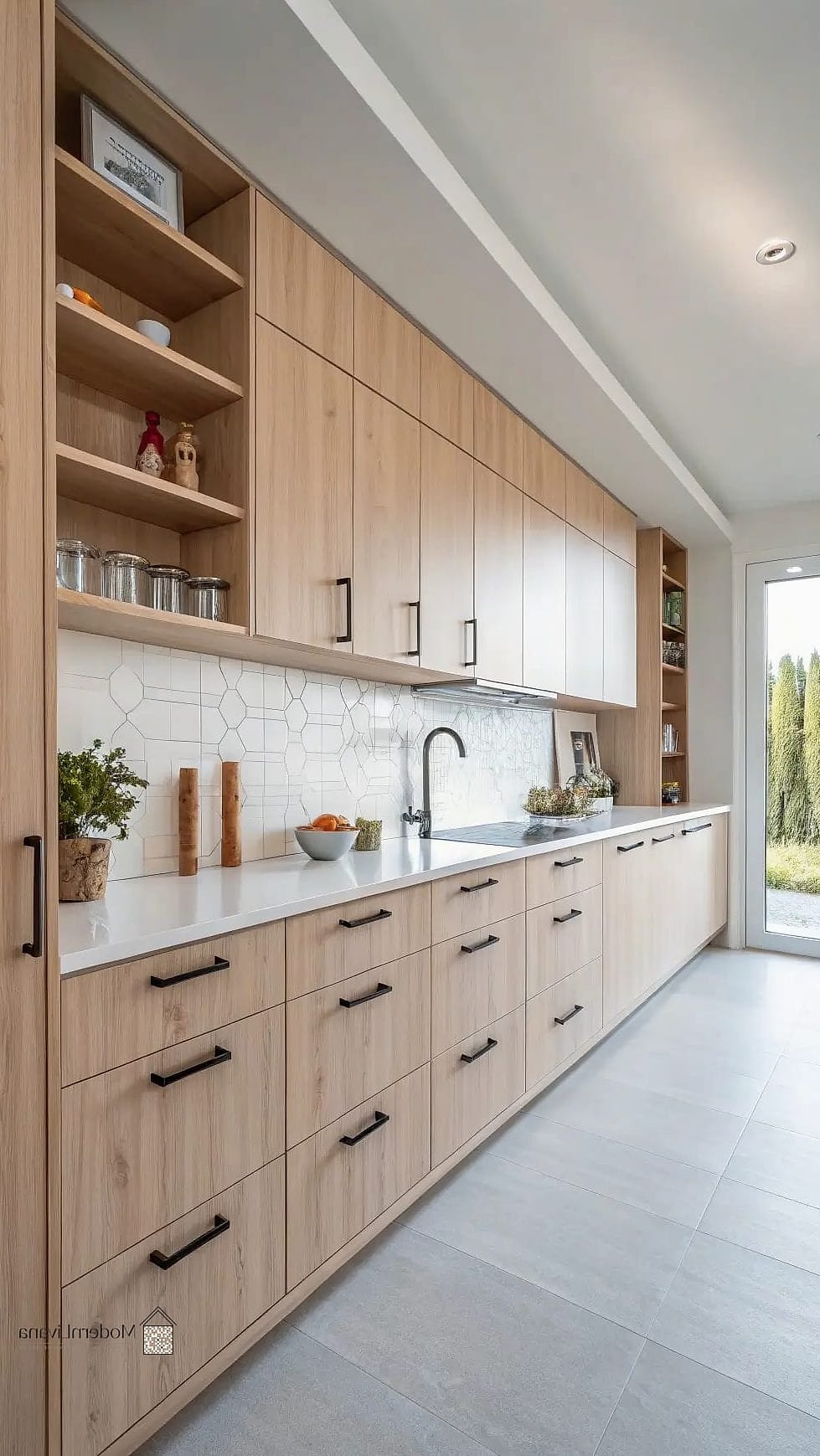
This is one of those upgrades that instantly makes a kitchen feel more custom without requiring a full renovation. Push-to-open cabinets ditch hardware entirely, keeping the cabinet fronts smooth and uninterrupted. It works especially well in galley kitchens where every visual line matters.
The main downside is that push-latches wear out faster than traditional hinges, so it’s worth investing in quality mechanisms if you’re going this route. Renters can mimic the look with slim recessed pulls instead.
A Single Statement Material Instead of Multiple Finishes
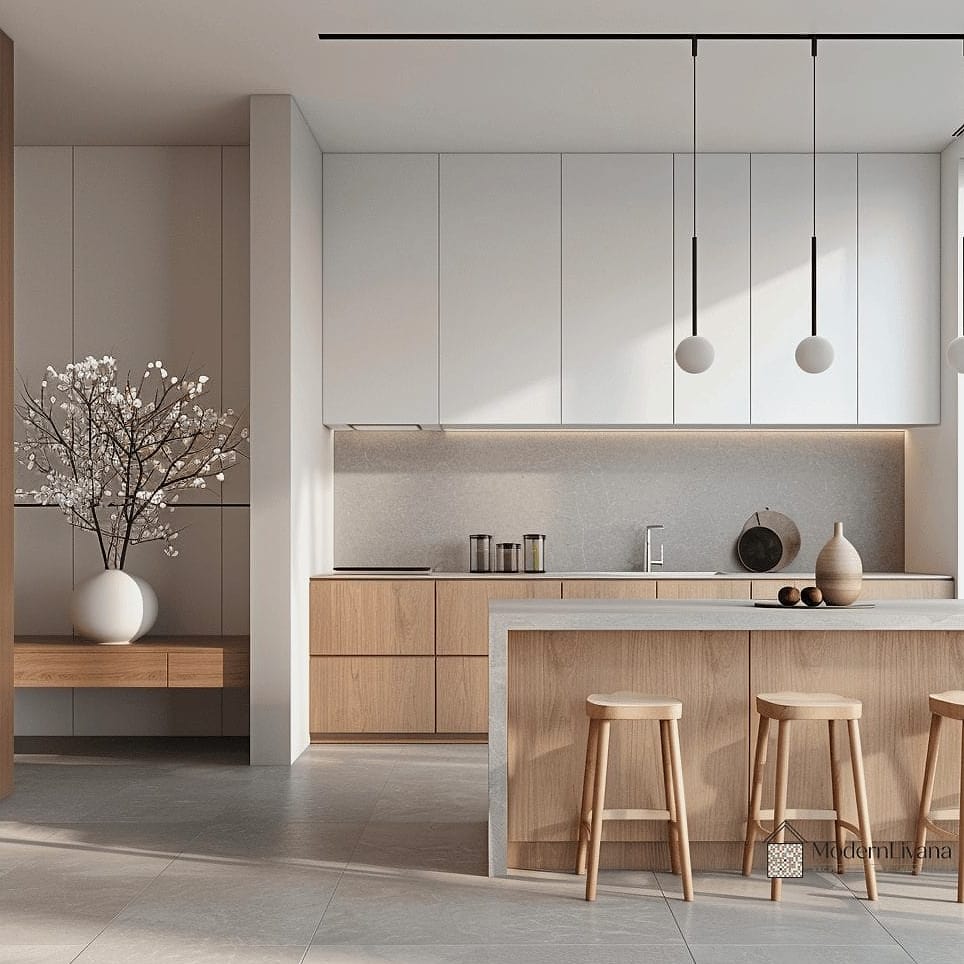
Most kitchens mix three or four materials—wood, tile, stone, metal. A truly minimalist approach picks one dominant material and lets it carry the whole room. Think an all-oak kitchen, or cabinetry and countertops both done in the same matte concrete-look quartz.
This works best in kitchens with good natural light, since a single tone can otherwise feel flat. It’s a bold choice, but it reads as intentional rather than unfinished.
Integrated Appliances Behind Cabinet Panels
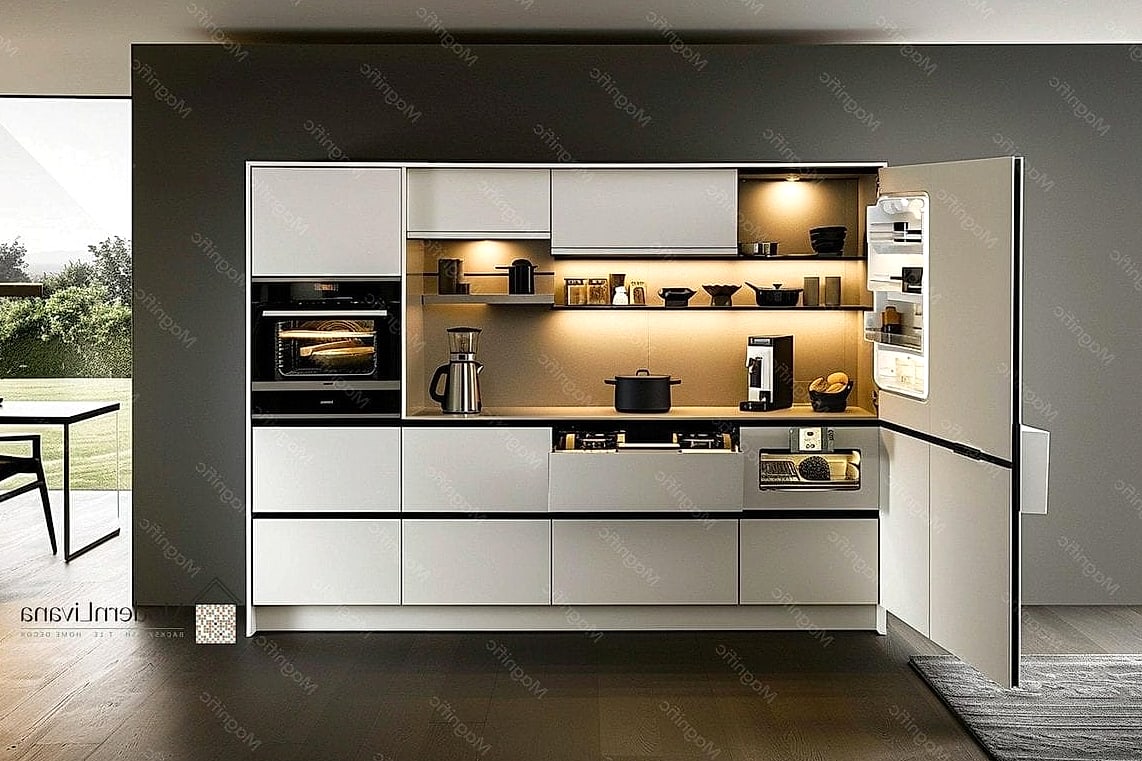
Hiding your fridge, dishwasher, and even your microwave behind matching cabinet fronts removes visual clutter almost instantly. Your eye stops registering “appliances” and just sees clean lines.
It’s a pricier option since panel-ready appliances cost more than standard ones, but for anyone who wants a kitchen that photographs like a showroom, it’s worth the investment. Smaller kitchens benefit the most because it makes the whole space feel bigger.
Monochromatic Color Palette with Tonal Layering
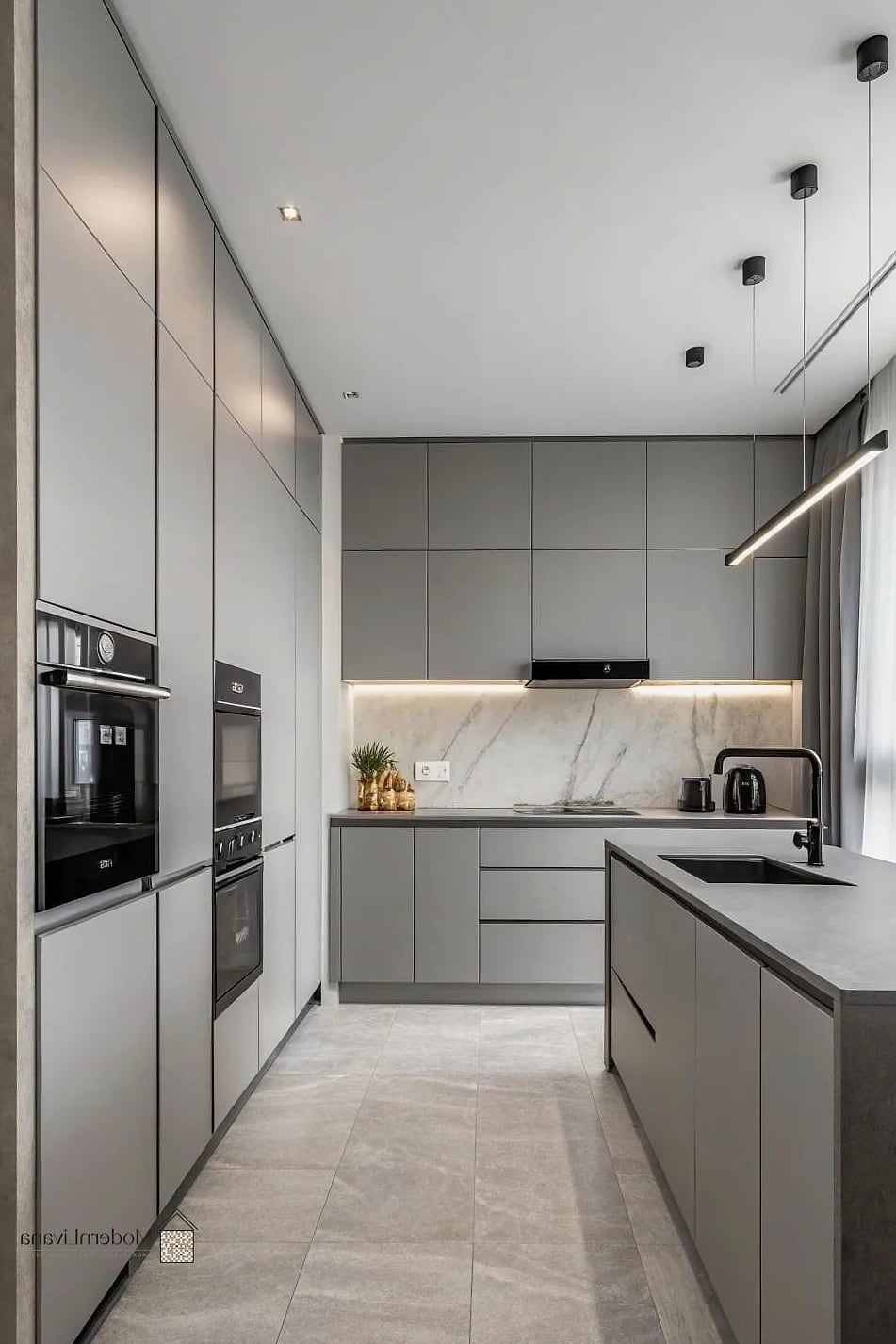
Instead of pure white-on-white, try layering two or three shades of the same color family—like a warm greige cabinet with a slightly lighter stone counter and a matching backsplash. It avoids the flat, clinical look that trips up a lot of minimalist kitchens.
Tonal layering also hides fingerprints and daily wear better than stark white does, which makes it a practical pick for families or anyone who cooks often.
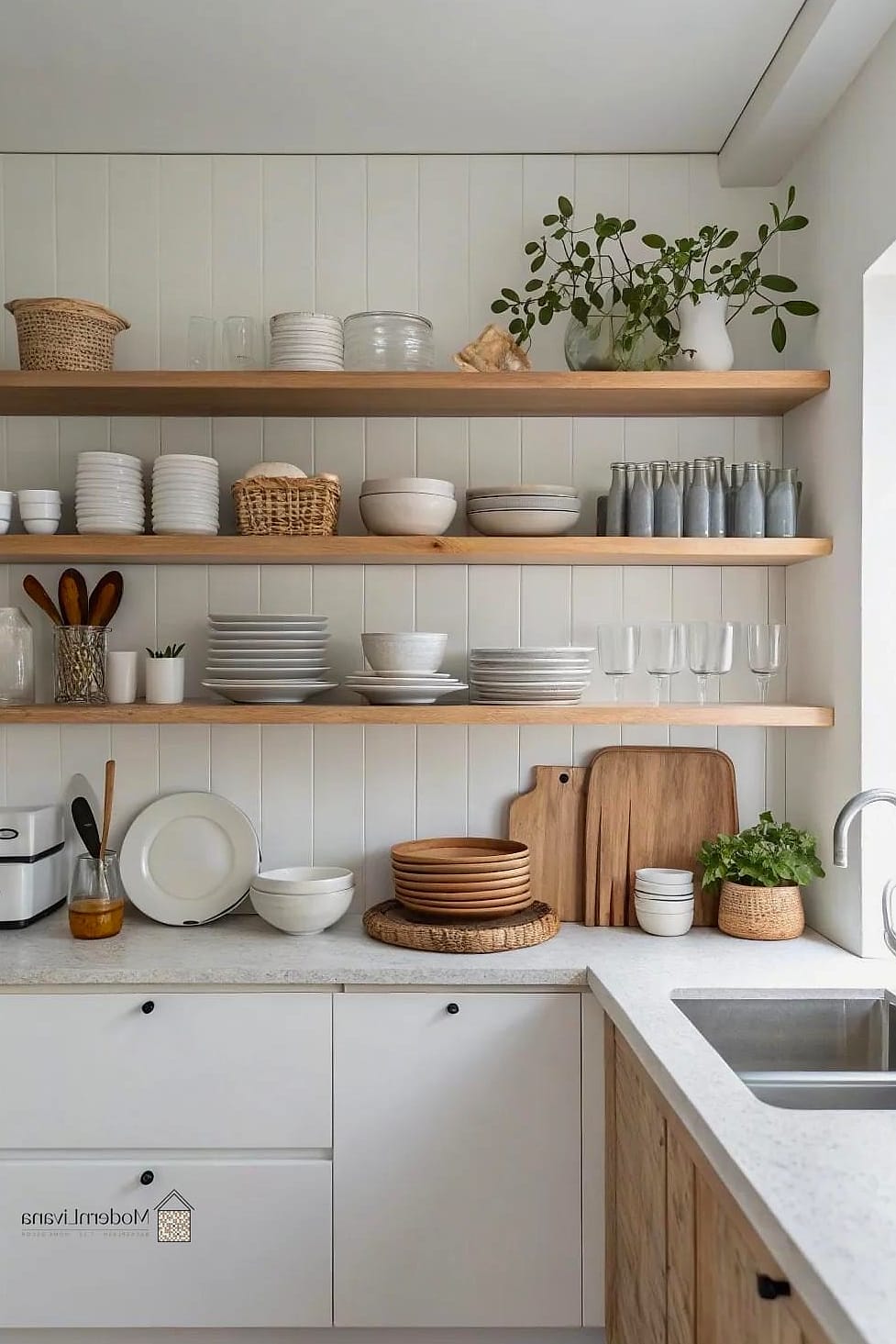
Floating Shelves with Deliberately Empty Space
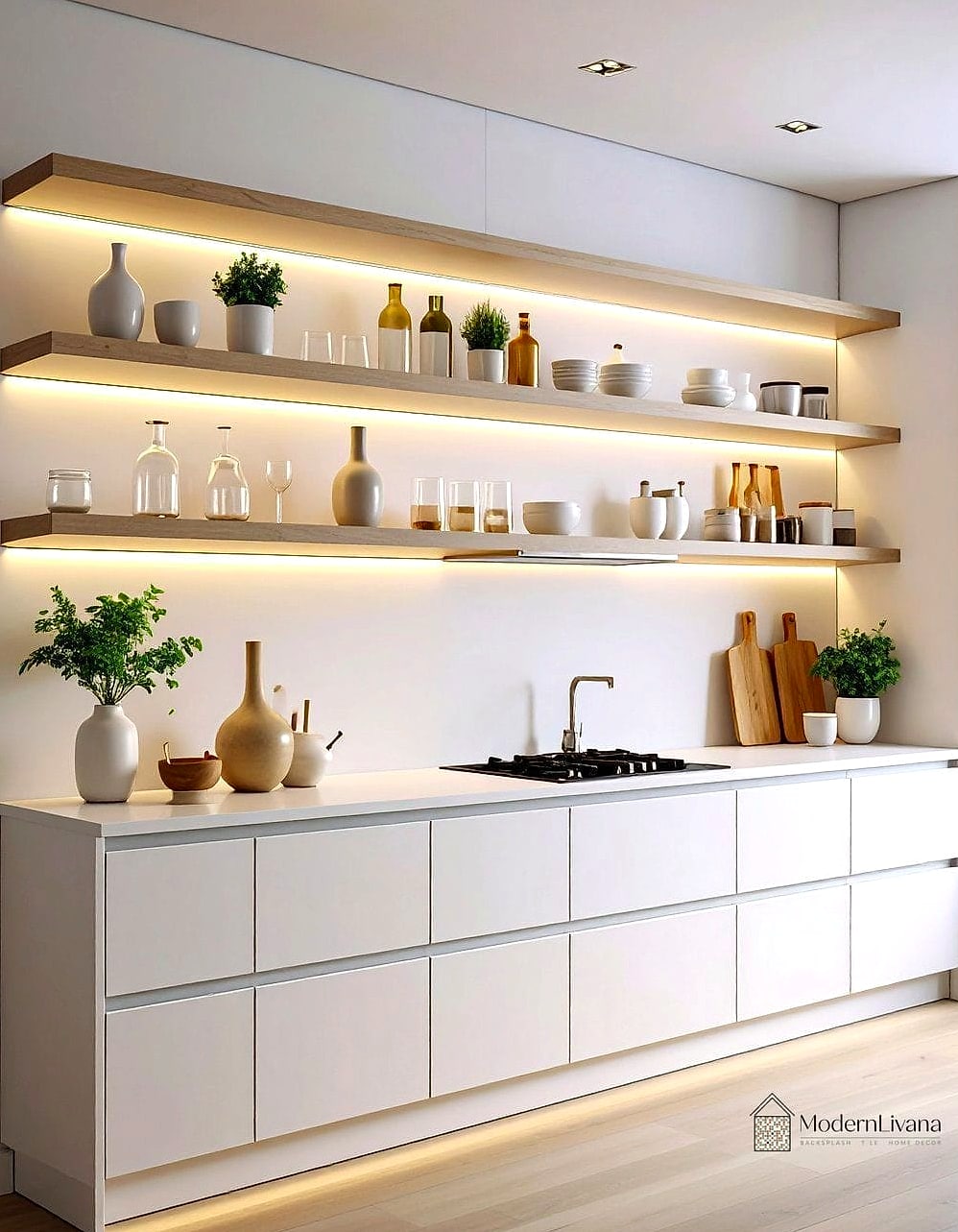
Open shelving gets recommended constantly, but the mistake most people make is overfilling it. True minimalist styling means leaving visible negative space between objects. A shelf with three carefully chosen items looks far more polished than one crammed with mismatched mugs.
Stick to a limited color palette on the shelf itself—stone, wood, and matte ceramic tend to look most cohesive together.
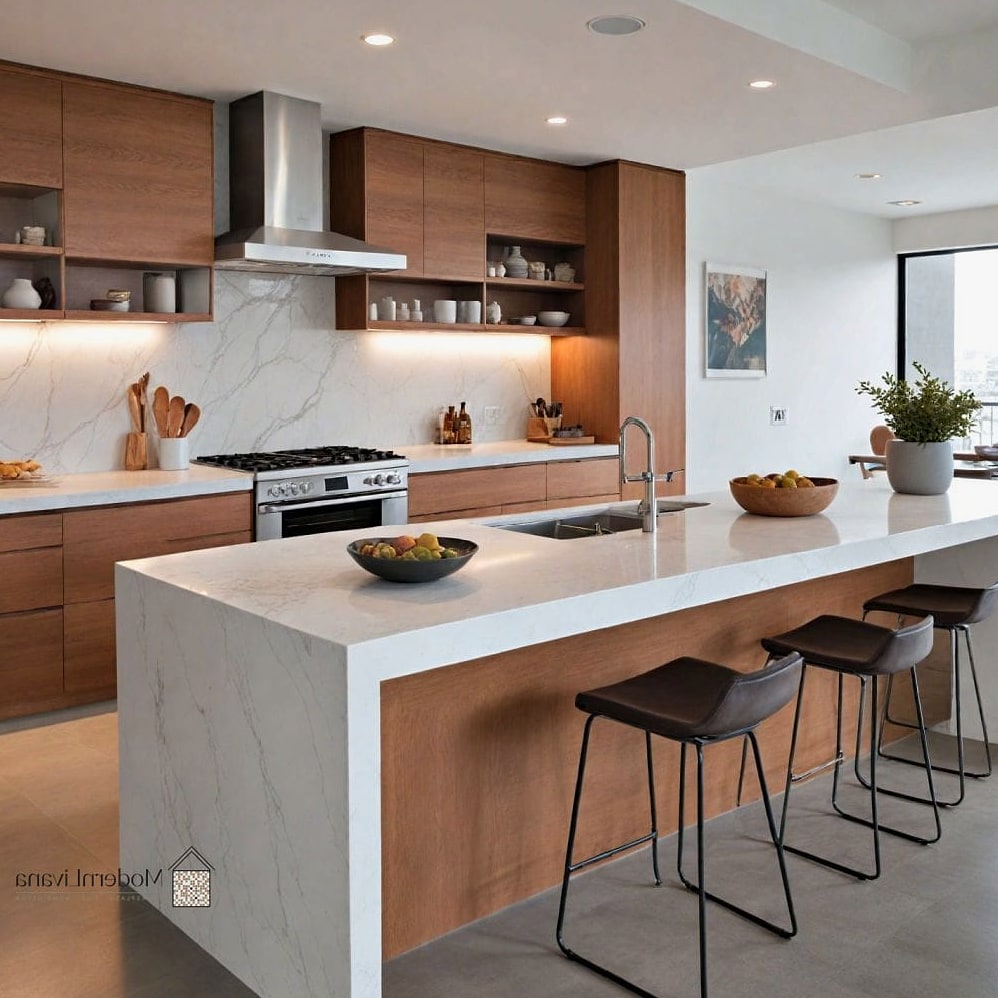
Waterfall Countertop Edges in Matte Stone
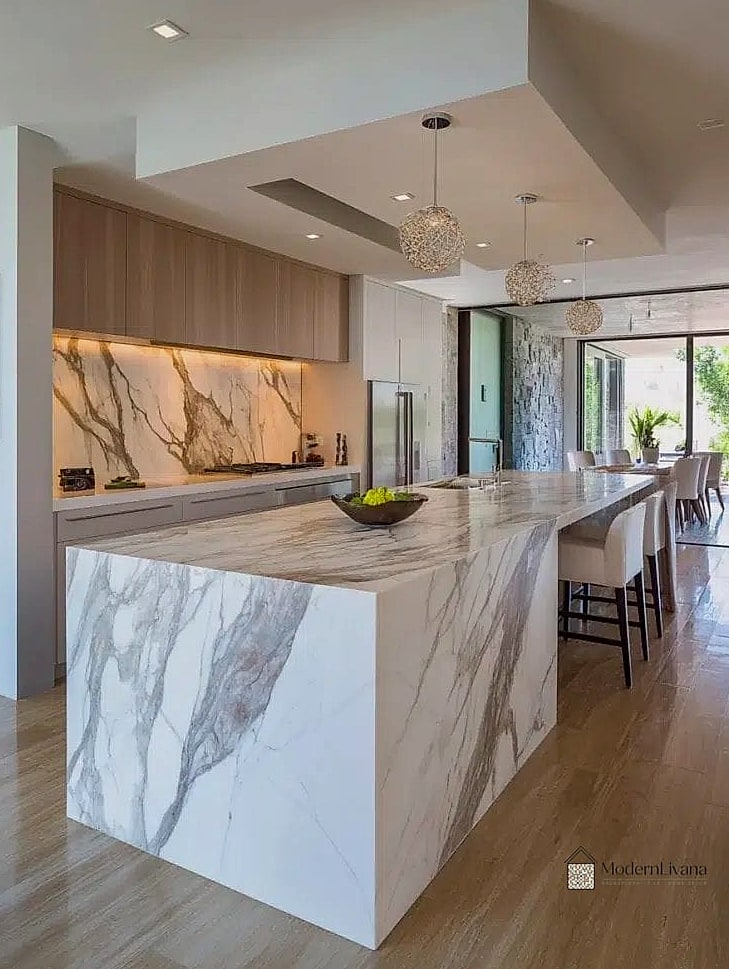
A waterfall edge, where the countertop material wraps down the side of an island in one continuous slab, adds a sculptural element without adding clutter. Matte finishes read as more modern and minimalist than polished stone, which can feel a bit dated.
It’s a splurge item, but it’s also one of the few “statement” features that fits naturally into a pared-back kitchen.
Concealed Range Hoods Built into Cabinetry
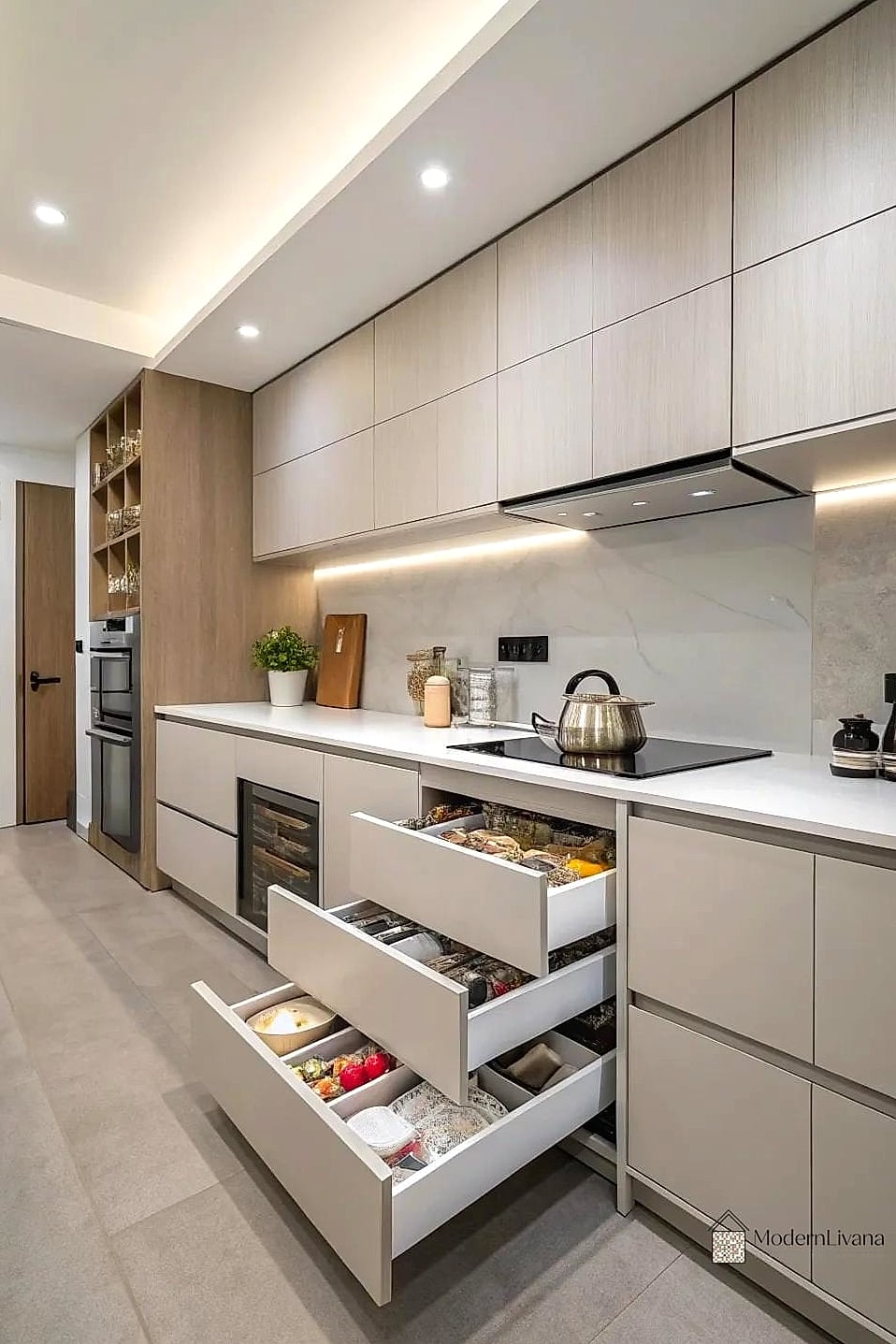
A bulky range hood can dominate a kitchen’s visual line. Concealing it inside a custom cabinet box, or opting for a downdraft ventilation system built into the cooktop, keeps sightlines clean. It’s especially effective in open-concept kitchens where the hood is visible from the living room.
This is more of a renovation-level project than a weekend DIY, so it’s best planned during a larger remodel.
Slim Profile Faucets in Matte Black or Brushed Brass
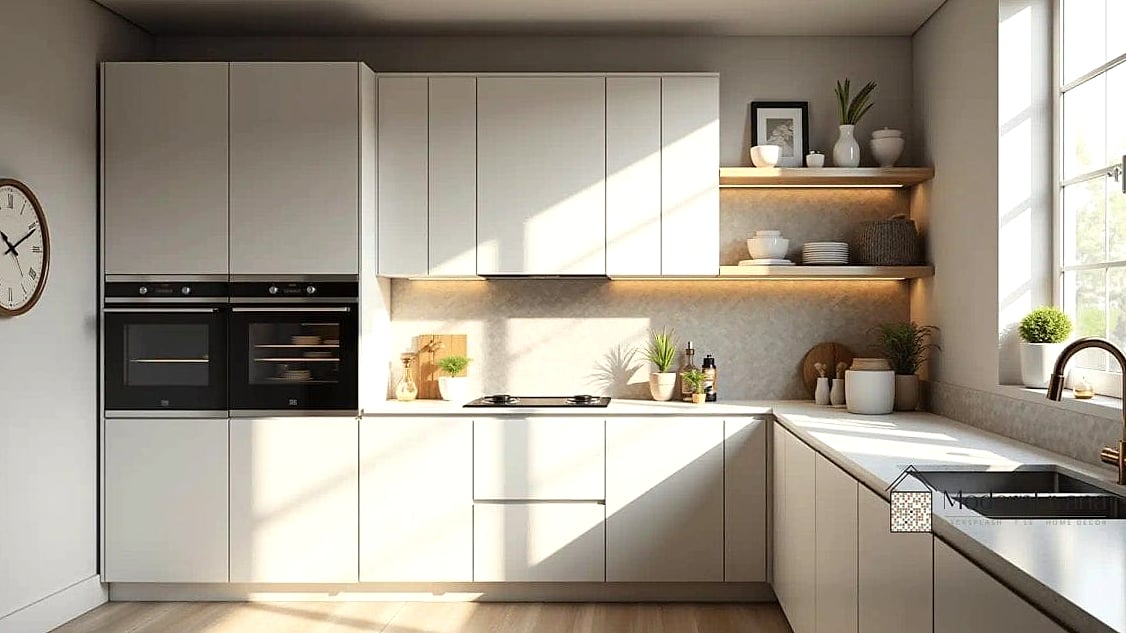
Bulky faucets can throw off an otherwise streamlined counter. Swapping in a slim, low-profile faucet is a small change that makes a bigger visual difference than people expect. Matte black keeps things moody and modern, while brushed brass adds warmth without breaking the minimalist rule of restraint.
It’s also one of the more affordable updates on this list and doable in an afternoon for anyone comfortable with basic plumbing.
Hidden Pantry Behind a Flush Door
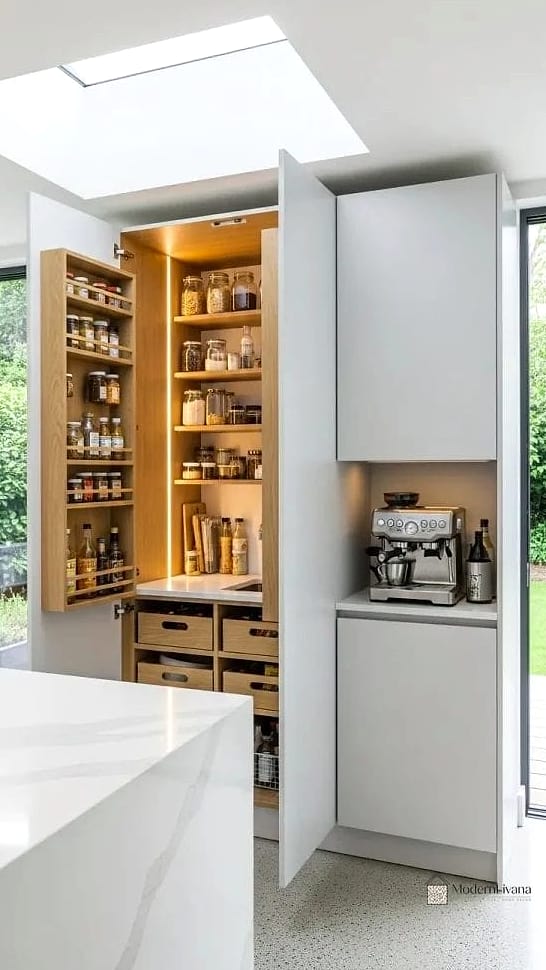
Instead of open shelving stacked with pantry items, some homeowners are opting for a walk-in pantry hidden behind a door that matches the surrounding wall or cabinetry. Open it up and you get full organizational freedom—baskets, bins, labeled containers—without any of it being visible from the main kitchen.
This works particularly well for anyone who wants a clean look but isn’t naturally tidy behind closed doors.
Wood Accents on One Wall Only
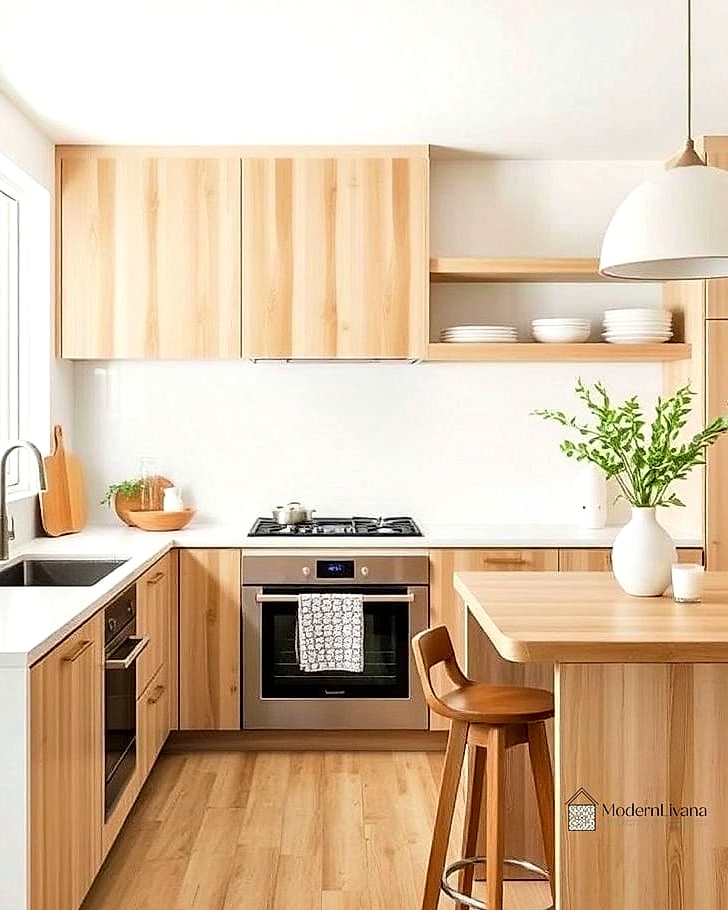
Rather than mixing wood throughout the kitchen, try isolating it to a single wall or the underside of upper cabinets. A warm wood tone paired with white or stone surfaces prevents the space from feeling like a sterile lab while still keeping things simple.
It’s a great budget-friendly option too, since you’re only committing to wood in one area instead of throughout the whole kitchen.
Oversized Single-Basin Sink
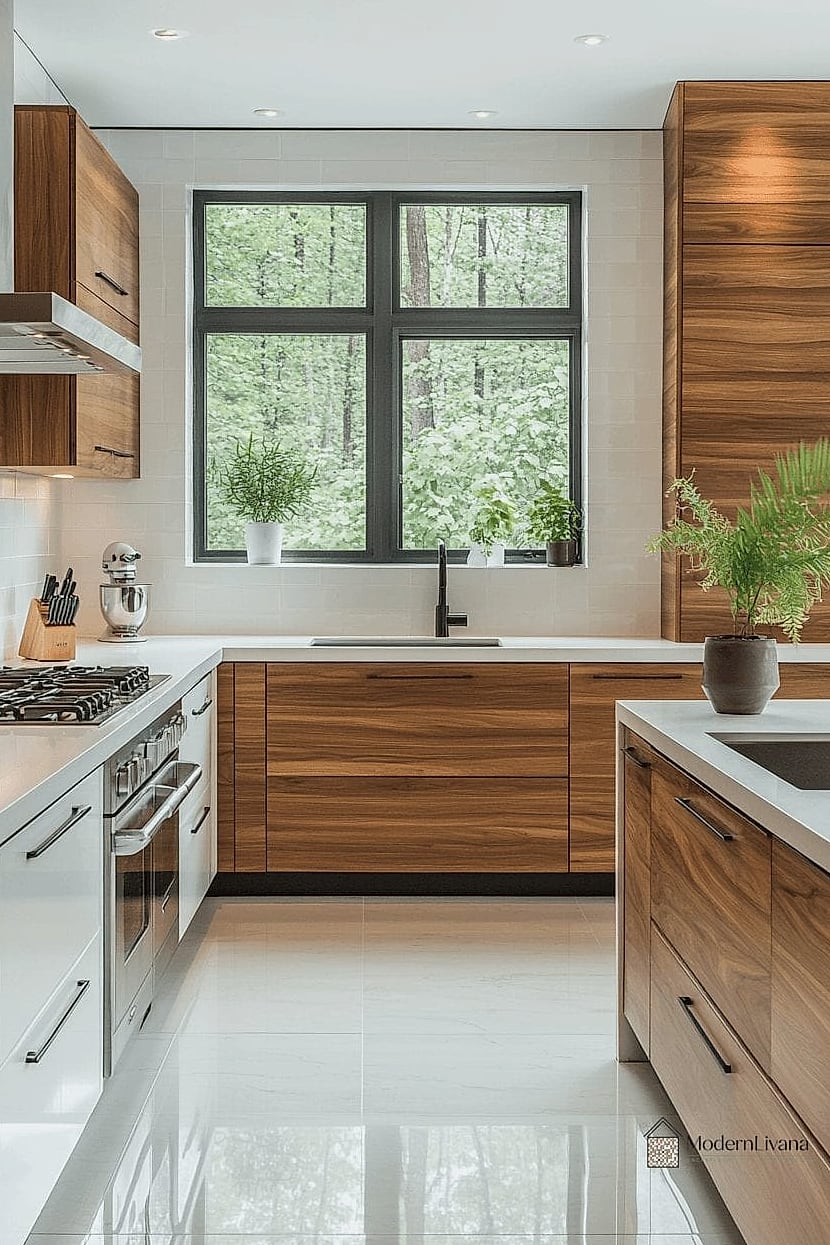
Ditching the double basin for one large single sink is both a practical and aesthetic upgrade. It simplifies dishwashing (goodbye, awkward pot-that-doesn’t-fit problem) and creates a cleaner visual line along the counter.
Undermount installation keeps the edges hidden for an even more streamlined look, though it does require solid stone or quartz counters to support it properly.
Toe-Kick Drawers for Hidden Storage
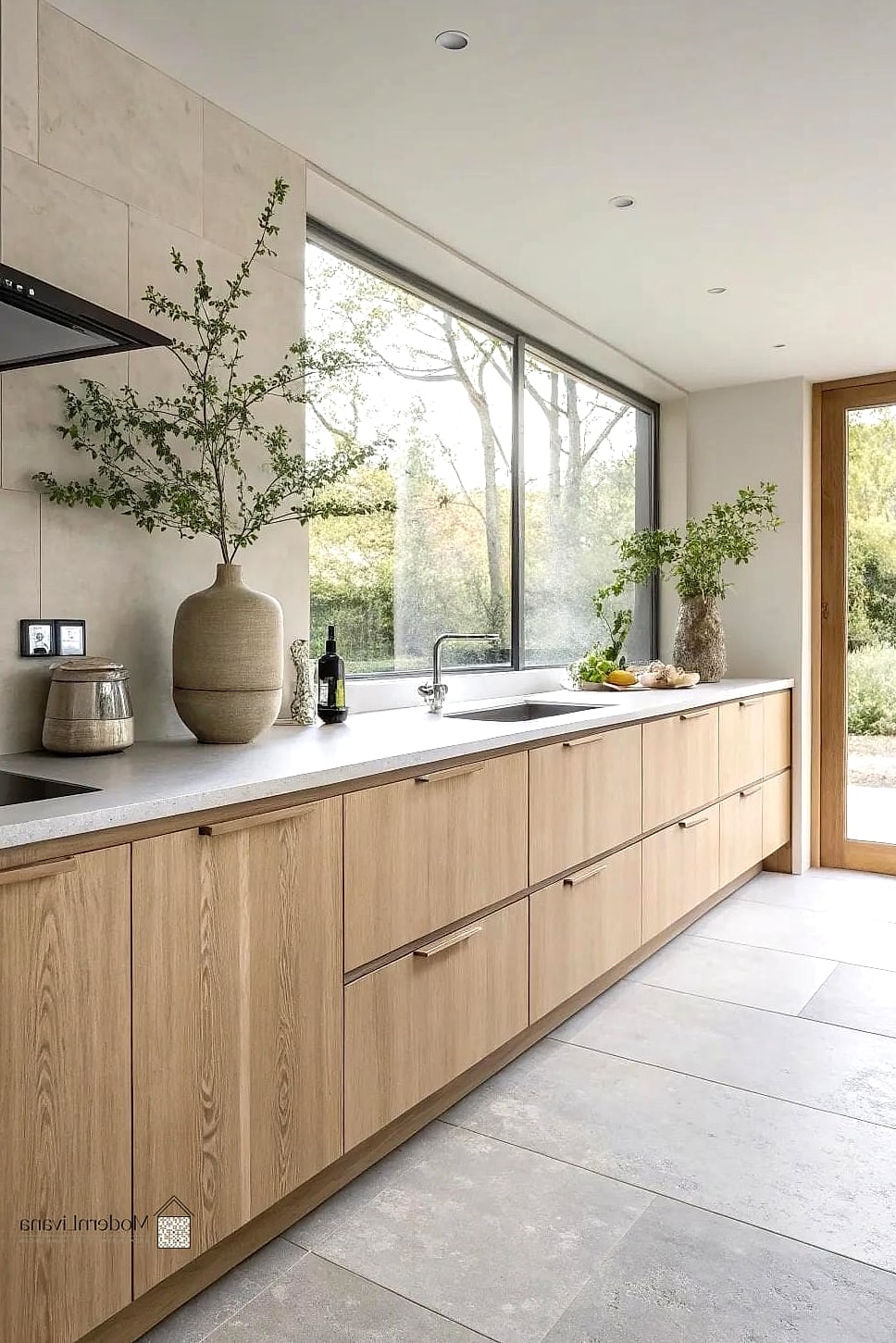
That awkward gap beneath your lower cabinets is often wasted space. Toe-kick drawers tuck into that area and are perfect for flat items like baking sheets, step stools, or pet food bowls that you want out of sight.
It’s a clever storage solution that doesn’t take up any additional floor space, which makes it ideal for smaller kitchens working with a tight footprint.
Matte Black Window Frames as a Focal Point
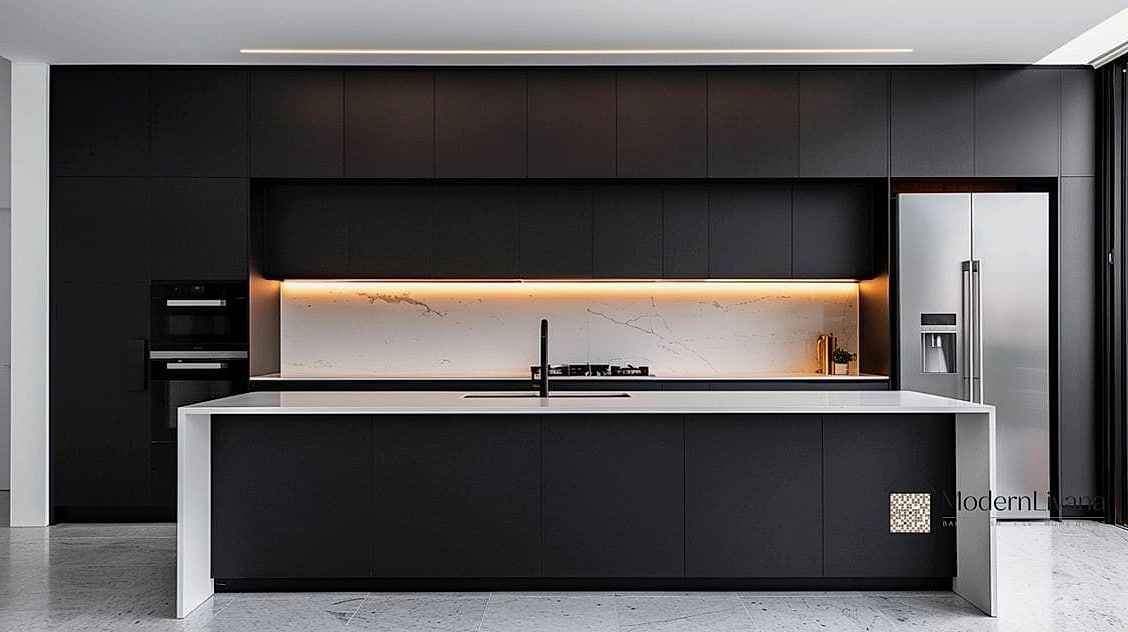
If your kitchen has windows, swapping standard white frames for matte black creates definition without adding decor. It’s a subtle architectural detail that draws the eye and adds contrast in an otherwise neutral space.
This works particularly well in kitchens with a lot of natural light, since the black frames keep the room from feeling washed out.
A Dedicated Coffee Station Tucked into a Cabinet
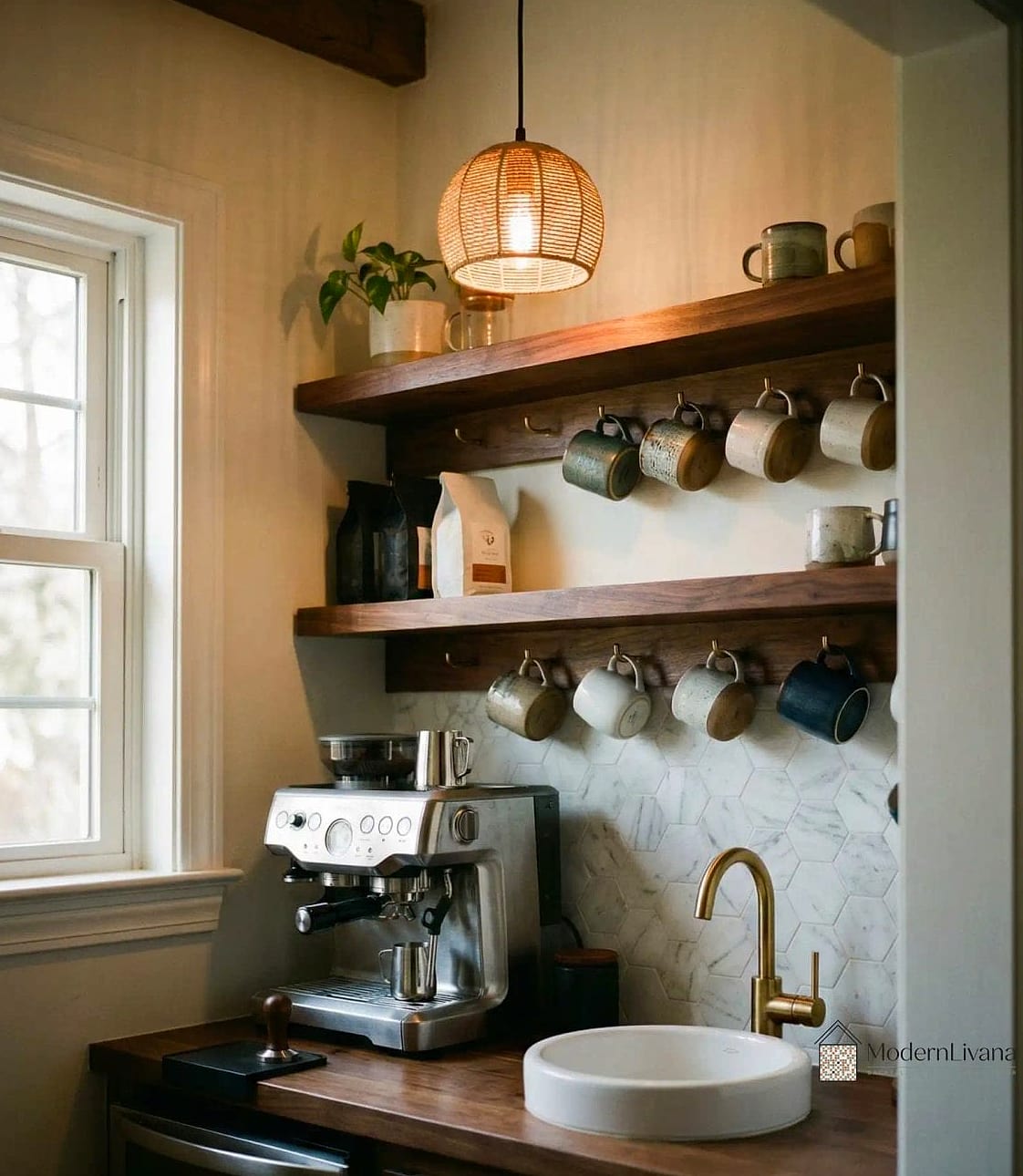
Rather than cluttering the counter with a coffee maker, grinder, and mugs, some homeowners are building a small coffee station into a cabinet with a pocket door. Pull it open when you need it, close it when you don’t.
It’s a small feature, but it solves one of the most common minimalist kitchen struggles: where do the daily-use appliances actually go?
Reeded or Fluted Cabinet Fronts
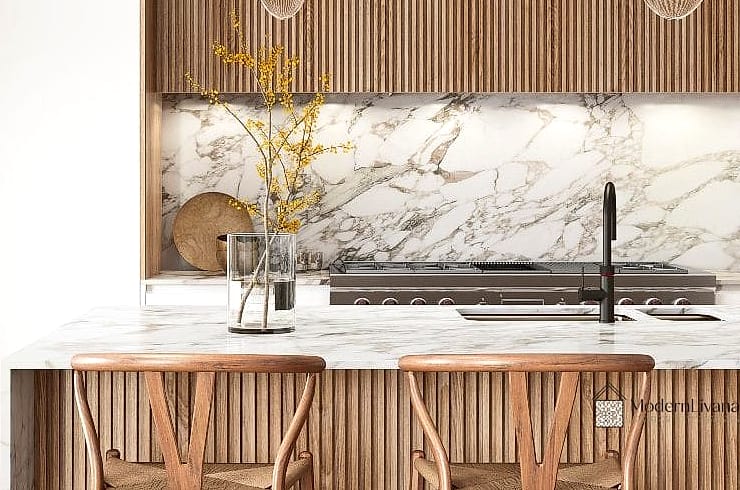
Adding subtle texture through reeded (grooved) cabinet fronts brings dimension to flat surfaces without introducing pattern or color. It’s become a favorite among interior designers because it photographs beautifully in natural light and adds warmth to an otherwise plain cabinet run.
It’s slightly pricier than flat-panel cabinetry, but a few reeded accent panels on an island can achieve a similar effect for less.
Integrated Compost and Recycling Drawers
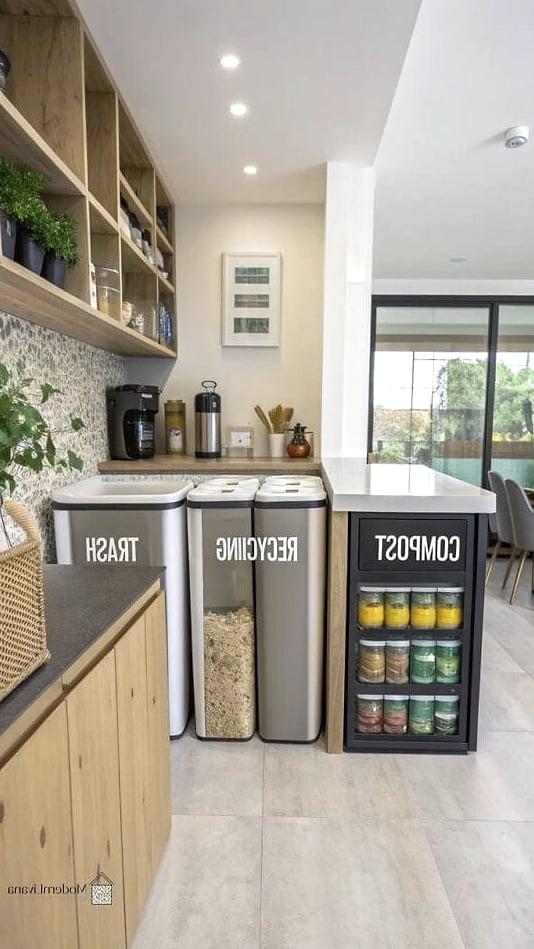
Pull-out drawers designed specifically for compost, recycling, and trash keep bins out of view and odors contained. It’s a practical upgrade that pairs well with the minimalist goal of an uncluttered kitchen floor.
Look for models with removable liners, since they make cleanup significantly easier, especially in households that compost regularly.
A Neutral Backsplash That Blends with the Counter
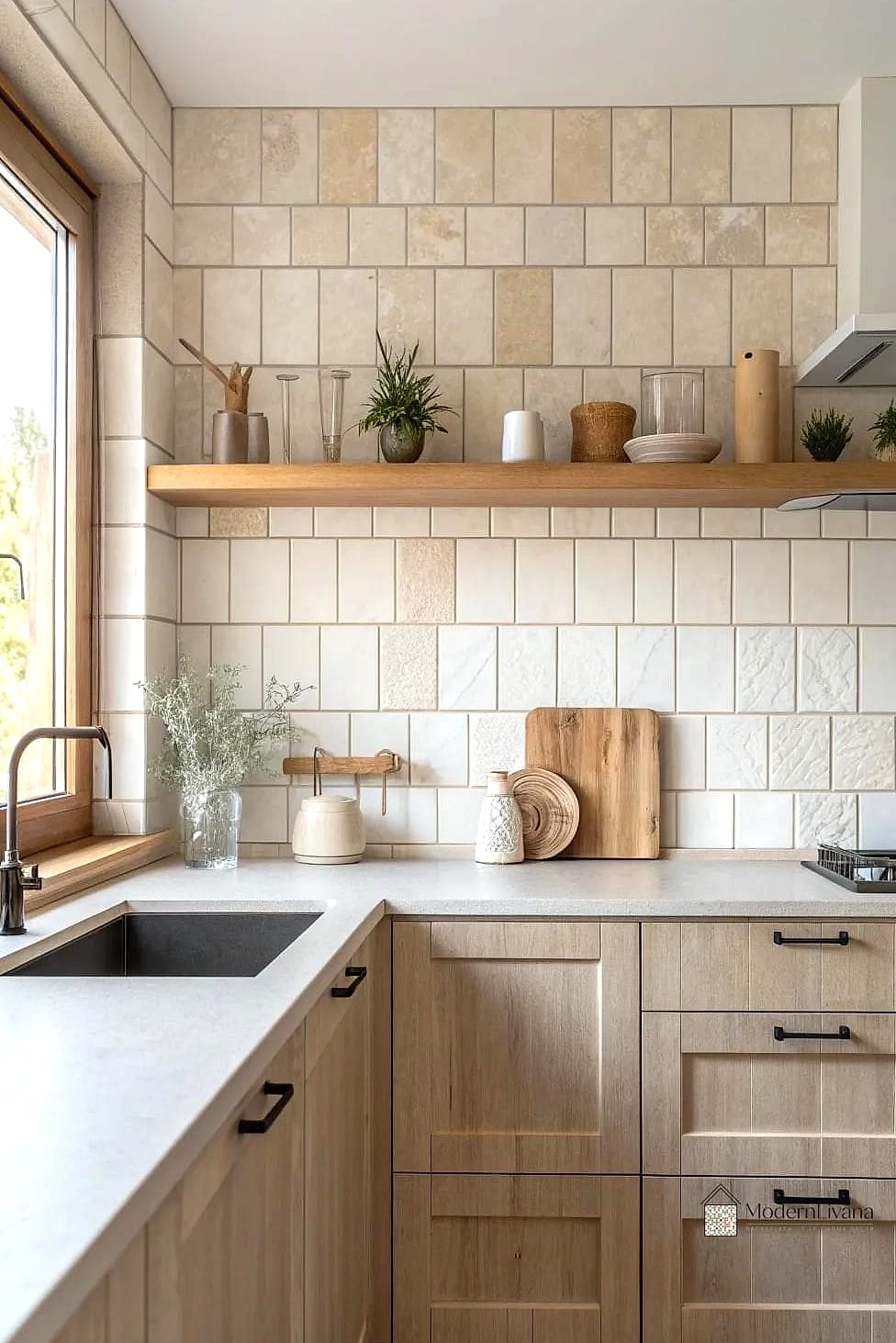
Instead of a contrasting backsplash, try matching the counter and backsplash material for a seamless look. It removes a visual break in the kitchen and makes the whole wall feel like one continuous surface.
This is a popular choice with quartz slabs since they can be cut to match perfectly, though a large-format porcelain tile can mimic the same effect at a lower price point.
Vertical Slat Wood Paneling on an Island
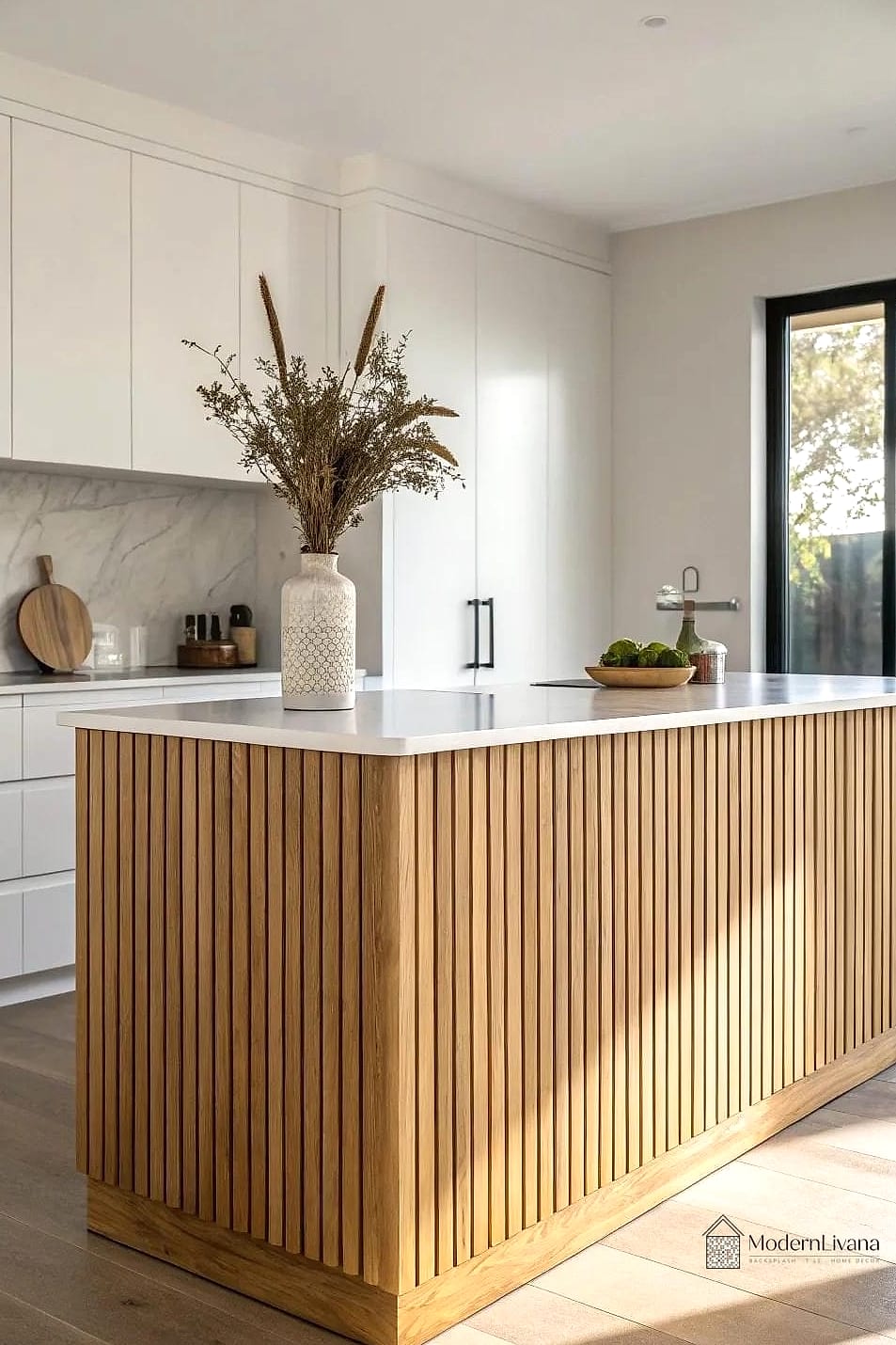
Vertical wood slats on an island base add texture and a sense of height, breaking up what’s often the largest flat surface in the kitchen. It reads as more custom than a plain painted island and works in both warm and cool color schemes.
It’s a moderately DIY-friendly project if you’re comfortable with basic woodworking, or it can be done as a decorative overlay on an existing island.
Drawer-Only Base Cabinets (No Lower Doors)

Swapping traditional cabinet doors for full-extension drawers throughout the lower cabinetry improves accessibility and keeps everything visible at a glance. No more digging through a dark cabinet for the one pot you need.
It costs more upfront than standard doors, but for anyone who values function as much as looks, it’s one of the more practical minimalist upgrades on this list.
A Single Pendant Light Instead of a Cluster
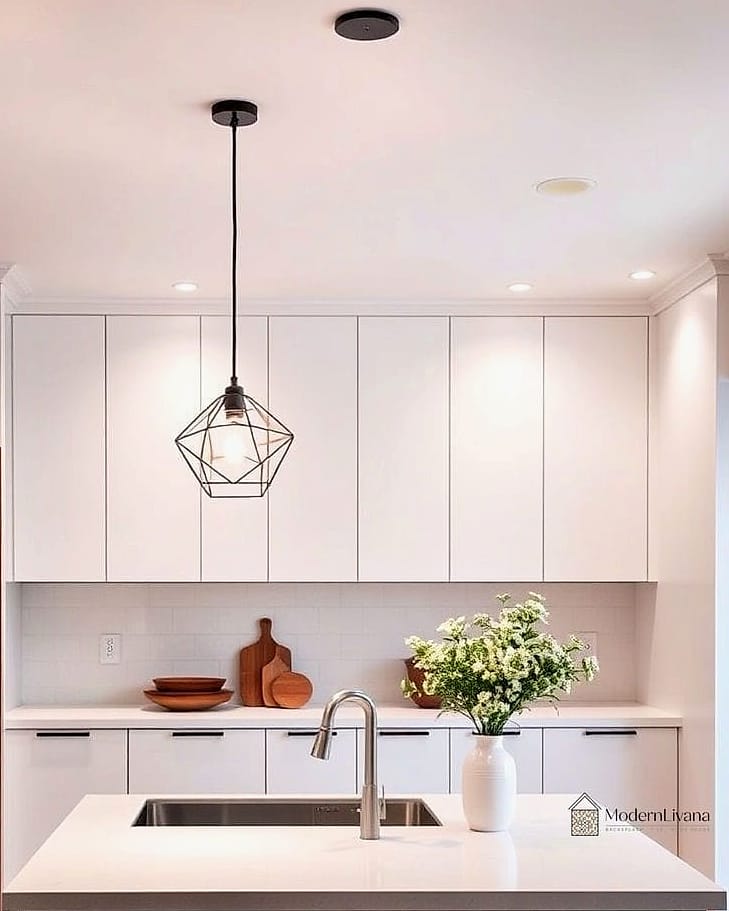
Rather than three matching pendants over an island, try one oversized statement pendant centered over the space. It creates a focal point without adding visual noise, and it tends to feel more current than the matchy-matchy cluster look.
Choose a fixture in a matte or textured finish rather than glossy metal for a softer, more grounded feel.
Countertop Cutout for a Built-In Trash Chute
A small cutout with a flip lid built directly into the counter lets you sweep food scraps straight into a bin below. It’s a niche feature, but it’s incredibly practical for anyone who does a lot of chopping and prepping.
This one requires custom fabrication, so it’s best planned during a full countertop replacement rather than added after the fact.
Muted, Earthy Green Cabinetry Instead of White or Gray
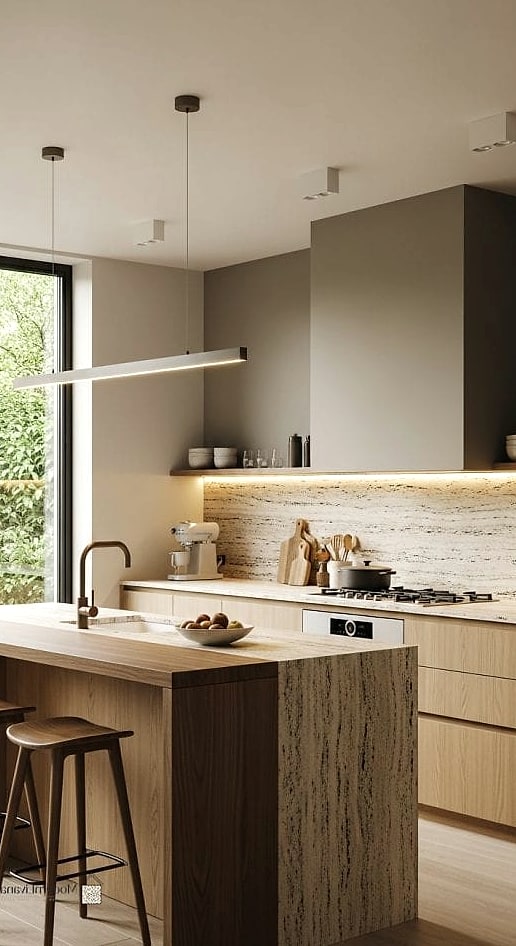
Green has been creeping into minimalist kitchens as an alternative to the usual white, gray, or greige palette. A muted sage or olive tone keeps things calm and neutral while adding a bit more personality than an all-white kitchen.
Pair it with brushed brass or matte black hardware, and keep the countertops and walls simple so the cabinet color stays the star of the show.
Open Shelving Made from the Same Material as the Counter
Instead of wood floating shelves, try shelving cut from the same stone or quartz as your countertops. It’s a small detail, but it ties the whole kitchen together and feels more cohesive than mixing materials.
Because stone shelving is heavy, make sure it’s properly anchored into wall studs or add hidden steel supports for safety.
A Curved Island Edge Instead of Sharp Corners
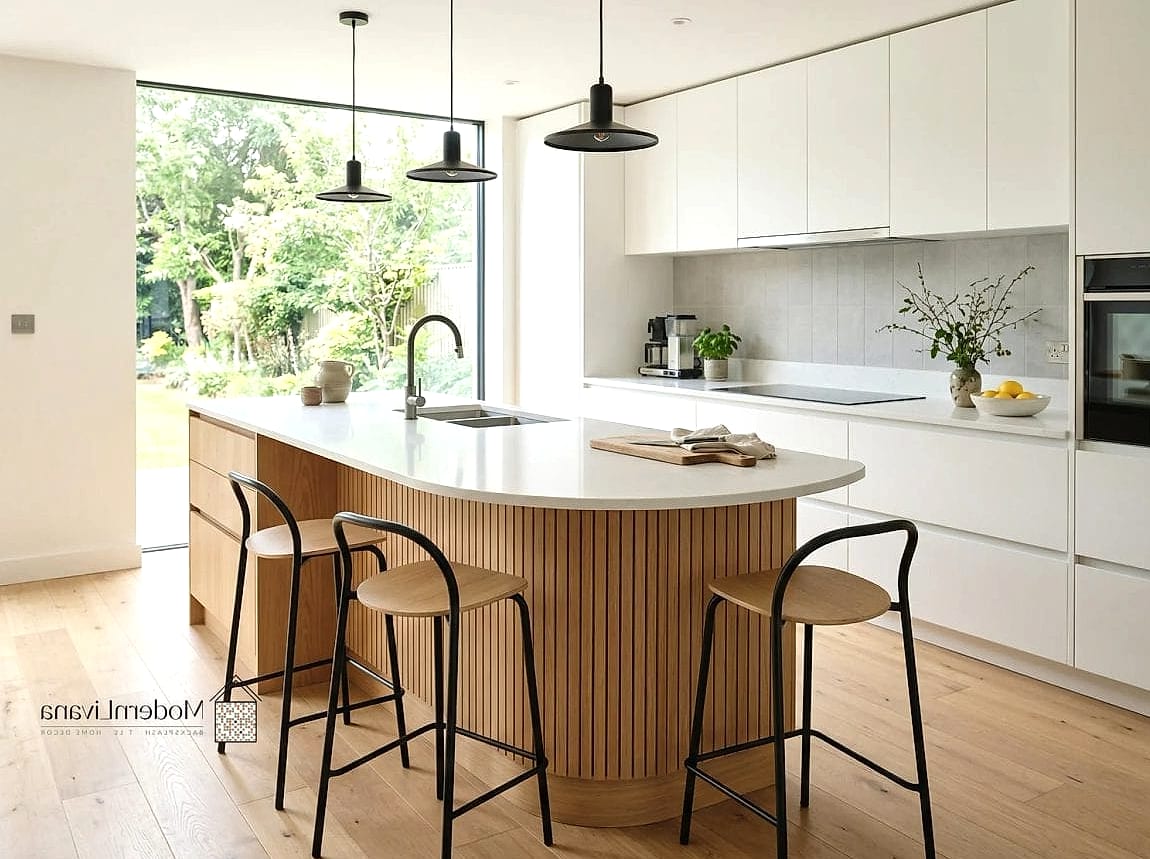
Soft, curved edges on an island soften the geometry of an otherwise boxy kitchen. It’s a subtle architectural choice that’s been showing up more in modern minimalist designs, and it’s also more practical for households with young kids who tend to bump into sharp corners.
Curved cabinetry costs more to fabricate, but a rounded countertop edge alone can achieve a similar softening effect for less.
Fully Integrated Range with No Visible Knobs or Controls
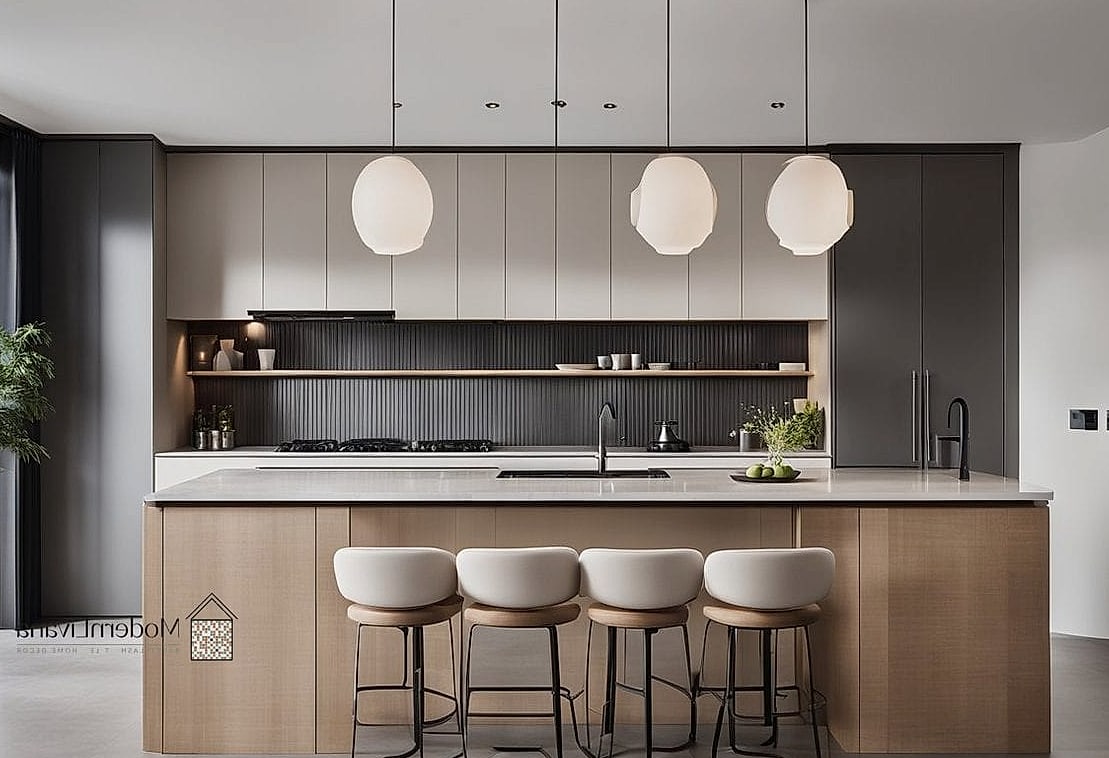
Touch-control or fully flush cooktops keep the range from becoming a focal point, which matters a lot in a kitchen designed around clean lines. Paired with a concealed hood, it can make the entire cooking zone nearly disappear into the cabinetry.
Touch controls do require a bit of a learning curve, so it’s worth testing the interface in person before committing.
A Dedicated “Nothing on the Counter” Rule with Smart Storage
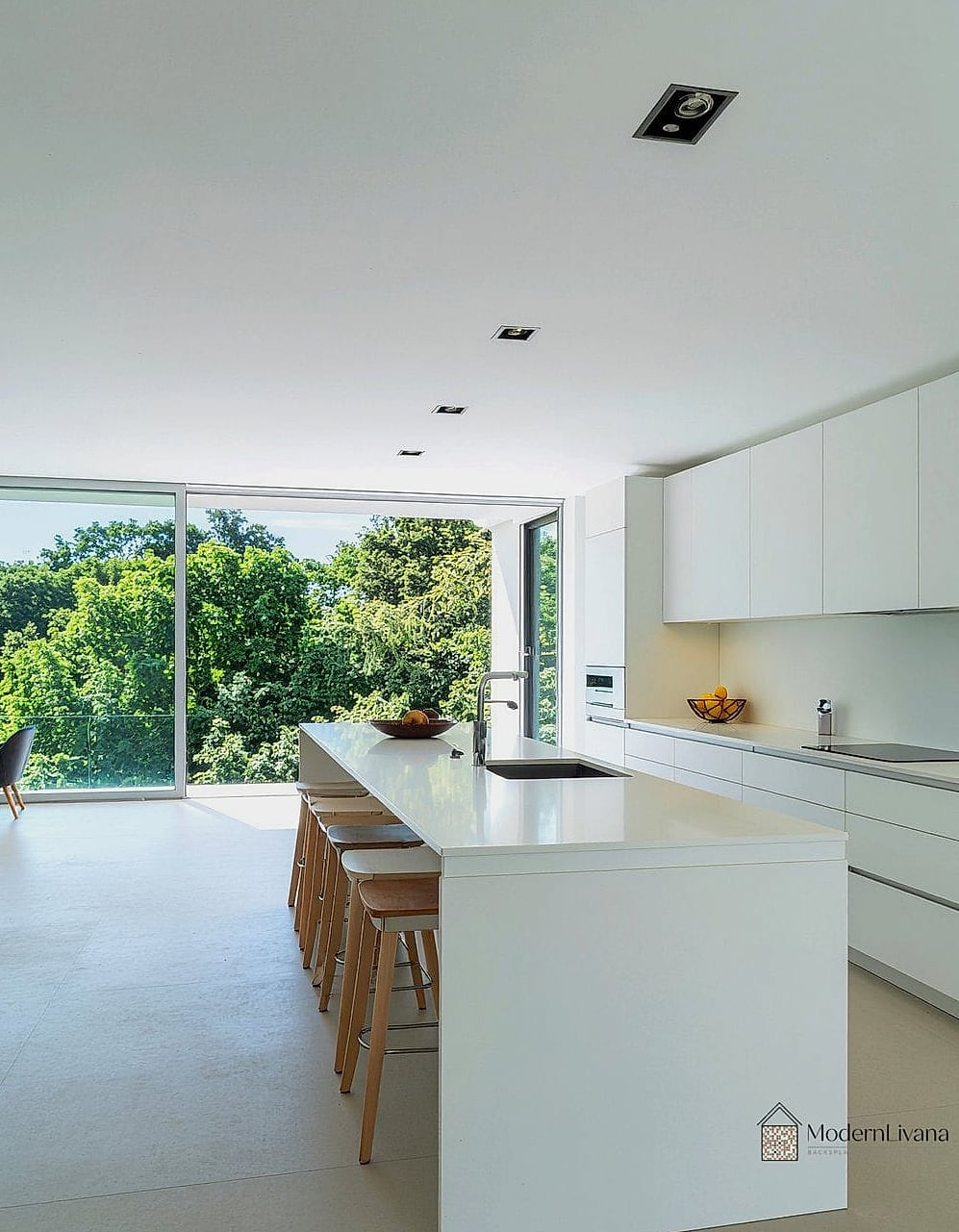
This isn’t a physical feature so much as a design philosophy, but it deserves a spot on this list because it’s the single biggest factor in how minimalist a kitchen actually feels. Every appliance, utensil, and gadget gets a home inside a drawer or cabinet, and the counters stay completely clear.
Drawer organizers, deep pull-out shelves, and labeled bins make this realistic for daily life instead of just a staged photo.
Warm Metal Accents Instead of All-Black or All-Chrome
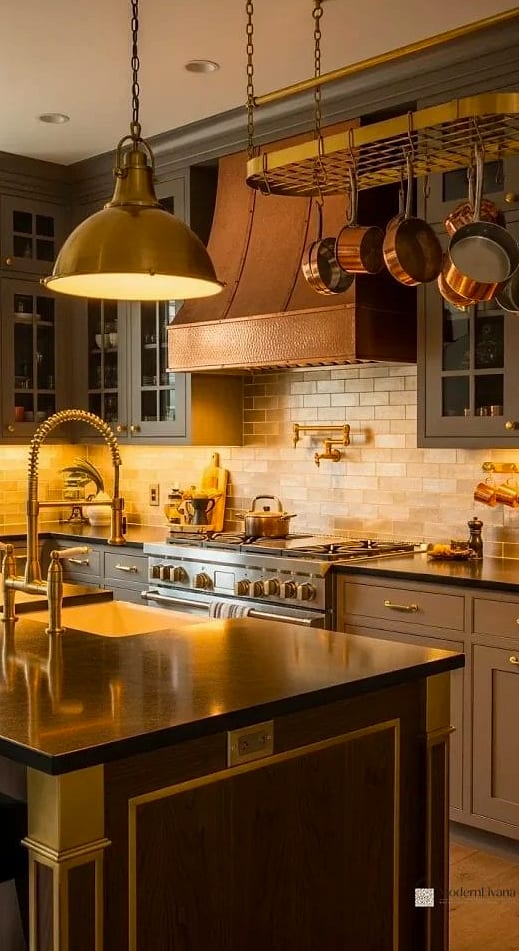
Rather than sticking to one hardware finish throughout, some designers are mixing in warm metals like unlacquered brass or bronze for a few key pieces—a faucet, a few cabinet pulls, a light fixture. It adds warmth and keeps an all-neutral kitchen from feeling too cold.
Unlacquered brass will patina naturally over time, which some homeowners love for the lived-in character it adds, while others prefer a sealed finish to keep it looking new.
Minimalist kitchens work best when every choice feels purposeful rather than performative. You don’t need to implement all 27 of these ideas to get the calm, uncluttered feel that makes minimalist design so appealing in the first place. Pick two or three that fit your space and budget, and build from there. A kitchen doesn’t have to be empty to feel minimal. It just has to be intentional.