30 Coastal Backsplash Ideas You’ll Want to Save Right Now

- Soft White Subway Tile with Sand-Colored Grout
- Sea-Glass Green Zellige Tile
- Pale Blue Herringbone Tile
- Vertical White Tile with Natural Wood
- Coastal Blue and White Mosaic
- Sandy Beige Porcelain Tile
- Glossy Aqua Subway Tile
- White Herringbone with Warm Wood Cabinets
- Marble Tile with Subtle Gray Veining
- Handmade Cream Ceramic Tile
- Navy Accent Backsplash
- White Mosaic with Blue Details
- Stacked Ceramic Tile in Ocean Blue
- Coastal Penny Tile
- Weathered-Look Porcelain Tile
- Seafoam Green Subway Tile
- Marble Herringbone Behind the Range
- Textured White Tile with Open Shelving
- Light Gray Subway Tile
- Blue-and-Cream Checkerboard Tile
- Natural Stone Mosaic
- Glossy White Tile with Black Fixtures
- Pale Blue Vertical Subway Tile
- Coastal Peel-and-Stick Backsplash
- White Tile with a Thin Blue Border
- Warm White Zellige with Brass Hardware
- Coastal Terrazzo Tile
- Soft Blue Fish-Scale Tile
- White Brick-Style Tile with Wood Accents
- Full-Height Coastal Backsplash
- Blue Mosaic with Natural Stone Accents
- Minimalist Coastal White-on-White Backsplash
- Coastal Glass Tile in Mixed Sea Tones
- Natural Wood-Look Tile Backsplash
- Coastal Marble-and-Blue Tile Mix
- Final Thoughts on Coastal Backsplash Ideas
30 Coastal Backsplash Ideas You’ll Want to Save Right Now
A coastal kitchen doesn’t have to look like a beach house covered in seashells. The best coastal backsplashes borrow from the colors and textures you actually find near the water: sandy neutrals, sea-glass blues, creamy whites, natural stone, weathered wood, and plenty of soft texture.
The backsplash is also a great place to bring in that relaxed feeling without committing to a full coastal remodel. A simple tile swap can change the mood of the kitchen, while a more detailed mosaic or handmade tile can become the feature that makes the whole room feel finished.
If you’re collecting inspiration, these 30 coastal backsplash ideas cover everything from budget-friendly peel-and-stick options to custom stonework. There are plenty of classic choices here, but also a few unexpected combinations worth saving.
Soft White Subway Tile with Sand-Colored Grout

Classic white subway tile gets a coastal update when you pair it with warm beige or sand-colored grout. The combination feels lighter and softer than stark white-and-gray, especially alongside natural wood cabinets.
This works beautifully in smaller kitchens because the pale tile reflects light without making the room feel overly polished. Choose a glossy ceramic tile for extra brightness, or a matte finish if you prefer a quieter look. The warm grout is also forgiving when everyday cooking splashes inevitably happen.
Sea-Glass Green Zellige Tile
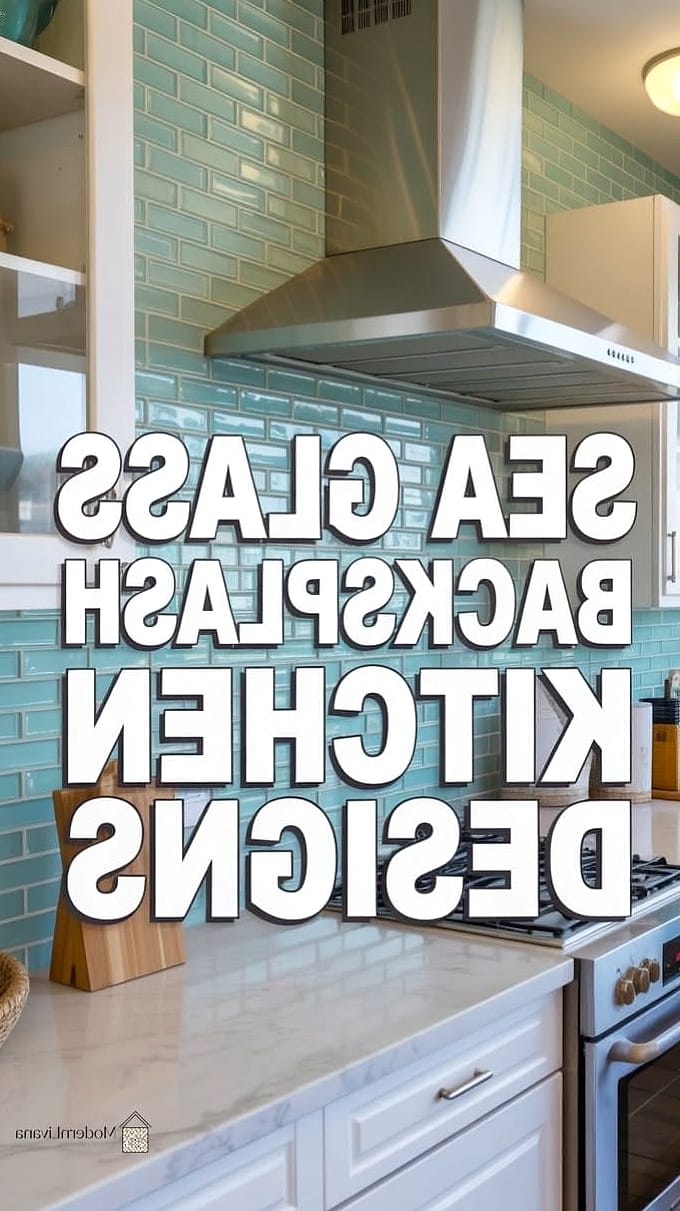
For a backsplash that feels connected to the ocean without becoming overly themed, try sea-glass green zellige tile. Its irregular edges and subtle variation give the wall a handmade appearance.
This is especially pretty with white oak cabinets, quartz countertops, and brushed brass hardware. Because zellige has naturally uneven surfaces, expect some variation in tone and texture. That is part of its charm, although the textured surface may require a little more attention when cleaning.
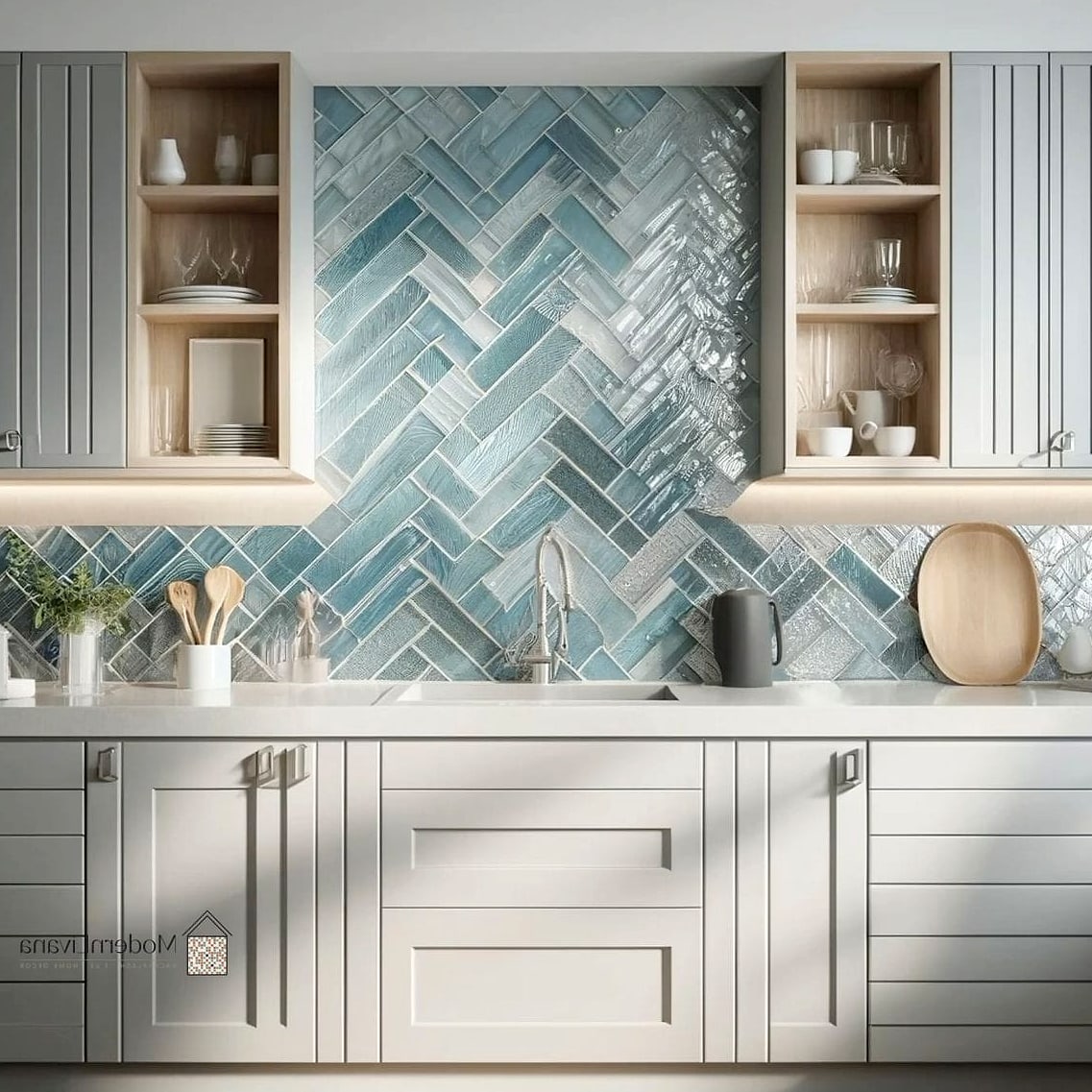
Pale Blue Herringbone Tile
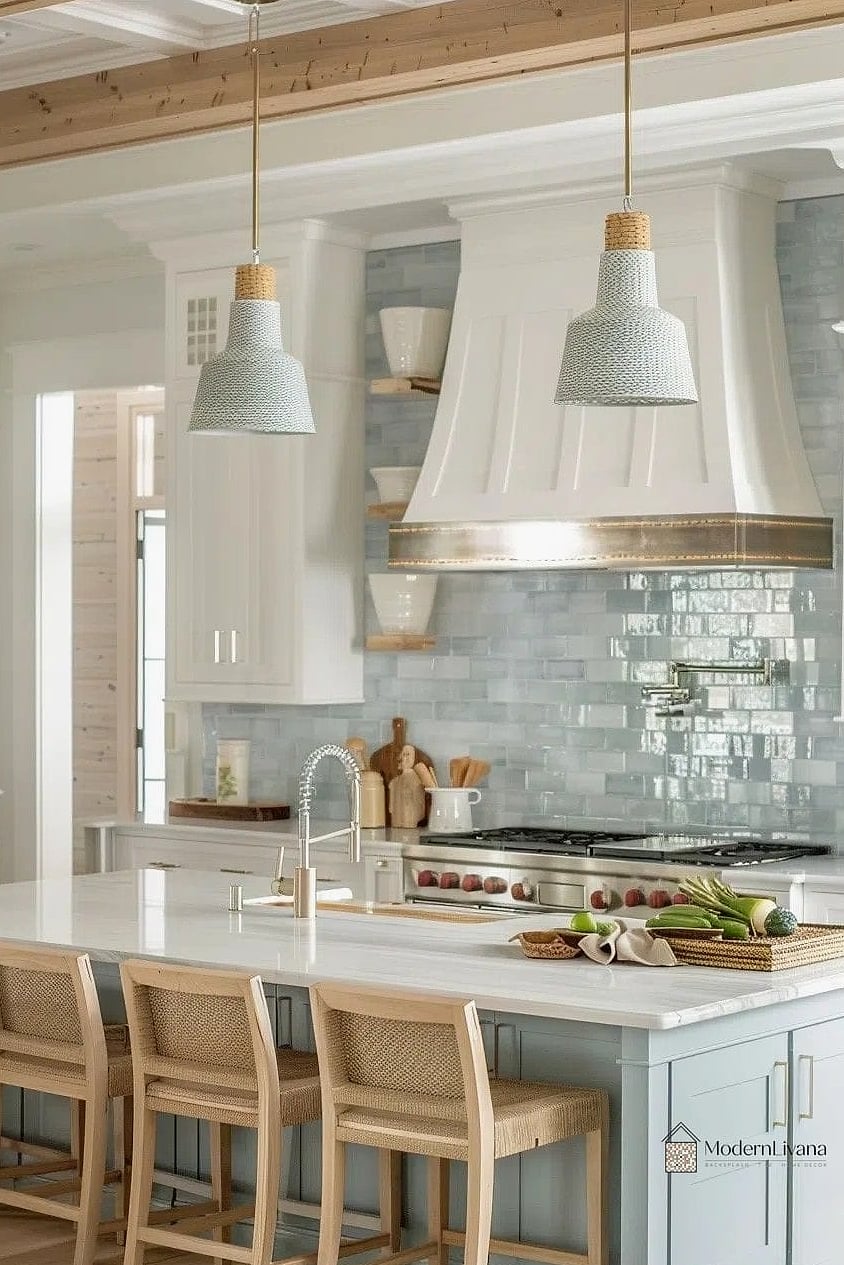
A pale blue herringbone backsplash adds movement while keeping the coastal palette gentle. Instead of a strong navy, look for misty blue, powder blue, or blue-gray ceramic tile.
The pattern works particularly well behind a range where you want the backsplash to act as a focal point. Keep the surrounding finishes simple so the herringbone has room to stand out. A white countertop and light wood accents are an easy pairing.
Vertical White Tile with Natural Wood

Installing narrow white subway tile vertically gives a familiar material a fresher shape. Add warm wood shelves, stools, or cabinet accents and the result feels relaxed rather than traditional.
This arrangement can be especially useful in kitchens with lower ceilings because the vertical lines draw the eye upward. Keep the grout close in color to the tile for a clean appearance, and use a durable ceramic or porcelain option for areas that see heavy cooking.
Coastal Blue and White Mosaic
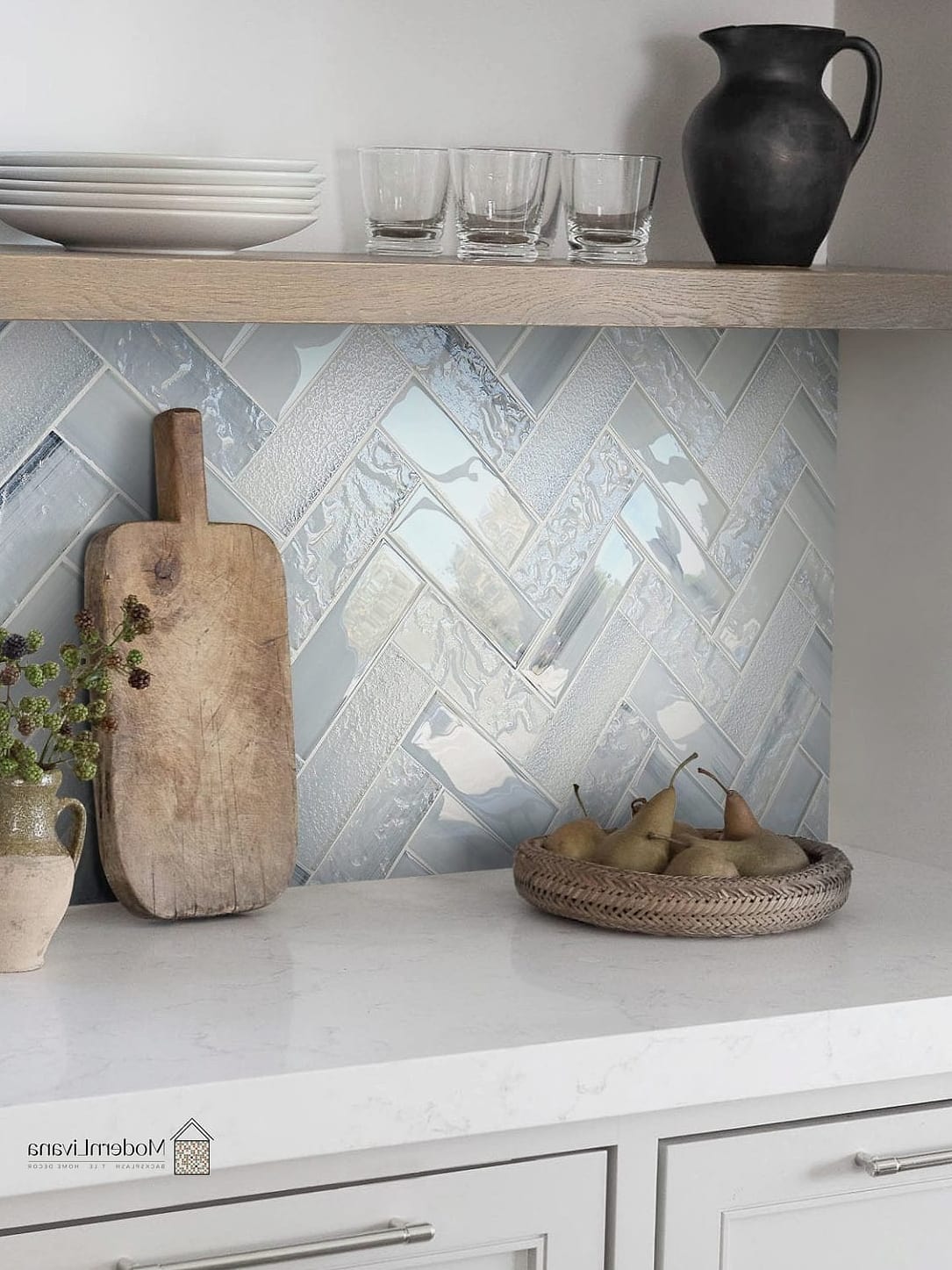
A blue-and-white mosaic backsplash can bring in more pattern without overwhelming a neutral kitchen. Look for small geometric, floral, or softly patterned tiles in shades of ocean blue, cream, and pale gray.
This option works nicely in a breakfast nook or compact galley kitchen where a small backsplash can provide plenty of visual interest. If the mosaic has several colors, repeat only one or two of them elsewhere in the room to keep the palette cohesive.
Sandy Beige Porcelain Tile
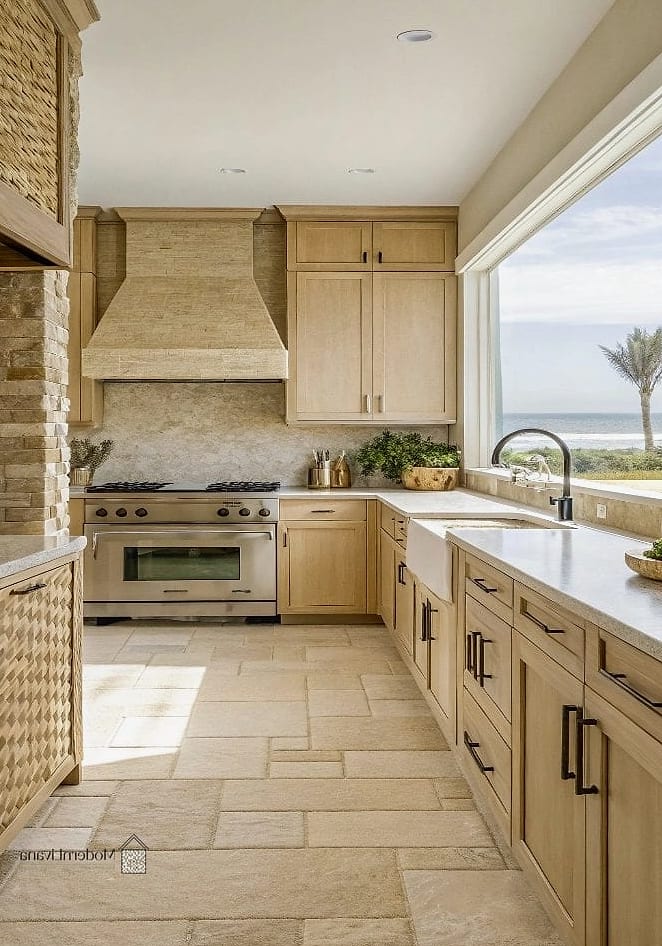
For a quieter coastal kitchen, sandy beige porcelain tile is hard to beat. It gives you the warmth of natural stone while offering a practical surface for a busy cooking area.
Choose a slightly textured finish for an earthy appearance, or a smooth matte tile for a more contemporary room. Pair it with cream cabinets, butcher block counters, or light quartz for a beach-inspired palette that doesn’t rely on blue.
Glossy Aqua Subway Tile
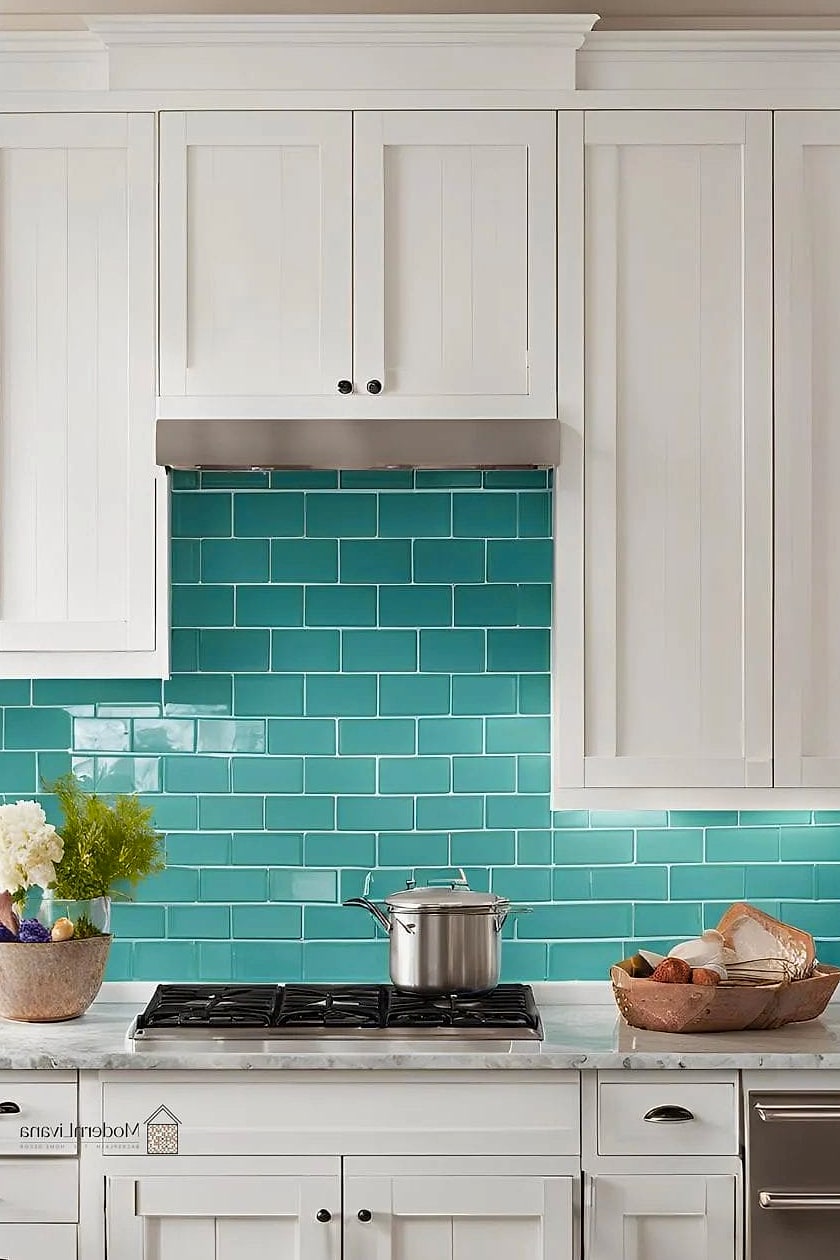
Aqua subway tile brings a cheerful splash of color to an otherwise neutral kitchen. The glossy finish catches daylight and can make a backsplash feel almost like polished sea glass.
This is a fun choice for a kitchen with white cabinets and simple hardware. For a more sophisticated look, choose a muted aqua rather than a bright turquoise. If the kitchen already has colorful accessories, keep the countertop and cabinet finishes restrained.
White Herringbone with Warm Wood Cabinets
White tile arranged in a herringbone pattern looks particularly coastal when combined with natural wood cabinetry. The wood keeps the white from feeling too stark, while the pattern adds enough detail to make the backsplash interesting.
This is a good choice when you want coastal style without committing to blue tile. A light quartz countertop and woven pendant lights can reinforce the relaxed feeling without making the room look overly decorated.
Marble Tile with Subtle Gray Veining

Marble can work surprisingly well in coastal kitchens when you choose a soft white stone with understated gray veining. The natural variation resembles the colors of clouds, sand, and weathered shoreline stone.
Use marble subway tile for a classic look or select rectangular marble pieces for a more contemporary layout. Keep in mind that natural marble requires more care than porcelain, particularly around acidic foods and cooking oils.
Handmade Cream Ceramic Tile
Cream-colored handmade ceramic tile creates a warm, slightly imperfect backdrop that pairs beautifully with coastal interiors. Look for tiles with small tonal variations instead of perfectly uniform pieces.
This style works especially well with off-white cabinetry and aged brass hardware. It can also soften a kitchen filled with hard surfaces such as quartz, stainless steel, and glass. For a lower-cost alternative, search for ceramic tiles designed to mimic handmade finishes.
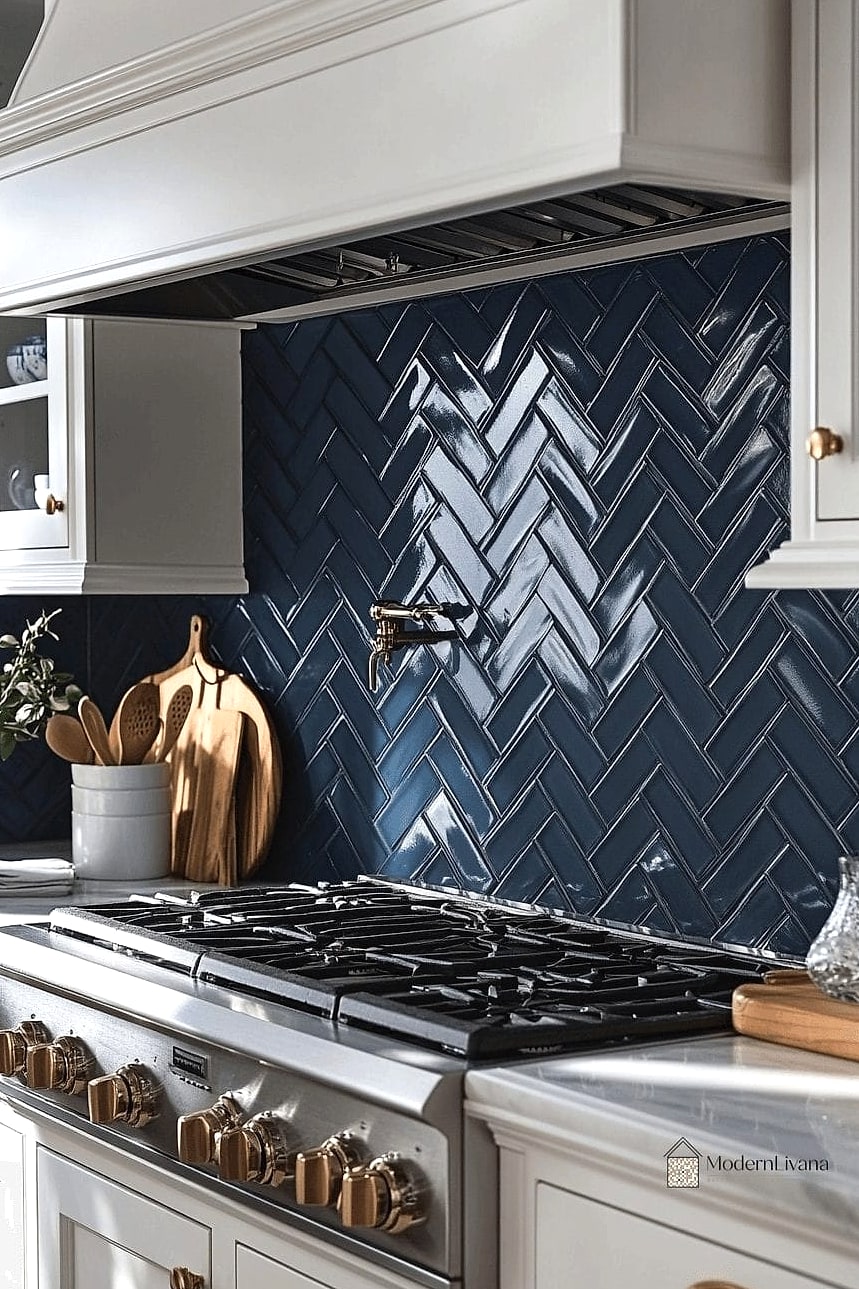
Navy Accent Backsplash

Navy can give a coastal kitchen more depth without turning the room dark. Instead of covering every wall in navy, use it as an accent behind the range or on a short backsplash wall.
Pair the tile with white cabinets and light countertops so the color feels intentional rather than heavy. Navy also looks excellent with brass or brushed nickel hardware, depending on whether you want the room to feel warmer or cooler.
White Mosaic with Blue Details
A white mosaic sprinkled with soft blue accents offers a more delicate take on coastal decorating. The background keeps the backsplash bright while the blue provides small flashes of color.
This can be particularly effective in a white kitchen where you want some visual texture without a dramatic contrast. Choose simple cabinet hardware and avoid adding too many additional patterns nearby.
Stacked Ceramic Tile in Ocean Blue

A stacked layout feels more modern than the traditional running-bond subway arrangement. Use a muted ocean-blue ceramic tile and install it in clean horizontal rows for a streamlined coastal look.
This approach works nicely in contemporary kitchens with flat-panel cabinets and quartz countertops. For a warmer result, add oak shelves or a butcher block island. A glossy tile will reflect light, while matte ceramic creates a softer finish.
Coastal Penny Tile

Small penny tiles can add texture and a subtle vintage note to a coastal kitchen. White is the obvious choice, but pale blue, seafoam, or soft gray can make the design feel more distinctive.
Because the individual pieces are small, penny tile works well around curves, corners, and awkward wall areas. The downside is the amount of grout, so use a quality grout and plan to give the backsplash a little more cleaning attention.
Weathered-Look Porcelain Tile
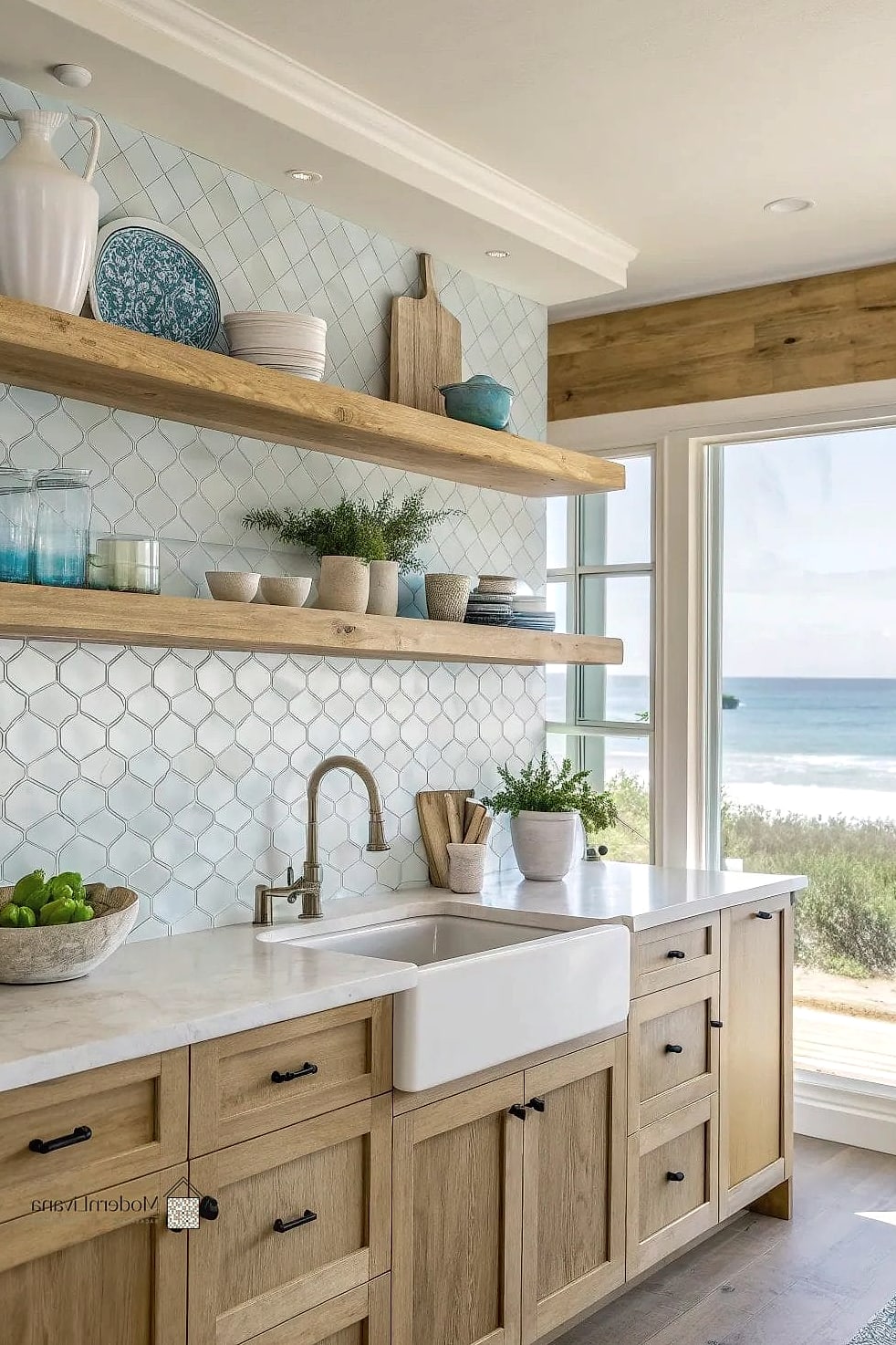
If you love the appearance of aged materials but want modern durability, consider porcelain tile with a weathered finish. Some styles mimic faded stone, old plaster, or lightly worn ceramic.
This backsplash pairs well with reclaimed wood shelves and simple white cabinets. It is particularly useful in a family kitchen where you want character without choosing a delicate material that needs constant babying.
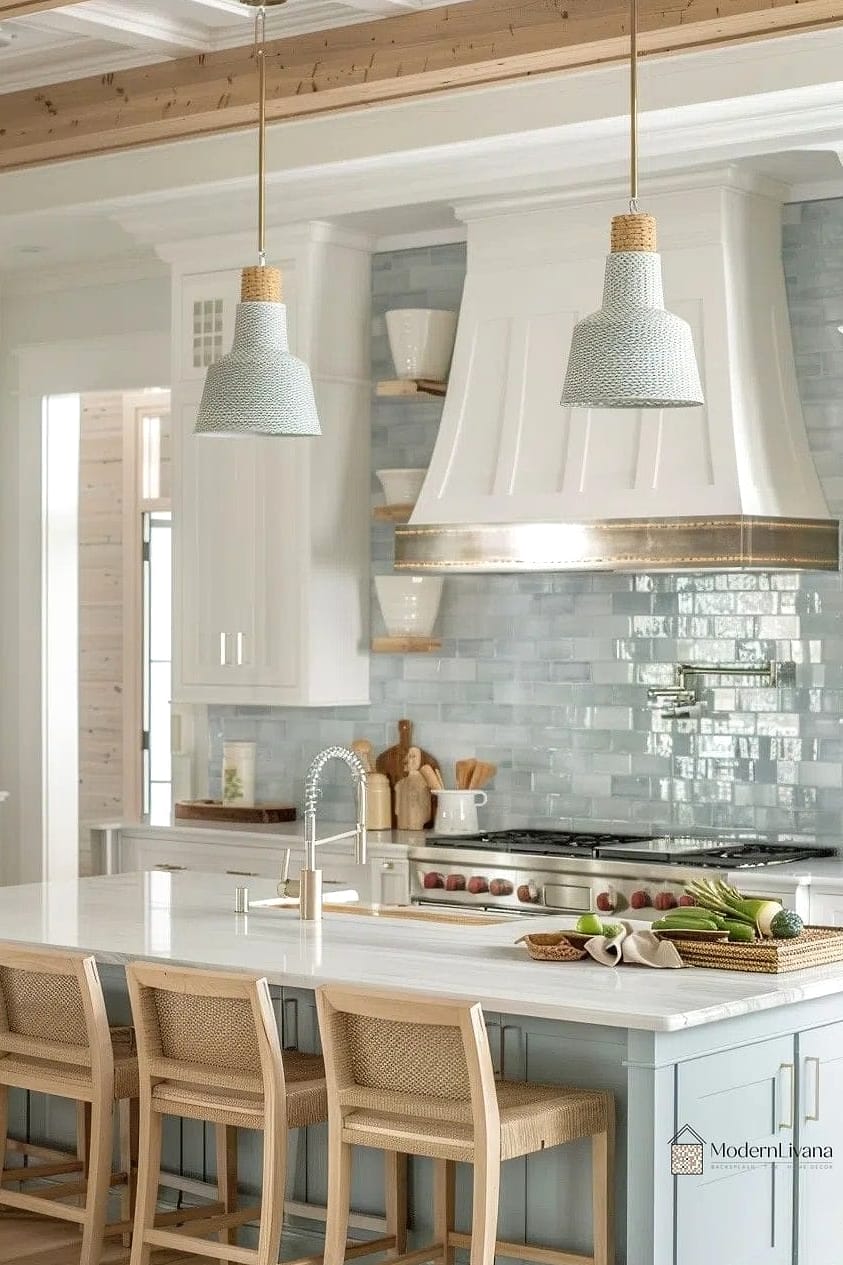
Seafoam Green Subway Tile

Seafoam green sits comfortably between blue and green, making it one of the easiest colors to use for a coastal backsplash. It feels fresh but not overly bright.
Try it with white quartz counters and natural oak cabinetry for a light Scandinavian-coastal combination. If you have dark floors or darker cabinets, a glossy seafoam tile can also help brighten the wall.
Marble Herringbone Behind the Range

A marble herringbone backsplash can turn the cooking zone into a subtle centerpiece. The pattern adds interest while the stone’s natural veining keeps the look from feeling overly busy.
For everyday practicality, consider using the decorative marble only behind the range and a simpler tile elsewhere. A full-height installation can make the range wall feel custom, but a smaller framed section is more budget-friendly.
Textured White Tile with Open Shelving

Texture can create a coastal feeling even when the backsplash is completely white. Choose a tile with a handmade, rippled, fluted, or lightly uneven surface, then pair it with floating wood shelves.
This combination is especially effective when the shelves hold everyday dishes, woven baskets, or a few small plants. Keep the shelf styling edited so the textured wall remains visible instead of disappearing behind clutter.
Light Gray Subway Tile

Light gray subway tile is a practical option for homeowners who like coastal style but don’t want an obvious beach palette. A soft gray has enough contrast to define the backsplash while remaining neutral.
It works especially well with white cabinets, pale wood, and stainless steel appliances. Choose a warm gray if your counters have beige or cream undertones, and a cooler gray if the kitchen leans toward crisp whites and blue accents.
Blue-and-Cream Checkerboard Tile
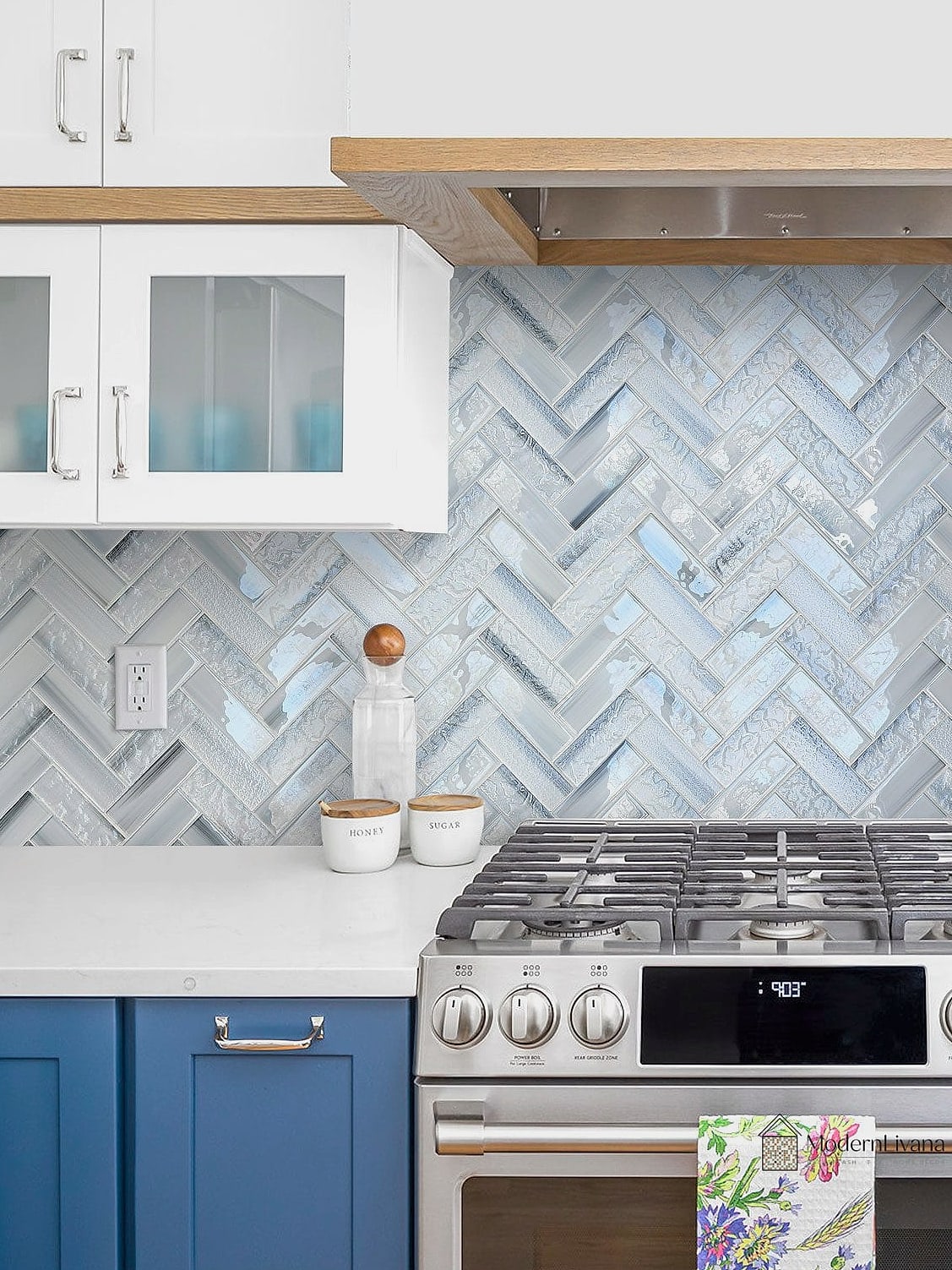
A checkerboard backsplash feels playful without requiring bright colors. Use muted blue and creamy white squares for a softer coastal interpretation.
This is best used where you want the backsplash to make a statement, such as behind a range or along one wall. Because the pattern is strong, keep surrounding textiles and accessories relatively simple.
Natural Stone Mosaic
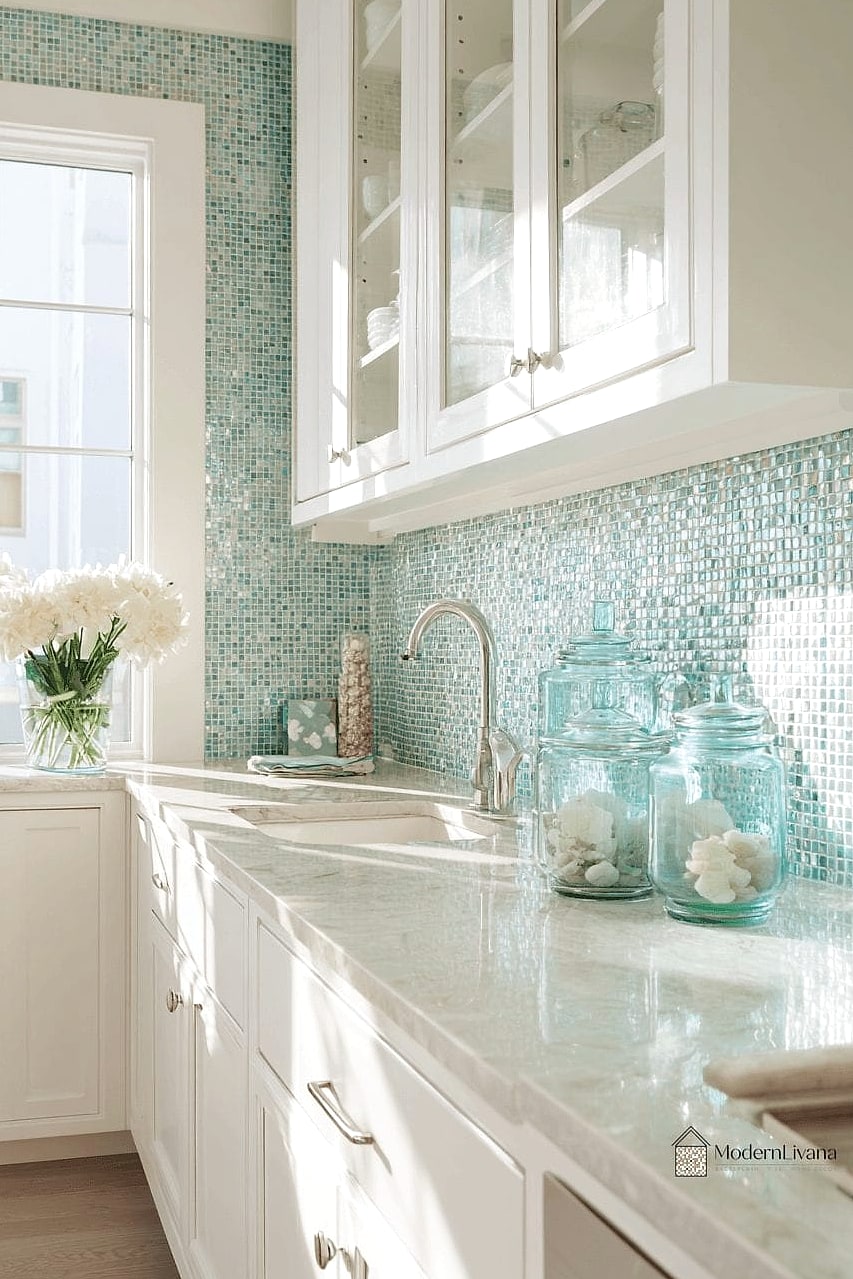
Natural stone mosaic tile brings an earthy, shoreline-inspired quality to the kitchen. Look for limestone, marble, travertine, or mixed-stone designs in cream, taupe, gray, and sandy tones.
This works particularly well with warm wood cabinets and stone countertops. Before choosing natural stone, check the manufacturer’s care recommendations because porous materials may need sealing and more careful cleaning than porcelain.
Glossy White Tile with Black Fixtures

A coastal kitchen doesn’t have to avoid black. Glossy white tile paired with matte black faucets, cabinet pulls, or light fixtures creates crisp contrast while keeping the backsplash bright.
This combination works well in modern coastal spaces where you want a cleaner, less traditional appearance. Add woven stools or natural wood accessories to soften the black-and-white palette.
Pale Blue Vertical Subway Tile
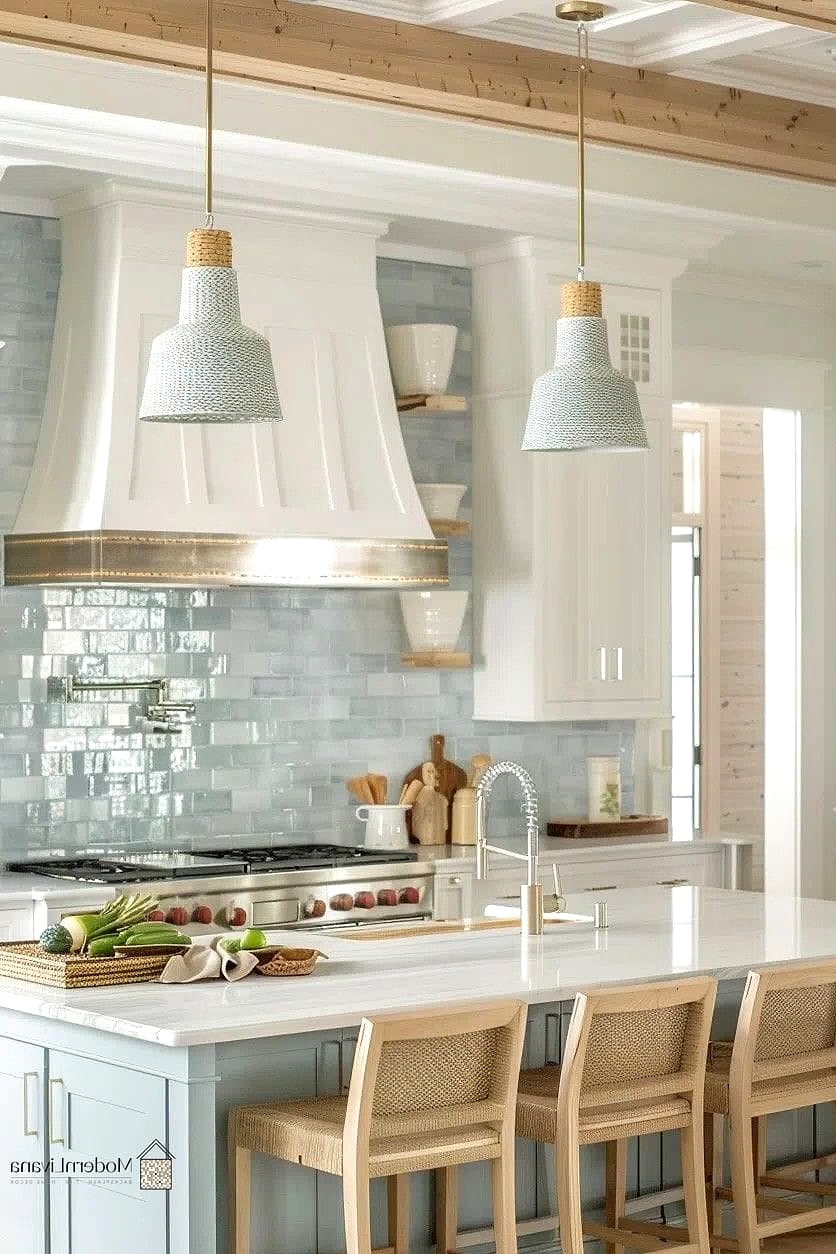
For something slightly different, install pale blue subway tiles vertically. The layout feels fresh and helps emphasize the height of the backsplash.
This is particularly useful in kitchens with open shelving or tall upper cabinets. Keep the grout subtle and choose a blue with gray or green undertones if you want a sophisticated coastal color rather than a bright nautical one.
Coastal Peel-and-Stick Backsplash
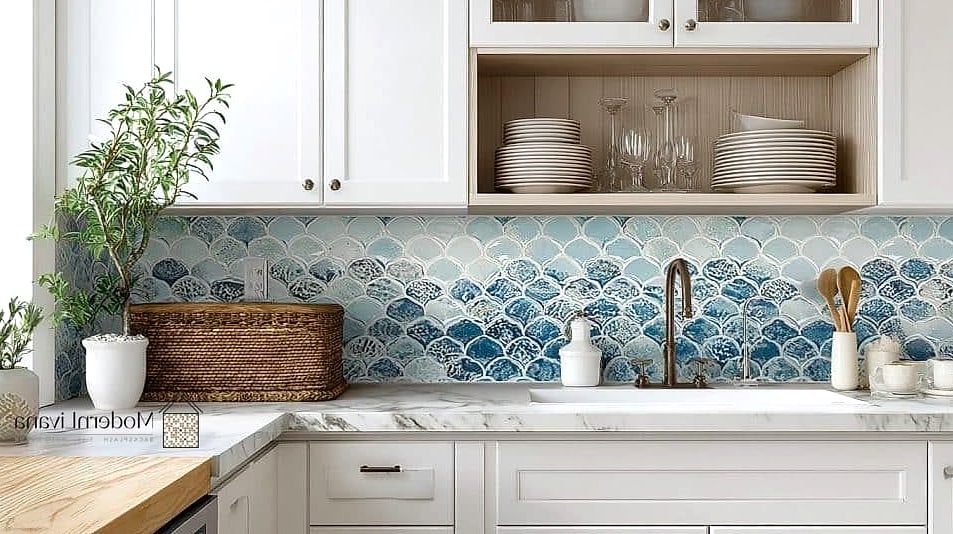
Renters and cautious DIYers can get the coastal look with peel-and-stick backsplash panels or tile stickers. Look for designs that mimic white subway tile, soft blue mosaics, or subtle natural stone.
This is best suited to areas with limited heat and moisture exposure, depending on the product specifications. Measure carefully, clean the wall thoroughly, and order extra material so future replacements are easier.
White Tile with a Thin Blue Border
A narrow blue border can give an otherwise simple white backsplash a custom appearance. Think of it as a small architectural detail rather than a major decorative statement.
Use the blue strip at the transition between the countertop and tile, around a range opening, or as a framed detail. This approach is useful when you want a little color but don’t want to commit to an entire blue backsplash.
Warm White Zellige with Brass Hardware
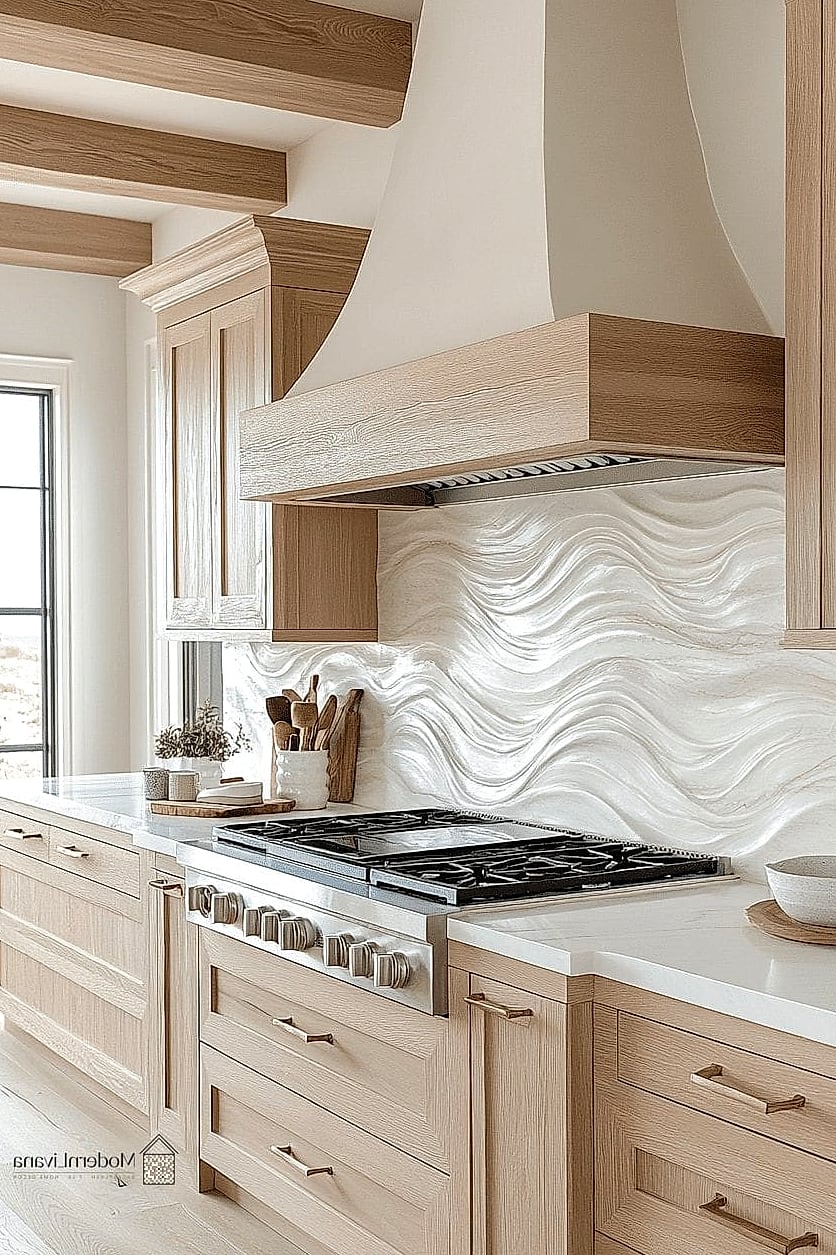
Warm white zellige tile is a lovely choice for kitchens that need softness rather than more color. Its handmade texture catches light differently across every piece, while brass hardware adds warmth.
This combination looks especially good with cream cabinets and light wood. Because the tile has uneven surfaces, wipe cooking splatters promptly around the range and follow the tile manufacturer’s cleaning recommendations.
Coastal Terrazzo Tile
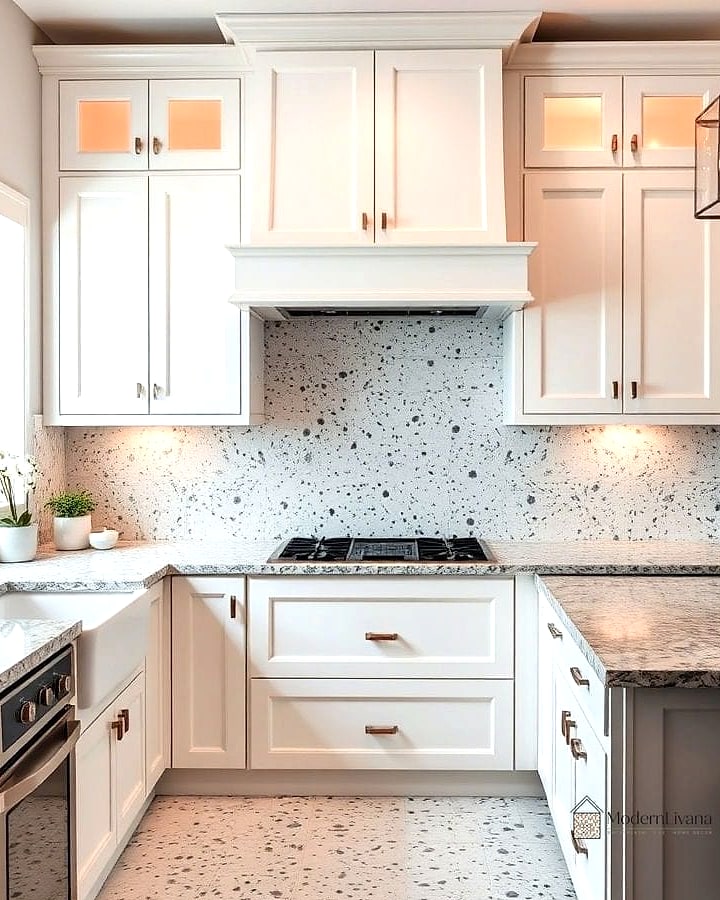
Terrazzo can bring a playful, modern edge to coastal kitchens. Choose a pale base with small chips in blue-gray, cream, tan, or muted green to echo a beachy palette without obvious nautical motifs.
This is a good choice for homeowners who want something different from subway tile. Large-format terrazzo-look porcelain can also create a similar effect with fewer grout lines and simpler maintenance.
Soft Blue Fish-Scale Tile

Fish-scale, scallop, or fan-shaped tile can create a gentle connection to the water while remaining stylish. Soft blue or seafoam versions are especially pretty when paired with white cabinetry.
Use this shape on a small backsplash area if you’re worried about it becoming too dominant. A simple stacked installation and minimal accessories keep the curved pattern from feeling overly themed.
White Brick-Style Tile with Wood Accents

Brick-style ceramic tile can give a coastal kitchen a relaxed cottage feel. Choose a white or creamy finish and combine it with reclaimed-looking shelves, oak cabinetry, or a butcher block island.
The brick shape adds texture without needing a complicated pattern. It also pairs naturally with farmhouse and transitional elements, making this a flexible option if your style sits somewhere between coastal and casual.
Full-Height Coastal Backsplash
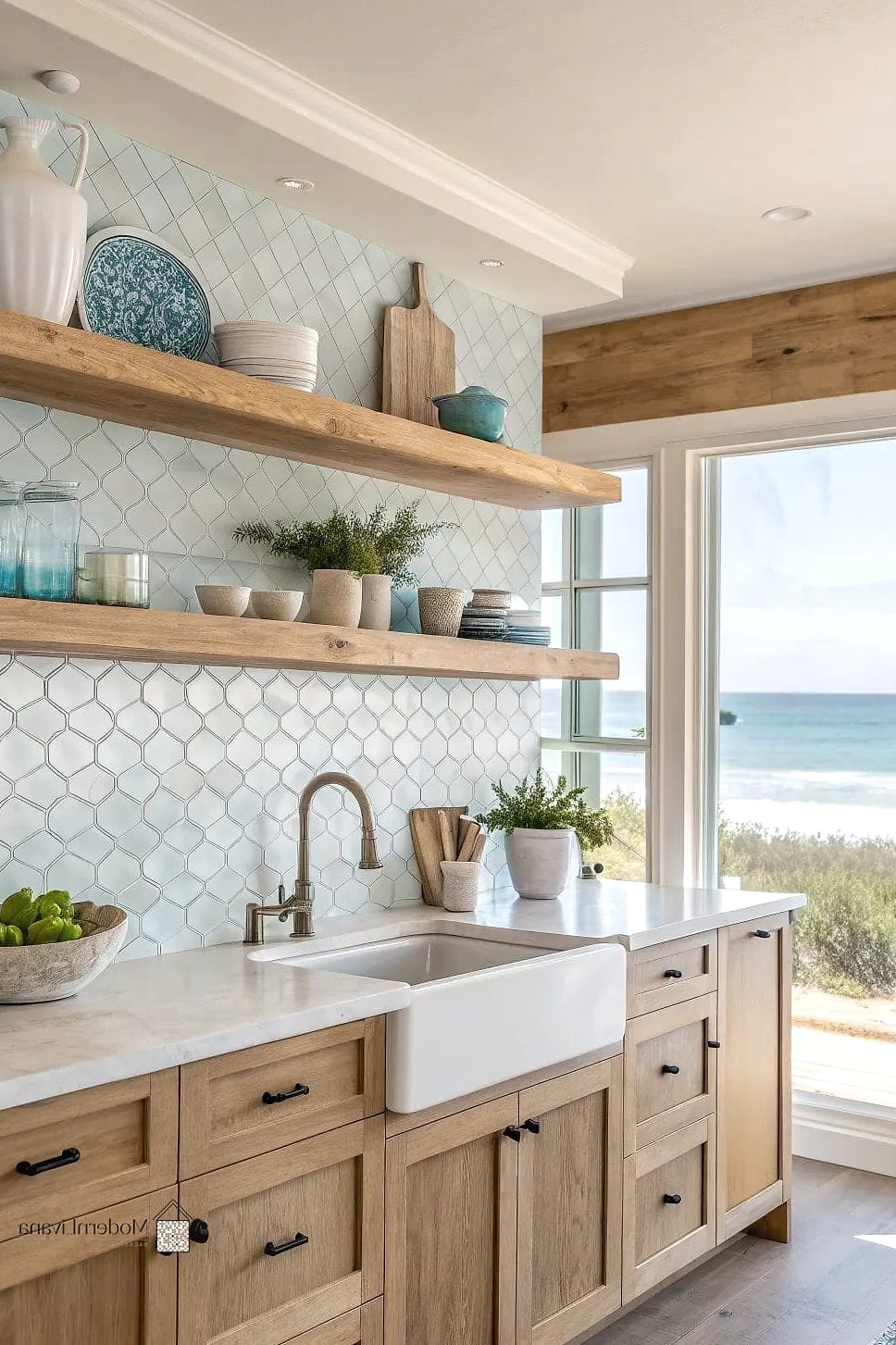
Taking the backsplash all the way from the countertop to the underside of the cabinets, shelves, or ceiling can make a coastal kitchen feel more finished. A full-height installation works particularly well behind a range or sink wall.
Use a quiet material such as pale marble, cream zellige, or soft blue tile if covering a large area. Although it costs more than a standard backsplash, the additional surface can make the kitchen feel intentionally designed rather than pieced together.
Blue Mosaic with Natural Stone Accents
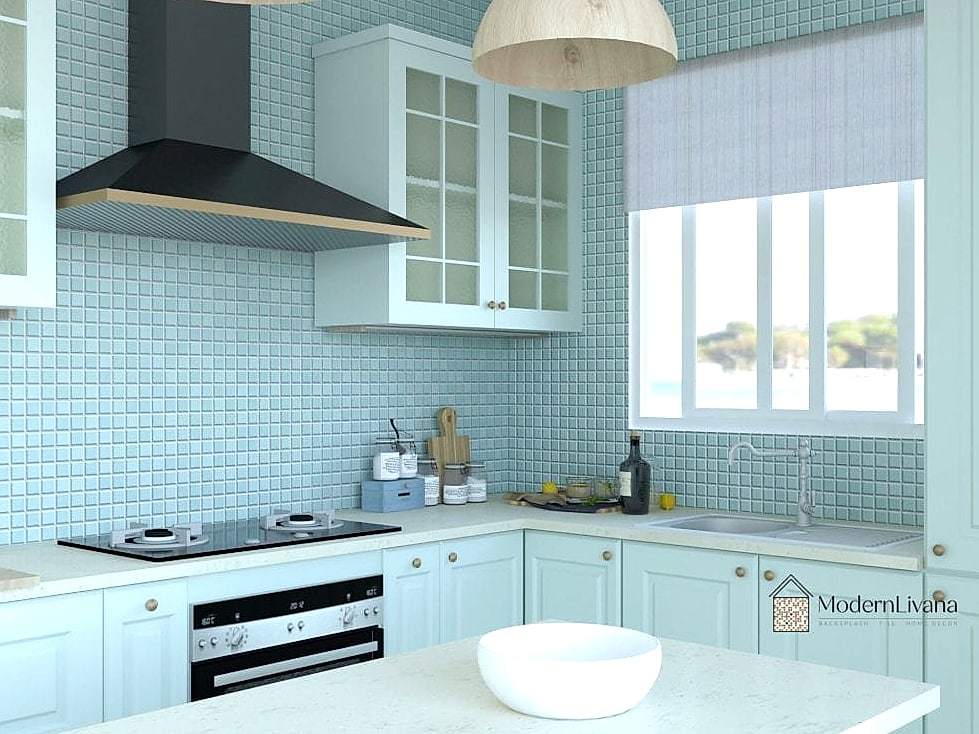
For a layered coastal look, combine blue mosaic tile with small amounts of natural stone. The mixture of ocean-inspired color and earthy neutrals creates a backsplash with plenty of visual depth.
This can work well in a larger kitchen where a simple tile might feel lost. Repeat the stone’s warm tones in wood accents, baskets, or countertop details so the materials feel connected.
Minimalist Coastal White-on-White Backsplash
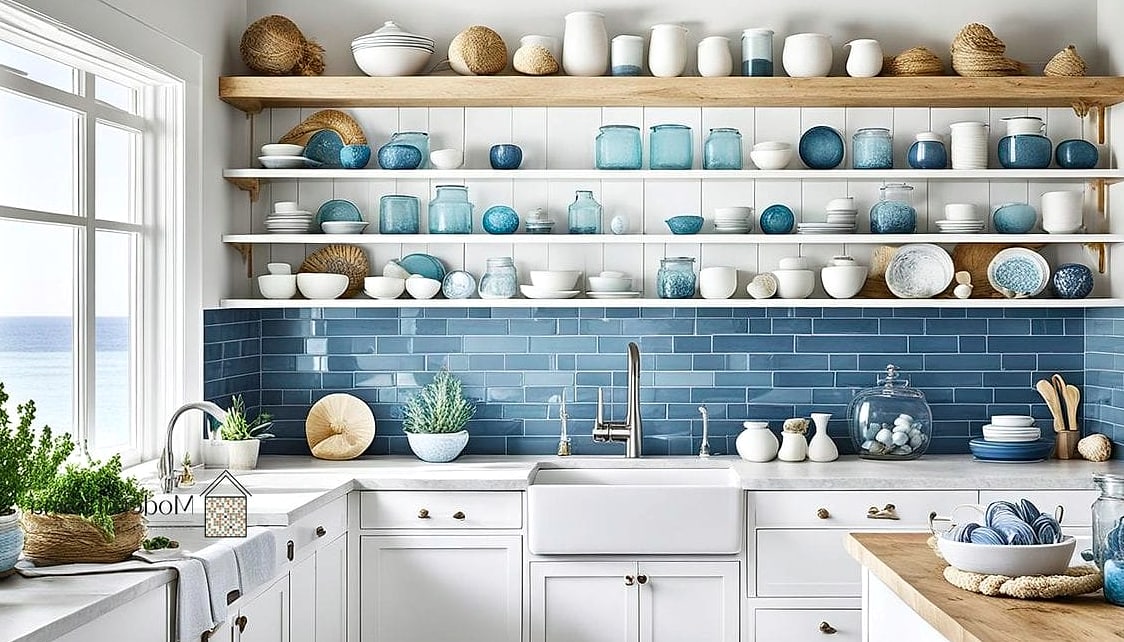
Sometimes the best coastal backsplash is the quietest one. White cabinets, white tile, and a pale countertop can create an airy backdrop that lets natural light do most of the decorating.
To keep an all-white kitchen from looking flat, mix finishes. Try glossy subway tile with matte quartz, textured ceramic with smooth cabinetry, or handmade tile with light oak shelving. A few plants and woven accents can provide warmth without adding visual clutter.
Coastal Glass Tile in Mixed Sea Tones
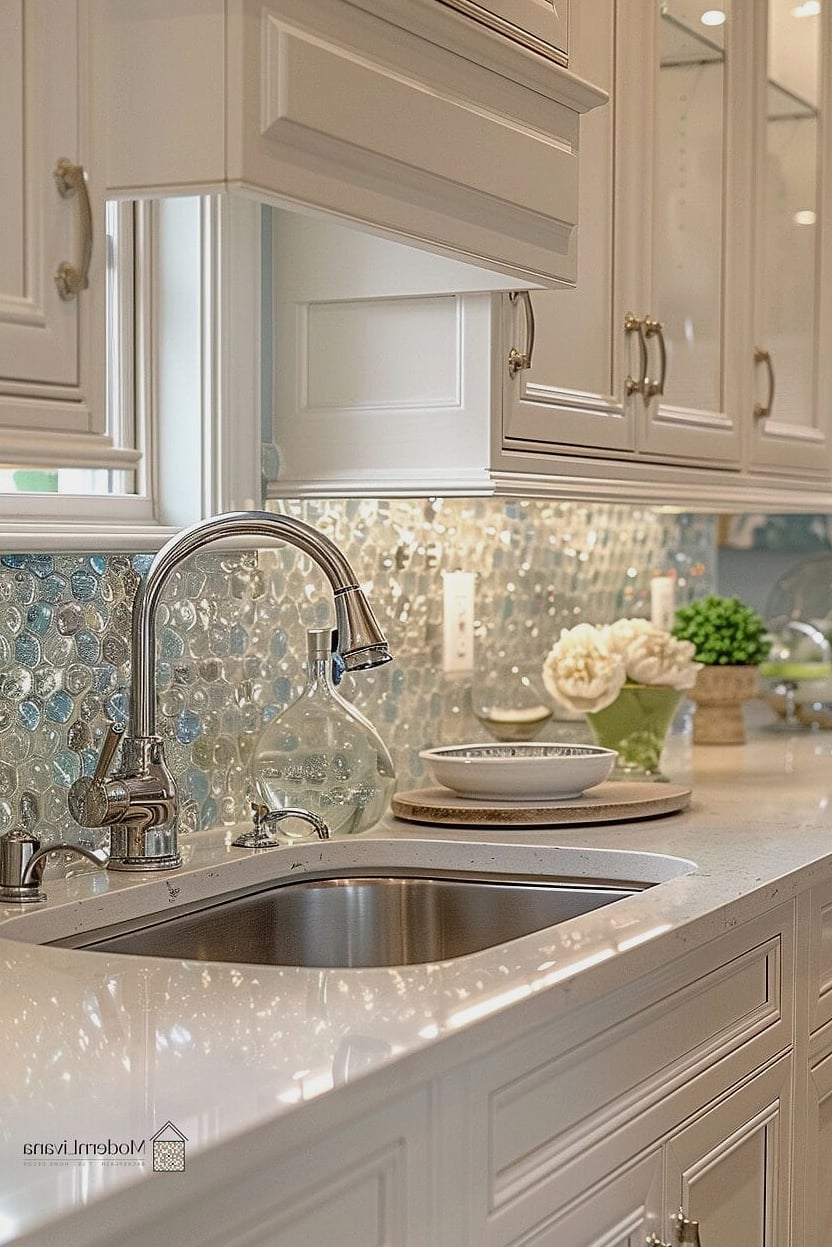
Mixed glass tile in pale blue, green, white, and gray can mimic the shifting colors of shallow water. It works especially well in kitchens with plenty of natural daylight because the surface catches and reflects light.
Use this approach as a full backsplash when the cabinetry is simple, or reserve it for a smaller accent area. Glass is easy to wipe clean, but installation can be less forgiving than standard ceramic tile, so precise layout and professional installation may be worthwhile for a large project.
Natural Wood-Look Tile Backsplash
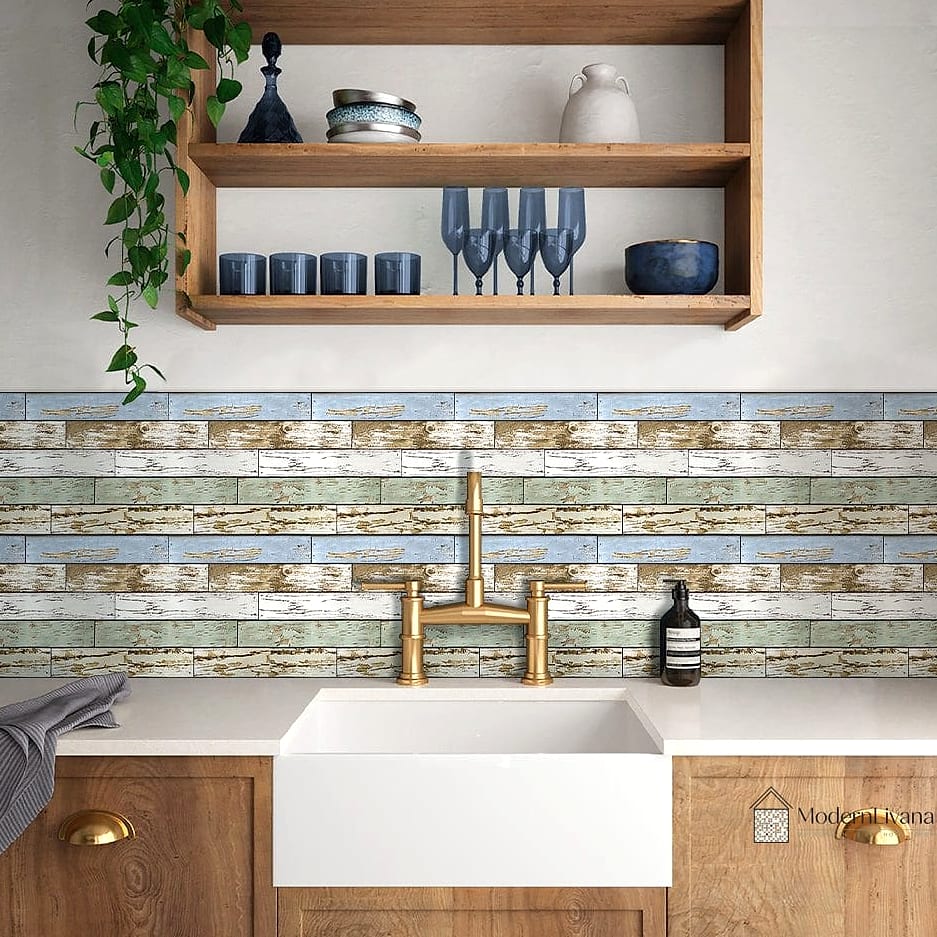
Wood-look porcelain tile brings warmth to a coastal kitchen without using actual wood behind the counters. Choose a pale oak, driftwood, or weathered finish and keep the plank scale relatively narrow for a backsplash application.
This idea works beautifully with white cabinets and stone countertops. It can also help connect a kitchen to adjacent wood flooring without requiring the backsplash to match it exactly.
Coastal Marble-and-Blue Tile Mix
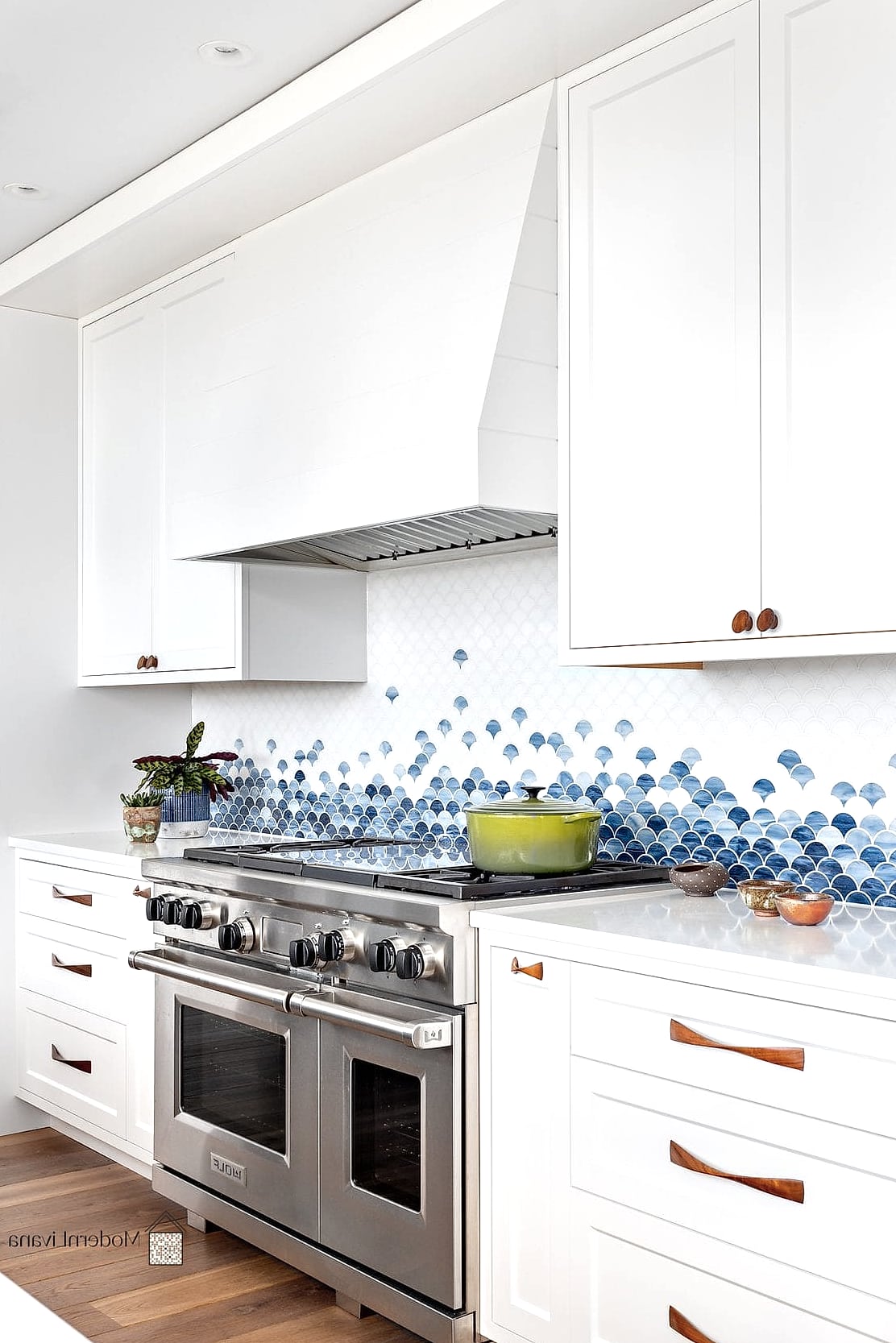
For a more customized backsplash, combine white marble with small amounts of muted blue tile. You might use marble subway tile across most of the wall with a blue mosaic inset behind the range.
This approach creates a focal point without covering the entire kitchen in pattern. It is also a good compromise when one person wants a colorful coastal backsplash and the other prefers a mostly neutral kitchen.
Final Thoughts on Coastal Backsplash Ideas
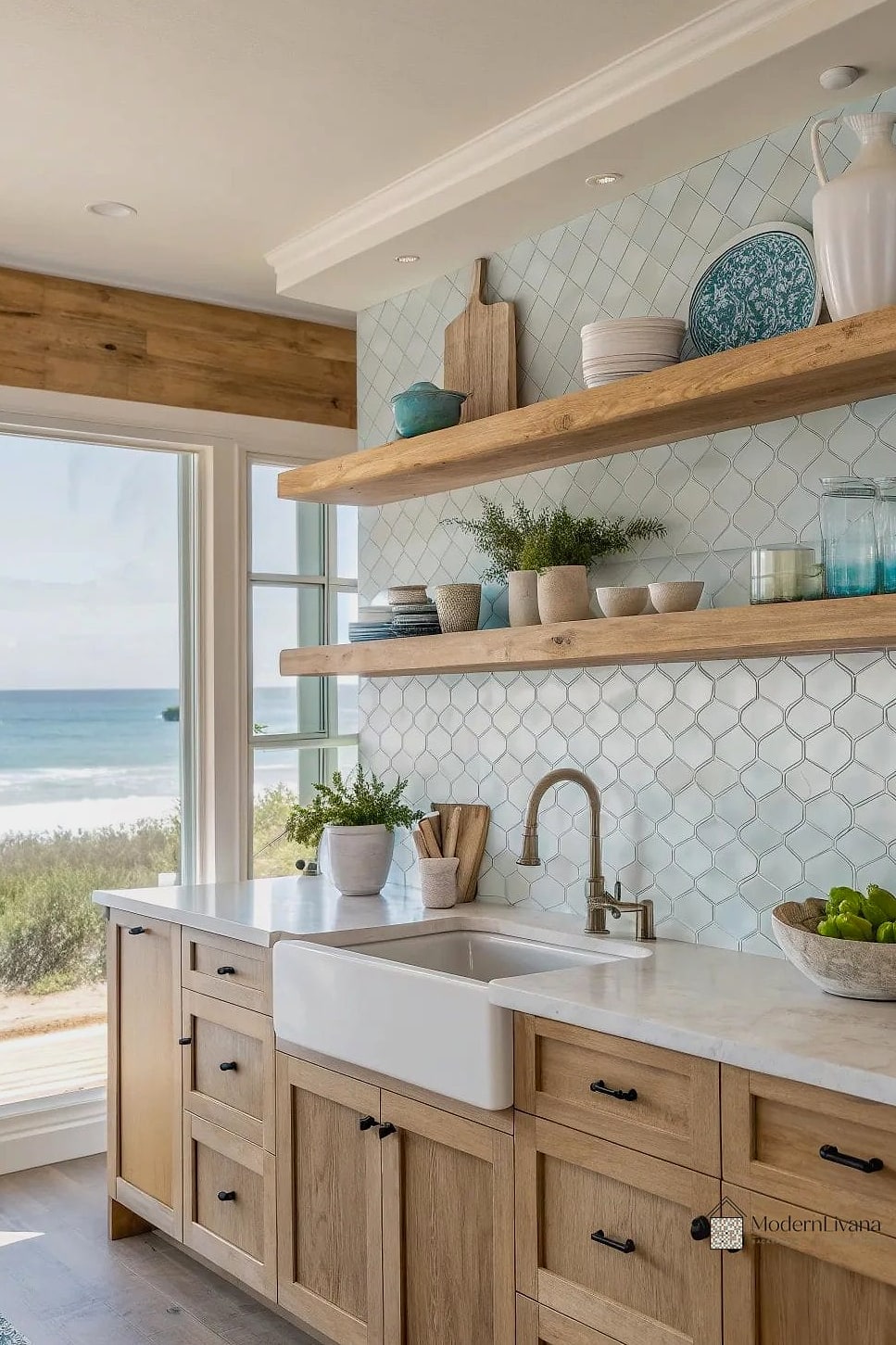
The best coastal backsplash ideas don’t necessarily feature seashells, anchors, or obvious beach motifs. Often, the look comes from a much simpler mix of light colors, natural materials, soft textures, and finishes that feel relaxed rather than overly coordinated.
If you’re remodeling on a budget, a basic subway tile in white, pale blue, or sand can give you plenty of coastal character. If you’re planning a larger renovation, handmade zellige, natural stone, marble, or a full-height installation can create a more custom result.
Before choosing your tile, look at the kitchen as a whole. Consider the cabinet color, quartz or butcher block countertops, flooring, lighting, and hardware. A backsplash should connect those pieces rather than compete with them.
And if you’re still deciding, save a few of these 30 Coastal Backsplash Ideas You’ll Want to Save Right Now and compare them in the actual light of your kitchen. The tile that looks perfect online may feel completely different next to your cabinets—and that little reality check can save you from an expensive backsplash mistake.