30 White Cabinets Ideas Perfect for Any Budget
- Classic Shaker Style Cabinets
- Flat Panel Slab Cabinets
- White Cabinets with Black Hardware
- Glossy White Lacquer Cabinets
- Matte White Cabinets
- White Cabinets with Warm Wood Accents
- Two-Tone Kitchen with White Uppers
- White Cabinets in a Small Galley Kitchen
- White Beadboard Cabinets
- White Cabinets with Glass Front Doors
- Painted White Cabinets on a Budget
- White Cabinets with Open Shelving
- White Shaker Cabinets with Marble Countertops
- White Cabinets with Butcher Block Counters
- All-White Kitchen with White Backsplash
- White Cabinets with Herringbone Backsplash
- White Cabinets in a Modern Farmhouse Kitchen
- White Cabinets with Brass Hardware
- White Bathroom Vanity Cabinets
- White Cabinets with Textured Doors
- White Cabinets with Under-Cabinet Lighting
- White Cottage Style Kitchen Cabinets
- White Cabinets with Colorful Island
- White Cabinets with Peel-and-Stick Backsplash
- White Cabinets with Statement Lighting
- White Cabinets in a Coastal Kitchen
- White Cabinets with Hidden Storage
- White Cabinets with Black Countertops
- White Laundry Room Cabinets
- White Cabinets with Two-Tone Hardware
- Custom Built-In White Cabinets for Living Spaces
30 White Cabinets Ideas Perfect for Any Budget
White cabinets never really go out of style, and there’s a good reason for that. They brighten up a room, they pair with almost any countertop or hardware finish, and they make even a small kitchen or bathroom feel bigger than it is. Whether you’re working with a tight budget or planning a full custom build, there’s a version of white cabinetry that fits. Here are 30 ideas to help you find the right look for your space.
Classic Shaker Style Cabinets
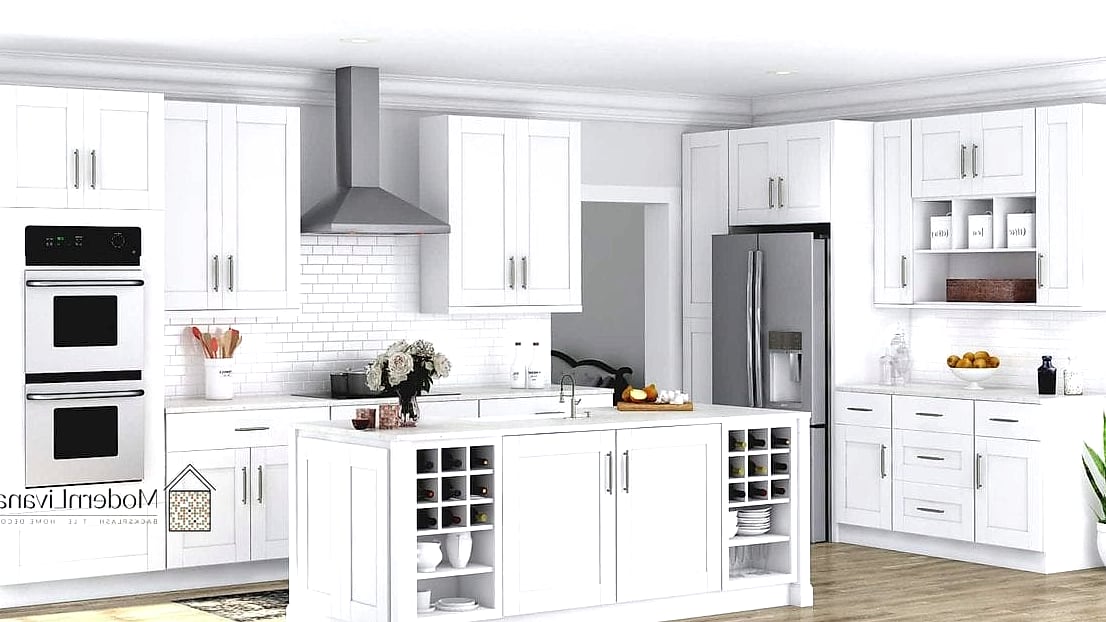
Shaker cabinets are the safest bet if you want something that will still look good in ten years. The clean recessed panel gives just enough detail without feeling fussy. They work in farmhouse kitchens, modern spaces, and everything in between. You can find them at big box stores for a budget remodel or get them custom built for a higher-end finish.
Flat Panel Slab Cabinets
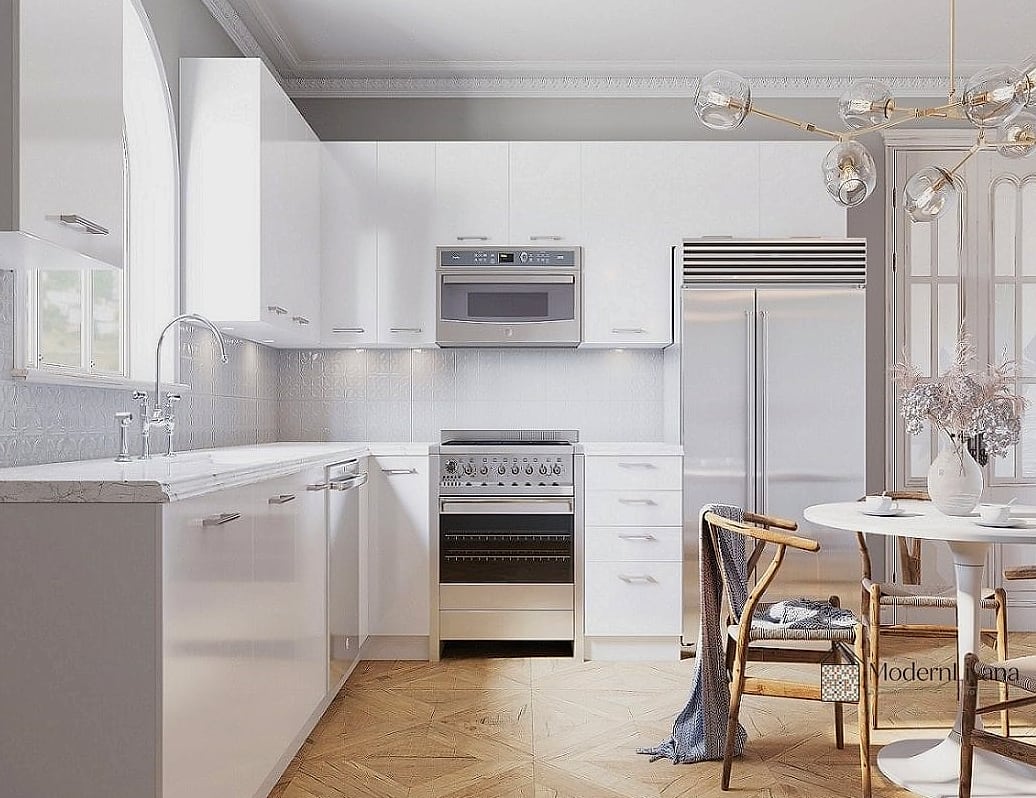
If you want something more streamlined, flat panel cabinets skip the detailing entirely. This look leans modern and pairs beautifully with brushed brass or matte black hardware. It’s also easier to wipe down since there’s no groove for grease and dust to collect in. Great option for anyone who wants a minimalist kitchen.
White Cabinets with Black Hardware
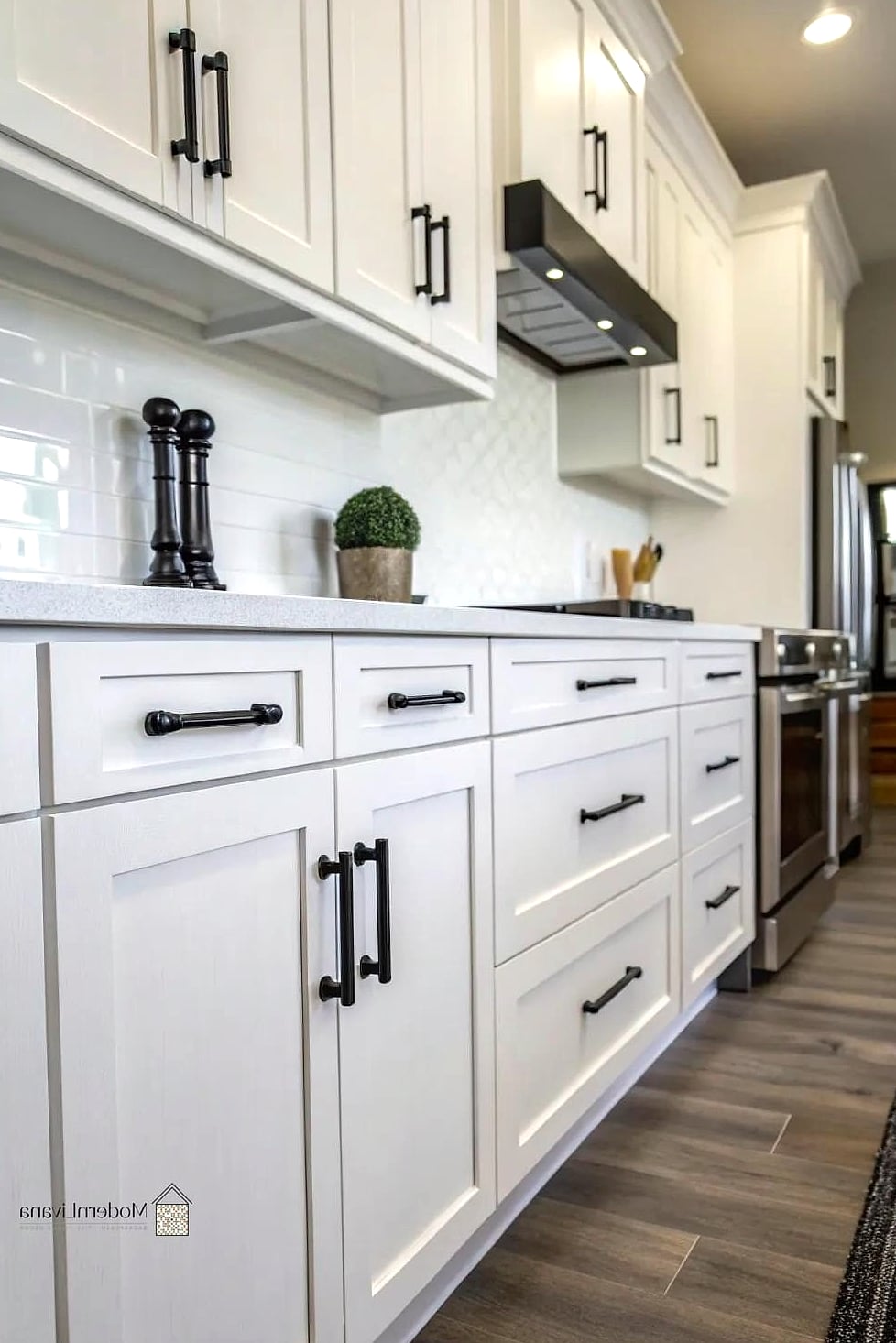
This combo has been everywhere lately, and for good reason. The contrast makes the hardware feel intentional instead of an afterthought. It works on shaker or flat panel doors and instantly makes a builder-grade kitchen look more custom. Swapping hardware is also one of the cheapest updates you can make.
Glossy White Lacquer Cabinets
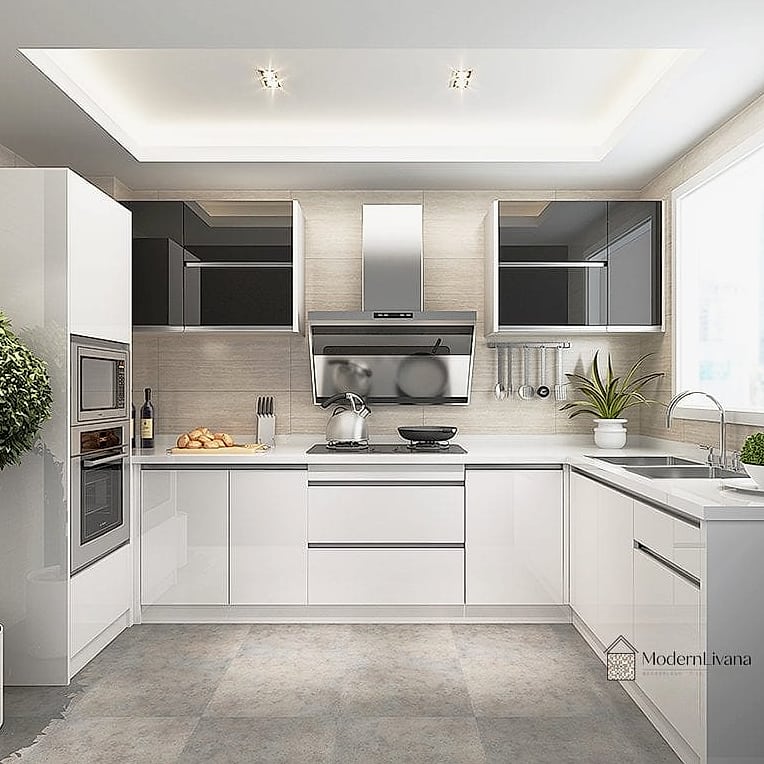
For a sleeker, more dramatic look, high-gloss lacquer cabinets reflect light beautifully and read as very modern. They show fingerprints more than matte finishes, so they’re better suited to households without a lot of little hands touching everything. Worth it if you love that polished, almost showroom feel.
Matte White Cabinets
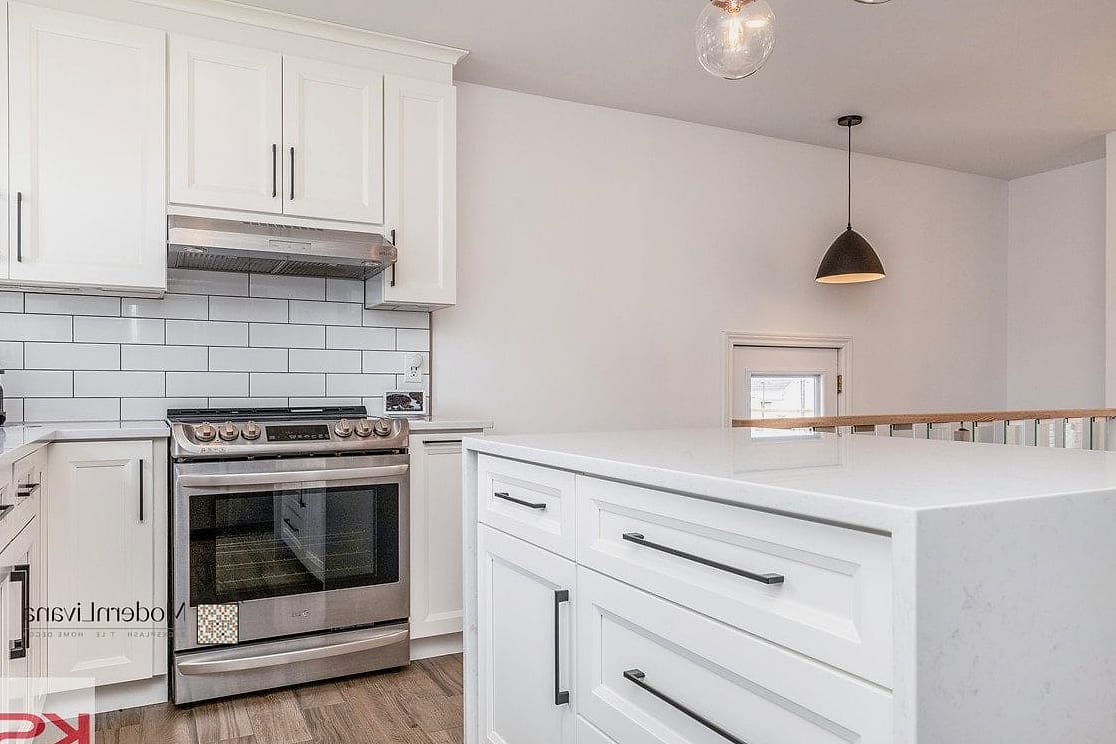
Matte finishes have grown in popularity because they hide smudges and fingerprints so much better than glossy ones. They also give a softer, more understated look that works well in modern farmhouse or Scandinavian-inspired kitchens. A good choice for busy families who don’t want to be wiping down doors all day.
White Cabinets with Warm Wood Accents
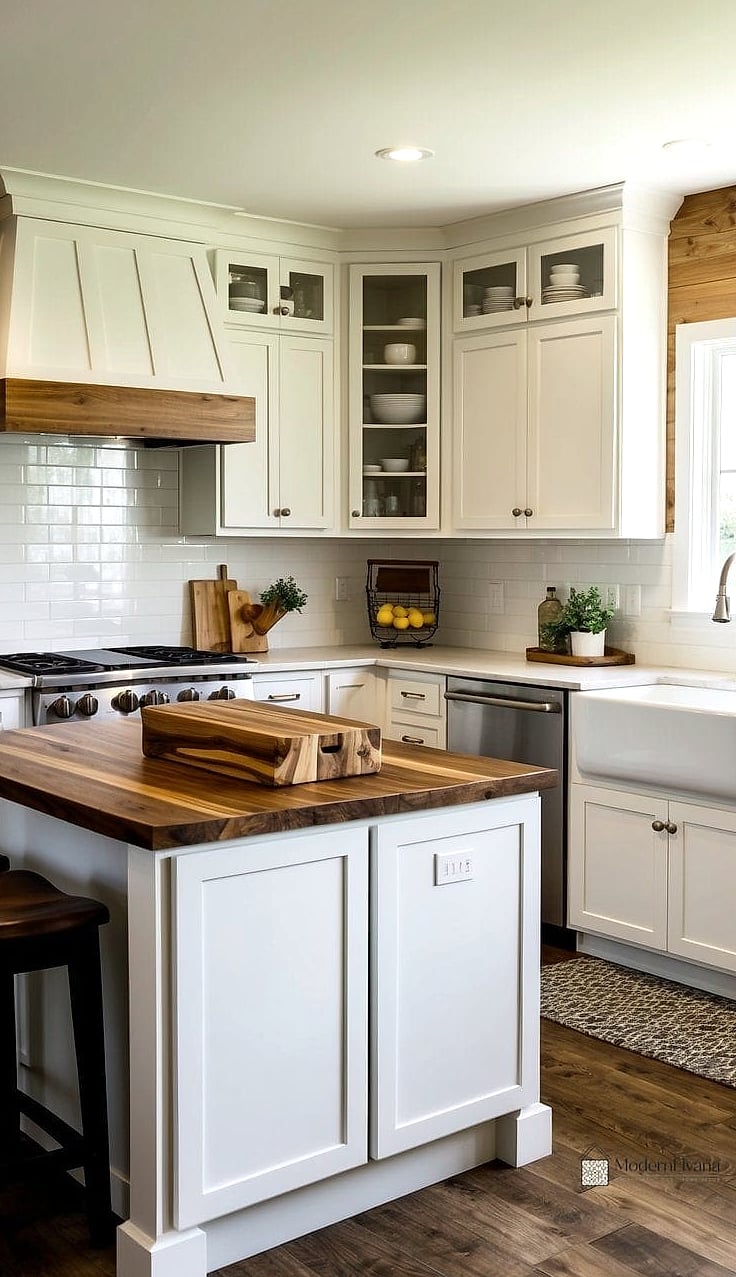
Pairing white cabinetry with warm wood tones keeps a kitchen from feeling too sterile or clinical. You might add a wood island, open shelving, or a butcher block section on one wall. This mix has real staying power because it balances brightness with warmth.
Two-Tone Kitchen with White Uppers
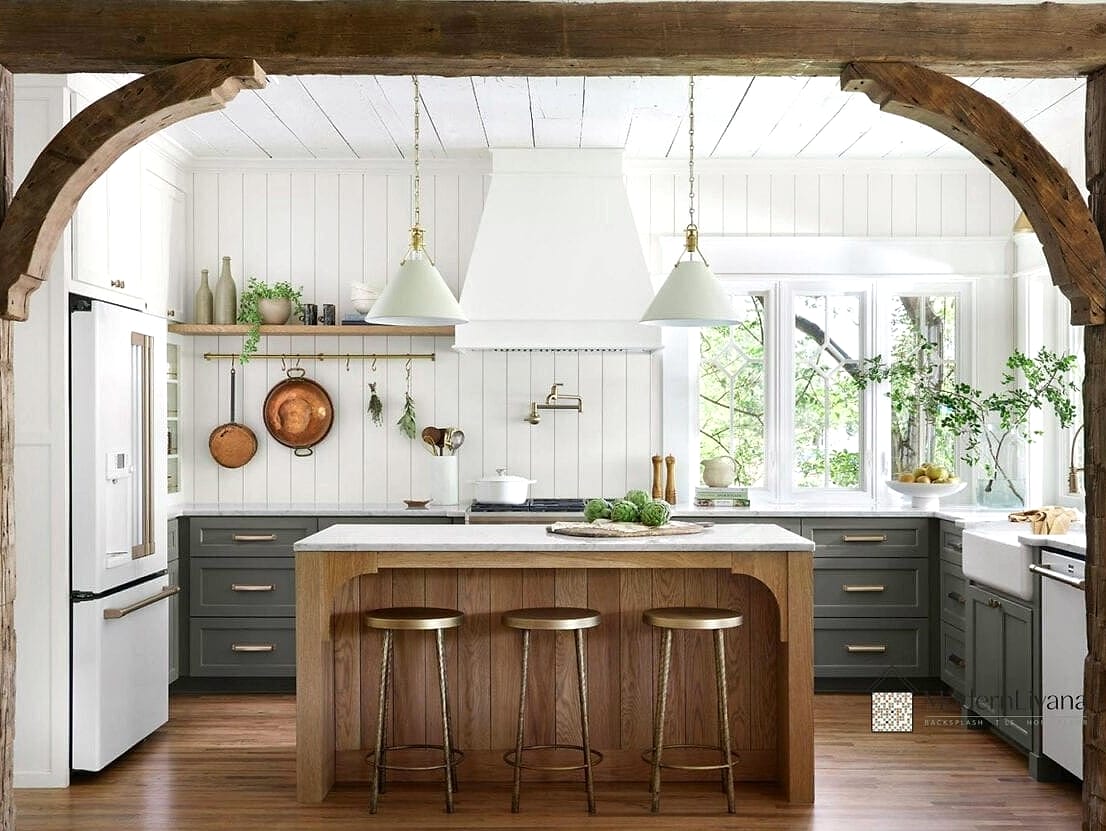
A popular way to add contrast without going all-in on a bold color is keeping upper cabinets white and choosing a deeper shade for the lower cabinets. Navy, sage green, and charcoal are common pairings. This approach also helps hide scuffs near the floor where they’re most likely to happen.
White Cabinets in a Small Galley Kitchen
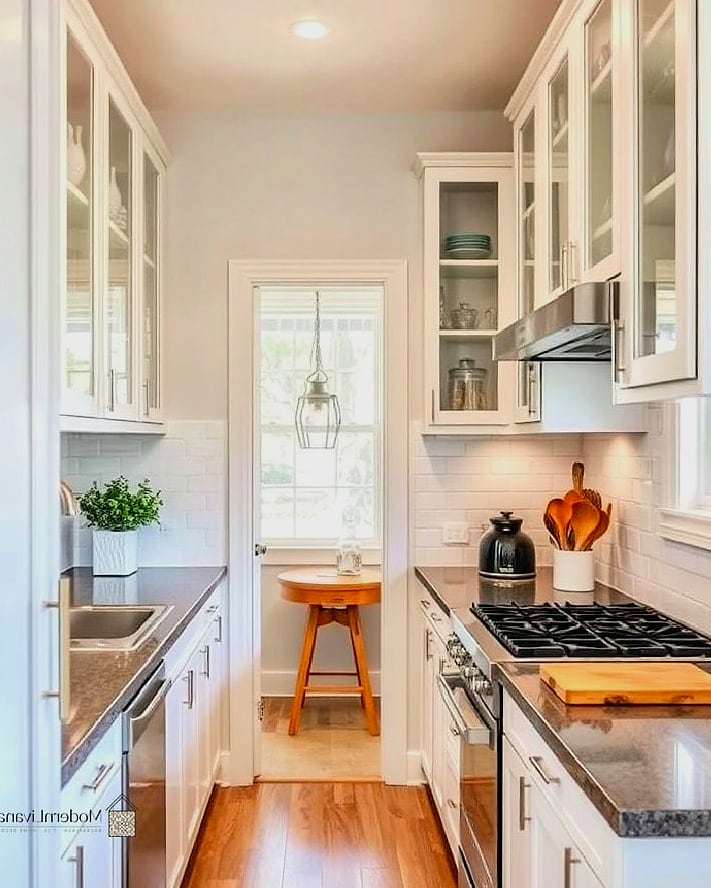
Small kitchens benefit the most from white cabinetry because it reflects light and makes narrow spaces feel less closed in. Pair with light countertops and a simple backsplash to keep things feeling open rather than cluttered. Glossy finishes can help bounce even more light around a tight galley layout.
White Beadboard Cabinets
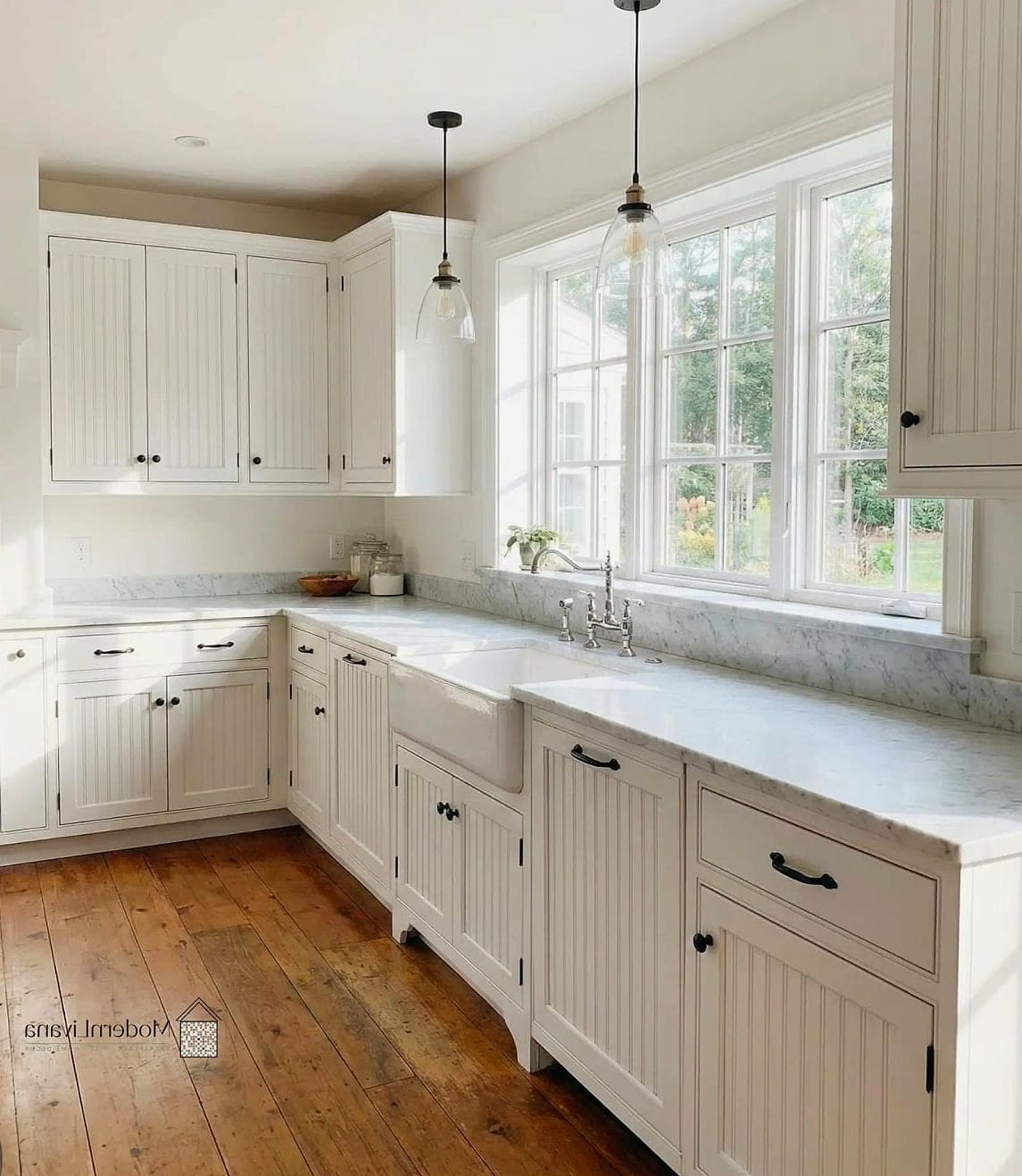
Beadboard detailing brings a cottage or coastal feel to white cabinets. The vertical grooves add texture without overwhelming the space. This style tends to show up a lot in farmhouse kitchens and vacation homes where a relaxed, lived-in vibe is the goal.
White Cabinets with Glass Front Doors
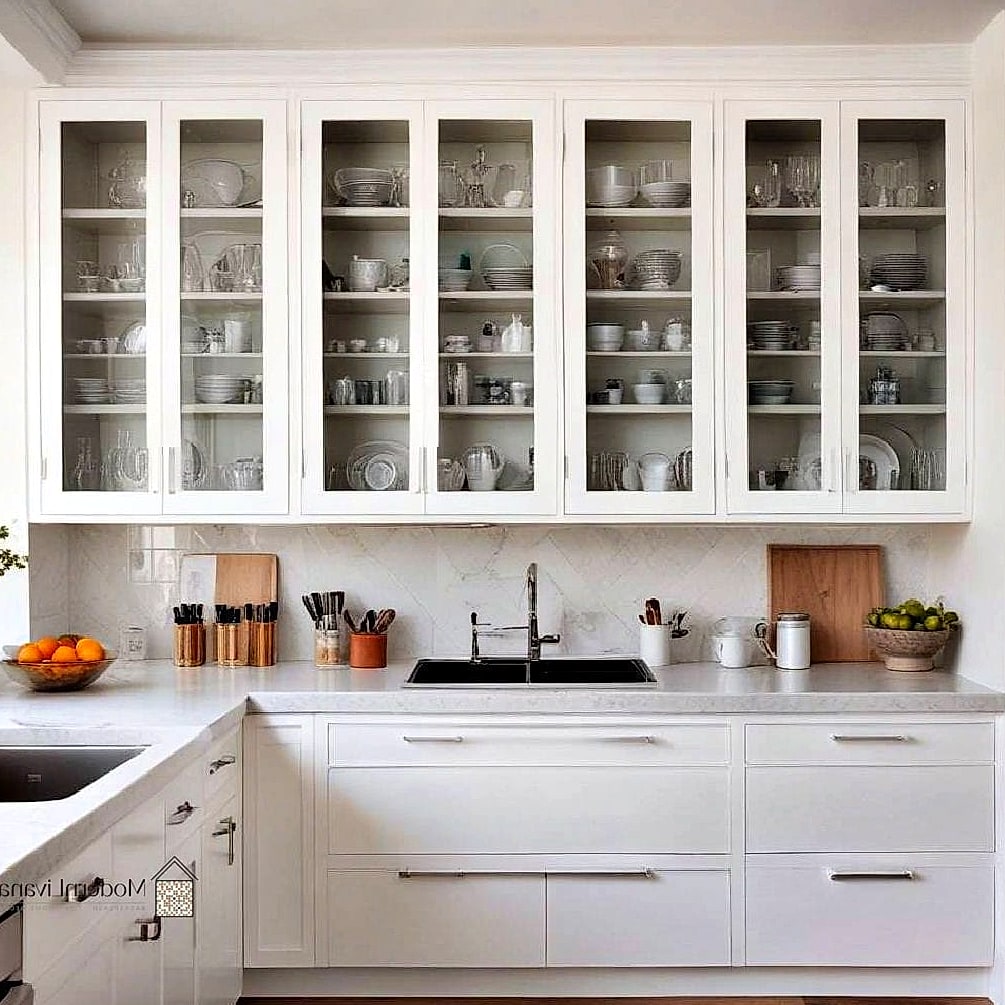
Swapping a few upper cabinet doors for glass is an easy way to break up a wall of solid white and show off pretty dishware. It also keeps things feeling lighter visually. Just know it does require a bit more upkeep since everything inside is on display.
Painted White Cabinets on a Budget
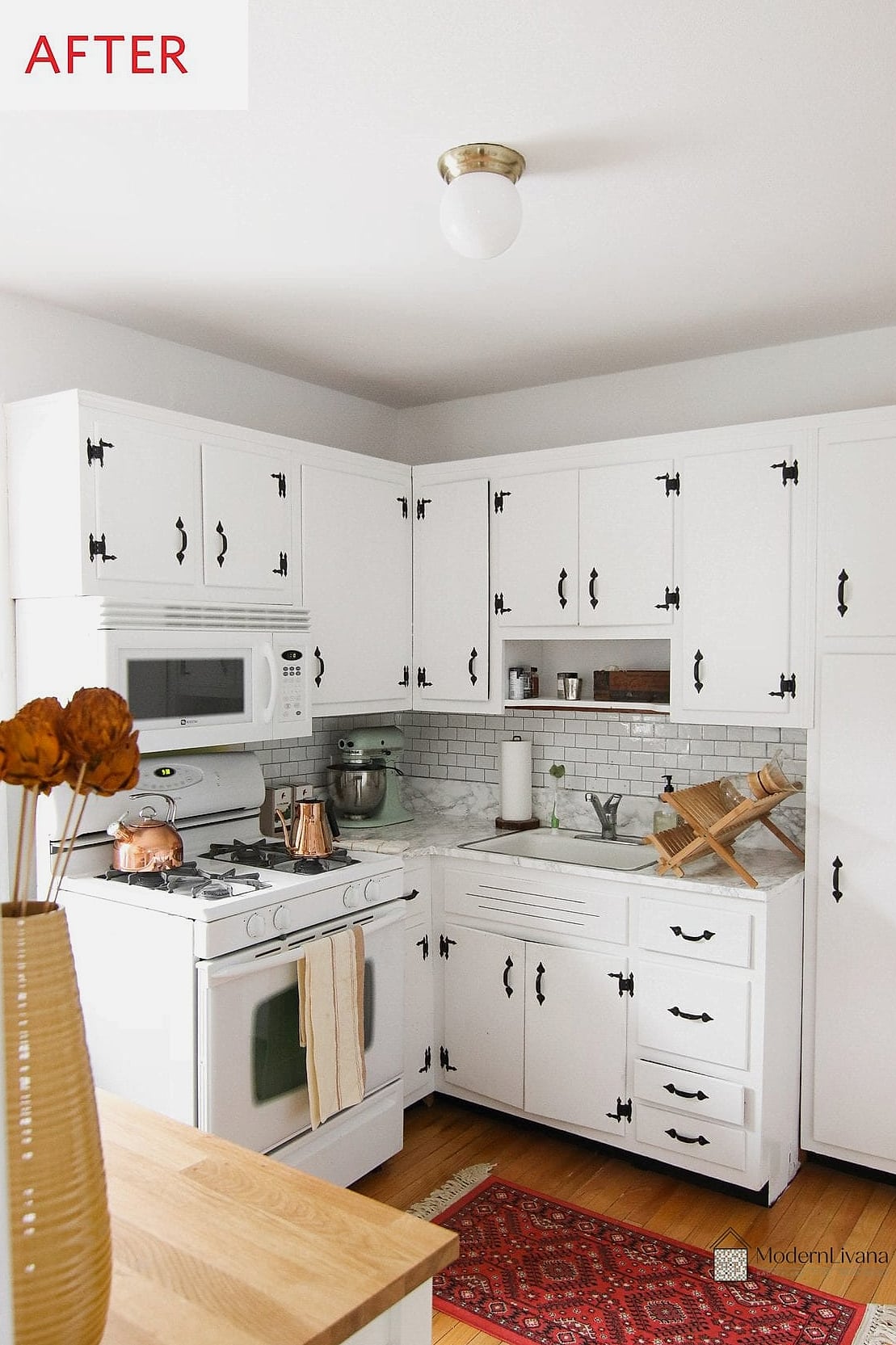
If new cabinets aren’t in the budget, painting your existing ones is a legitimate way to get the same look for a fraction of the cost. A good primer and a durable cabinet-grade paint make a huge difference in how long the finish lasts. This is one of the most requested DIY kitchen projects for a reason.
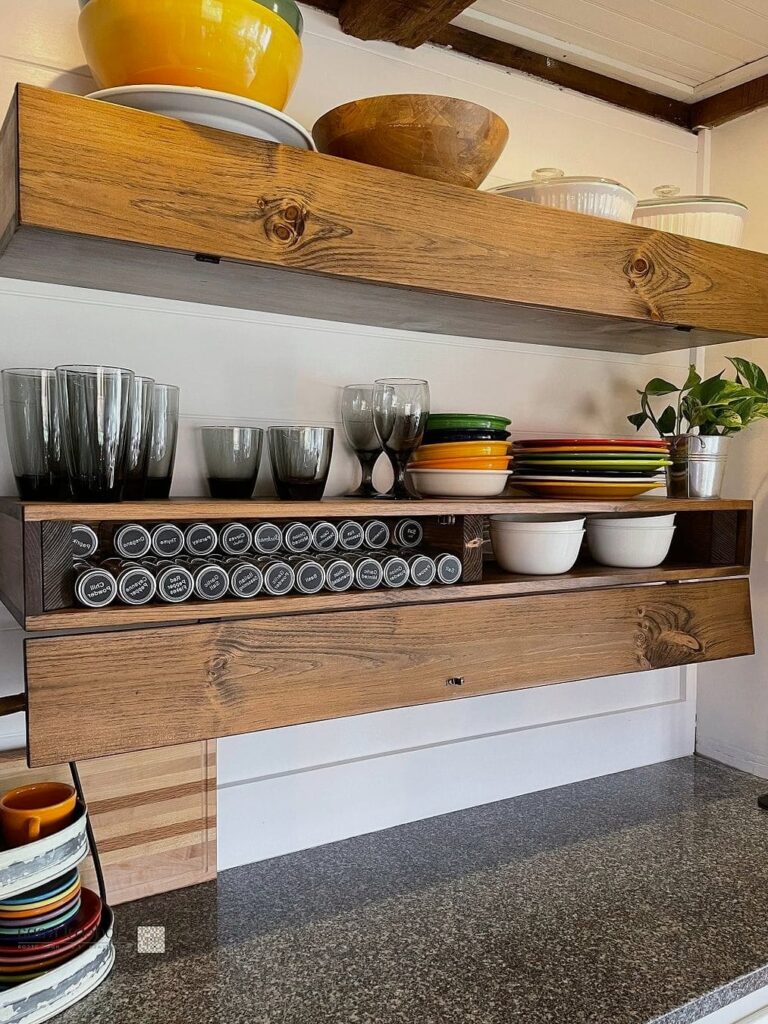
White Cabinets with Open Shelving
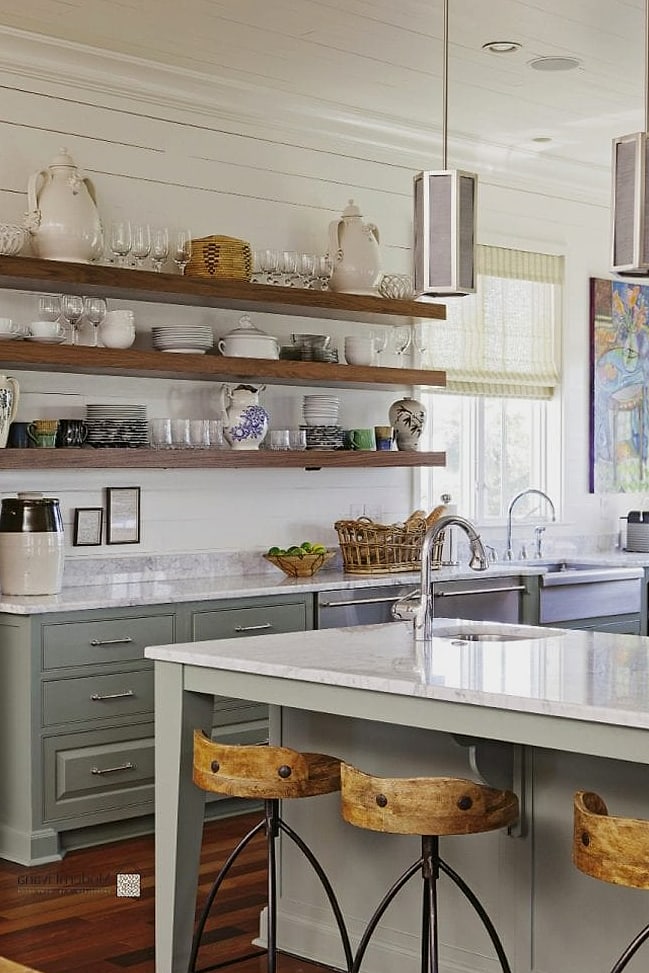
Mixing in open shelves alongside white cabinetry adds visual interest and gives you a spot to display everyday dishes or a few plants. It works especially well in kitchens that already feel a little boxed in. Just keep the shelves curated since open storage shows clutter fast.
White Shaker Cabinets with Marble Countertops
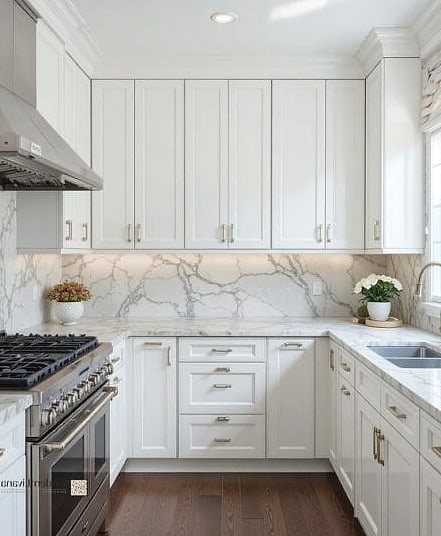
This is the pairing most people picture when they think of a classic white kitchen. The subtle veining in marble adds movement against the flat white cabinet doors. Quartz with a marble-look pattern is a more budget-friendly and low-maintenance alternative if real marble feels like too much upkeep.
White Cabinets with Butcher Block Counters
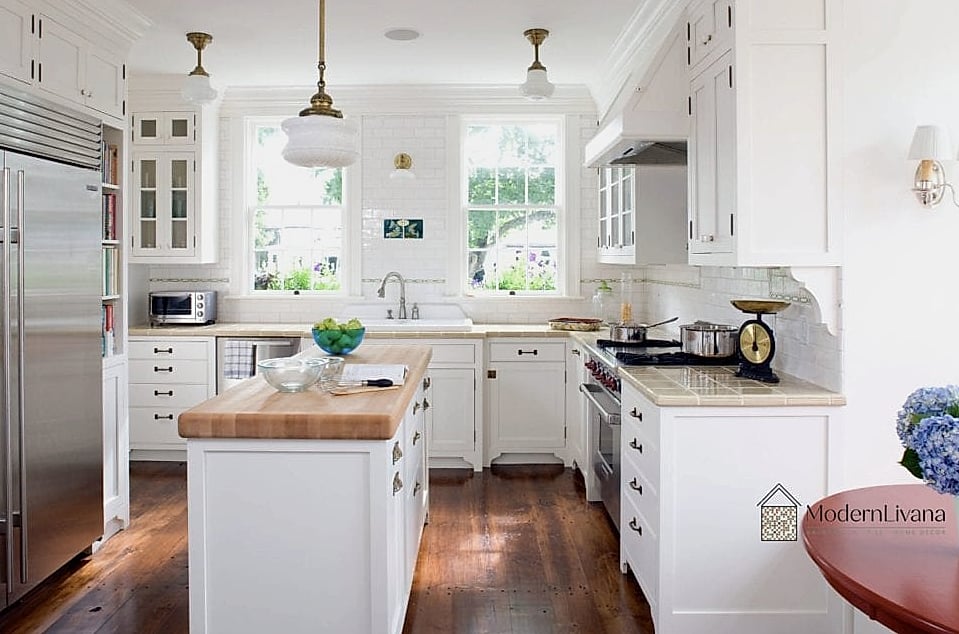
For a warmer, more farmhouse-leaning kitchen, butcher block counters bring in wood tone without adding a full accent wall or island. They’re also fairly renter-friendly since sections can sometimes be added without permanent changes. Just remember they need regular oiling to stay protected.
All-White Kitchen with White Backsplash
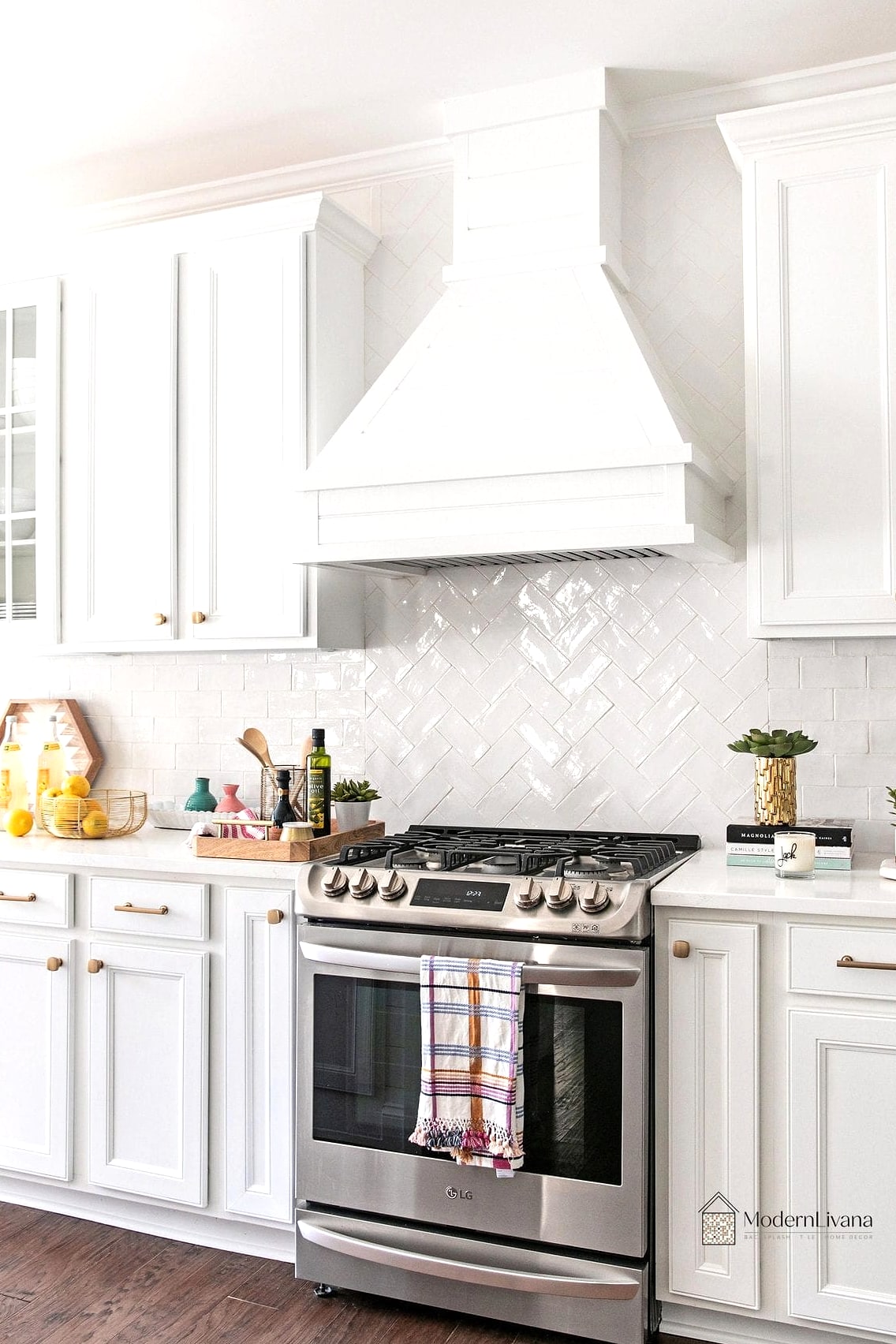
Going monochromatic with white cabinets, white countertops, and a white subway tile backsplash creates a bright, airy feel that photographs beautifully. To keep it from feeling flat, vary the textures and finishes, like a matte cabinet with a glossy tile. Adding black or wood accents keeps this look from feeling too sterile.
White Cabinets with Herringbone Backsplash
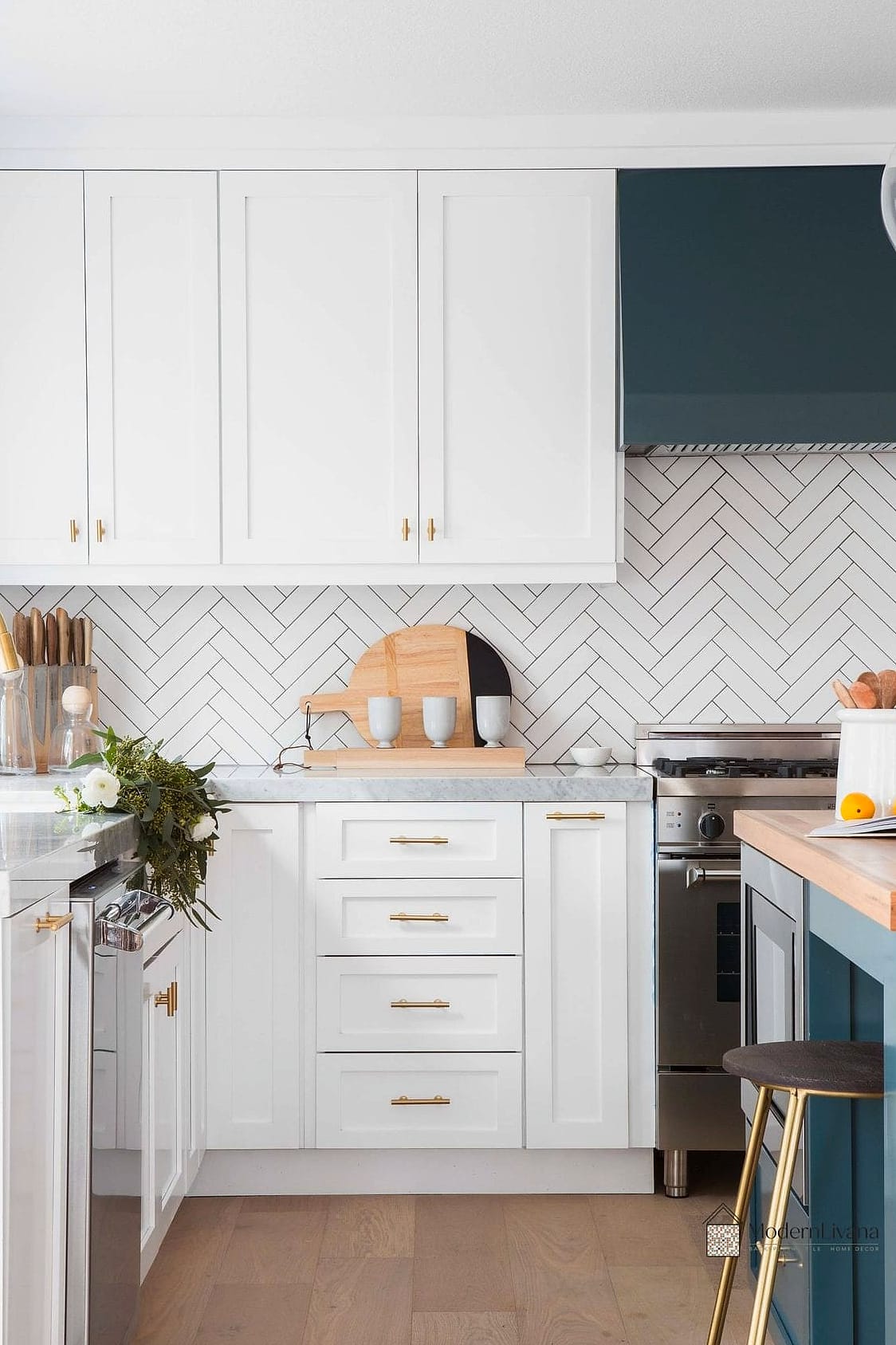
A herringbone pattern backsplash adds movement and pattern against simple white cabinetry. It works with subway tile, zellige tile, or even mosaic tile depending on the vibe you’re after. This is a great way to add personality without introducing a lot of extra color.
White Cabinets in a Modern Farmhouse Kitchen
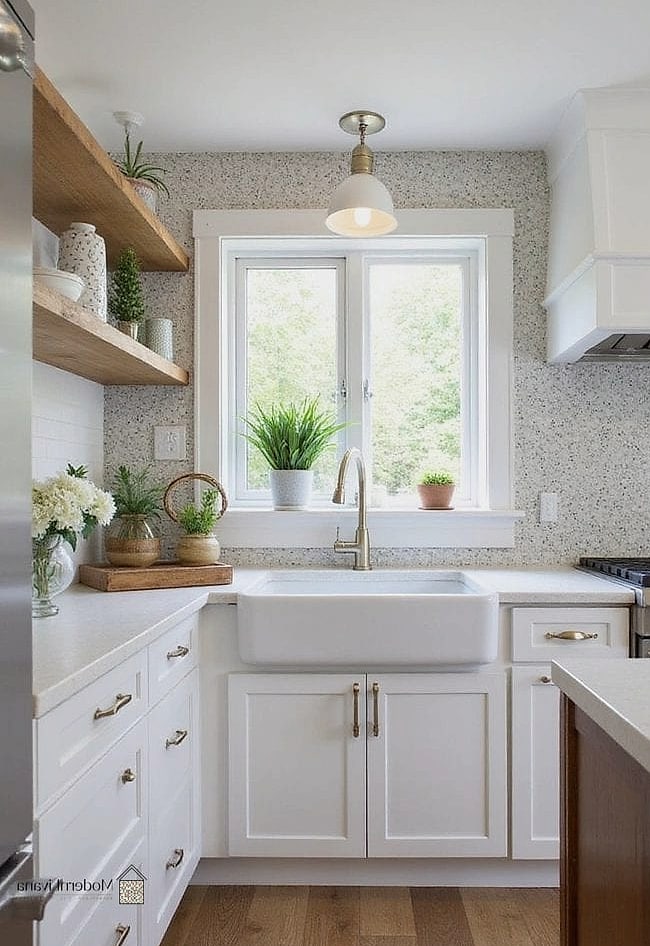
Modern farmhouse kitchens usually combine white shaker cabinets with black hardware, a farmhouse sink, and some wood or shiplap detailing. It’s a look that’s stayed popular because it’s warm and welcoming without feeling dated. Open shelving with baskets is a common addition here too.
White Cabinets with Brass Hardware
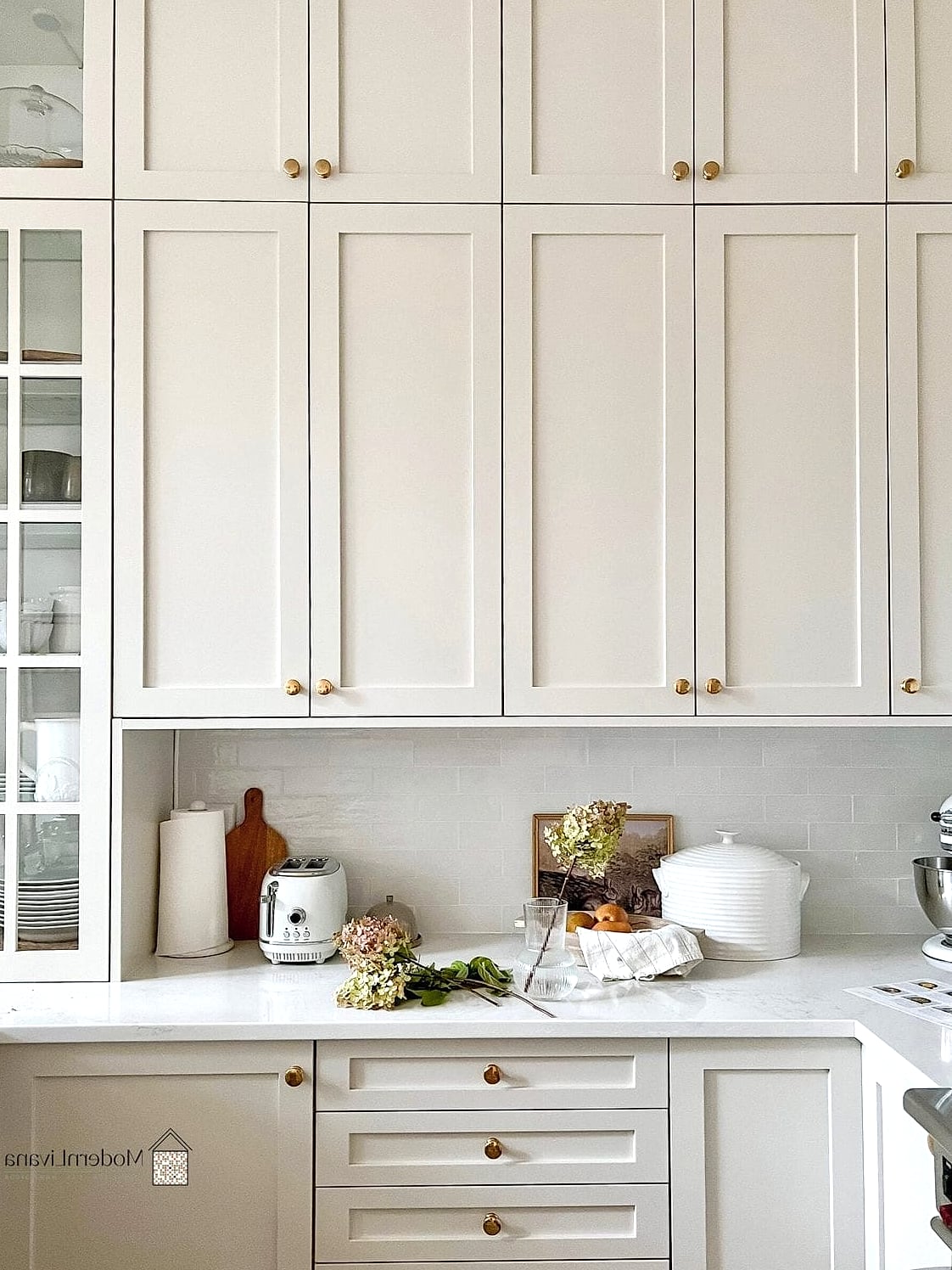
Brushed brass hardware against white cabinets gives a warmer, more traditional feel compared to black or chrome. It pairs especially well with warm wood floors and neutral color palettes. A relatively inexpensive swap if you already have white cabinets and want to change the mood of the room.
White Bathroom Vanity Cabinets
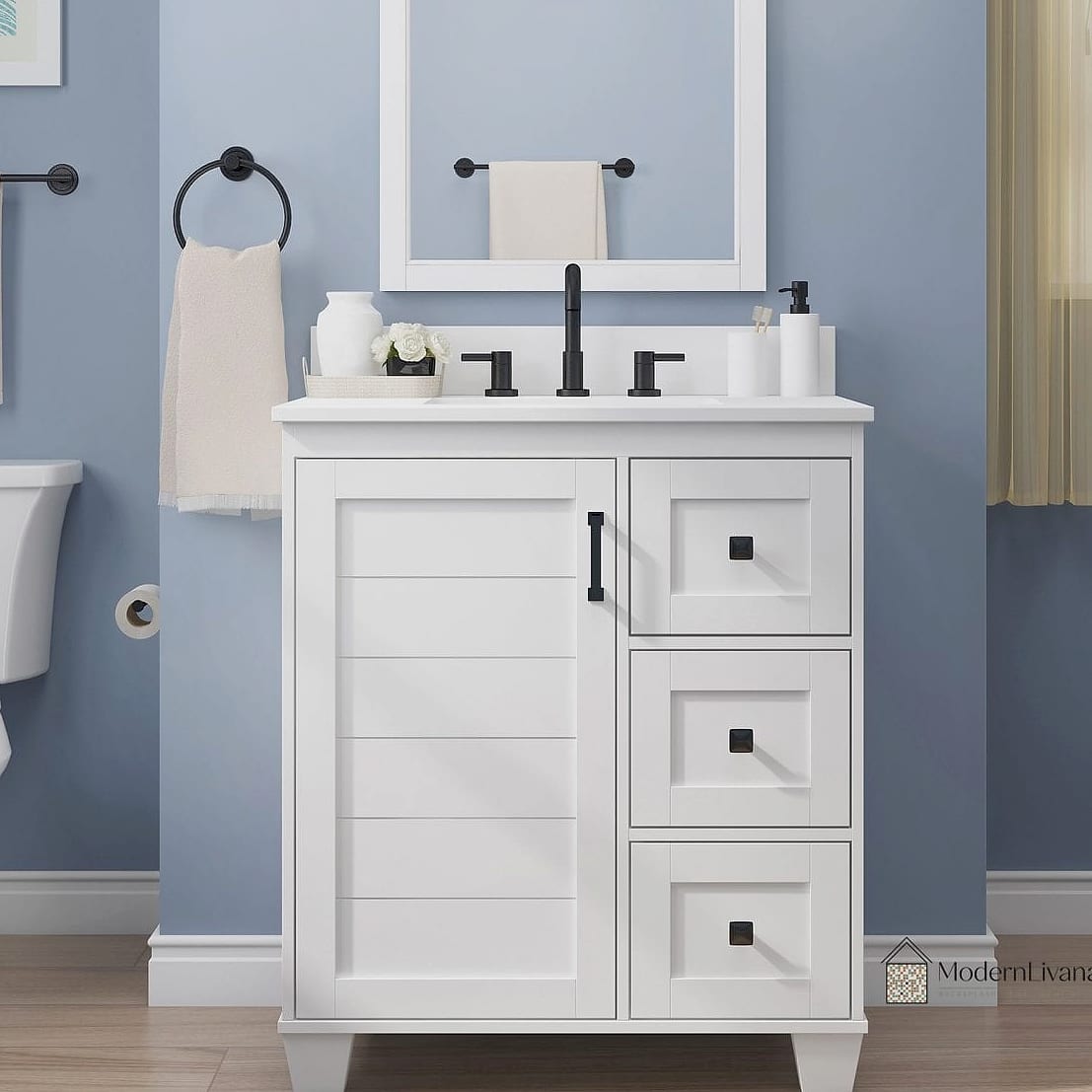
White vanities make small bathrooms feel cleaner and brighter, especially paired with a simple mirror and updated lighting. Shaker style vanities are widely available at different price points, so this is an easy area to upgrade without a full bathroom remodel. Adding drawer organizers inside keeps everyday items tidy.
White Cabinets with Textured Doors
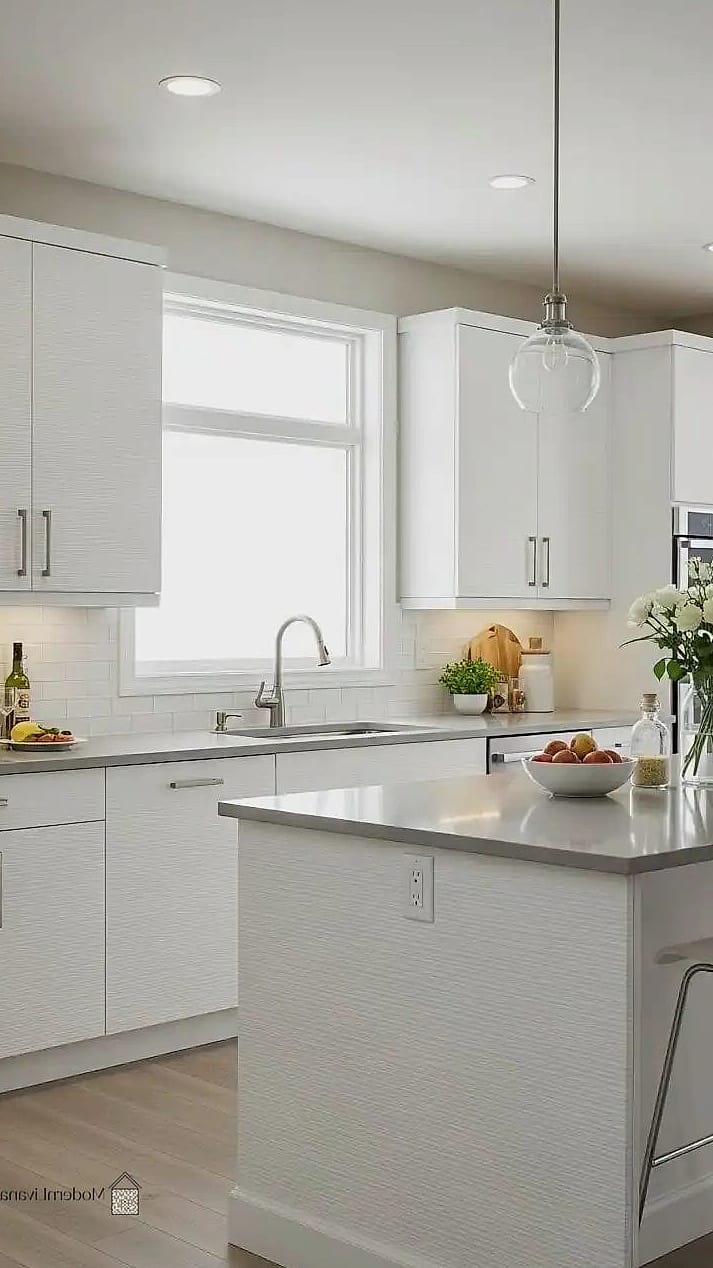
Beyond shaker and flat panel, there are cabinet doors with subtle textures like fluting or ribbing that add depth to an all-white kitchen. These details catch light differently throughout the day, which keeps a plain white kitchen from feeling flat. A nice option if you want something a little more custom looking.
White Cabinets with Under-Cabinet Lighting
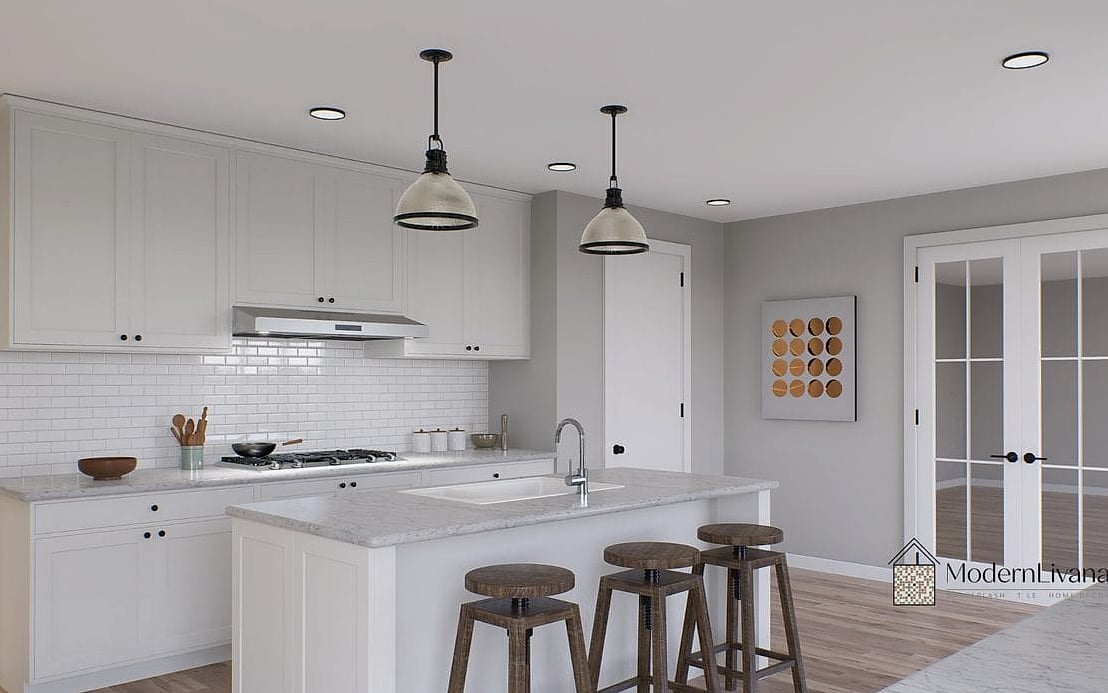
Adding LED strip lighting underneath white upper cabinets does two things: it’s practical for counter tasks and it makes the whole kitchen feel more layered at night. Layered lighting is one of those details that photographs well and genuinely improves everyday cooking. Relatively simple as a DIY project too.
White Cottage Style Kitchen Cabinets
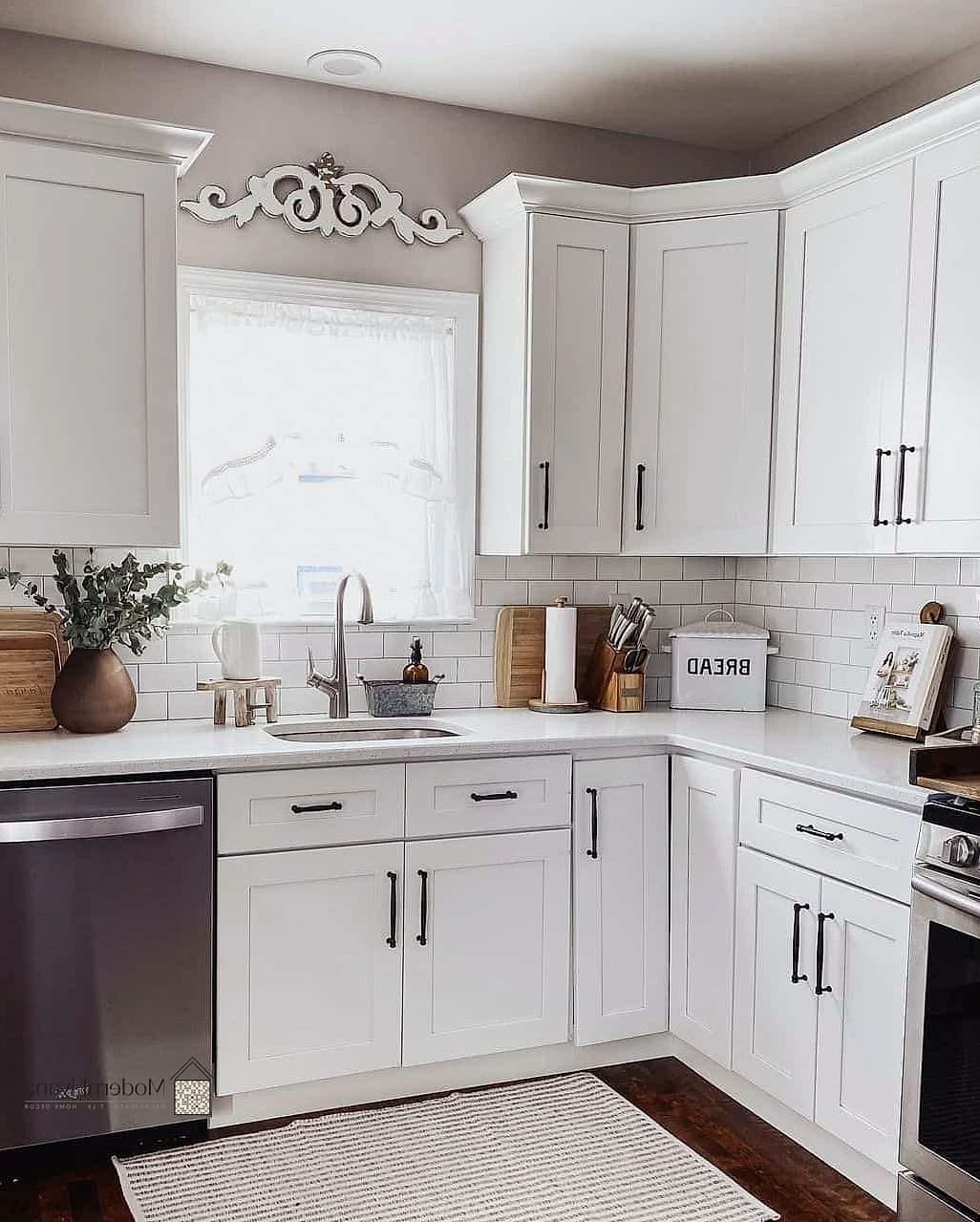
Cottage style leans into softer edges, sometimes with slightly arched cabinet doors or vintage-inspired hardware. Pair with a farmhouse sink and open shelving for a cozy, collected look. This style works especially well in older homes with a lot of natural character already built in.
White Cabinets with Colorful Island
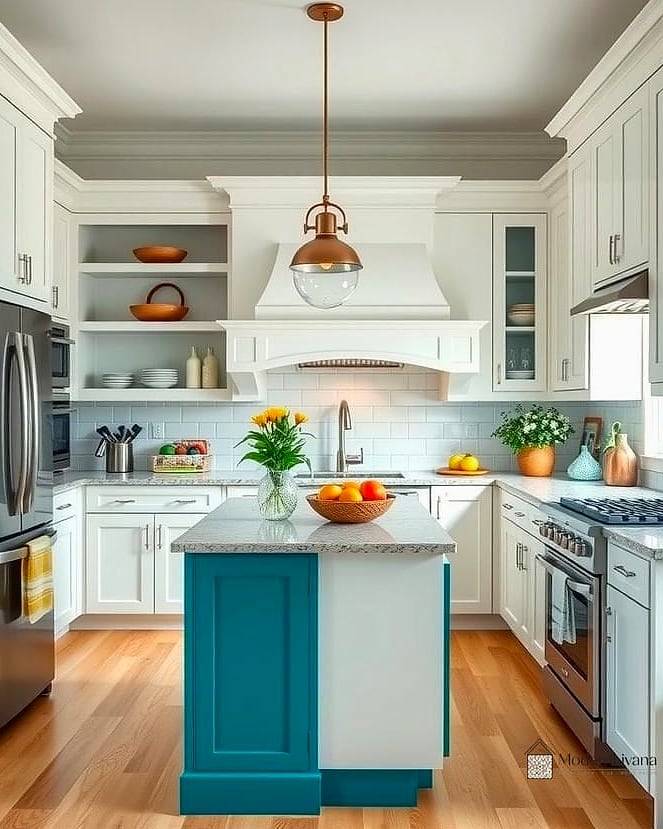
Keeping perimeter cabinets white while giving the island a pop of color is a popular way to add personality without overwhelming the whole kitchen. Sage green, navy, and even deep red islands have all had their moment. It’s also easier to change later if you want to update the color down the road.
White Cabinets with Peel-and-Stick Backsplash
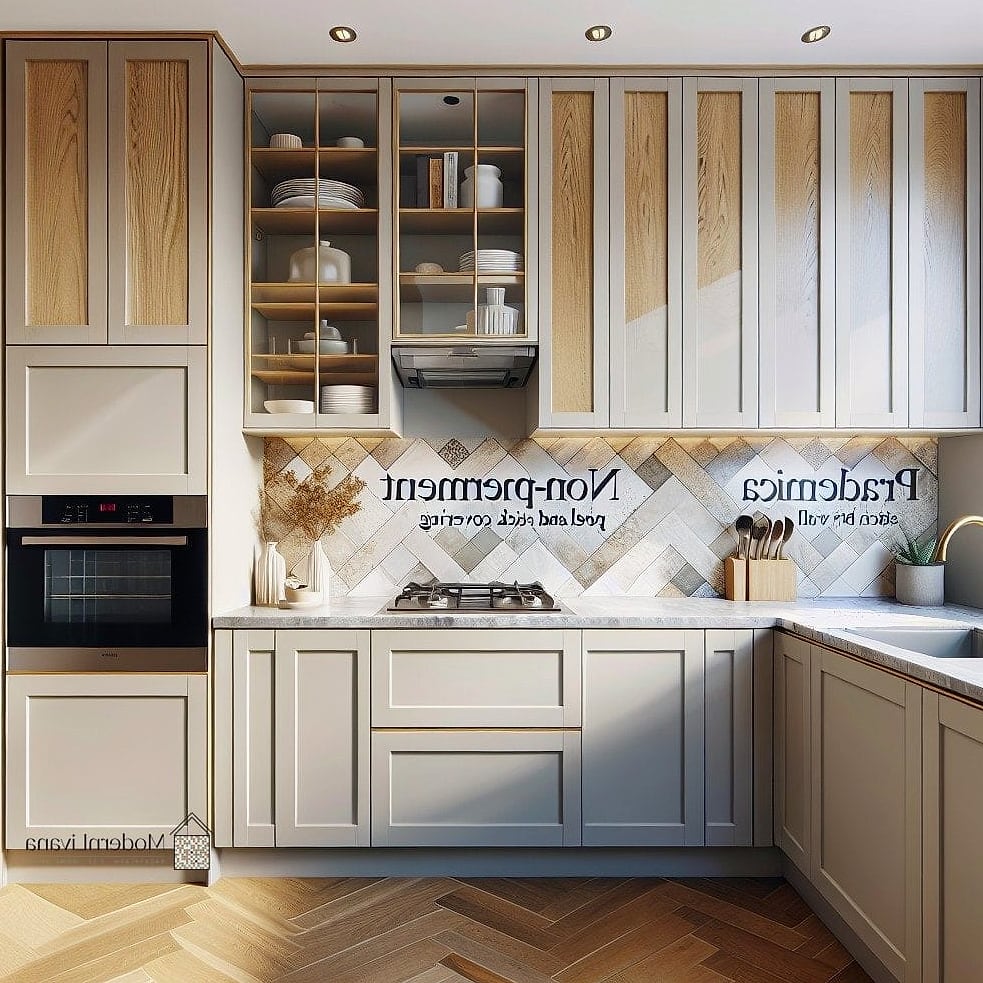
For renters or anyone on a tight budget, peel-and-stick tile is a genuinely useful way to add a finished look behind white cabinets without a full tile installation. Quality has improved a lot in recent years, with options that mimic subway tile, mosaic patterns, and even zellige tile. Easy to remove if you move out.
White Cabinets with Statement Lighting
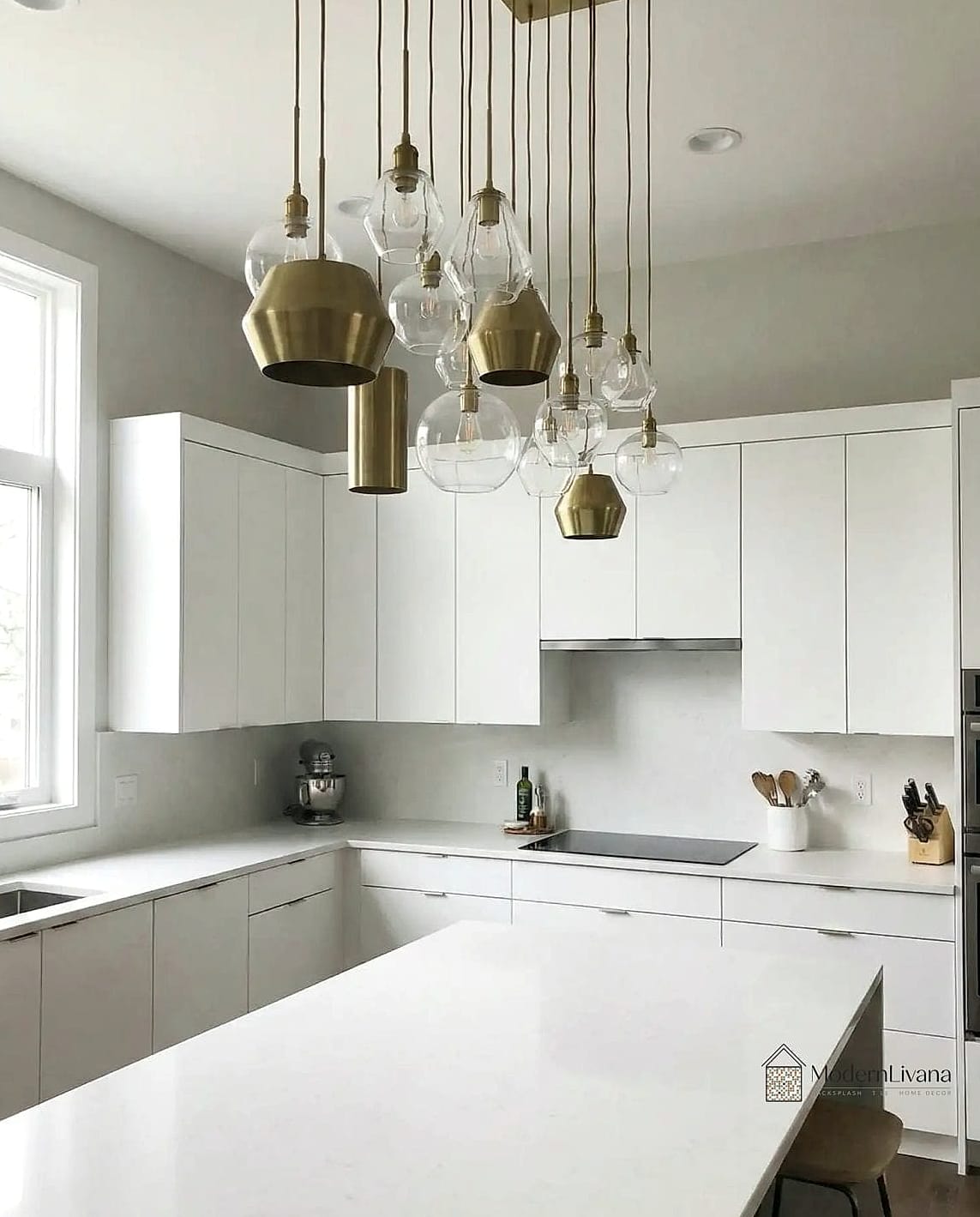
A bold pendant light or chandelier over an island stands out even more against simple white cabinetry. Since the cabinets themselves are neutral, this is a great place to take a risk with a more unique fixture. It’s one of the easier ways to make a kitchen feel designed rather than default.
White Cabinets in a Coastal Kitchen
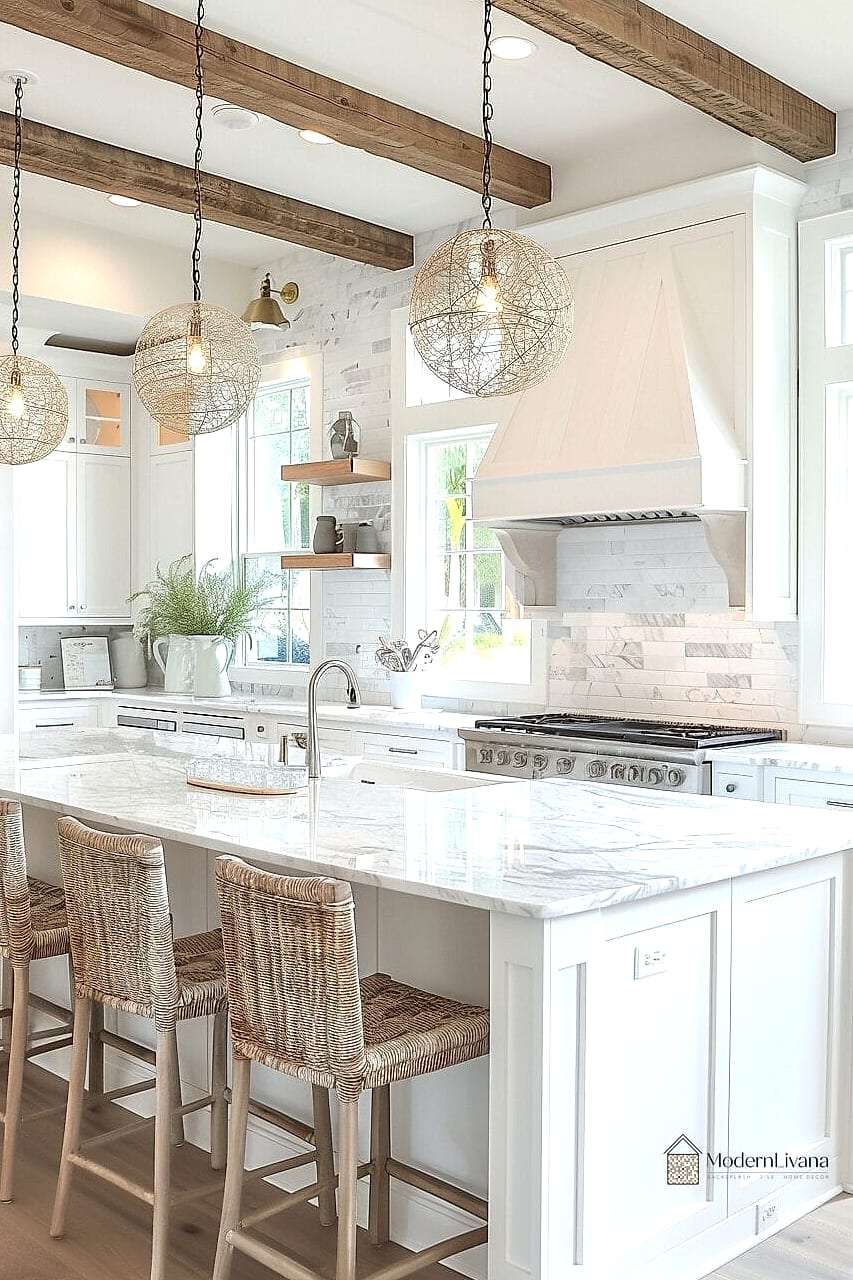
Coastal kitchens often use white cabinetry as the base, then layer in blue accents, natural textures like rattan or woven baskets, and light wood tones. It’s a relaxed look that works well in homes near the water but honestly translates anywhere you want a breezy, casual feel.
White Cabinets with Hidden Storage
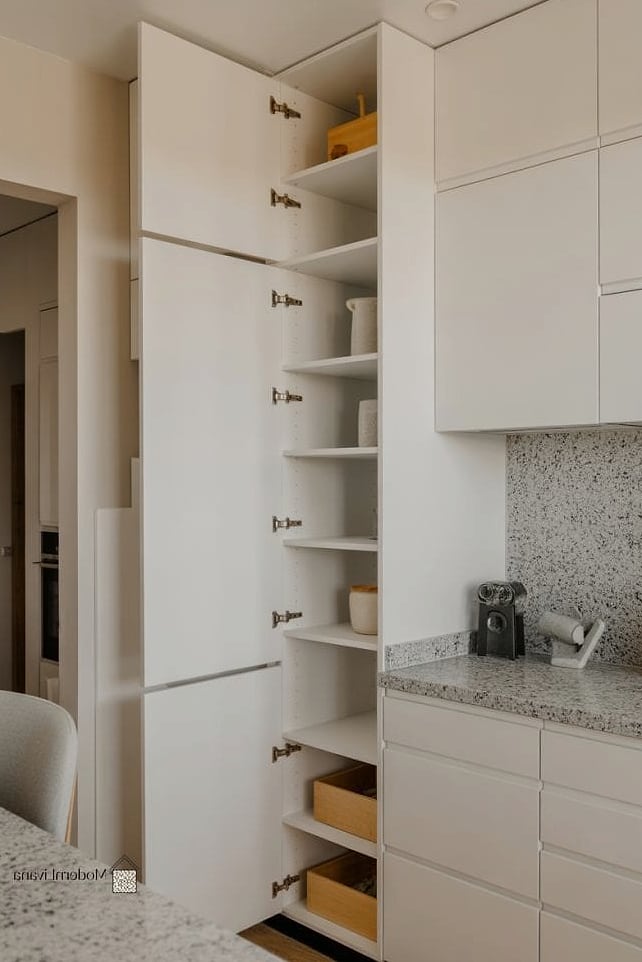
Built-in storage solutions like pull-out trash bins, spice racks, and appliance garages help a white kitchen stay looking clean since less sits out on the counter. This is especially helpful in smaller kitchens where clutter shows more easily. Drawer organizers and labeled bins take this even further.
White Cabinets with Black Countertops
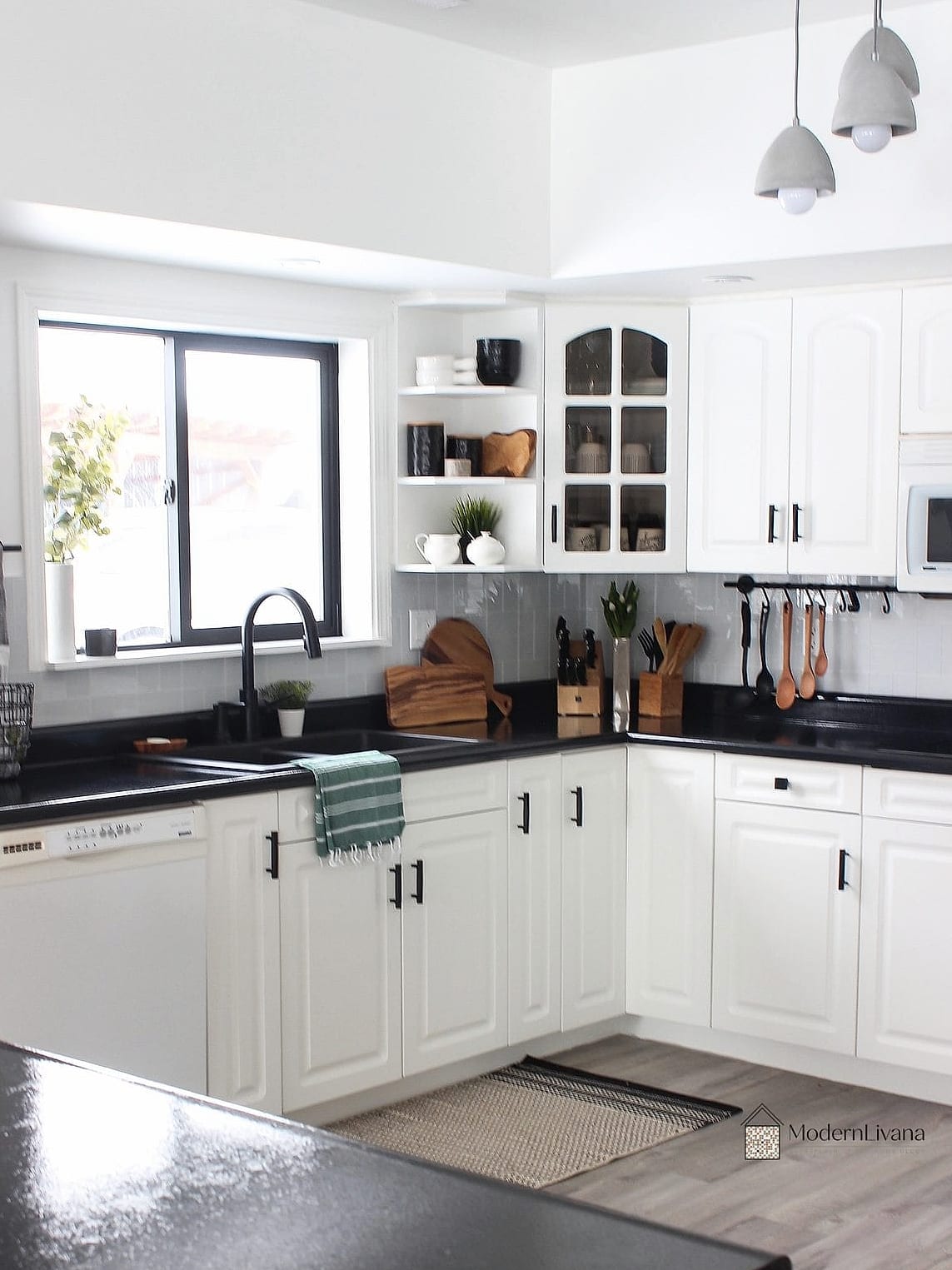
Flipping the usual formula, black countertops against white cabinets create a striking, high-contrast look that feels more dramatic than an all-white kitchen. Soapstone, black granite, or a matte black quartz all work well here. Just know that dark countertops can show water spots more, so a quick wipe-down habit helps.
White Laundry Room Cabinets
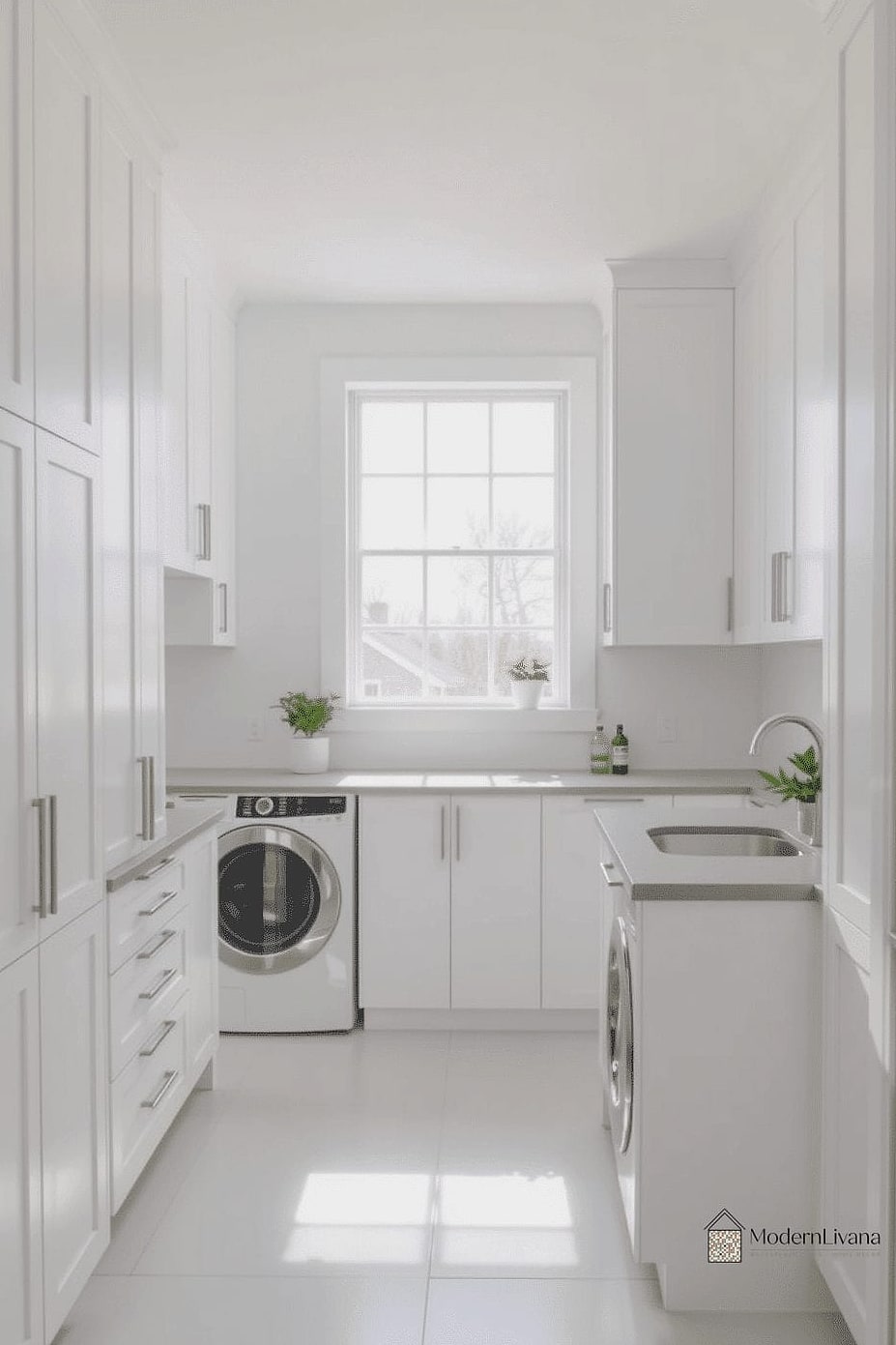
White cabinetry isn’t just for kitchens. In a laundry room, it keeps the space feeling bright and gives you a place to hide detergent, dryer sheets, and cleaning supplies out of sight. Adding a hanging rod or a small folding counter alongside the cabinets makes the room more functional too.
White Cabinets with Two-Tone Hardware
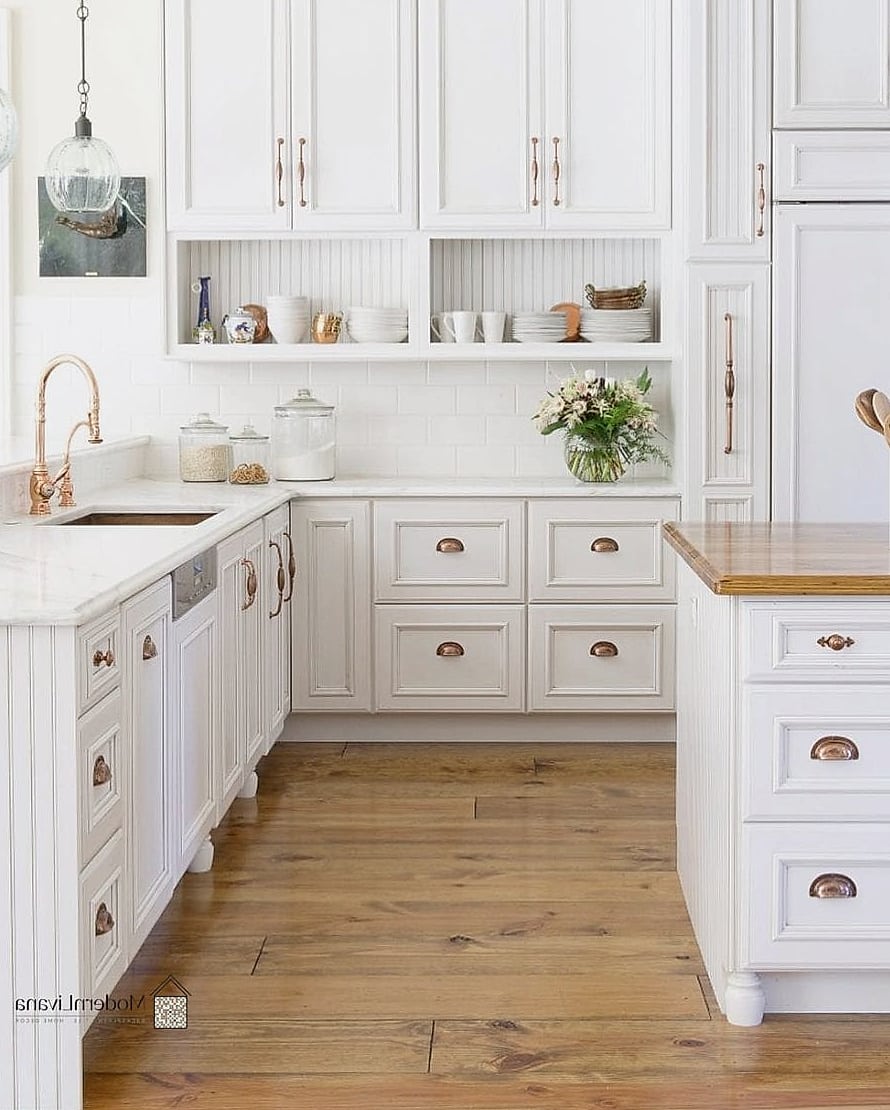
Mixing knobs and pulls in two different finishes, like brass pulls with black knobs, is a subtle way to add interest to an all-white kitchen. It’s a small detail, but it keeps things from feeling too matchy. A low-cost way to experiment before committing to one metal finish throughout the house.
Custom Built-In White Cabinets for Living Spaces
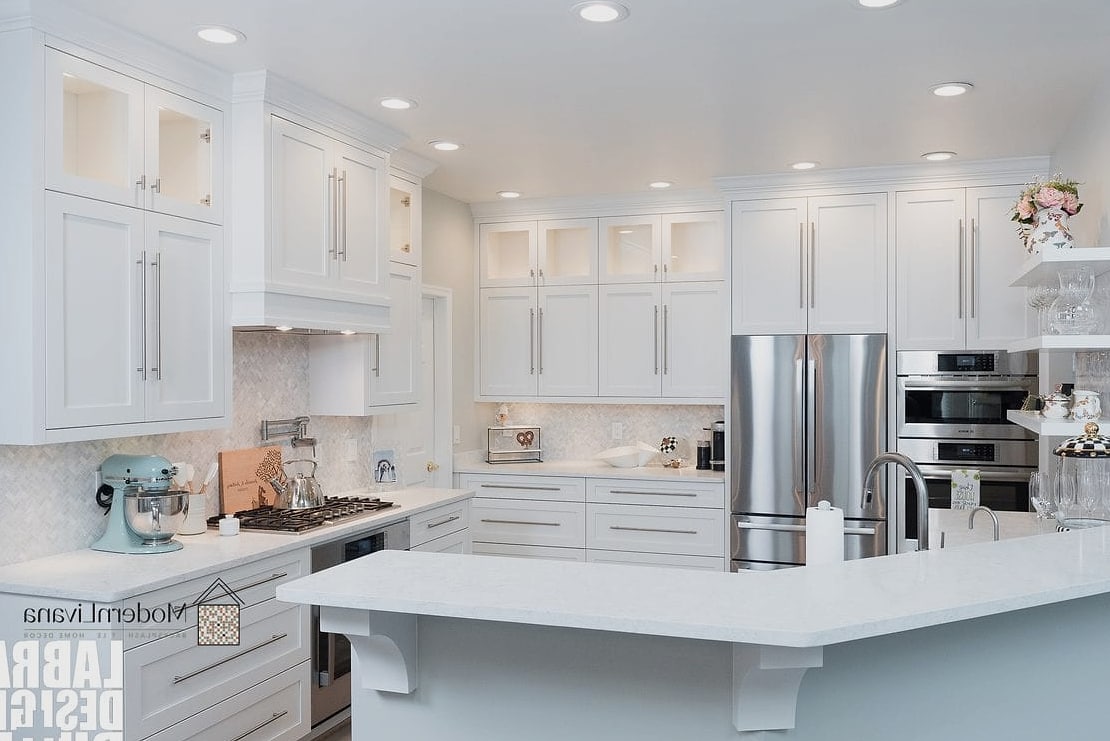
White cabinetry isn’t limited to kitchens and bathrooms. Built-in cabinets around a fireplace or in a home office create a polished, custom look for storage and display. They work well for hiding electronics, books, or seasonal decor while keeping a room feeling cohesive and bright.
No matter your budget or style, there’s a version of white cabinetry that works for your home. Start with what matters most to you, whether that’s durability, a specific finish, or just getting the most bang for your buck, and build the rest of the design around it.