28 Backsplash for Wood Countertops Ideas That Designers Keep Coming Back To
- Classic White Subway Tile
- Handmade Zellige Tile
- Warm Terracotta Tile
- Sleek Marble Slab
- Textured Fluted Tile
- Natural Stacked Stone
- Classic Beadboard Panels
- Bold Patterned Cement Tile
- Glossy Ceramic Mosaic
- Reclaimed Wood Panels
- Black Subway Tile
- Handpainted Talavera Tile
- Minimalist Plaster Finish
- Classic Brick Backsplash
- Chevron Pattern Tile
- Warm Neutral Limewash Wall
- Bold Emerald Green Tile
- Simple Ceramic Square Tile
- Dramatic Waterfall Stone Slab
- Hexagon Tile Pattern
- Rustic Whitewashed Brick
- Glass Tile Backsplash
- Two-Tone Tile Layout
- Natural Slate Tile
- Board and Batten Wall Detail
- Moody Charcoal Grout with Neutral Tile
- Warm Travertine Tile
- Playful Geometric Encaustic Tile
28 Backsplash for Wood Countertops Ideas That Designers Keep Coming Back To
Wood countertops bring so much warmth to a kitchen, but figuring out what to put behind them can feel trickier than picking the counters themselves. You want something that complements all that natural grain and color without fighting for attention. The good news is there’s a huge range of backsplash options that pair beautifully with butcher block, walnut, oak, and every other wood countertop style out there. Let’s get into it.
Classic White Subway Tile
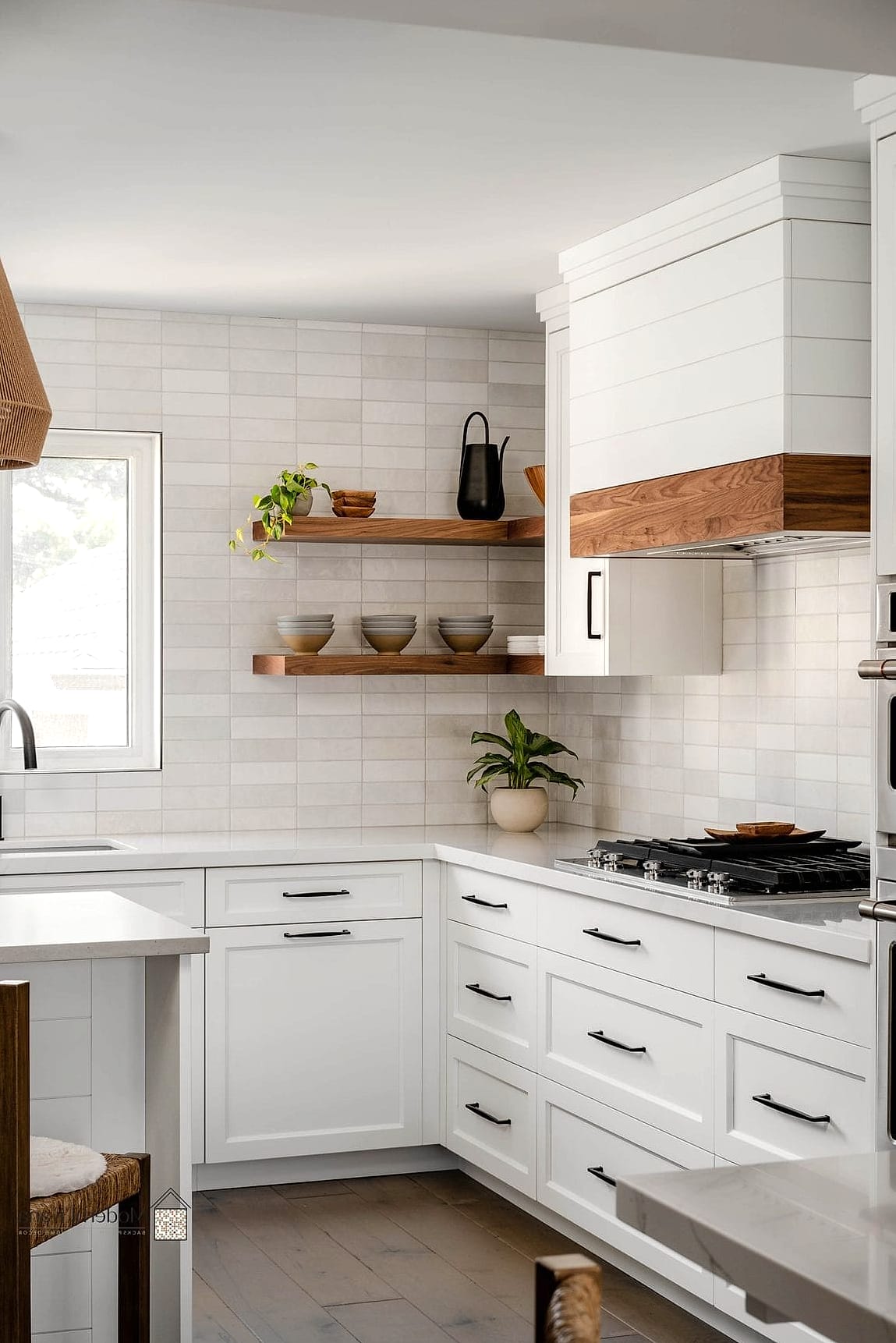
You really can’t go wrong with white subway tile against wood countertops. The clean lines and bright surface create a nice contrast that lets the wood tone shine as the star of the room. It works in farmhouse kitchens, coastal spaces, and even modern ones with black hardware. Subway tile is also budget-friendly and easy to find at almost any home improvement store. For a fresh twist, try a herringbone pattern instead of the standard brick layout.
Handmade Zellige Tile
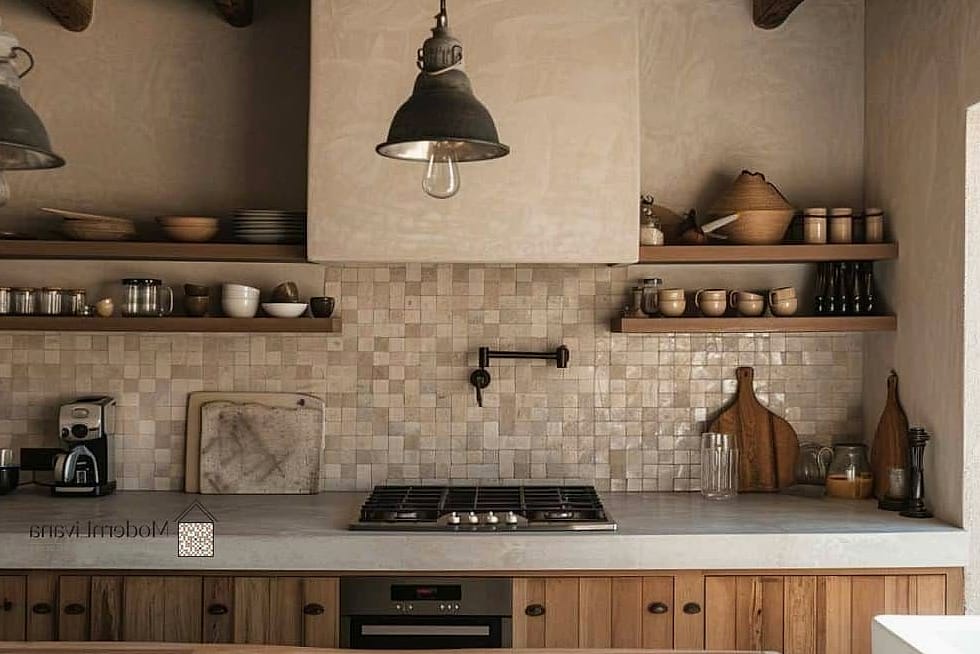
Zellige tile has that slightly imperfect, hand-glazed look that pairs incredibly well with the organic feel of wood counters. Each tile has subtle variations in color and texture, so no two installations ever look quite the same. This option leans a bit more luxury and works great in Mediterranean or modern farmhouse kitchens. It does require a bit more care during installation since the tiles aren’t perfectly uniform, but the payoff is a backsplash that feels custom.
Warm Terracotta Tile
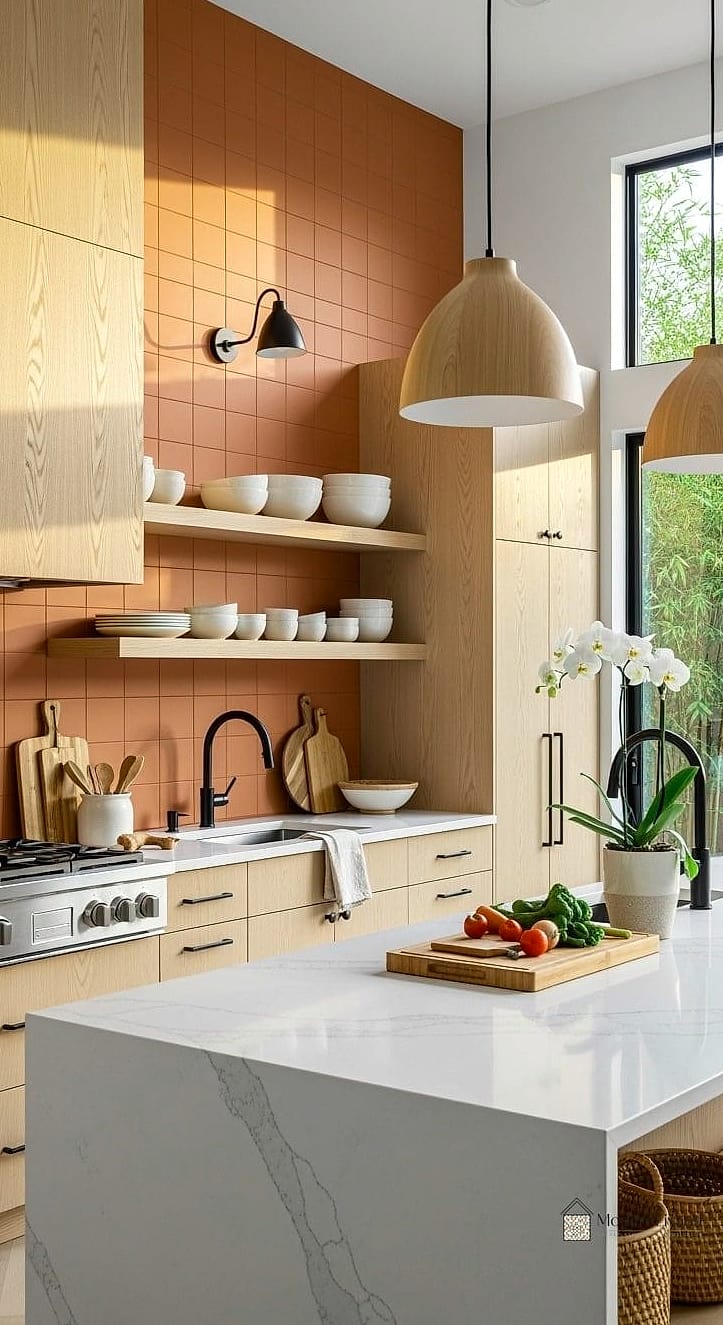
Terracotta brings an earthy, sun-baked warmth that echoes the natural tones already happening in your wood countertops. This is a favorite for anyone going for a Spanish-inspired or rustic Italian kitchen vibe. The color depth varies from piece to piece, giving the wall real character. Terracotta is porous, so sealing it properly matters for long-term durability and easy cleaning.
Sleek Marble Slab
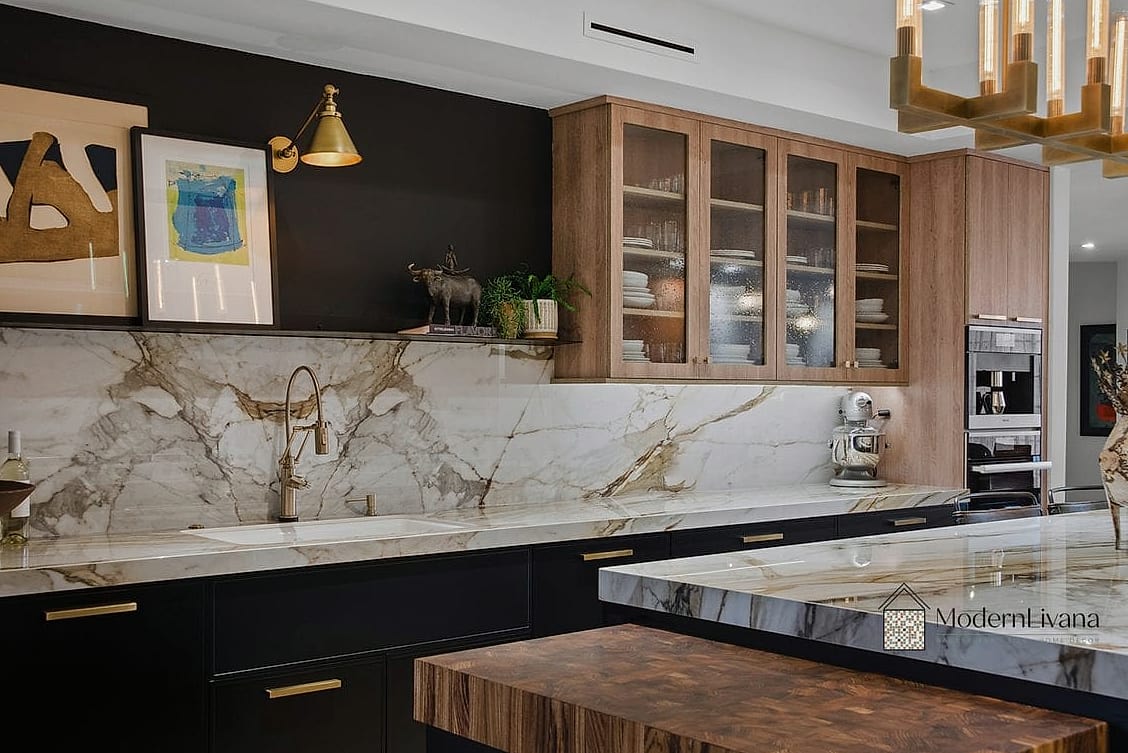
A full marble slab backsplash gives a kitchen an elevated, high-end feel while still letting wood countertops feel grounded and natural. The veining adds movement and visual interest without introducing another material texture. This pairing works especially well when the wood countertop is used as an island accent rather than throughout the whole kitchen. Marble does need sealing and isn’t the most forgiving with acidic spills, so keep that in mind if you’re a heavy home cook.
Textured Fluted Tile
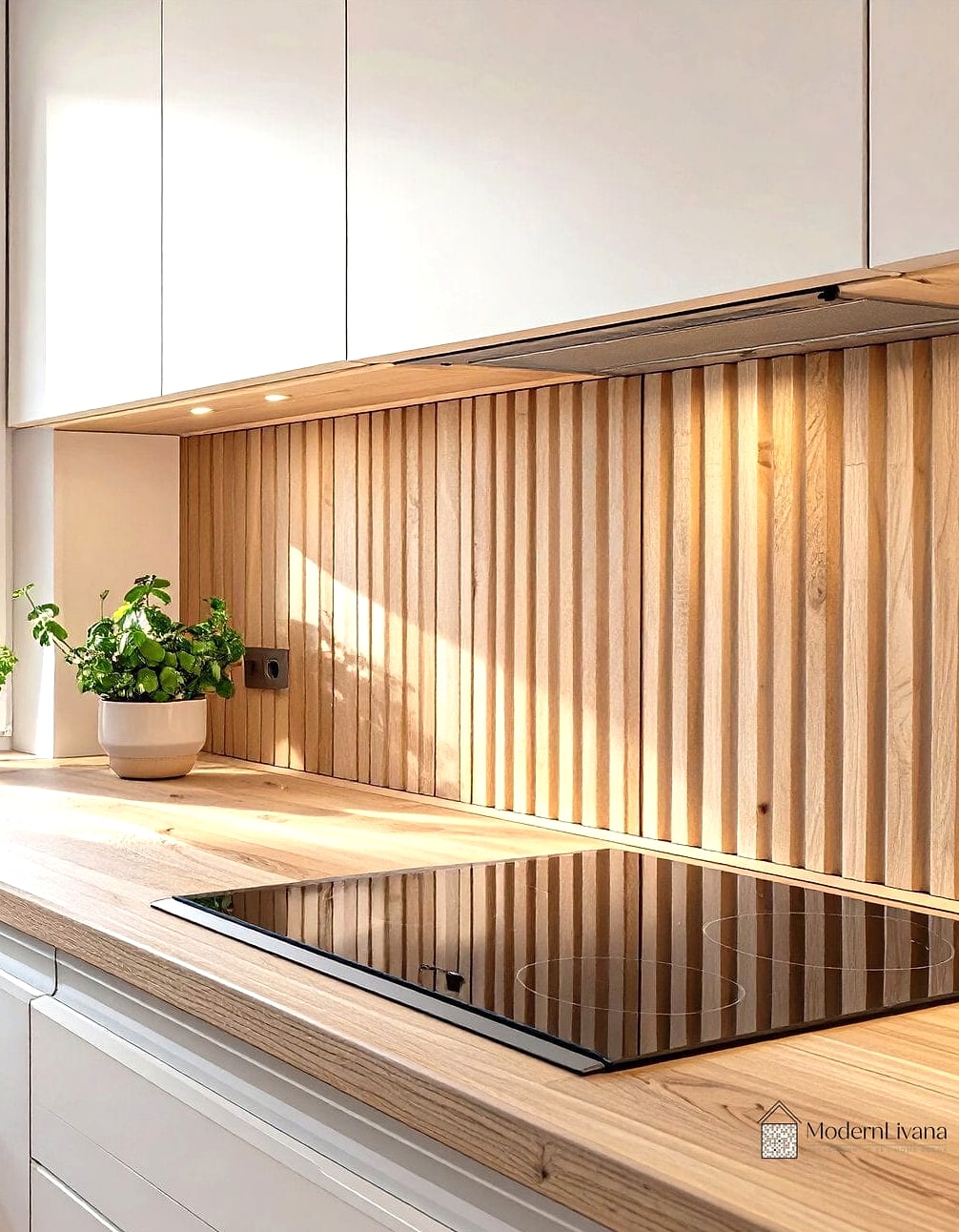
Fluted or ribbed tile has become a favorite among designers who want dimension without adding busy patterns. The vertical grooves catch light beautifully and add a soft architectural detail behind wood counters. This look feels modern but still cozy, which makes it a great middle ground for people torn between styles. It’s often used as a focal point behind a stove or sink area rather than wall to wall.
Natural Stacked Stone
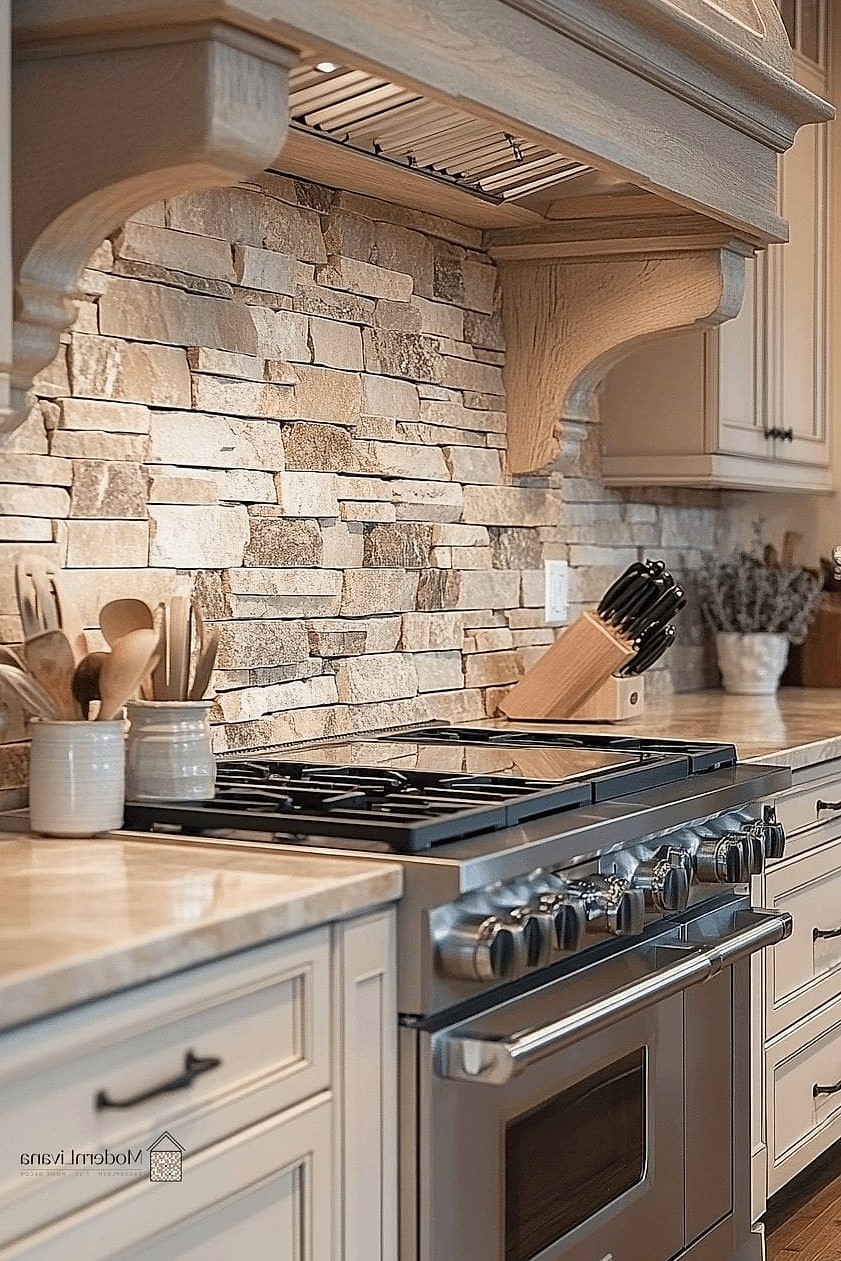
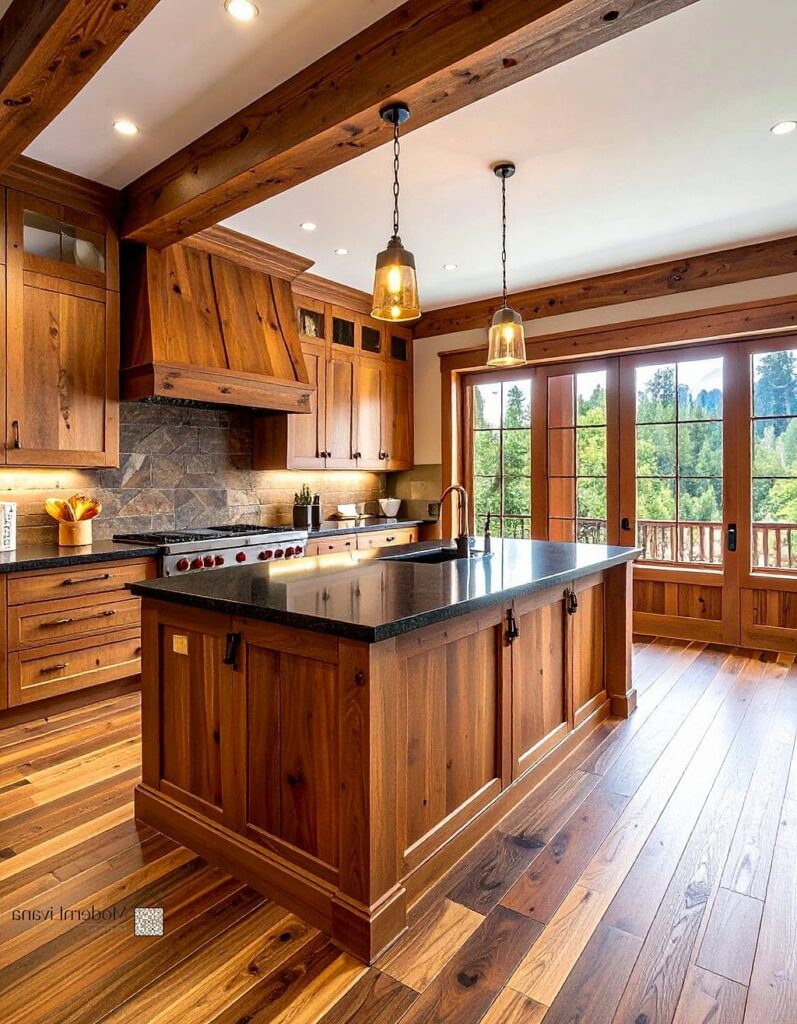
Stacked stone brings a cabin-meets-modern feel that plays really nicely with warm wood tones. It’s a great choice for kitchens that want a slightly rugged, organic aesthetic without going full rustic lodge. The texture adds a lot of visual weight, so it works best when the rest of the kitchen stays fairly simple. Stone is durable and holds up well over time, though grout lines will need occasional attention.
Classic Beadboard Panels
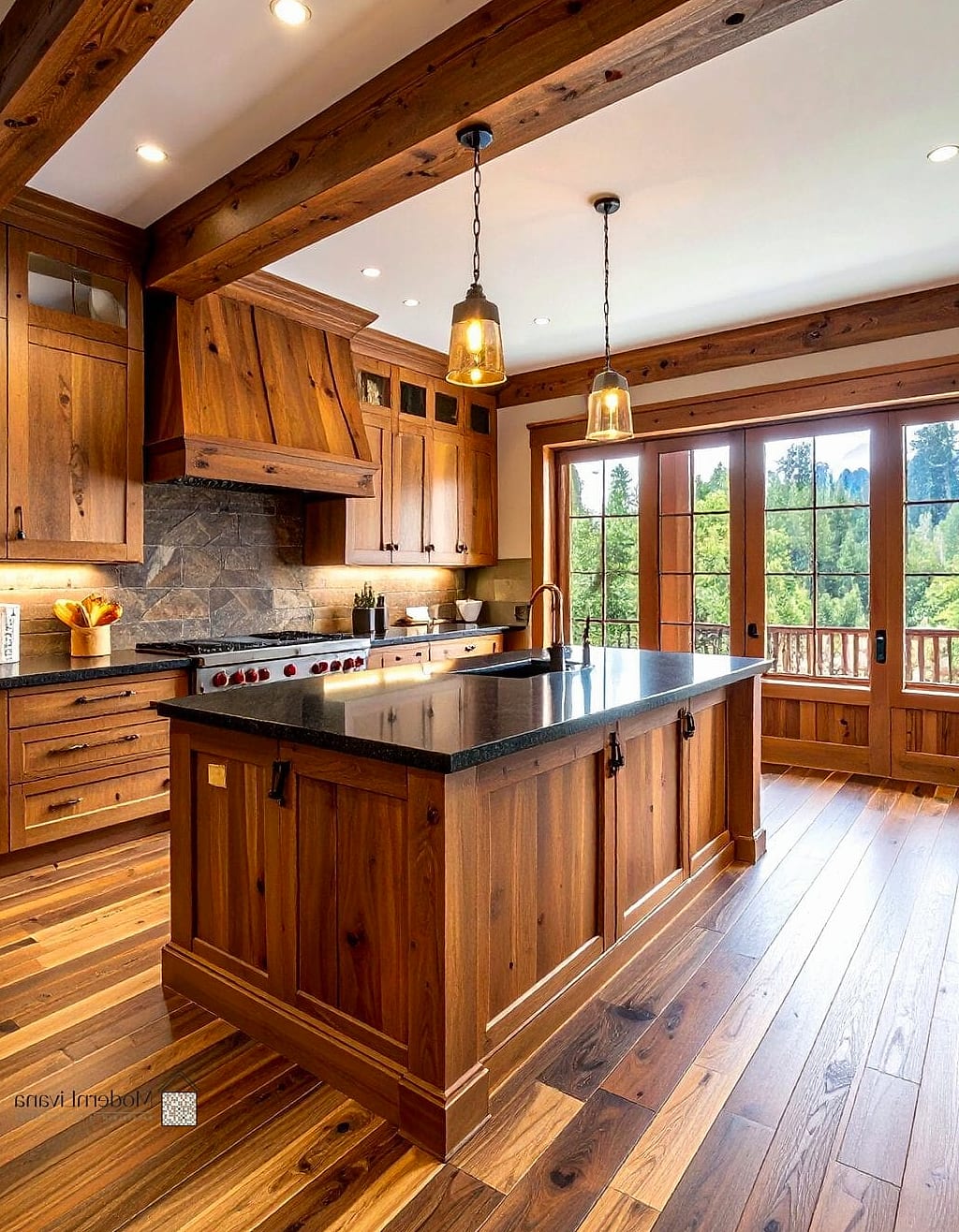
Beadboard isn’t just for bathrooms anymore. Painted beadboard behind wood countertops gives a cottage or coastal kitchen a charming, collected-over-time look. It’s also one of the more affordable and DIY-friendly options on this list. A soft white, sage, or pale blue beadboard backsplash feels fresh against warm wood tones. Just know it needs a good coat of protective finish since it sits close to water and heat sources.
Bold Patterned Cement Tile
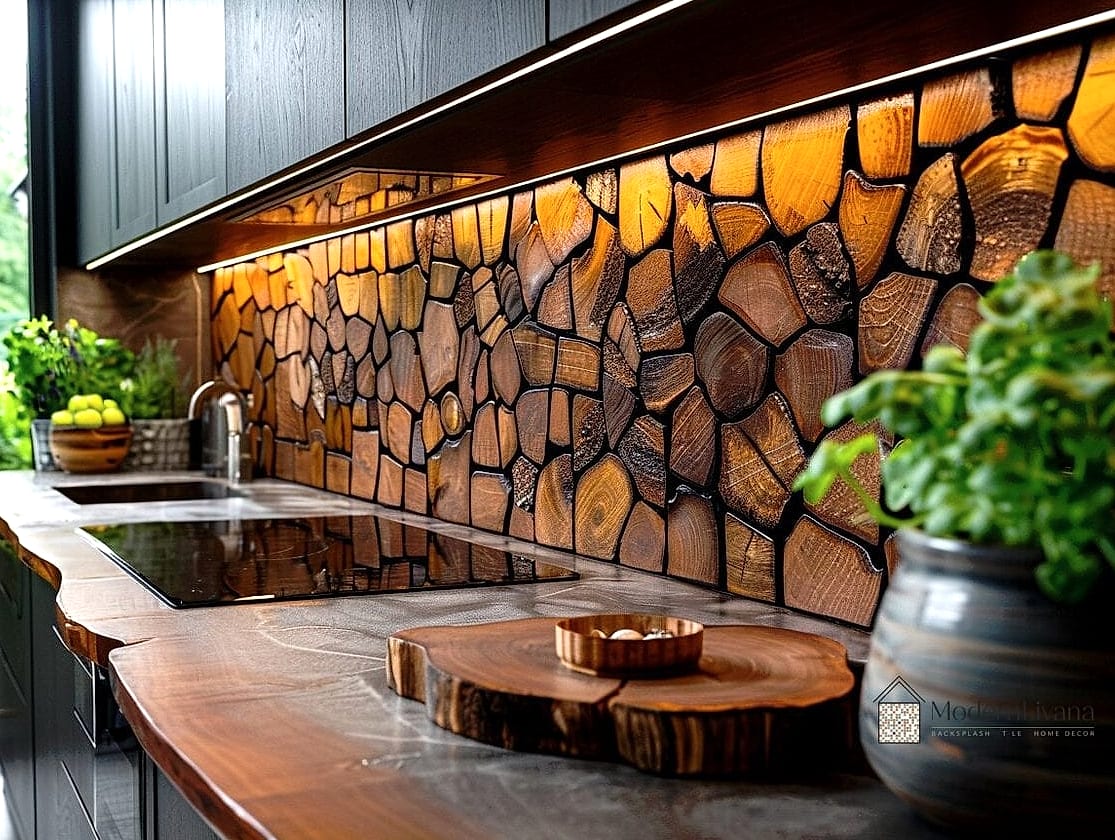
Patterned cement tile adds personality fast, and it looks especially striking paired with the simplicity of wood countertops. These tiles often come in geometric or Moroccan-inspired designs with rich color combinations. This is a great pick if the rest of your kitchen is fairly neutral and you want one area to really pop. Cement tile does need sealing to prevent staining, so factor that into your maintenance routine.
Glossy Ceramic Mosaic
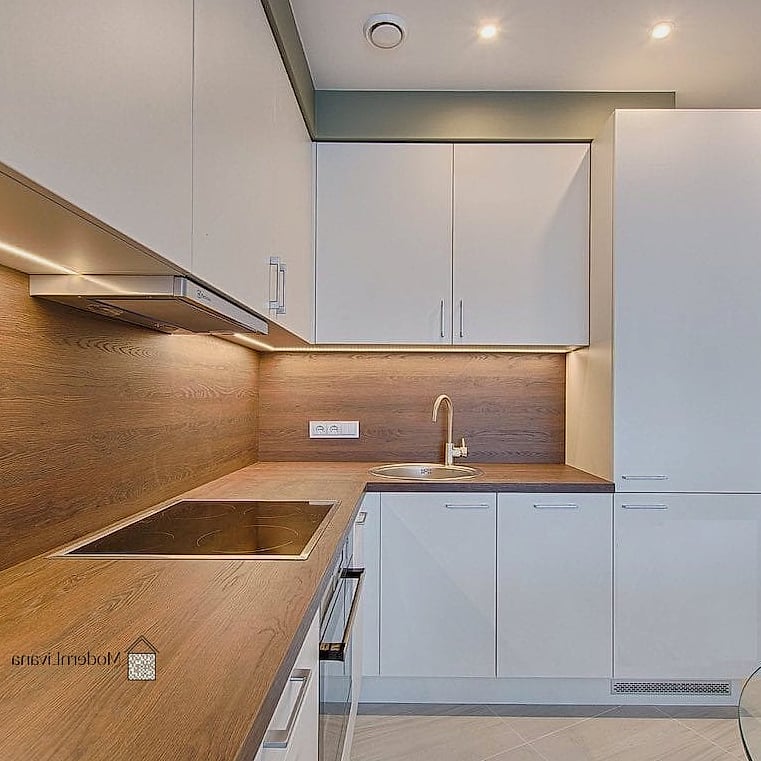
A mosaic tile backsplash in soft, glossy ceramic tiles adds shine and a bit of playfulness without overwhelming the space. Small-format tiles create texture and light reflection that larger tiles just can’t match. This works particularly well in smaller kitchens where every surface detail gets noticed. Mosaic patterns range from subtle to dramatic, so there’s flexibility depending on how bold you want to go.
Reclaimed Wood Panels
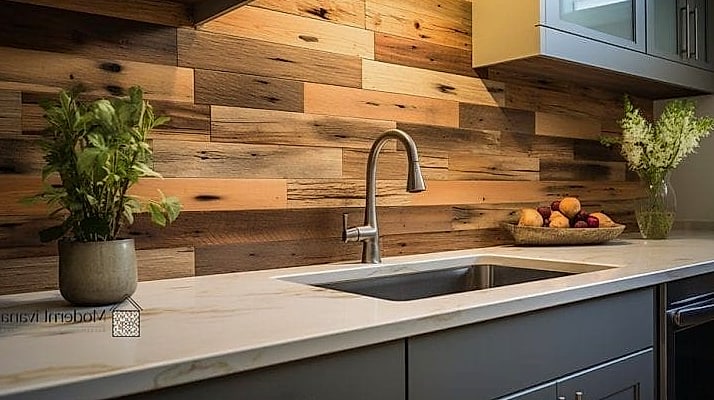
For a fully cohesive, all-wood look, some homeowners choose reclaimed wood panels as the backsplash itself. This creates a warm, cabin-like atmosphere that feels intentional rather than mismatched. It works best behind areas that don’t see a lot of splashing, like a coffee bar or open shelving zone. A matte sealant helps protect the wood while keeping that natural, weathered appearance intact.
Black Subway Tile
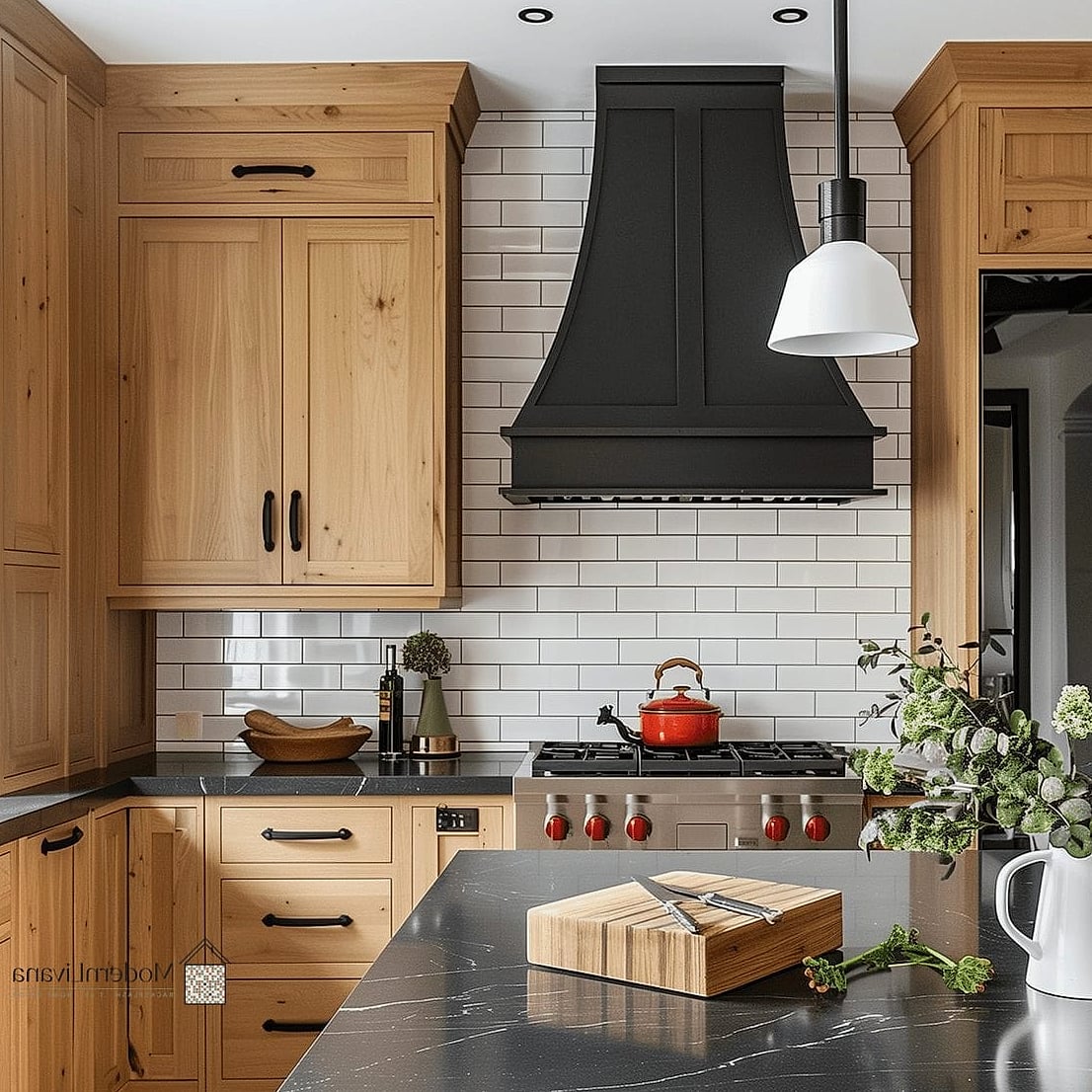
Black subway tile creates a striking, moody contrast against lighter wood countertops. It’s a popular choice for kitchens leaning into a more dramatic, modern farmhouse aesthetic. The dark tone also hides splatters and daily kitchen messes better than lighter grout and tile combinations. Pair it with brushed brass or matte black hardware for a cohesive, designer-approved look.
Handpainted Talavera Tile
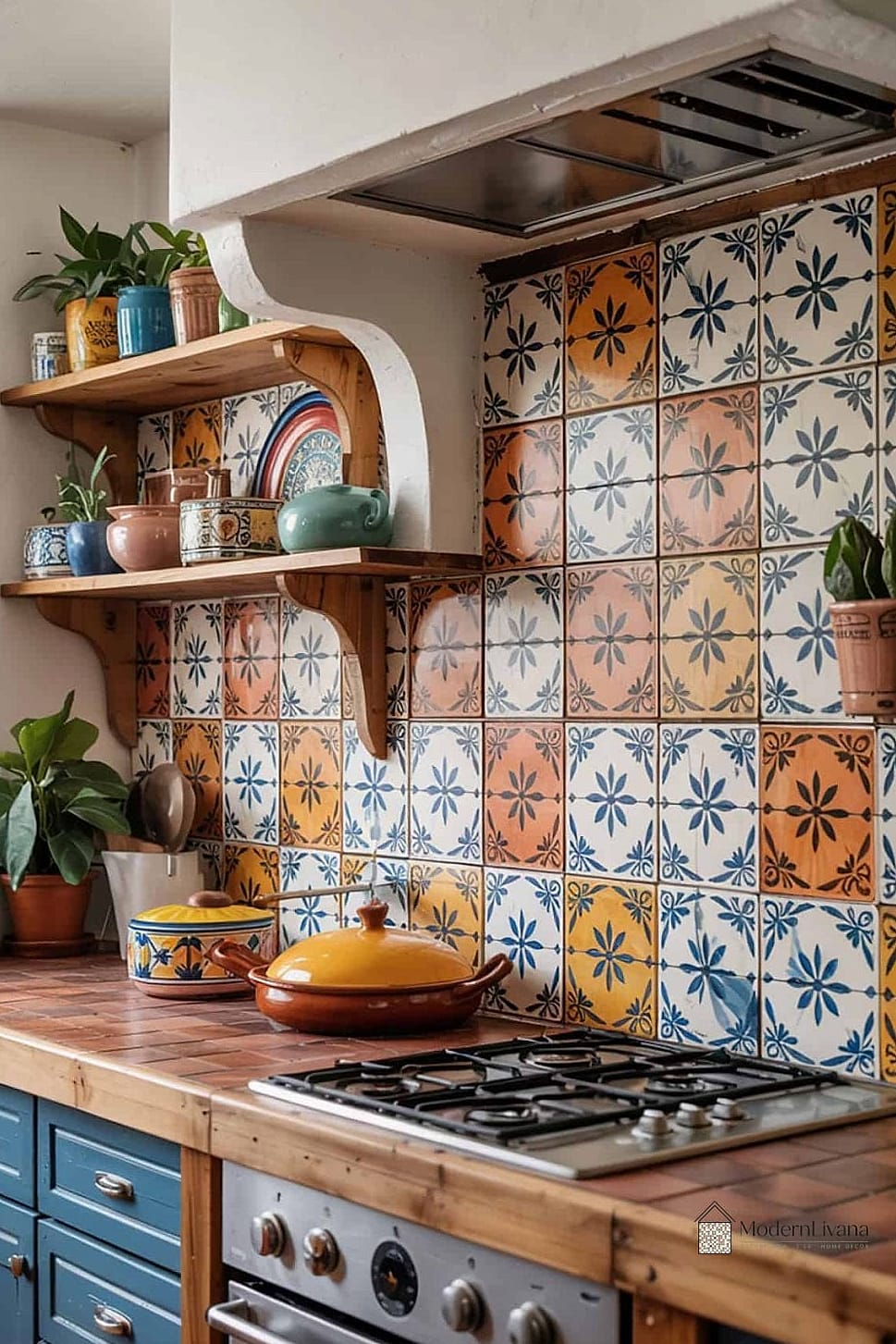
Talavera tile brings vibrant color and pattern that feels collected and personal rather than mass-produced. These tiles often feature blues, yellows, and greens that create a lively backdrop for wood countertops. This option shines in kitchens with a global or bohemian design sensibility. Because the patterns are so detailed, it’s usually best used as an accent rather than covering an entire wall.
Minimalist Plaster Finish
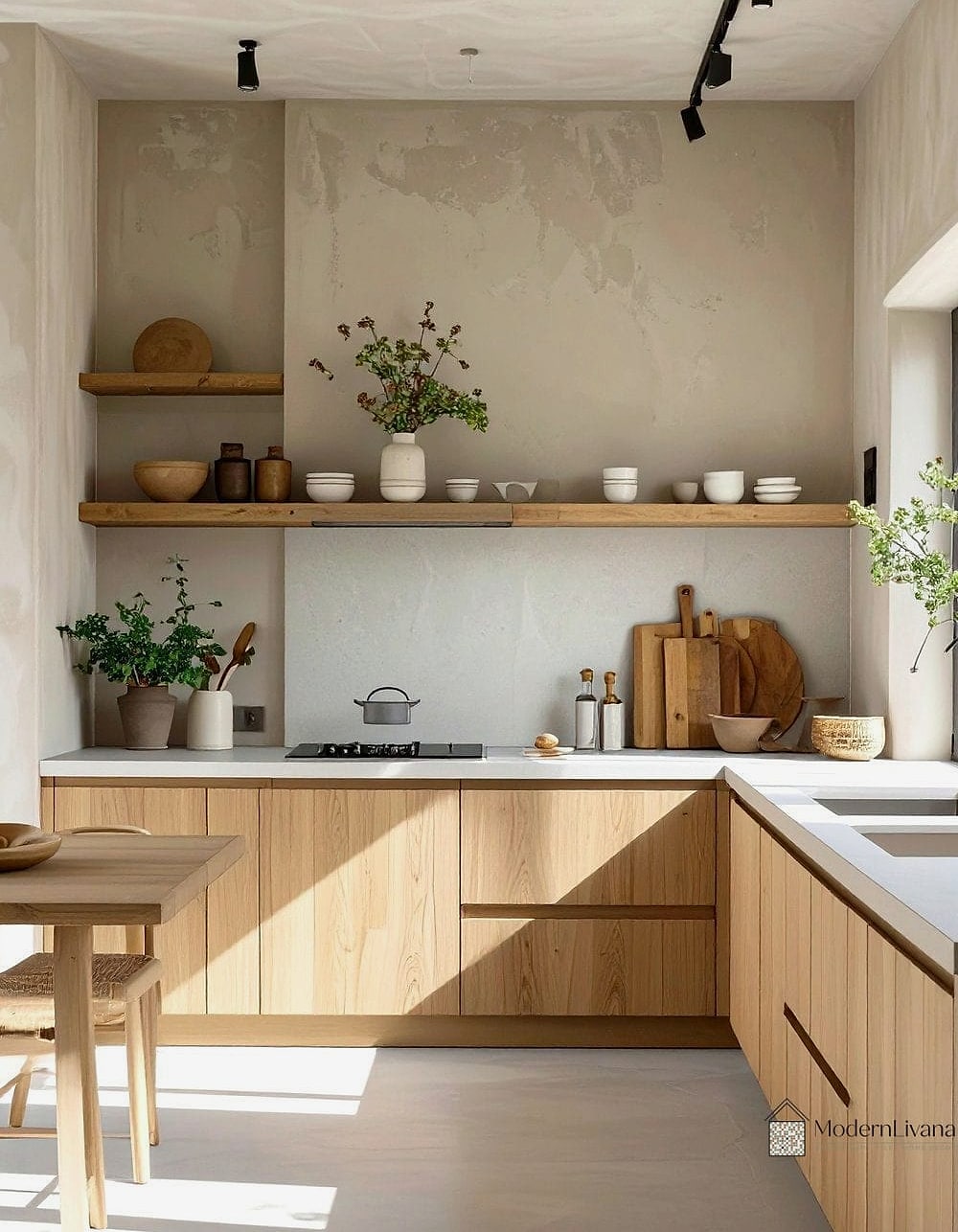
Plaster backsplashes have been showing up more and more in designer kitchens, and it’s easy to see why. The soft, matte texture feels organic and pairs beautifully with the grain of wood countertops. This look is all about subtlety, letting the room feel calm and understated. Plaster requires a skilled hand to apply correctly, but the seamless result is hard to replicate with tile.
Classic Brick Backsplash

Exposed brick or thin brick veneer gives a kitchen an industrial-meets-farmhouse feel that pairs surprisingly well with wood counters. The rough texture and warm red or whitewashed tones add depth without competing with the wood. This works particularly well in kitchens with high ceilings or open-concept layouts. Sealing the brick helps make cleanup easier since the surface can be more porous than tile.
Chevron Pattern Tile
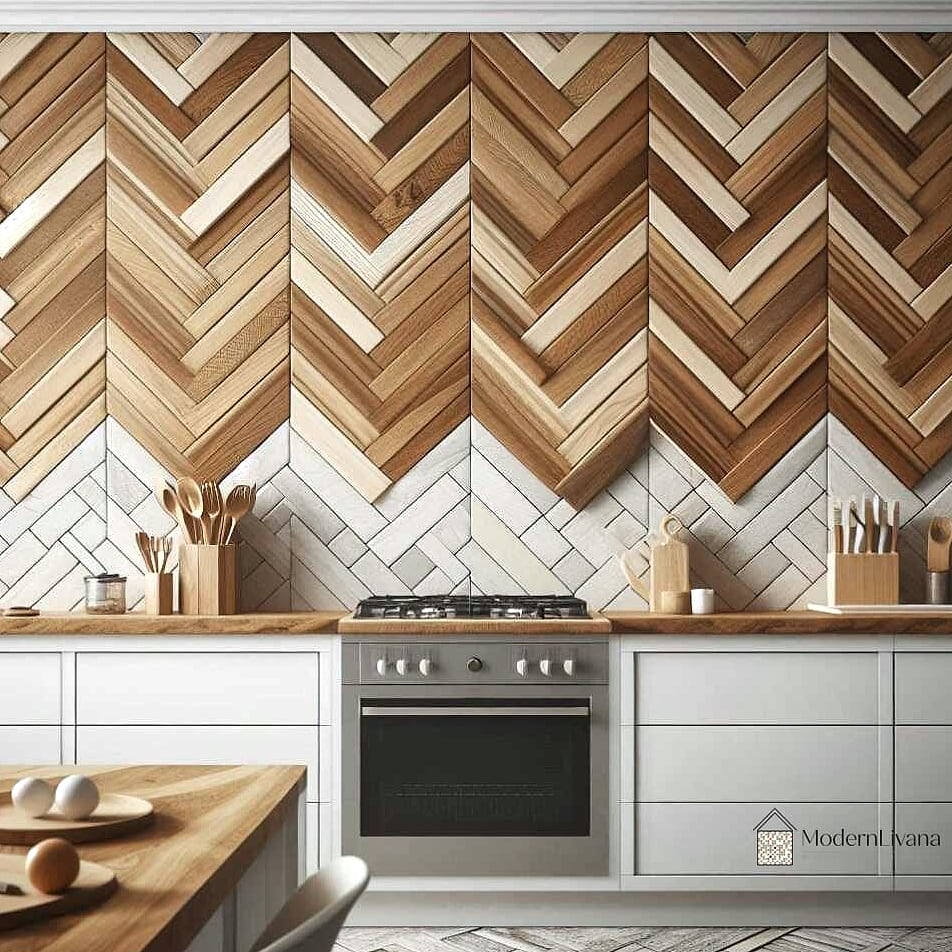
A chevron pattern adds movement and a sense of craftsmanship that flat tile layouts don’t offer. This works with almost any tile material, from marble to ceramic, and instantly elevates the backsplash into a focal point. It pairs especially well with waterfall wood countertop edges since both features draw the eye in a similar directional flow. This layout does take more precision during installation, so it’s often worth hiring a pro.
Warm Neutral Limewash Wall

Limewash isn’t technically a tile, but it’s become a popular backsplash alternative for kitchens that want texture without hard lines. The soft, cloudy finish adds warmth and depth that complements wood tones beautifully. This works best in low-splash zones or kitchens where the stove area has a separate protective material. It’s a great option for anyone wanting a European countryside feel.
Bold Emerald Green Tile
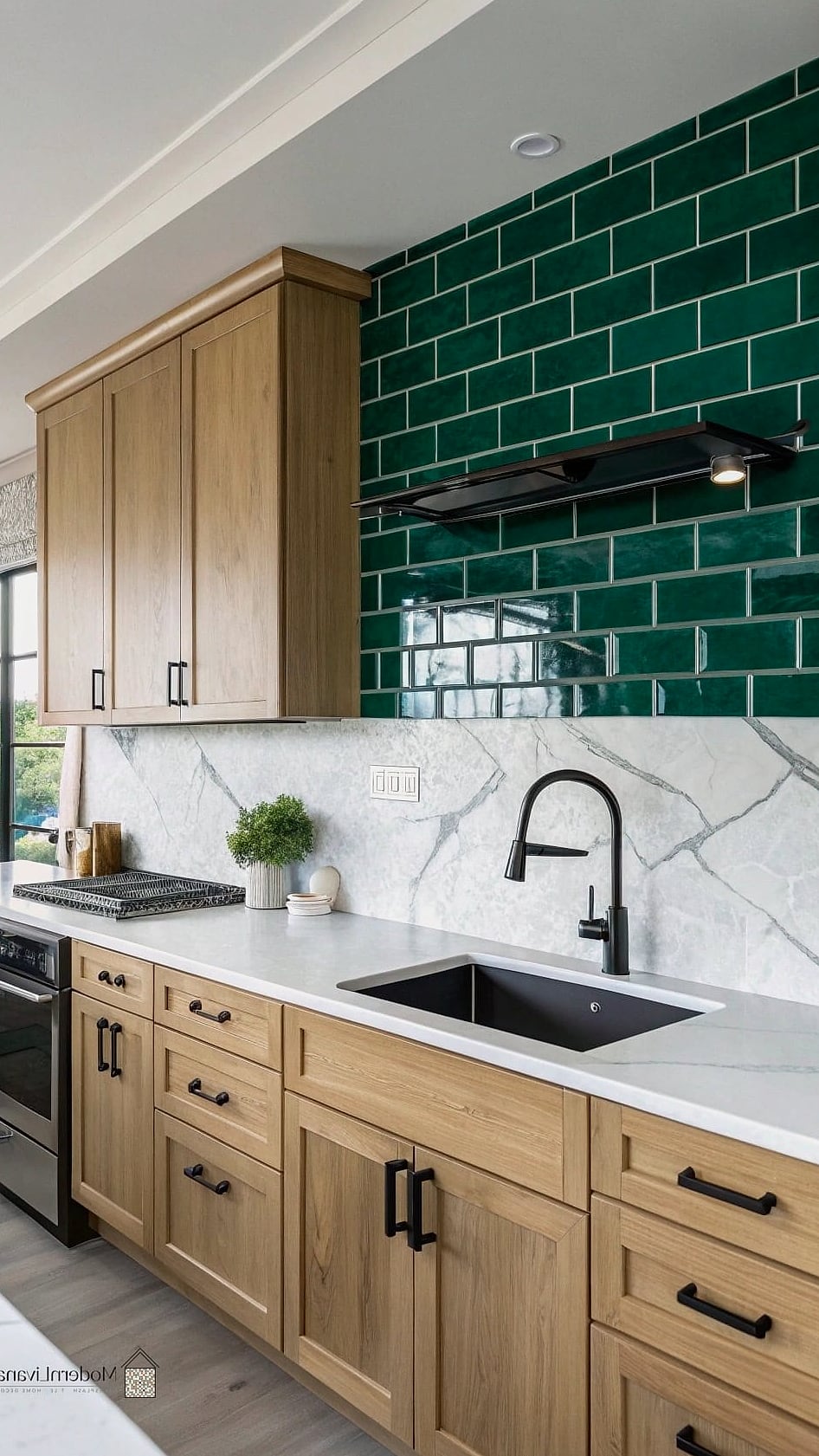
A rich green backsplash creates a dramatic, jewel-toned contrast against warm wood countertops. This combination has become a favorite in more colorful, maximalist kitchen designs. Green pairs especially well with brass fixtures and creamy white cabinetry. Whether you choose glossy or matte tile changes the whole mood, so it’s worth testing samples in your actual lighting.
Simple Ceramic Square Tile
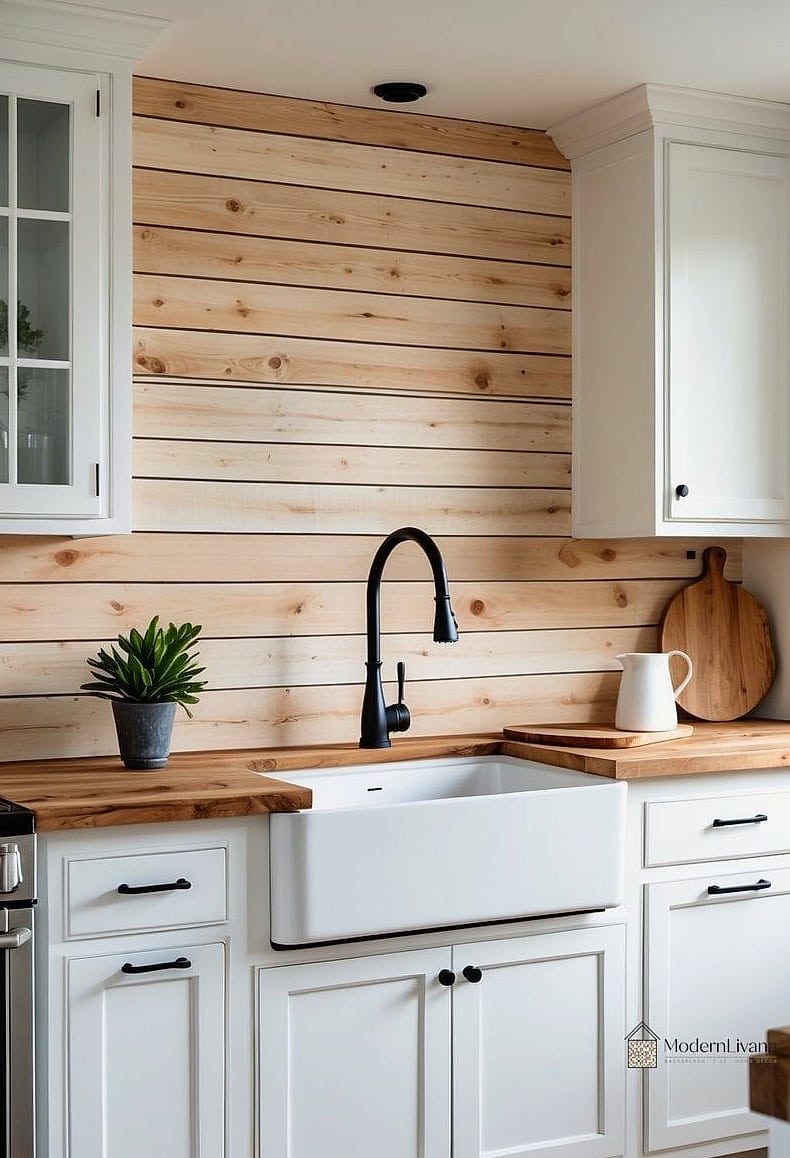
Sometimes simple really is better, and a clean grid of square ceramic tile proves that point. This layout feels timeless and works in nearly any kitchen style, from traditional to modern. It’s also one of the easier tile patterns for DIY installation if you’re tackling the project yourself. Choosing a warm white or cream shade keeps things soft against the wood tones.
Dramatic Waterfall Stone Slab
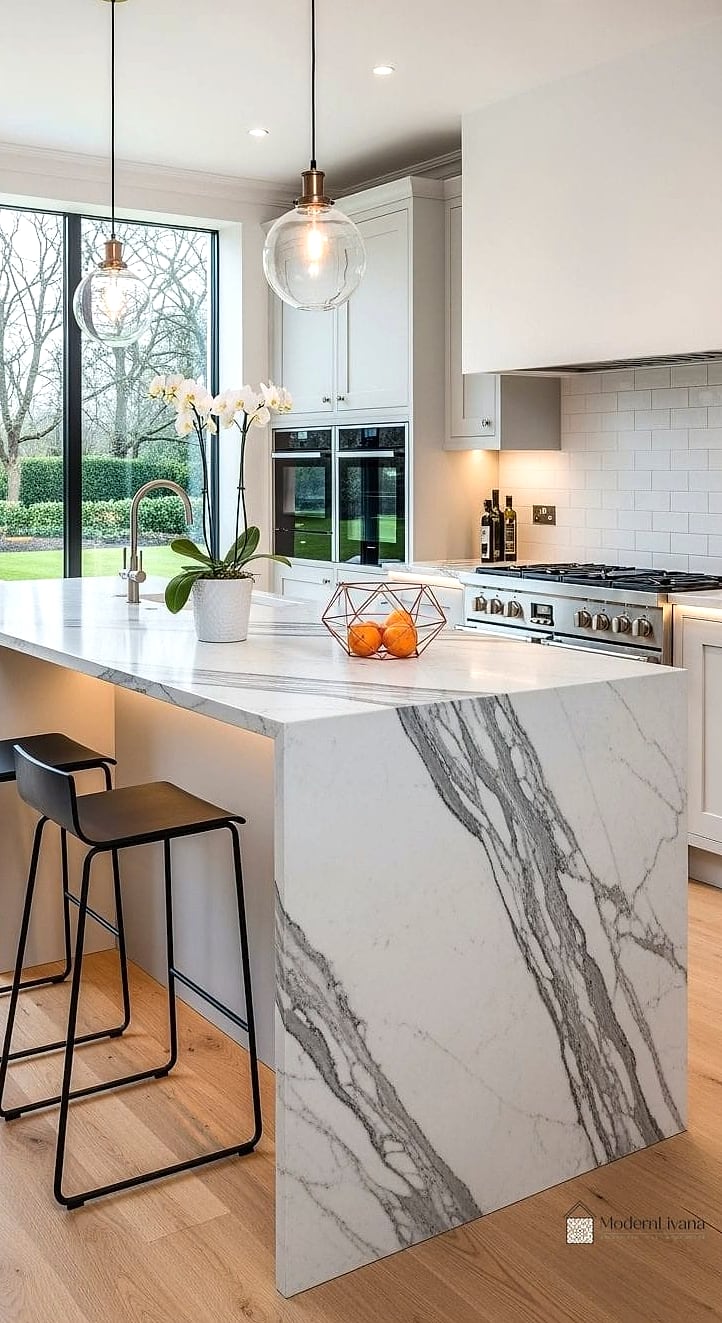
Extending a stone slab from the countertop up the backsplash wall creates a seamless, high-end look that’s hard to beat. This pairing works particularly well when only part of the kitchen uses wood, like an island, while stone handles the main prep areas. It’s a more costly option, but the visual impact is significant. This look has become one of those upgrades that instantly makes a kitchen feel more custom without requiring a full renovation.
Hexagon Tile Pattern
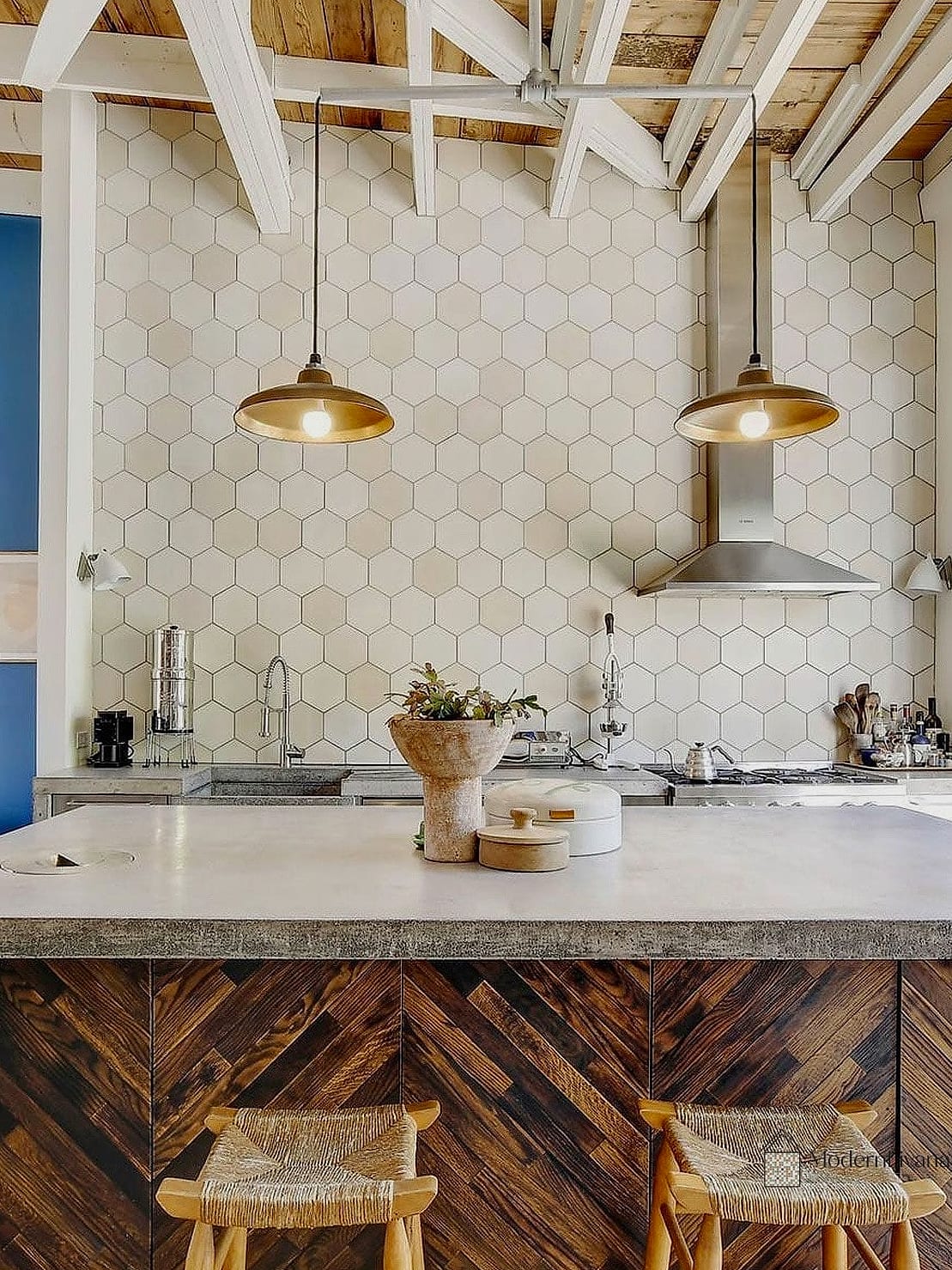
Hexagon tiles bring a playful geometric shape that adds interest without feeling too busy. This pattern pairs nicely with wood countertops because the organic shape softens the rigidity of a straight grid. Available in countless colors and materials, hexagon tile is flexible enough for traditional and contemporary kitchens alike. Smaller hexagons create a more intricate look, while larger ones keep things simple and modern.
Rustic Whitewashed Brick
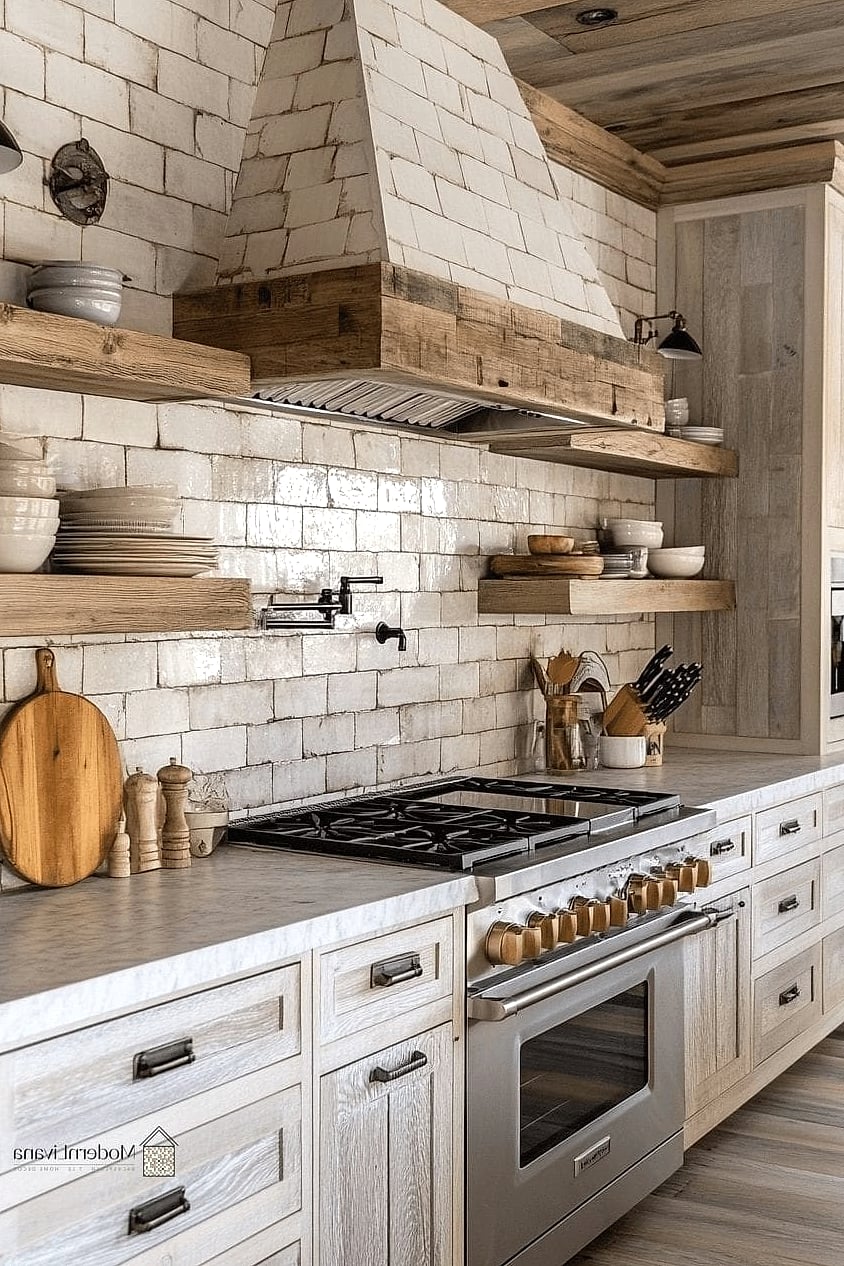
Whitewashed brick softens the industrial edge of traditional exposed brick while keeping its texture and character. This look pairs beautifully with lighter wood countertops for a bright, airy farmhouse feel. It’s a popular choice for kitchens that want texture but still need to feel light and open. The whitewash also makes small kitchens feel less closed in compared to raw brick.
Glass Tile Backsplash
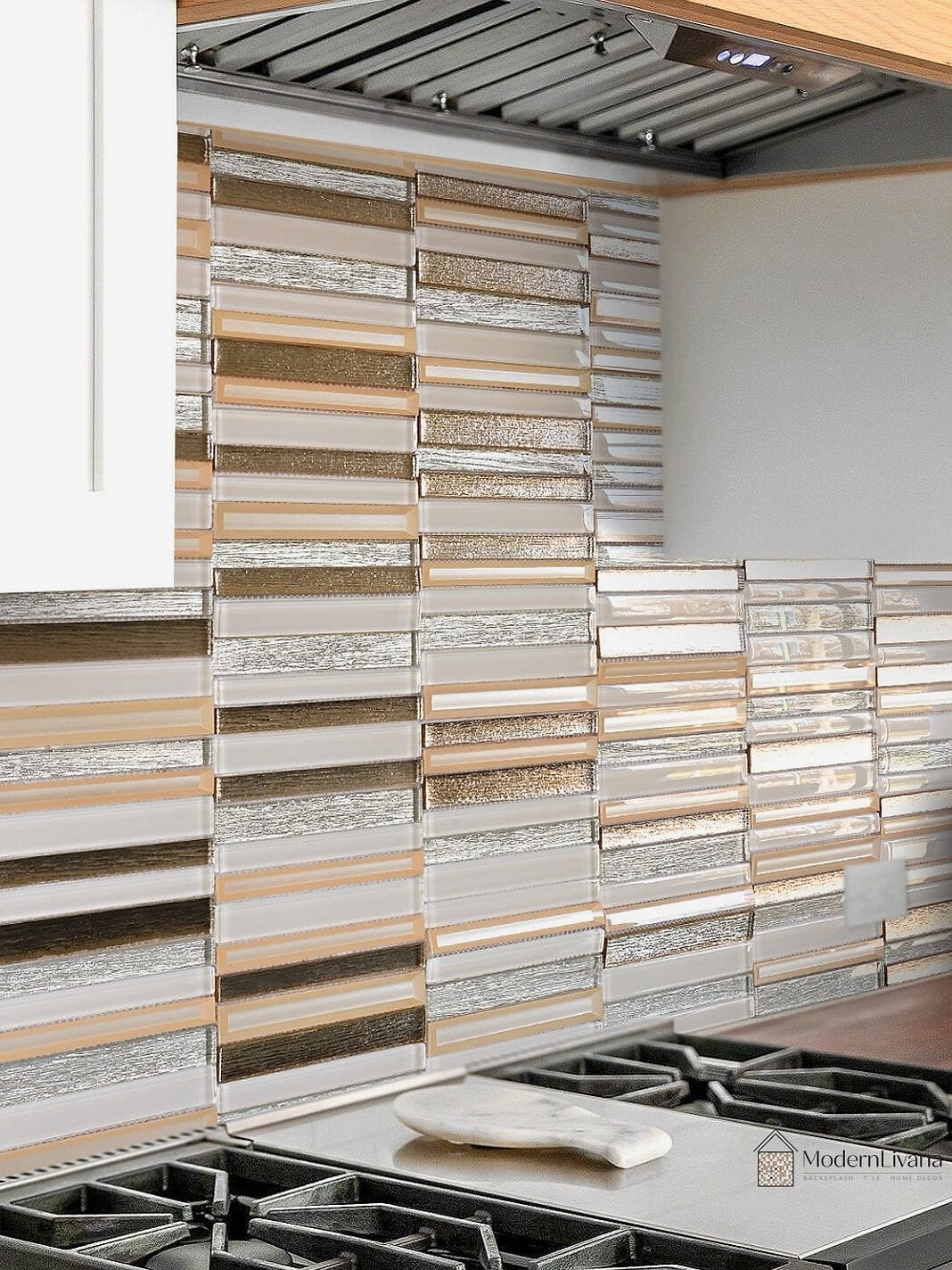
Glass tile adds a reflective quality that brightens a kitchen and bounces light around the room. It pairs surprisingly well with wood countertops since the glossy surface contrasts nicely with the warm, matte wood grain. Glass tile comes in nearly every color imaginable, making it easy to match your existing palette. Cleaning is simple since the smooth surface doesn’t trap grease or grime the way textured materials can.
Two-Tone Tile Layout
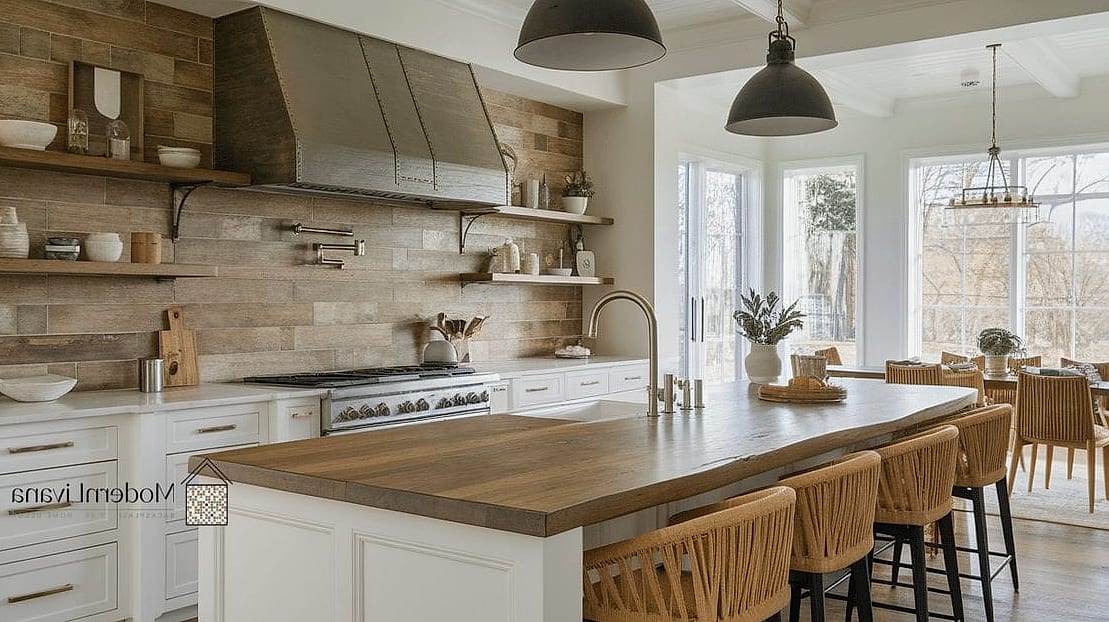
Combining two tile colors or shapes creates a custom, layered look that feels more unique than a single uniform backsplash. This might mean pairing a solid color tile with a patterned accent strip, or mixing matte and glossy finishes. It’s a great way to tie together multiple colors already present in your kitchen, like cabinet hardware or flooring. This approach takes a bit more planning but results in a backsplash that feels thoughtfully designed.
Natural Slate Tile
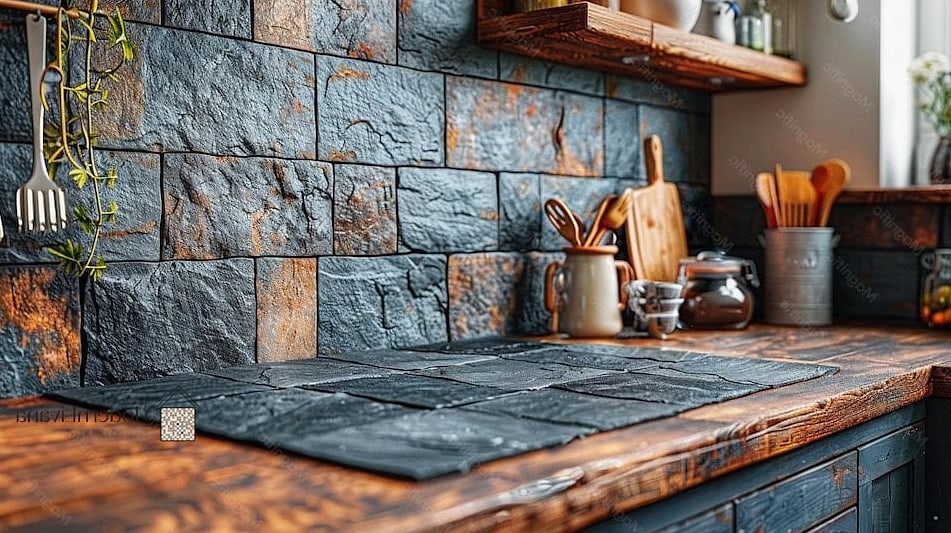
Slate has a moody, textured surface that pairs well with the earthiness of wood countertops. Its color variations, ranging from charcoal to deep green, add depth without needing a busy pattern. This is a solid pick for kitchens going for a modern rustic or cabin-inspired look. Slate is naturally durable, though it does benefit from periodic sealing to keep its surface protected.
Board and Batten Wall Detail
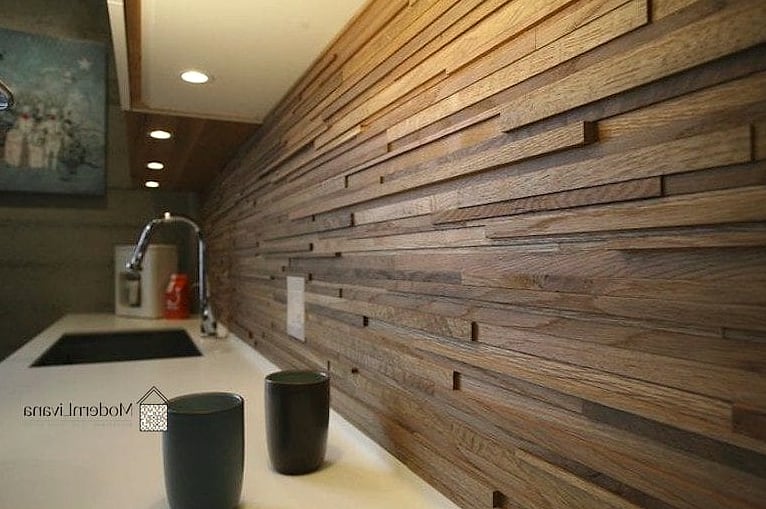
Board and batten isn’t a traditional backsplash material, but it’s gained popularity in kitchens with lower-splash zones, like behind open shelving or a baking station. The vertical lines add architectural interest and a cottage-style charm. Painted in a soft neutral, it creates a nice textural contrast against smooth wood countertops. This option works best combined with a more water-resistant material near the sink and stove.
Moody Charcoal Grout with Neutral Tile
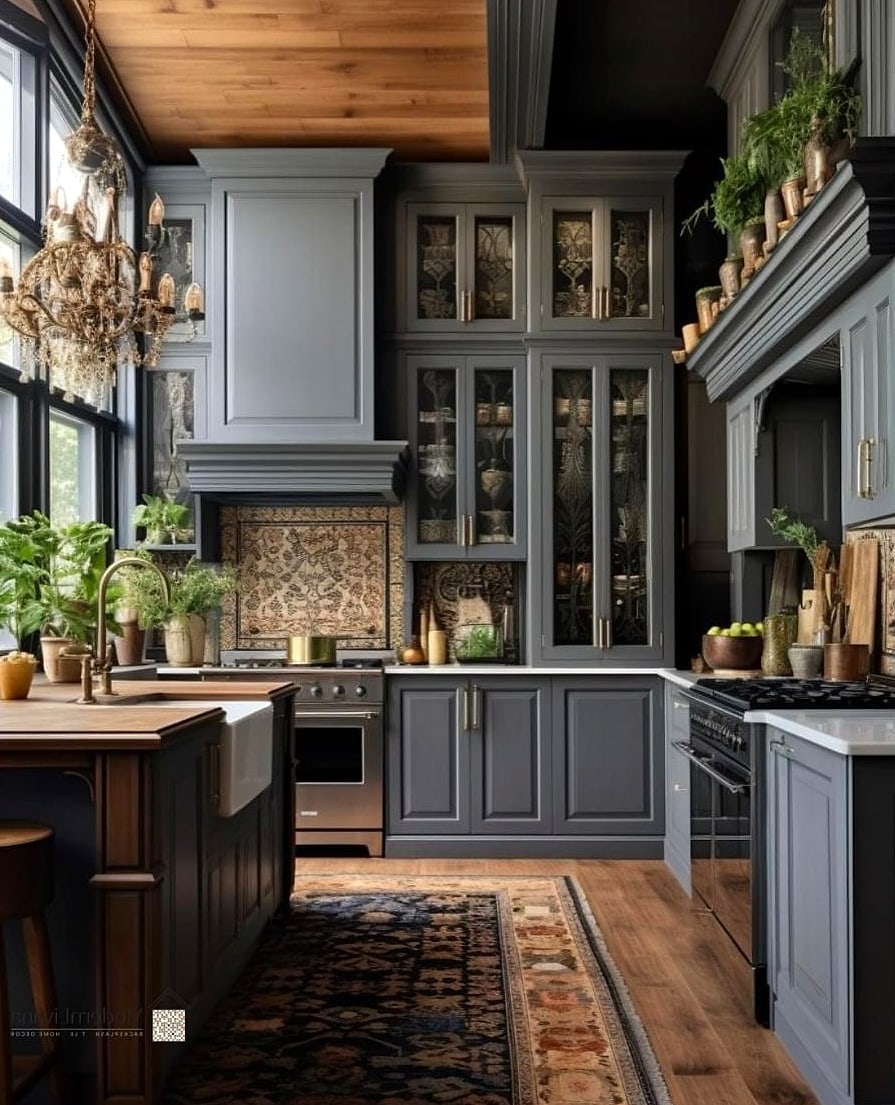
Sometimes the biggest style shift comes from the grout color rather than the tile itself. Pairing a neutral tile with dark charcoal grout adds definition and a slightly edgier look. This combination hides daily grime better than white grout while still keeping the backsplash feeling fairly classic. It’s an easy way to add contrast without committing to a bold tile color.
Warm Travertine Tile
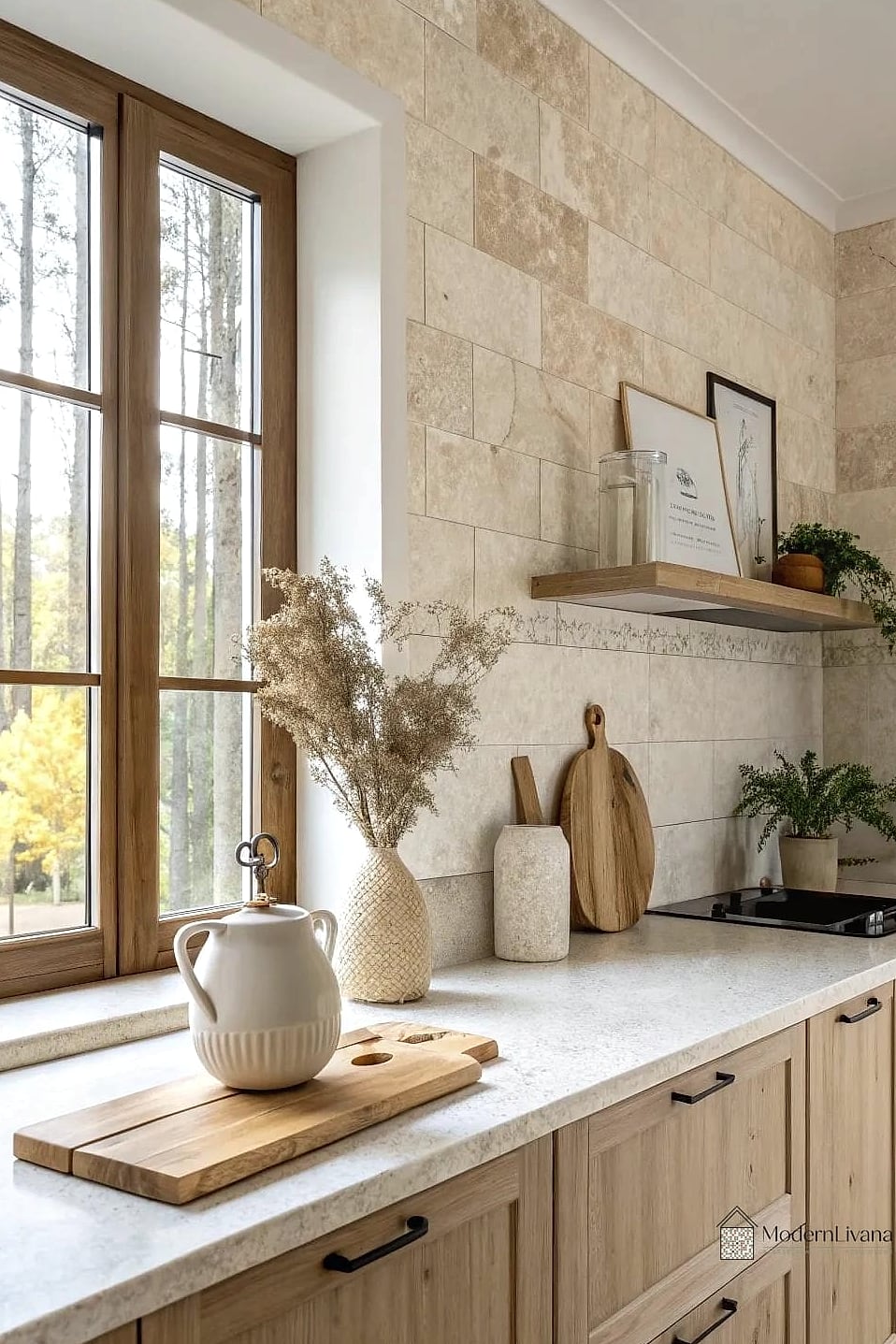
Travertine has a soft, sandy color palette that blends naturally with warm wood tones. Its subtle texture and pitted surface give it an old-world charm that feels collected rather than trendy. This works especially well in Tuscan, Mediterranean, or transitional kitchen styles. Travertine does need sealing to prevent staining, so it’s worth building that into your regular maintenance routine.
Playful Geometric Encaustic Tile
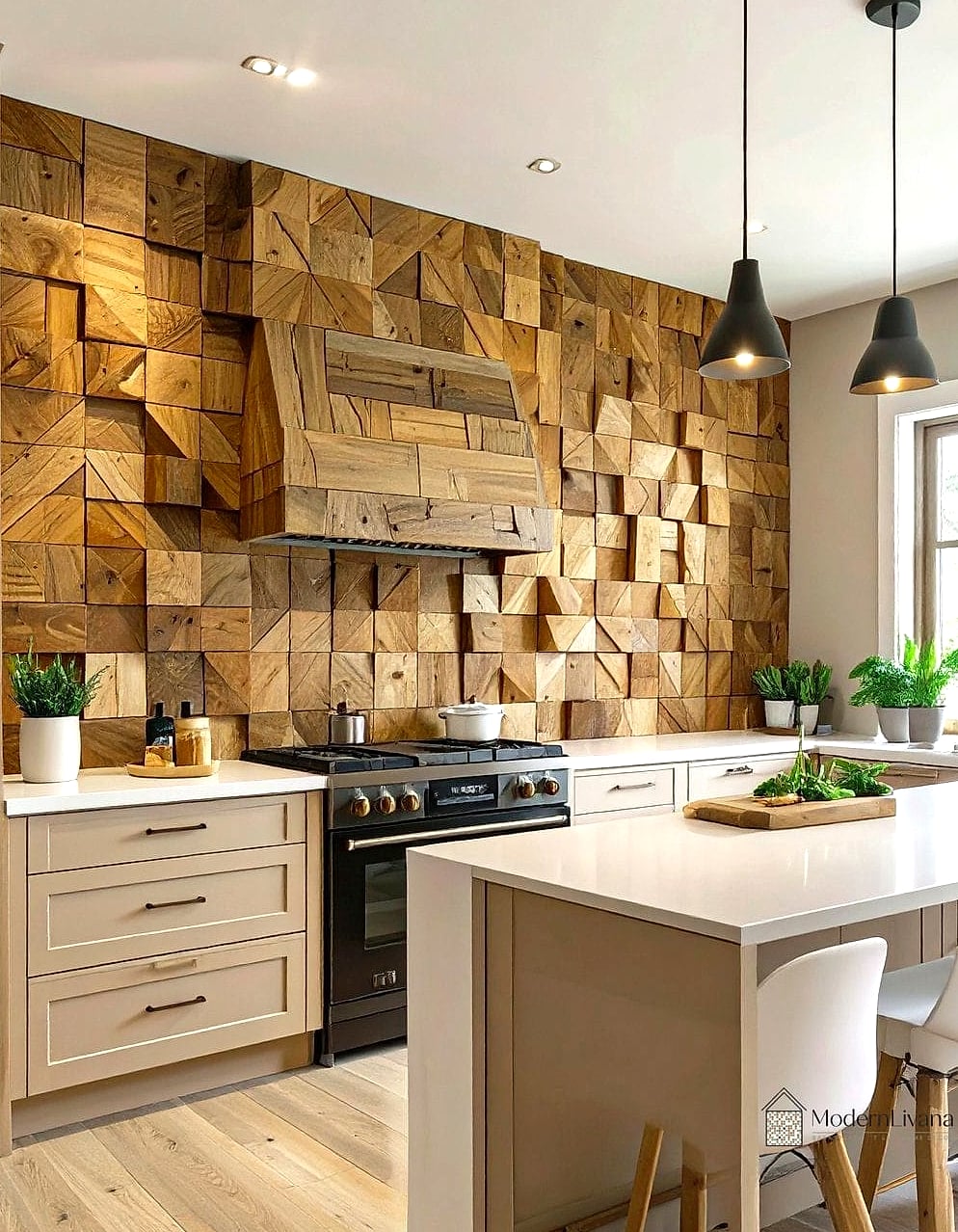
Encaustic tile brings bold geometric patterns and rich color combinations that make a real style statement. This is a great choice for a kitchen that wants a strong focal point without changing the whole layout. The patterns often include multiple colors, so pulling one shade for cabinetry or hardware helps tie the whole room together. Because the design is so detailed, this tile usually works best as a feature wall rather than throughout the entire kitchen.
Choosing a backsplash for wood countertops really comes down to how much contrast or harmony you want between the two surfaces. Some of these ideas lean into bold color and pattern, while others keep things quiet and let the wood do the talking. Whichever direction you go, pulling a few samples and holding them against your actual countertop in your kitchen’s lighting will always give you the clearest picture before committing.