23 White Cabinets Ideas That Designers Keep Coming Back To
- Classic Shaker Style Cabinets
- Warm White with Wood Countertops
- High-Gloss Lacquer Finish
- Matte White Cabinetry
- Two-Tone Kitchens with White Uppers
- White Cabinets with Black Hardware
- Beadboard Cabinet Doors
- White Cabinets in a Small Kitchen
- Inset Cabinet Doors
- White Cabinets with Marble Countertops
- Glass-Front Upper Cabinets
- White Cabinets with a Colorful Backsplash
- Farmhouse Sink with White Cabinetry
- White Cabinets with Open Shelving
- Herringbone Tile Backsplash with White Cabinets
- White Cabinets in a Bathroom Vanity
- White Cabinets with Brass Hardware
- White Cabinets with Textured Panels
- White Cabinets in a Laundry Room
- All-White Kitchen with Monochromatic Palette
- White Cabinets with a Statement Island
- White Cabinets with Under-Cabinet Lighting
- Vintage-Inspired White Cabinets
23 White Cabinets Ideas That Designers Keep Coming Back To
White cabinets never really go out of style, no matter how many trend forecasts try to convince us otherwise. They brighten small spaces, they play nice with pretty much any countertop or hardware finish, and they make a kitchen or bathroom feel clean without feeling clinical. If you’re weighing your options, here are 23 white cabinet ideas that keep showing up in real homes and real design portfolios for good reason.
Classic Shaker Style Cabinets

Shaker cabinets are the reason white kitchens still feel fresh after decades of trends coming and going. The recessed panel and clean lines work in farmhouse kitchens, modern builds, and everything between. They’re easy to keep clean since there’s no ornate detailing to trap dust or grease. Budget-wise, shaker fronts are widely available at every price point, from stock cabinets to custom builds.
Warm White with Wood Countertops
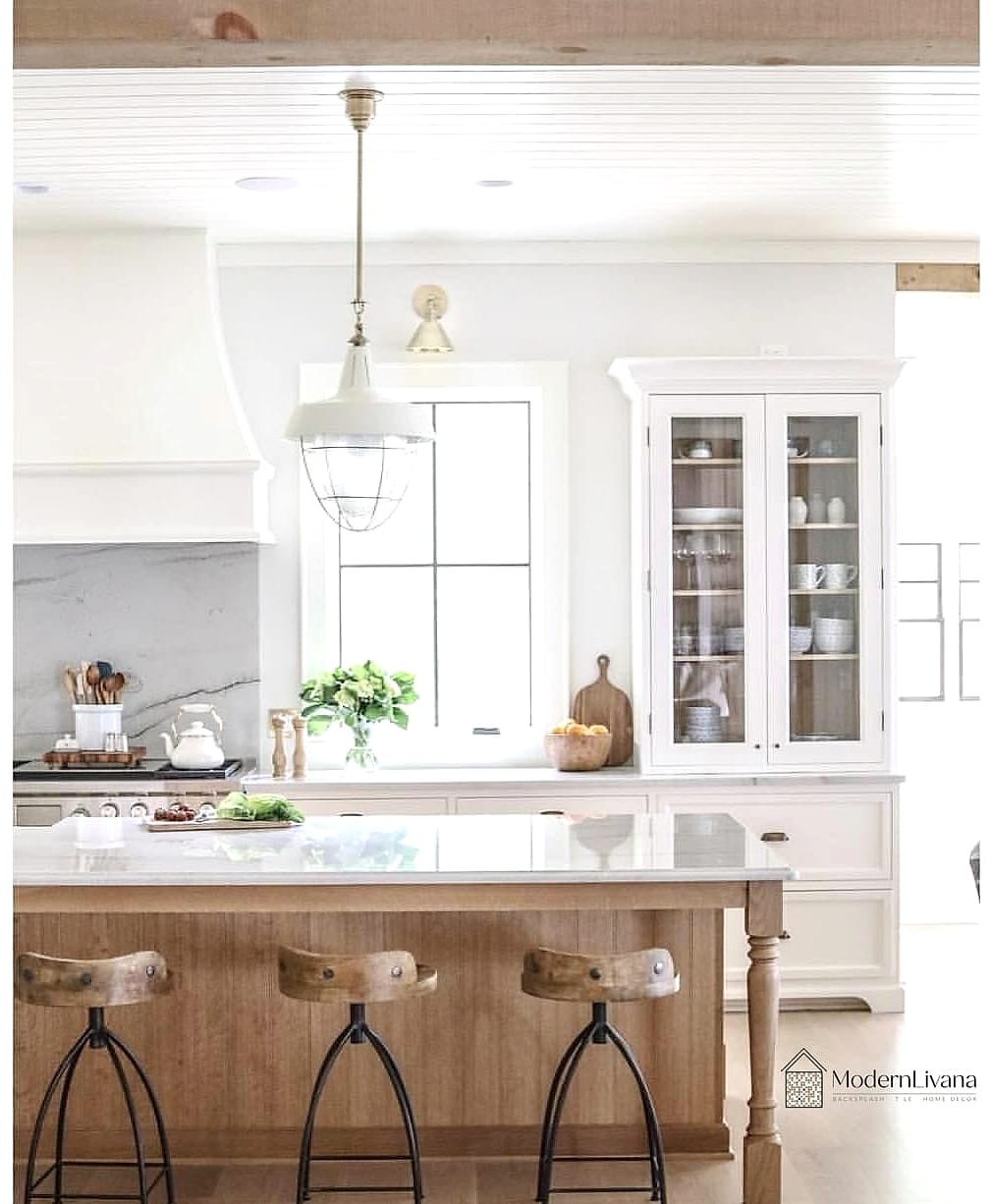
Pairing white cabinets with butcher block or warm wood countertops keeps a kitchen from feeling too sterile. The wood adds texture and a little coziness that pure white-on-white can sometimes lack. This combo works especially well in smaller kitchens where you want brightness but still crave some warmth underfoot. Maintenance is straightforward as long as you seal butcher block regularly and wipe up spills before they soak in.
High-Gloss Lacquer Finish

For a more modern, almost European feel, high-gloss white cabinets reflect light beautifully and make a room feel larger. Designers love this look for contemporary kitchens where sleek surfaces are the whole point. The tradeoff is that gloss shows fingerprints and smudges more than matte finishes, so you’ll want a microfiber cloth handy. It’s a striking option if you’re going for a polished, high-end feel without adding color.
Matte White Cabinetry
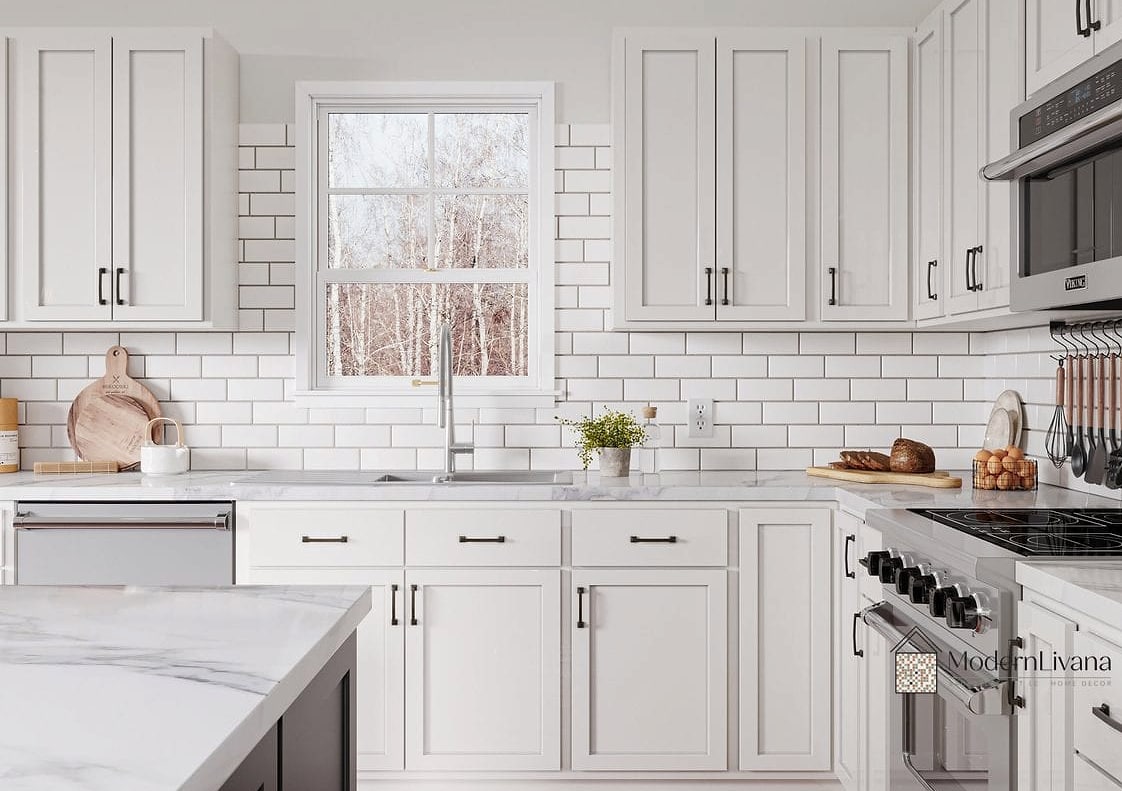
Matte finishes have become the quieter alternative to gloss, and they’re everywhere in newer builds right now. They hide fingerprints and water spots far better than glossy surfaces, which makes them a practical pick for busy households. The soft, chalky look pairs beautifully with brushed brass or matte black hardware. It’s a good middle ground if you want something modern but not cold.
Two-Tone Kitchens with White Uppers
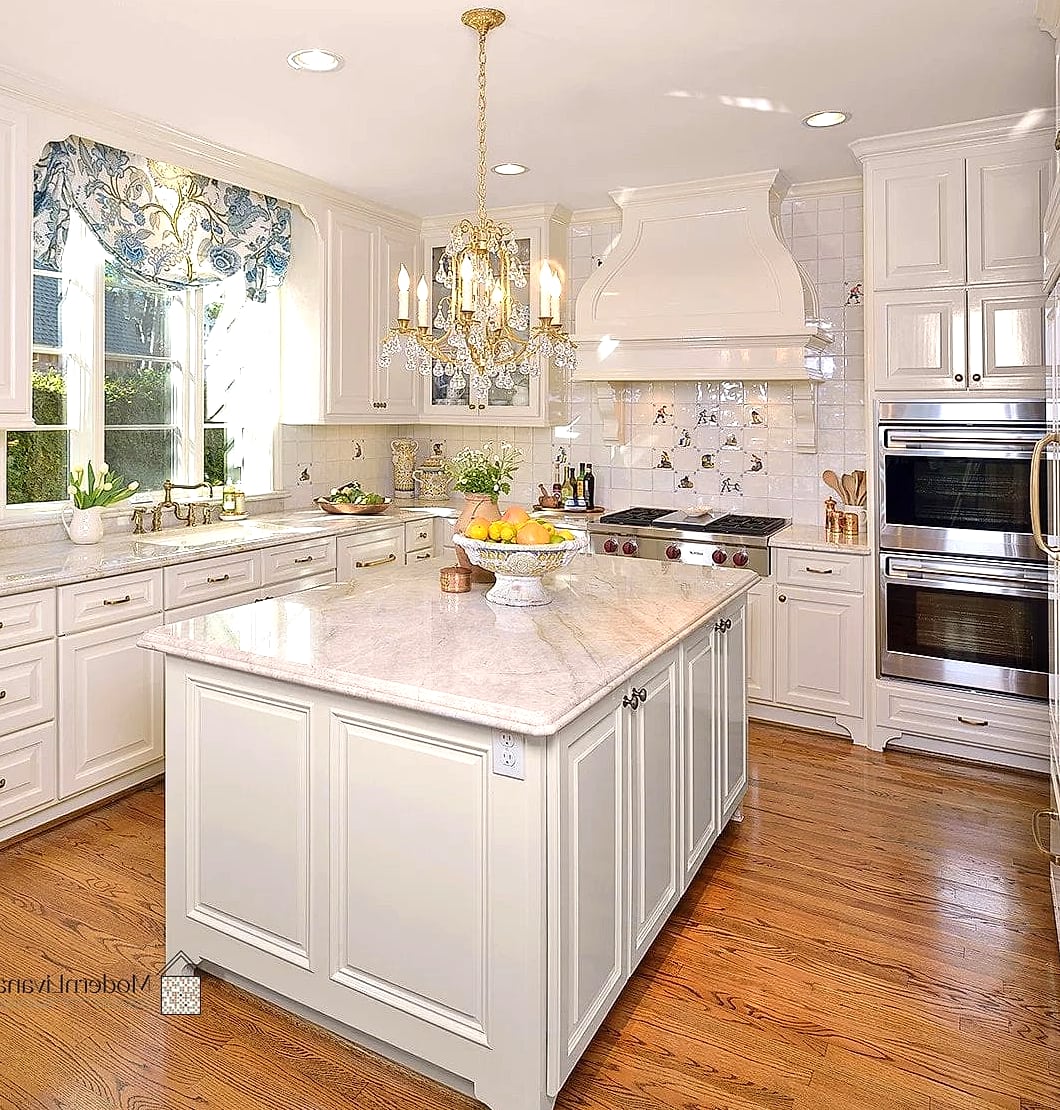
Keeping upper cabinets white while going darker on the lower cabinets is one of those design moves that photographs incredibly well. It keeps the ceiling area feeling open and light while grounding the room with a moodier tone down low. This works particularly well in kitchens with limited natural light, since the white up top bounces light around. Navy, forest green, and charcoal lowers are especially popular pairings right now.
White Cabinets with Black Hardware
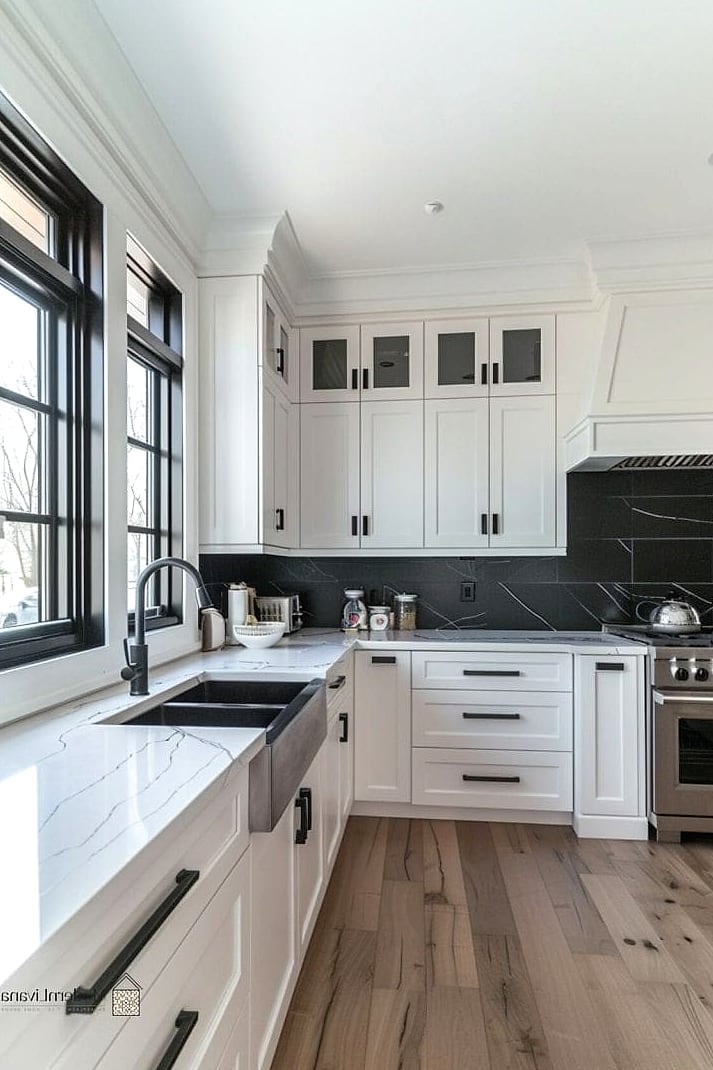
Black fixtures against white cabinetry create a crisp, graphic contrast that never really feels dated. It’s an easy way to add a little edge to an otherwise soft, neutral kitchen. This pairing works in traditional and modern spaces alike, which is part of why designers reach for it so often. Swapping hardware is also one of the cheapest updates you can make if you’re not ready for a full renovation.
Beadboard Cabinet Doors
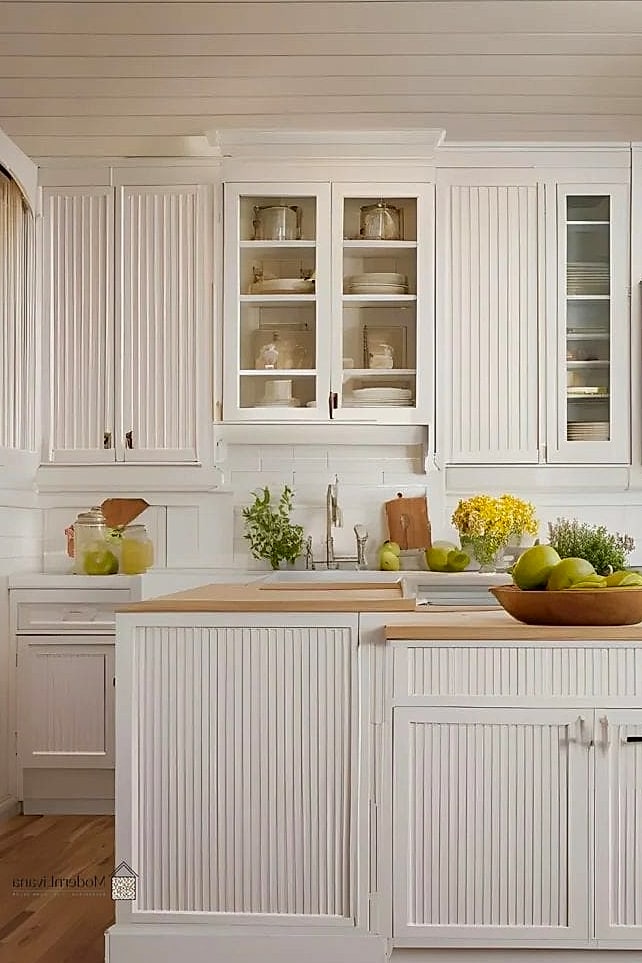
Beadboard paneling brings a cottage or coastal feel to white cabinetry that flat panels just can’t replicate. The vertical grooves add texture and a handmade quality, especially nice in kitchens going for a farmhouse or New England vibe. It does take a bit more effort to clean since dust and grease can settle into the grooves. Still, for the character it adds, most homeowners find it worth the extra wipe-down.
White Cabinets in a Small Kitchen
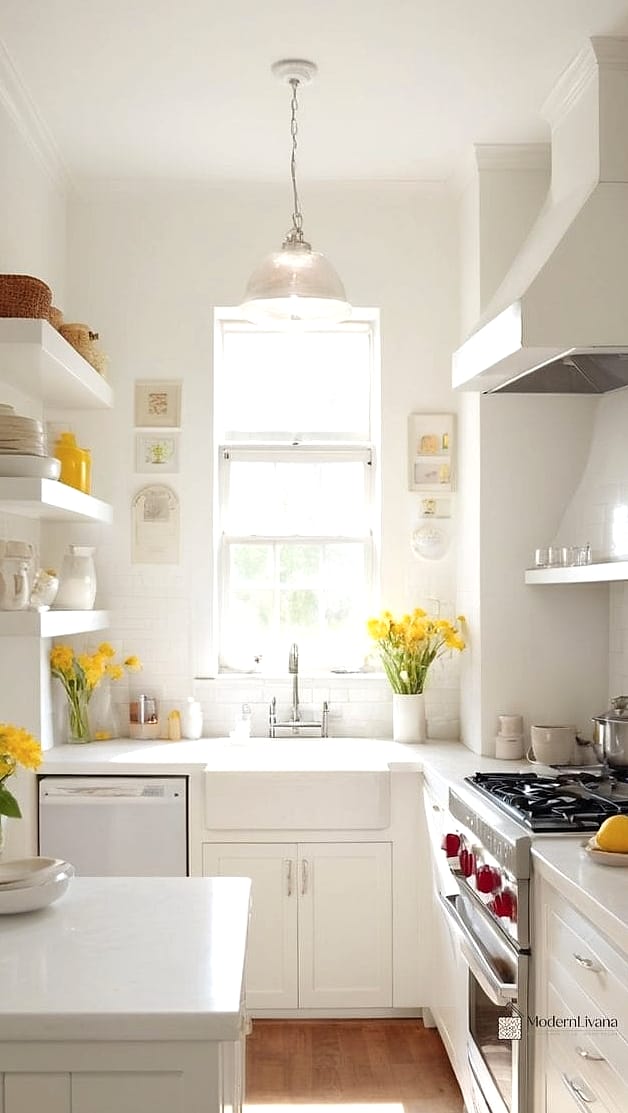
If you’re working with a compact galley or apartment kitchen, white cabinets are one of the most reliable ways to make the space feel bigger than it is. Light bounces around instead of getting absorbed, which matters a lot in rooms without much natural light. Pairing white cabinets with a light countertop and minimal upper cabinetry keeps things feeling open rather than boxed in. Open shelving on one wall can also help avoid a closed-in feel.
Inset Cabinet Doors

Inset doors sit flush within the cabinet frame rather than overlapping it, giving white cabinetry a more custom, furniture-like appearance. This is a detail designers gravitate toward for higher-end kitchens because it reads as more traditional and well-crafted. It’s a pricier option since it requires more precise construction, but the payoff is a timeless look that ages well. If budget allows, this is one upgrade that genuinely elevates a kitchen’s overall feel.
White Cabinets with Marble Countertops
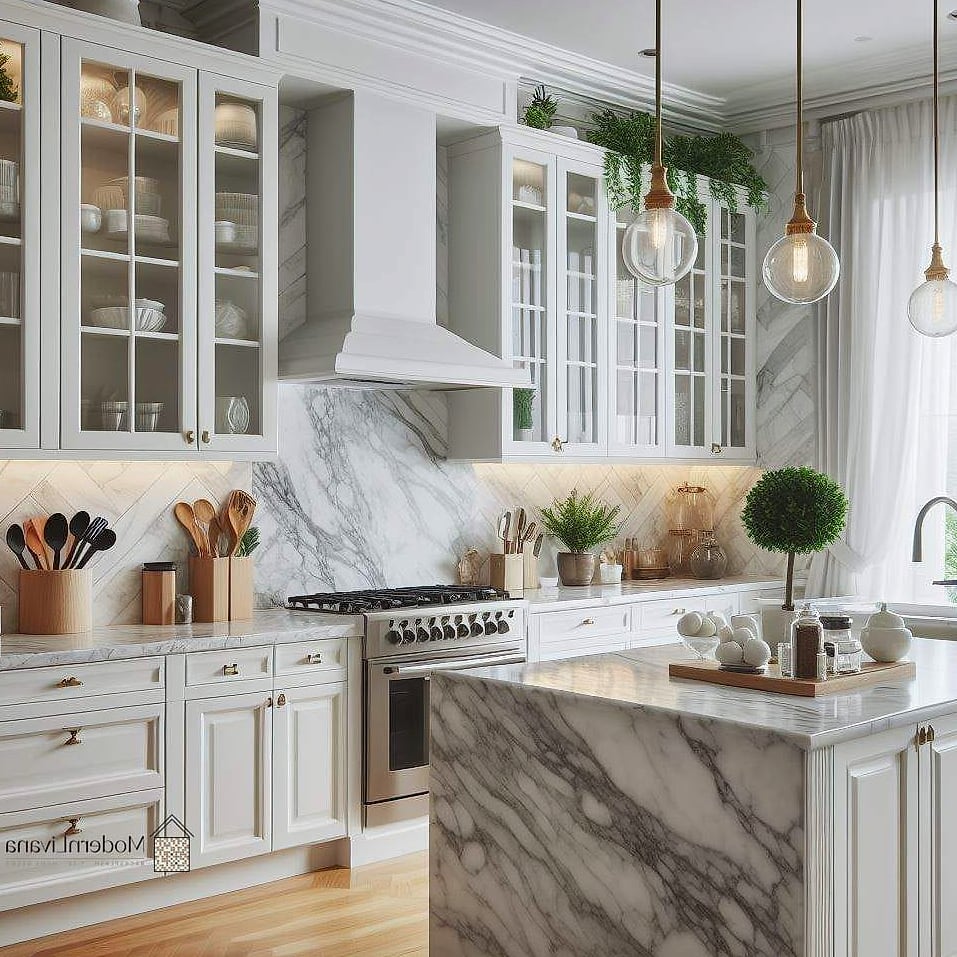
White cabinets and marble countertops are a pairing that’s stuck around for a reason: it just works. The soft veining in the marble adds movement and interest against the flat white cabinetry. This combination leans traditional or transitional depending on the hardware and lighting you choose. Marble does require some care since it can stain and etch, so a quartz alternative with a similar look is worth considering for busier households.
Glass-Front Upper Cabinets
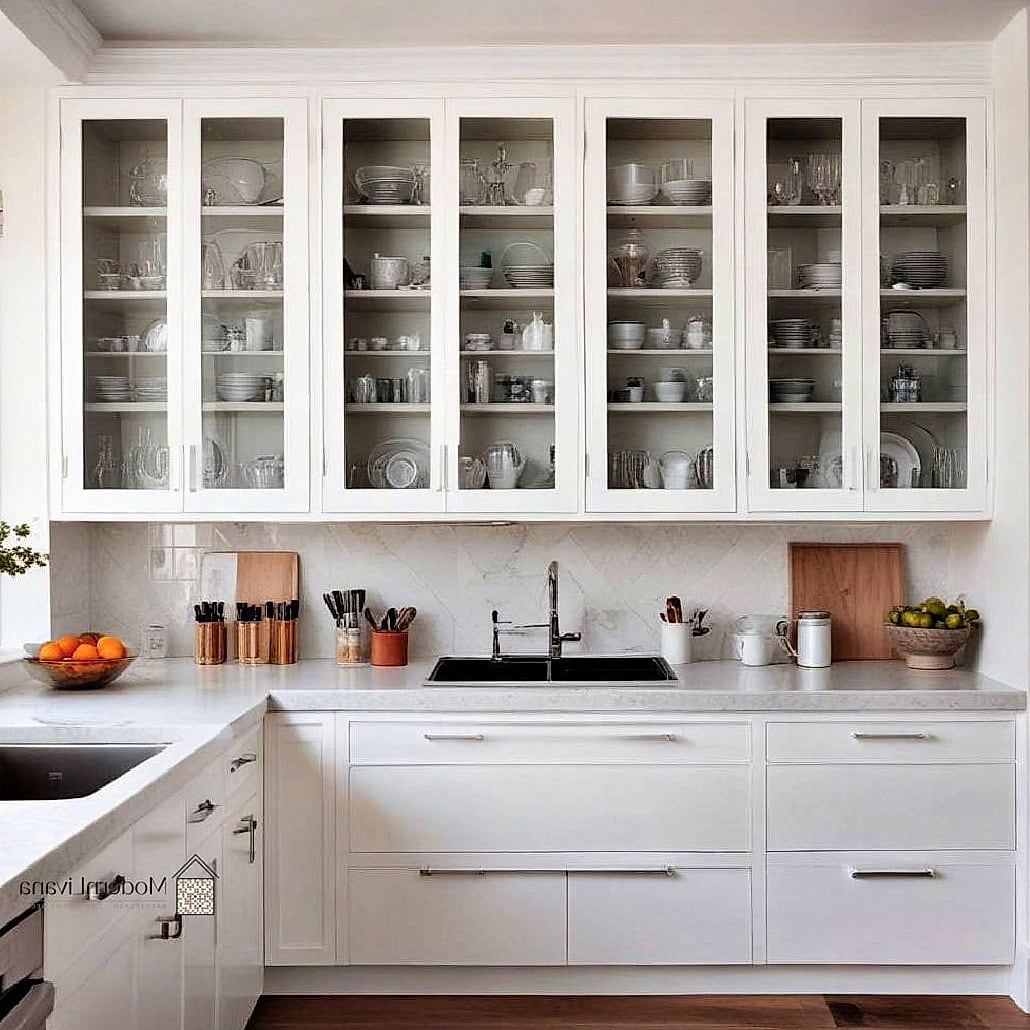
Swapping a few solid upper cabinet doors for glass fronts breaks up a wall of white and adds a little visual interest. It’s a nice way to display pretty dishware or glassware without cluttering open shelves. This works especially well in dining-adjacent kitchens where the cabinets double as a bit of a display case. Just know that glass fronts mean everything inside needs to stay reasonably tidy.
White Cabinets with a Colorful Backsplash
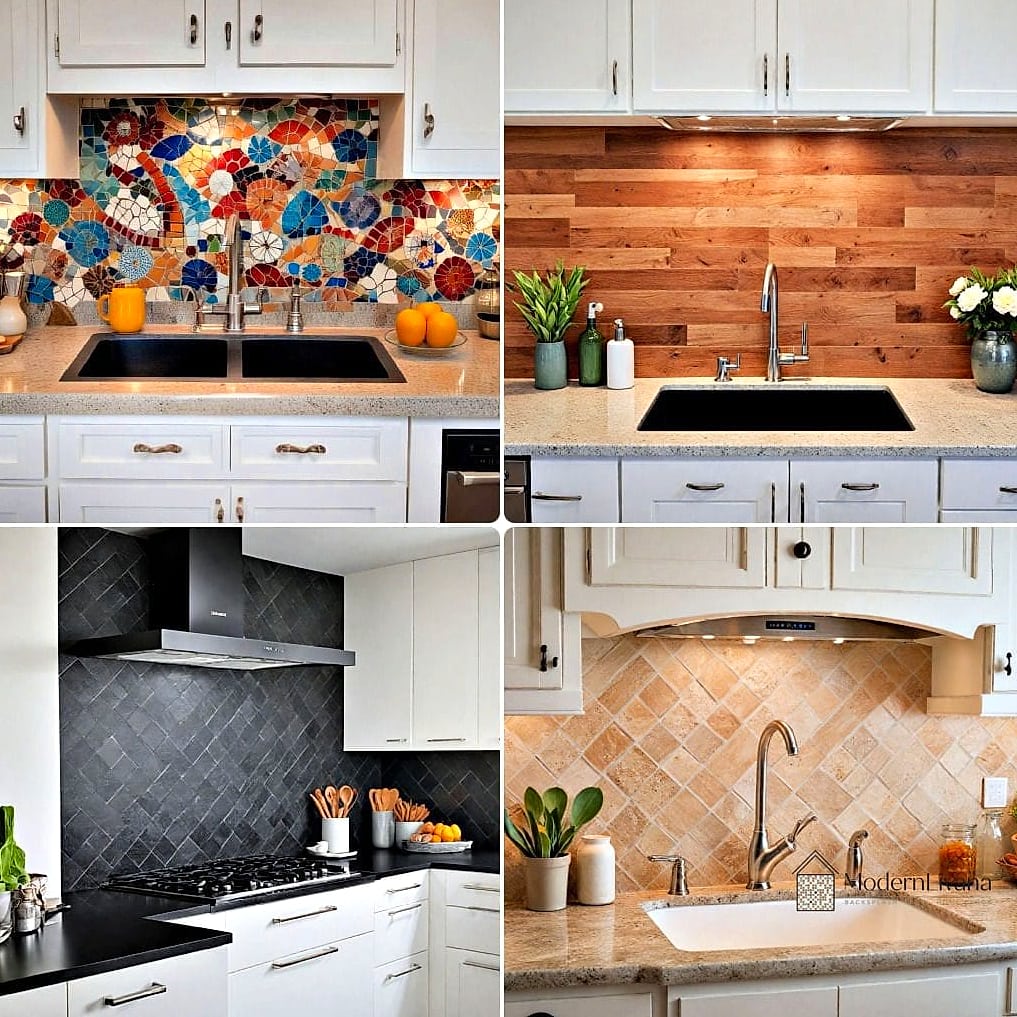
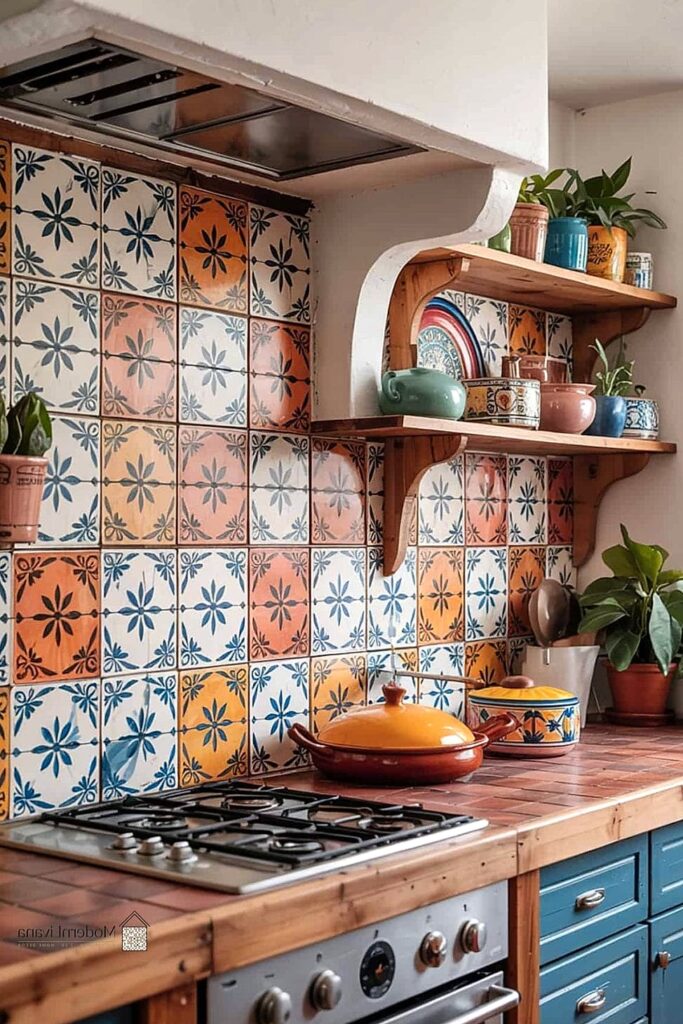
A white cabinet base gives you a lot of freedom to go bold with your backsplash, whether that’s a zellige tile in a soft blue or a bright patterned mosaic. Since the cabinets stay neutral, the backsplash becomes the room’s real personality. This is a favorite trick for renters or homeowners who want color without committing to it long-term, since you can always swap the backsplash later. Peel-and-stick tile options make this approach even more accessible if you’re not ready for a full tile installation.
Farmhouse Sink with White Cabinetry

An apron-front farmhouse sink set into white cabinets is one of those combinations that instantly reads as classic and welcoming. It softens the kitchen’s overall look and adds a bit of old-world charm without feeling fussy. This pairing shows up constantly in farmhouse and modern farmhouse kitchens for good reason. Just make sure your cabinet layout can accommodate the sink’s depth, since retrofitting one into existing cabinetry isn’t always simple.
White Cabinets with Open Shelving
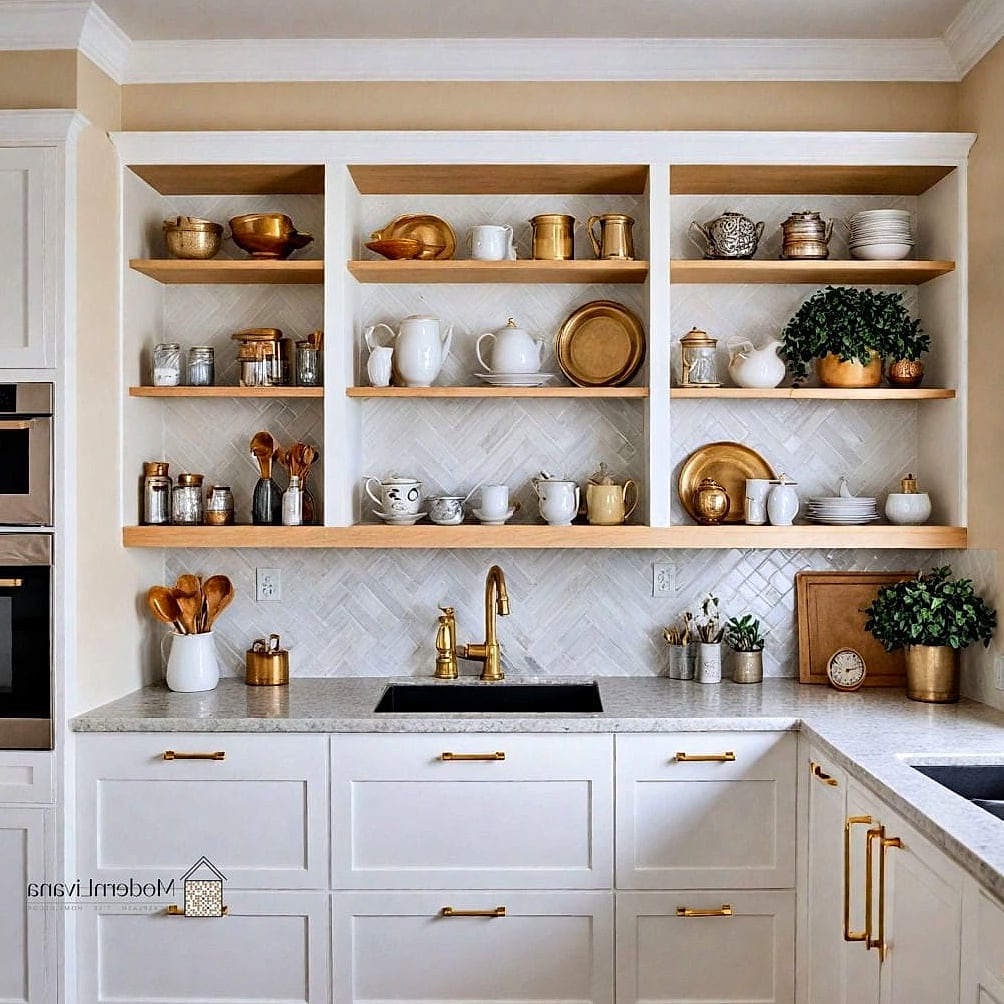
Mixing in open shelving alongside white cabinets keeps a kitchen from feeling too boxy or closed off. Floating shelves in a warm wood tone contrast nicely against white cabinetry and give you a spot to style plants, cookbooks, or everyday dishes. This is a popular choice for kitchens that want an airy, curated feel rather than a fully enclosed one. Just be honest with yourself about how tidy you’ll actually keep open shelves before committing to too many.
Herringbone Tile Backsplash with White Cabinets

A herringbone-pattern backsplash adds movement and texture that a plain subway tile can’t quite match, and it looks especially sharp against flat white cabinetry. This works well in both classic and modern kitchens depending on the tile material you choose. Ceramic or porcelain versions are budget-friendly, while marble herringbone leans more luxury. It’s a slightly more involved installation, so factor that into your timeline if you’re doing it yourself.
White Cabinets in a Bathroom Vanity
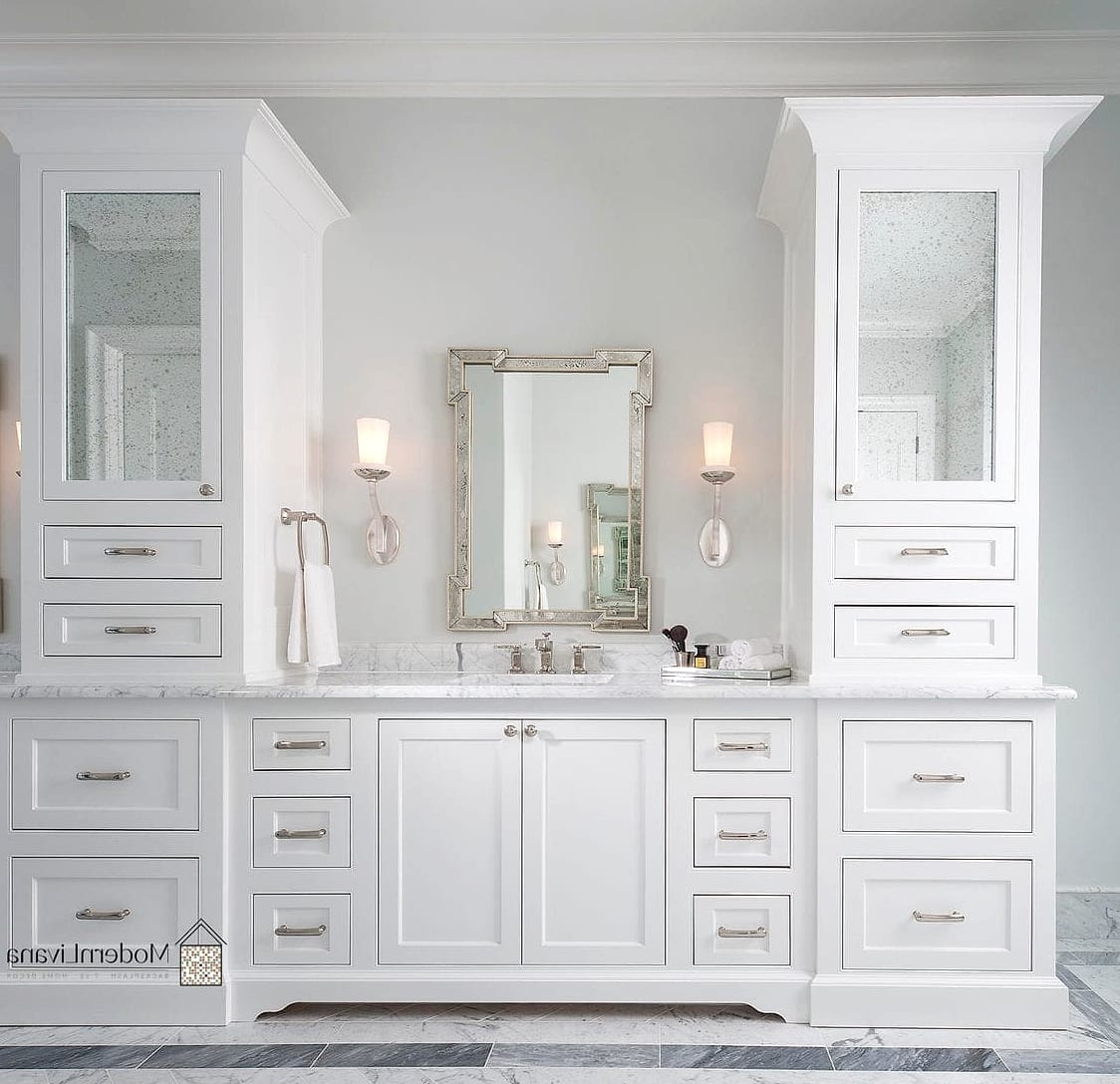
White cabinetry isn’t just for kitchens. It’s one of the most requested looks for bathroom vanities because it feels fresh and spa-like without trying too hard. Pairing a white vanity with brushed brass or matte black fixtures gives the space a little personality. This look works in primary bathrooms and small powder rooms alike, and it tends to photograph beautifully for resale listings too.
White Cabinets with Brass Hardware
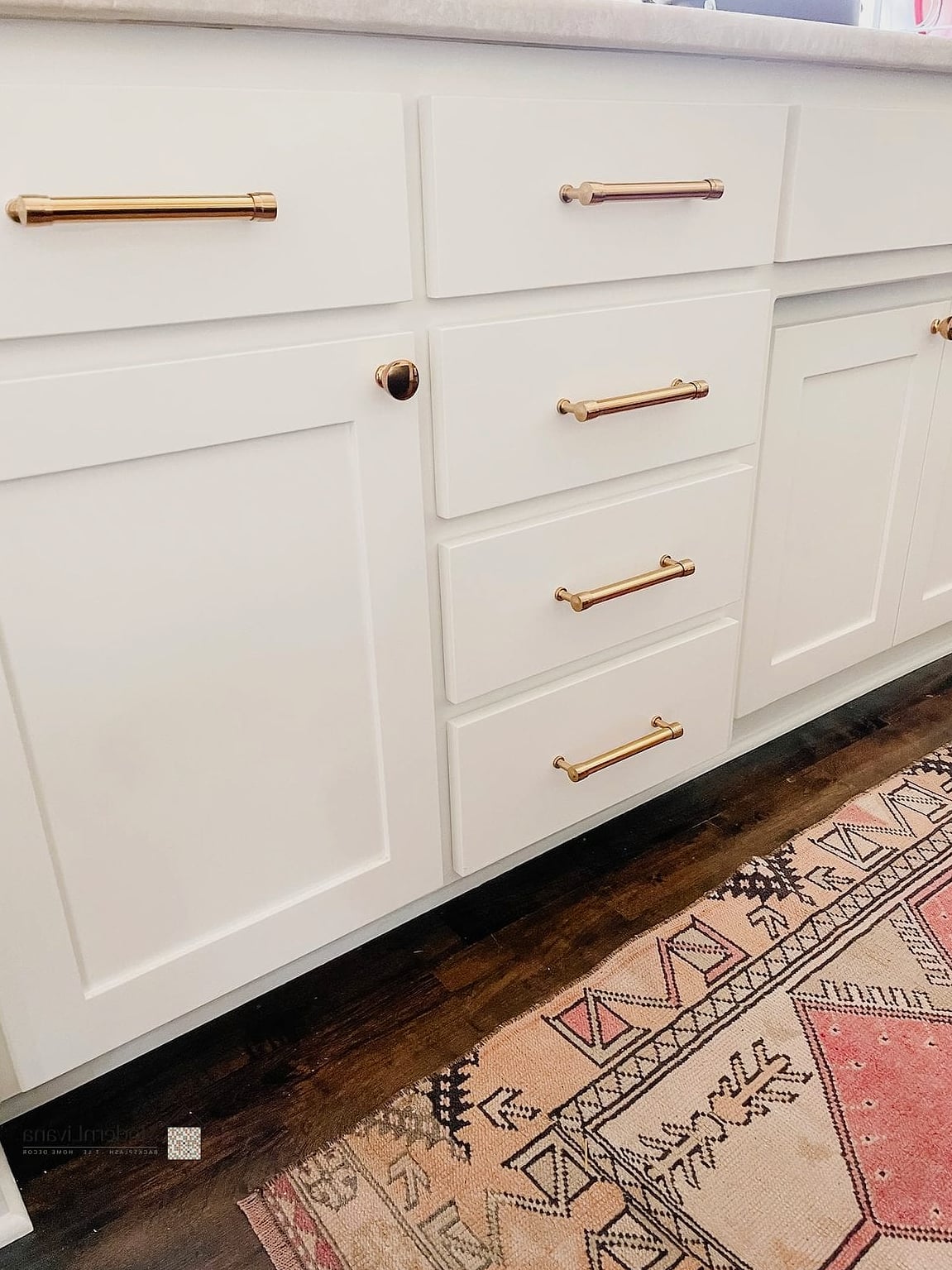
Brushed brass pulls and knobs against white cabinetry bring warmth to a space that could otherwise feel a little cold. This pairing has had serious staying power over the last several years, and it doesn’t show signs of slowing down. It works particularly well in kitchens leaning traditional, transitional, or even a soft modern style. It’s also one of the easiest and most affordable cabinet refreshes if you’re not ready for anything bigger.
White Cabinets with Textured Panels
Fluted or grooved cabinet panels add a subtle architectural detail to white cabinetry that flat doors don’t offer. This look has been showing up more in kitchen islands and bathroom vanities as a way to add interest without adding color. It reads as a little more custom and high-end, even on a stock cabinet base. Cleaning takes slightly more attention since the grooves can collect dust, but a soft brush handles it fine.
White Cabinets in a Laundry Room
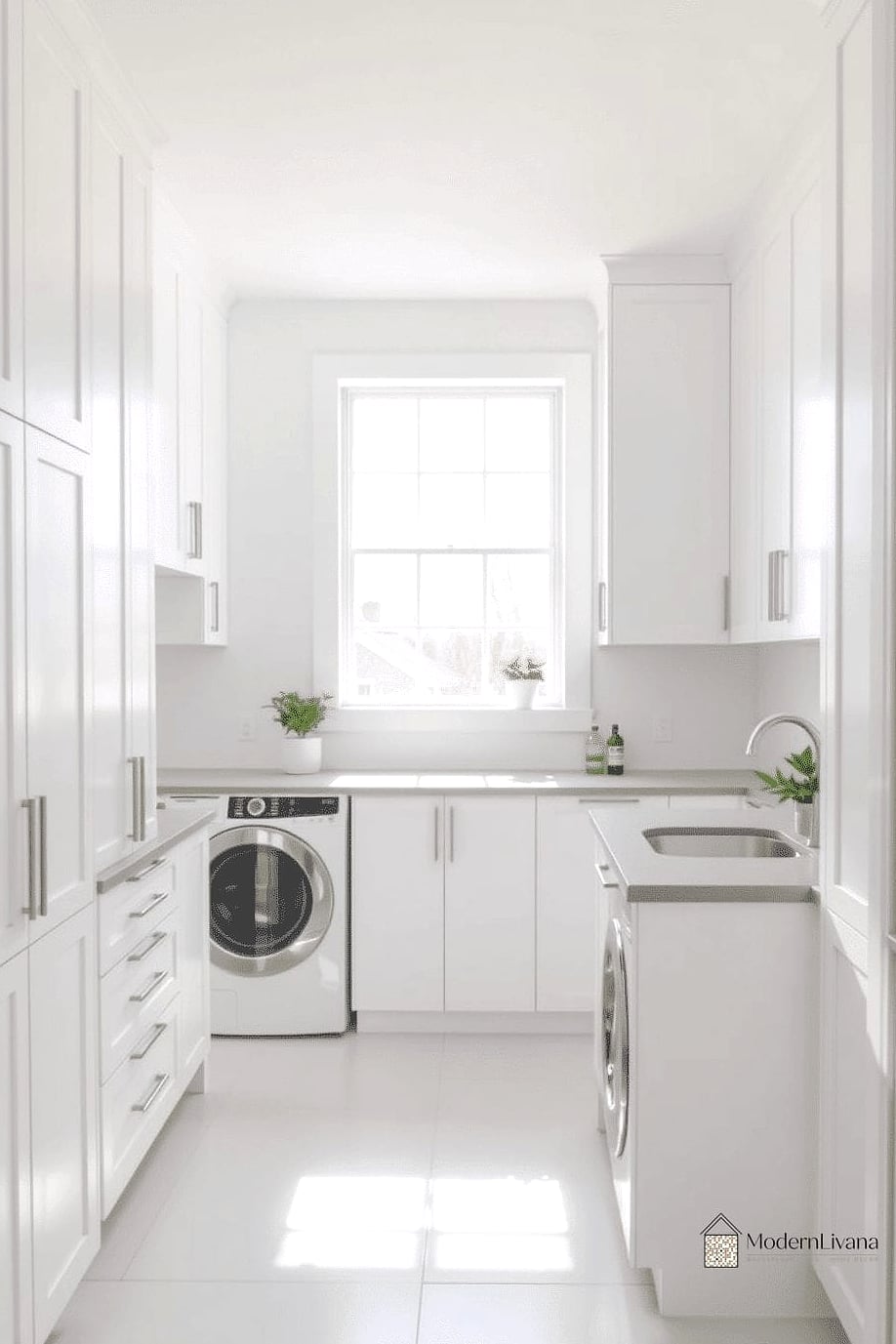
Laundry rooms with white cabinetry feel brighter and more like a functional extension of the home rather than an afterthought. Built-in storage above and below the machines keeps detergent, dryer sheets, and cleaning supplies out of sight but easy to grab. This is a great spot to use baskets and labeled bins to keep everything organized. Even a small laundry closet feels more put-together with a few white cabinet doors concealing the mess.
All-White Kitchen with Monochromatic Palette

Going fully monochromatic, white cabinets, white countertops, white walls, creates a bright, gallery-like feel that photographers and designers both love. The key to making this work is varying the textures and finishes so the room doesn’t feel flat. Think matte cabinets, a honed countertop, and a slightly glossy tile backsplash. It’s a striking look, though it does require a bit more diligence about keeping things clean since there’s nowhere for mess to hide.
White Cabinets with a Statement Island
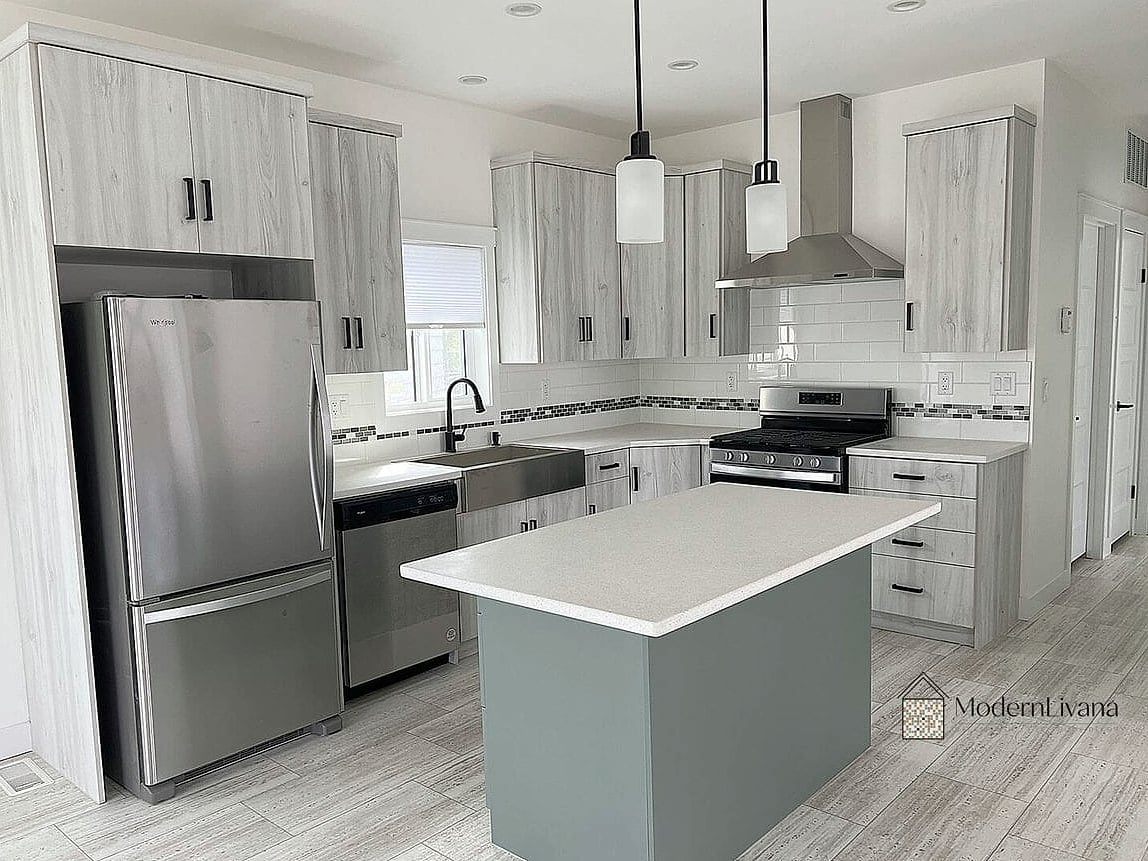
Keeping the perimeter cabinets white while making the island a bold color, like navy, sage, or even black, is one of the most popular kitchen layouts designers return to again and again. It gives the eye somewhere to land without overwhelming the whole room in color. This approach also makes it easy to update the look later since you’re really only repainting one piece. It’s a favorite for kitchens that want personality without going all in on a colorful room.
White Cabinets with Under-Cabinet Lighting
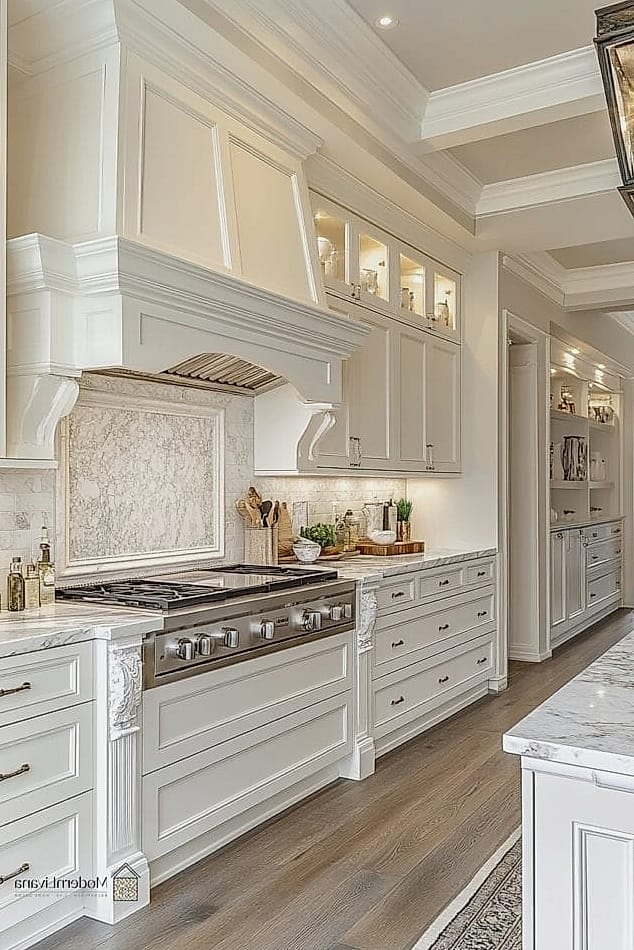
Adding LED strip lighting under white upper cabinets does more than just look nice, it actually makes countertop tasks like chopping and cooking noticeably easier. The light also bounces off white surfaces beautifully, making the whole kitchen feel brighter in the evening. This is a relatively simple DIY project if you’re comfortable with basic wiring, or an easy add-on if an electrician is already in your kitchen for other work. Layered lighting like this is one of those details that makes a kitchen feel finished.
Vintage-Inspired White Cabinets
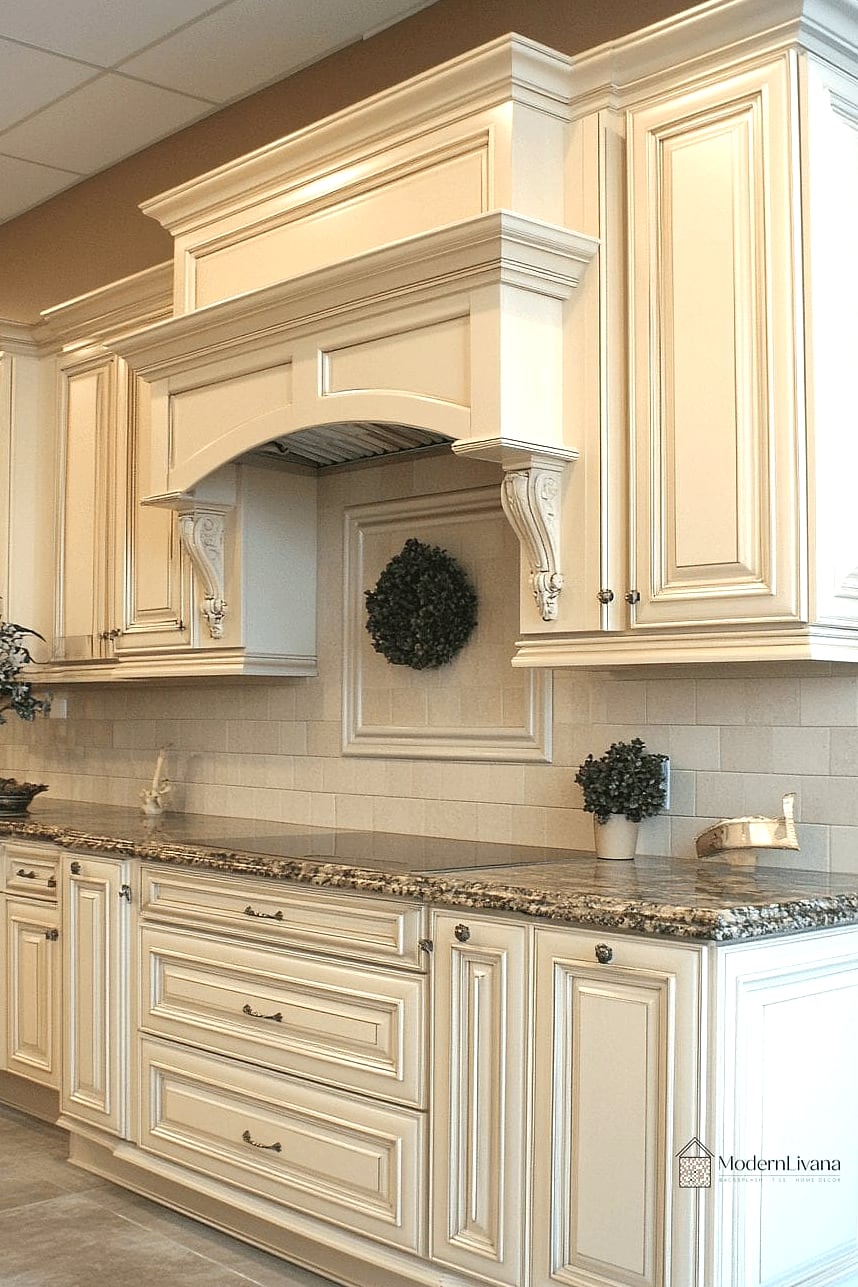
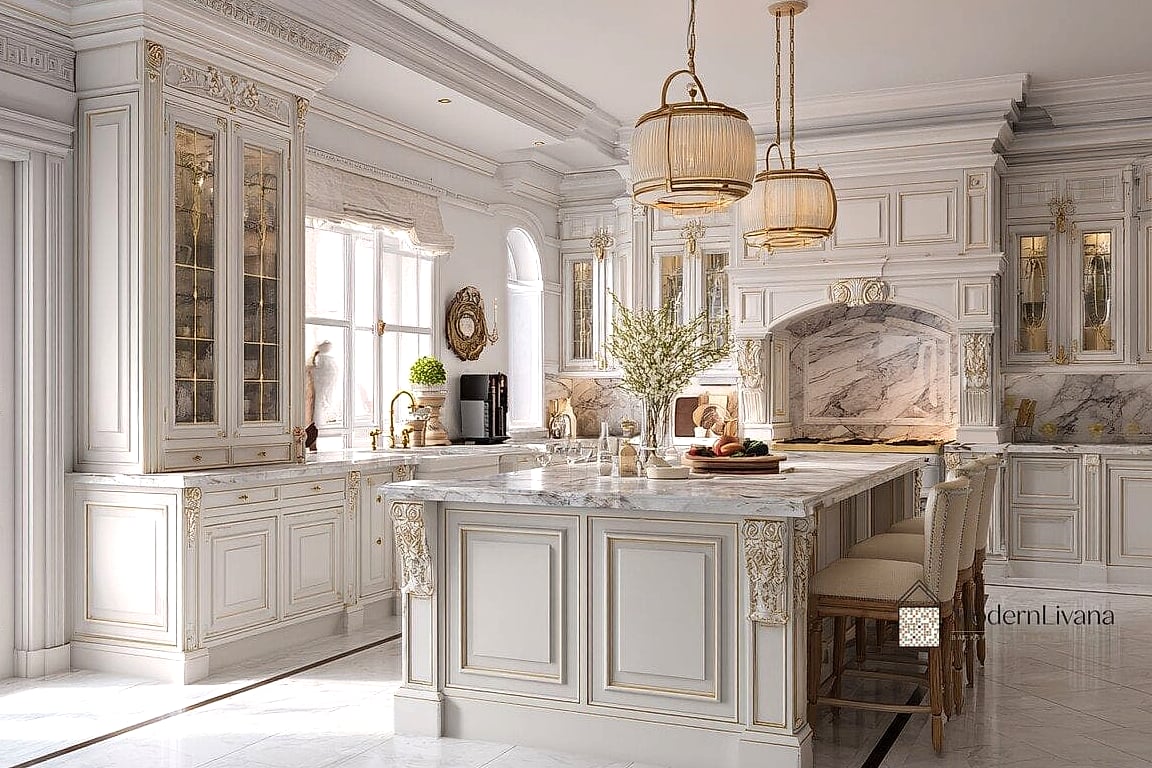
Reproduction hardware, fluted glass inserts, and slightly rounded door profiles give white cabinets an antique, collected-over-time feel rather than a straight-from-the-showroom look. This style has been gaining traction with homeowners who want character without a full vintage kitchen overhaul. It pairs beautifully with older homes but also works surprisingly well in new builds looking to soften a too-modern feel. Sourcing vintage-style hardware is usually the easiest way to bring this look into an existing white kitchen without replacing the cabinets themselves.
If there’s one takeaway here, it’s that white cabinets are less of a single look and more of a flexible starting point. Whether you lean farmhouse, modern, or somewhere in between, there’s a version of this idea that fits your space, your budget, and how much upkeep you’re actually willing to do.