27 Kitchen Floating Shelves Ideas Creative Open Ideas Worth Stealing From Interior Designers
- Reclaimed Wood Shelves Over the Stove
- Black Metal Shelves for an Industrial Edge
- Marble Shelves for a Touch of Luxury
- Corner Floating Shelves for Awkward Spaces
- Shelves Flanking a Window
- Open Shelves with Built-In Lighting
- Rustic Wood Slab Shelves
- Glass Shelves for a Minimalist Look
- Floating Shelves for Open Dish Storage
- Shelves Styled with Cookbooks and Greenery
- Two-Tier Floating Shelves for Extra Storage
- Shelves Above a Coffee Bar
- Floating Shelves with Hidden Storage Underneath
- Wraparound Shelves for a Full Wall Statement
- Floating Shelves in Place of a Backsplash
- Painted Shelves to Match Your Cabinetry
- Shelves with Exposed Steel Brackets
- Floating Shelves for Small Kitchen Appliances
- Shelves with a Textured Finish
- Floating Shelves for Open Pantry Storage
- Shelves Paired with a Mosaic Tile Backsplash
- Floating Shelves in a Butler’s Pantry
- Shelves with Built-In Wine Storage
- Floating Shelves for a Kids’ Snack Station
- Shelves with a High-Gloss Finish
- Floating Shelves as a Half Wall Divider
- Peel-and-Stick Wood Shelves for Renters
27 Kitchen Floating Shelves Ideas Creative Open Ideas Worth Stealing From Interior Designers
Open shelving gets a lot of flak for being impractical, but honestly, when it’s done right, it’s one of the easiest ways to make a kitchen feel lighter and more personal. There’s something about swapping out a few heavy upper cabinets for floating shelves that just opens everything up. If you’ve been on the fence about trying it, these 27 ideas should give you plenty to work with, whether you’re renovating from scratch or just want to update one wall.
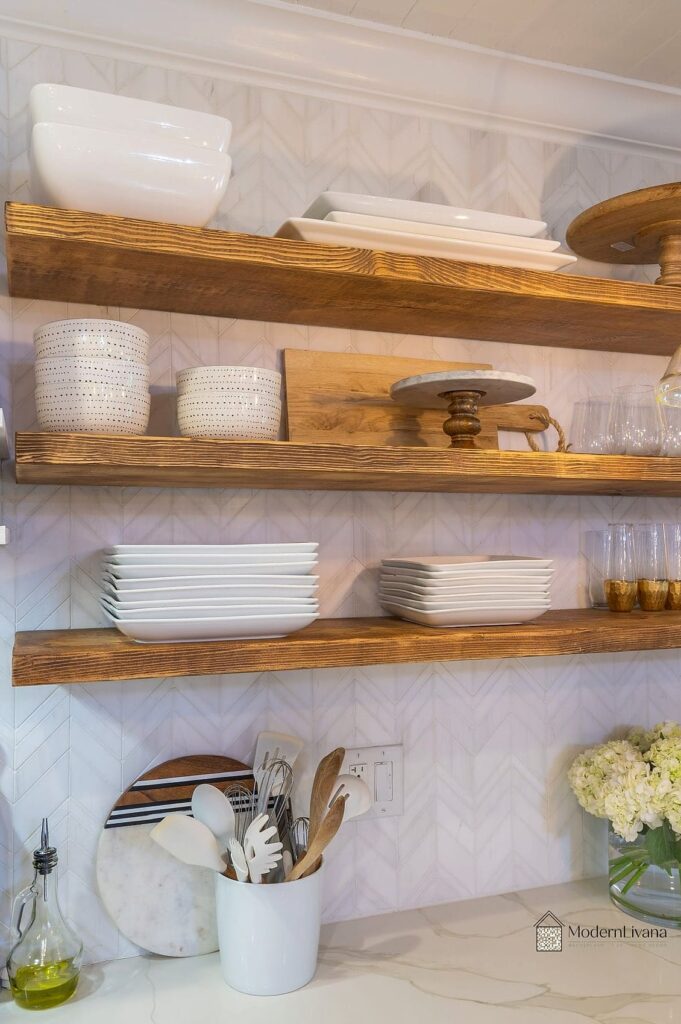
Reclaimed Wood Shelves Over the Stove

There’s a reason this look shows up in so many farmhouse and industrial kitchens. Reclaimed wood brings texture and history into a space that can otherwise feel a little too polished. The grain, the knots, the slight color variations, none of it looks manufactured.
This works especially well above a stove where you want easy access to oils, spices, and cooking utensils. Just keep in mind wood near heat needs a sealant to hold up over time. A matte polyurethane finish protects the surface without making it look glossy or fake.
Black Metal Shelves for an Industrial Edge

If your kitchen leans modern or industrial, black metal floating shelves add a nice contrast against white or wood cabinetry. They’re thinner than wood shelves, which gives them a more architectural feel.
Pair them with black fixtures and hardware for a cohesive look. These are pretty low maintenance too, a quick wipe down keeps them looking sharp, and they don’t scratch as easily as painted wood.
Marble Shelves for a Touch of Luxury
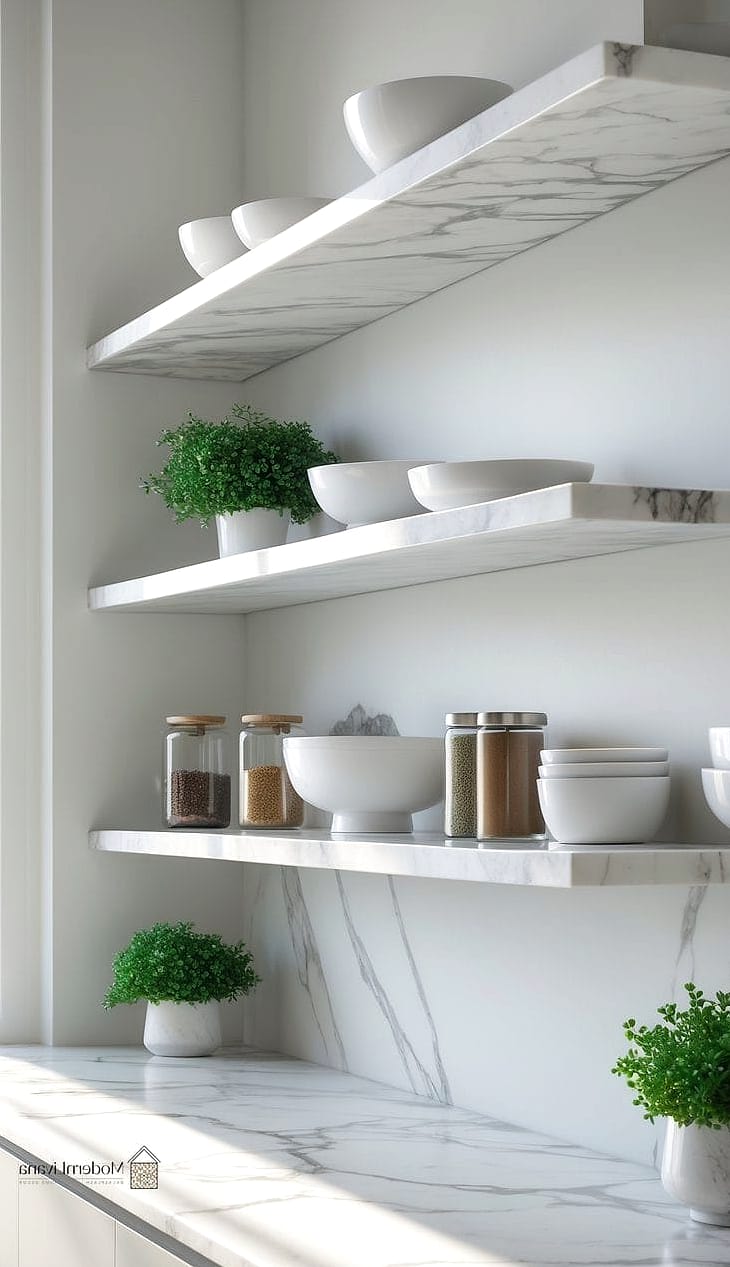
Marble floating shelves aren’t something you see every day, and that’s exactly why they stand out. They add an unexpected layer of sophistication, especially in a kitchen with quartz countertops or marble backsplash tile.
They’re heavier than wood or metal, so proper installation with hidden brackets rated for the weight is a must. This isn’t really a DIY-friendly option unless you’re experienced, but the payoff is a kitchen that feels genuinely custom.
Corner Floating Shelves for Awkward Spaces
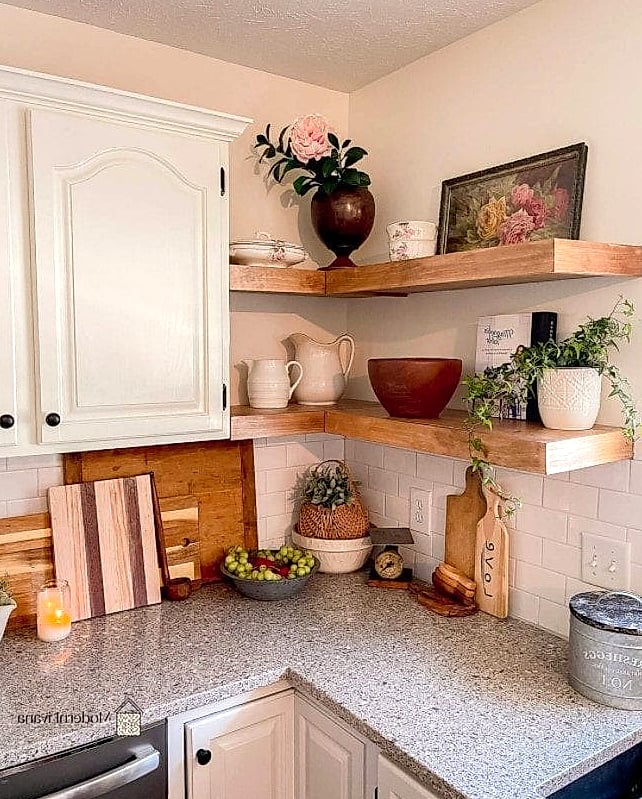
Corners are notoriously hard to use well, and floating shelves solve that problem better than most cabinets do. A few staggered corner shelves can hold everything from cookbooks to potted herbs without eating up floor space.
This is a great renter-friendly idea too, since many corner shelf brackets install with minimal wall damage. It’s also a smart way to add storage in small kitchens where every inch counts.
Shelves Flanking a Window
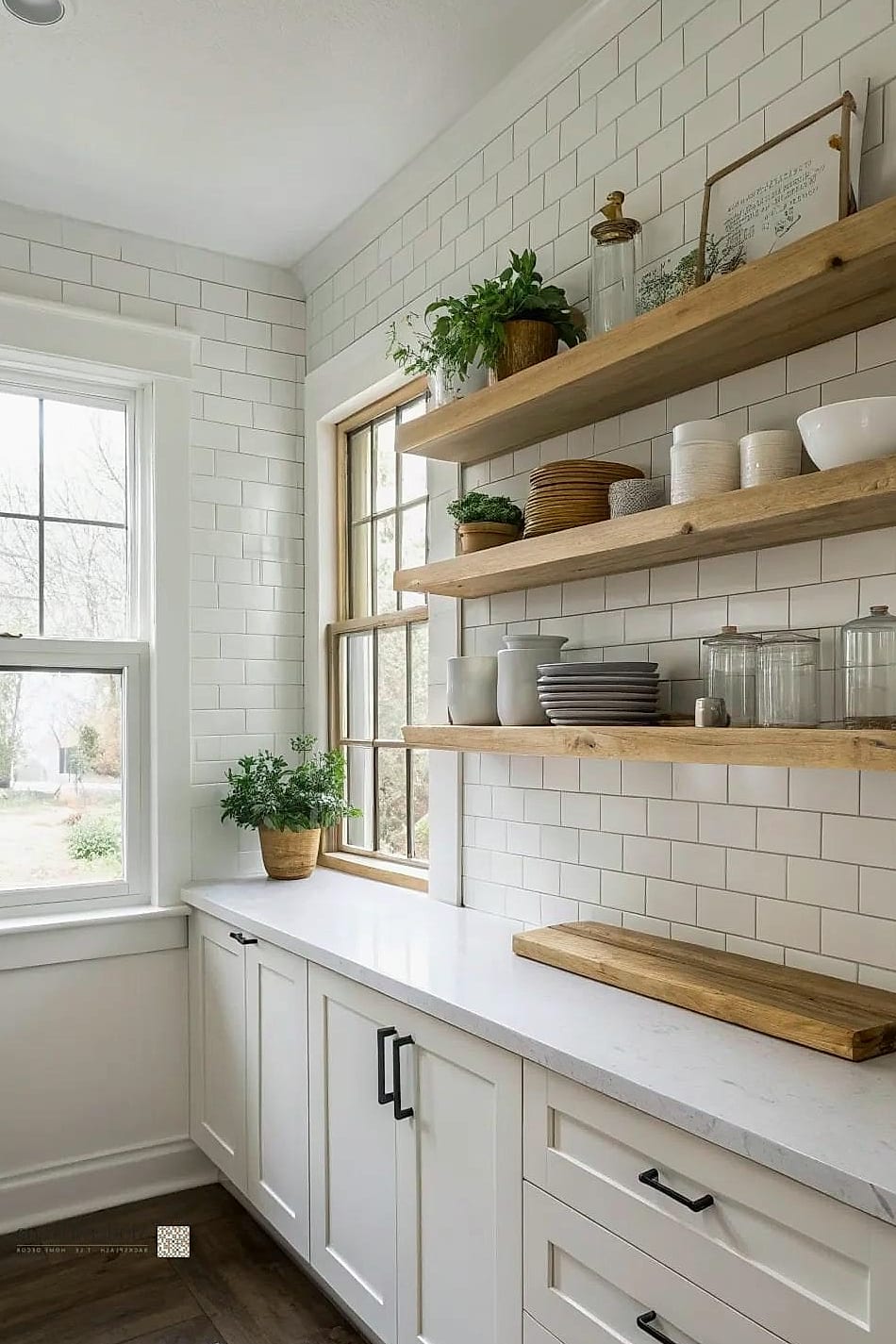
Instead of cabinets on either side of your kitchen window, try mirrored floating shelves. It creates a nice symmetry and keeps natural light flowing into the room instead of blocking it with bulky upper cabinets.
This layout works particularly well over a sink, since you’ll have easy access to dish soap, sponges, and everyday glassware. Just be mindful of humidity near the window if you’re using unsealed wood.
Open Shelves with Built-In Lighting
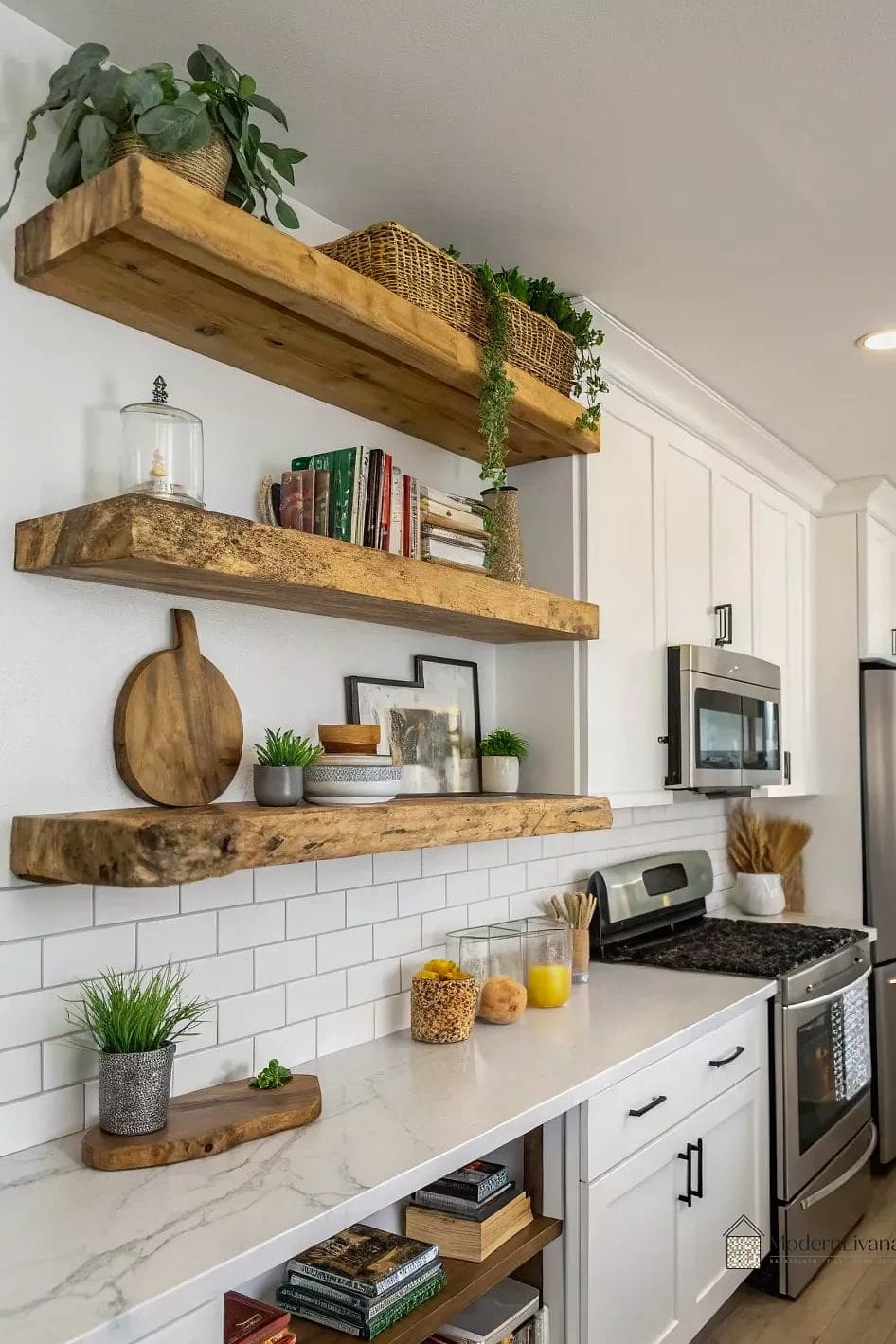
Adding LED strip lighting underneath floating shelves gives your kitchen that layered lighting effect designers love. It’s subtle, but it makes a huge difference at night when you don’t want the overhead lights blasting.
This is a fairly simple upgrade if you’re already installing new shelves, most LED strips are battery-powered or plug into a nearby outlet, so it’s not a major electrical project.
Rustic Wood Slab Shelves
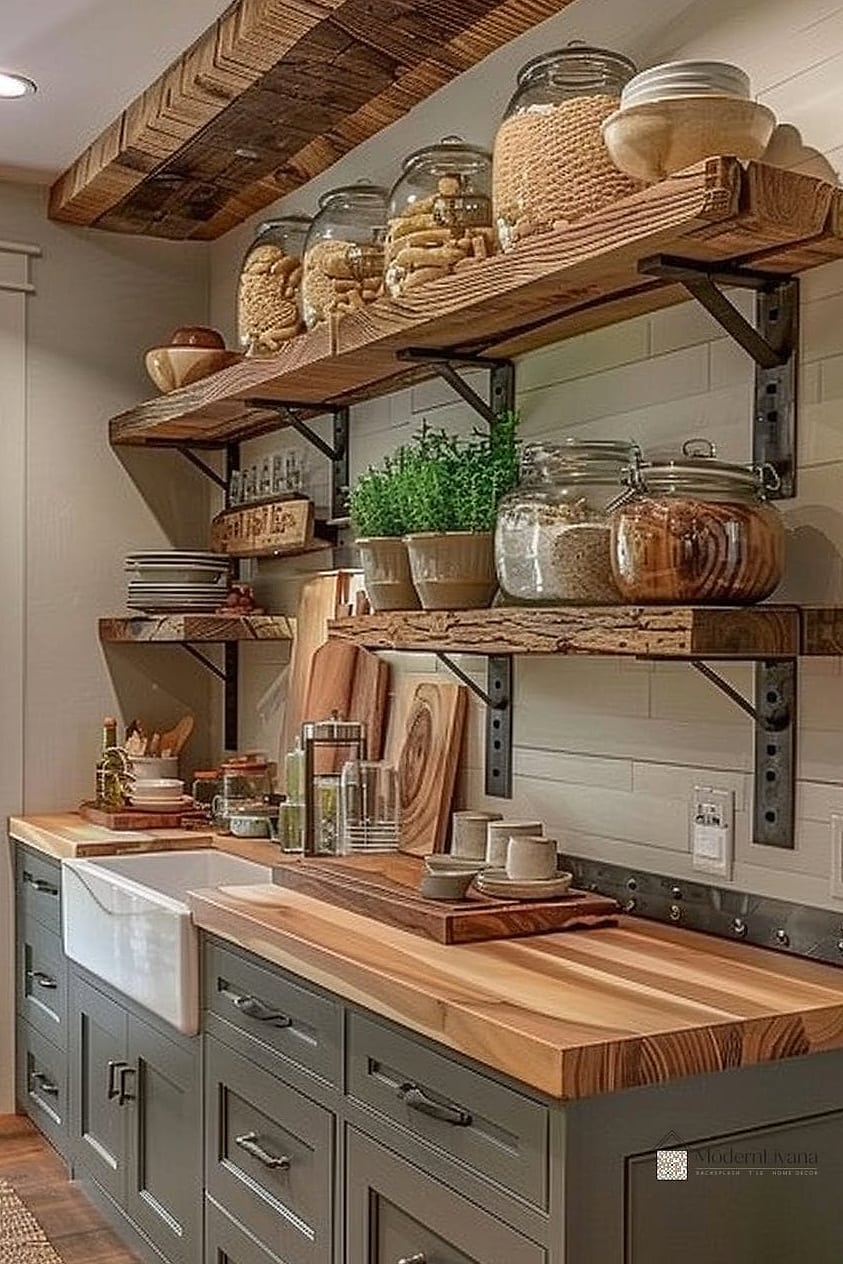
Thicker than your average shelf, wood slab shelves have a chunky, substantial feel that works beautifully in farmhouse and rustic kitchens. Live-edge slabs in particular add a organic, one-of-a-kind quality.
Because they’re heavier, you’ll want sturdy hidden brackets or steel rod supports. These shelves pair nicely with warm wood tones elsewhere in the kitchen, like a butcher block island or wood cabinetry.
Glass Shelves for a Minimalist Look
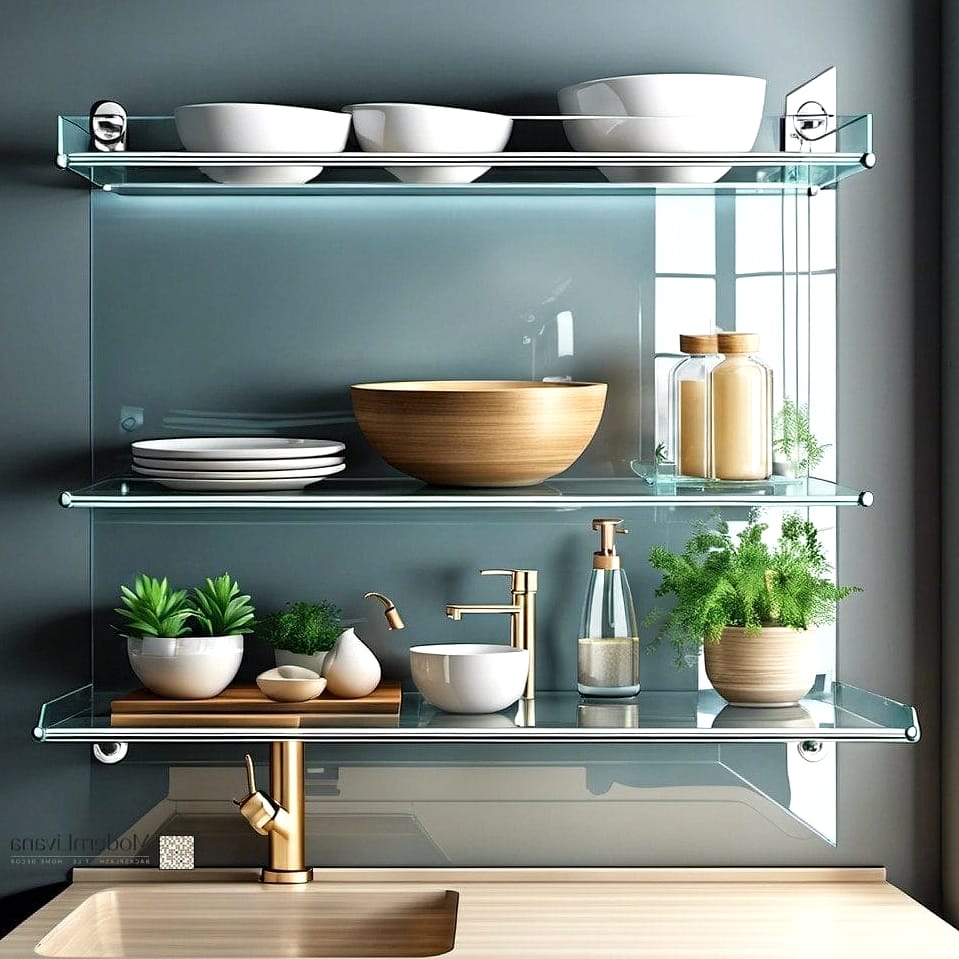
Glass floating shelves practically disappear against the wall, which makes them a great choice for small kitchens where you don’t want anything visually heavy. They keep the space feeling open and airy.
They do show fingerprints and dust more than wood or metal, so if you go this route, be ready for a bit more upkeep. A glass cleaner and microfiber cloth once a week keeps them looking crisp.
Floating Shelves for Open Dish Storage

Skipping upper cabinets entirely in favor of shelves for everyday dishes is a bold move, but it’s growing in popularity. It forces a bit of intentional organization since everything is on display, but it also makes unloading the dishwasher faster.
Stick to a neutral color palette for your dishware if you go this route. White or cream plates and bowls look tidy and cohesive, while a mismatched collection can start to feel cluttered fast.
Shelves Styled with Cookbooks and Greenery
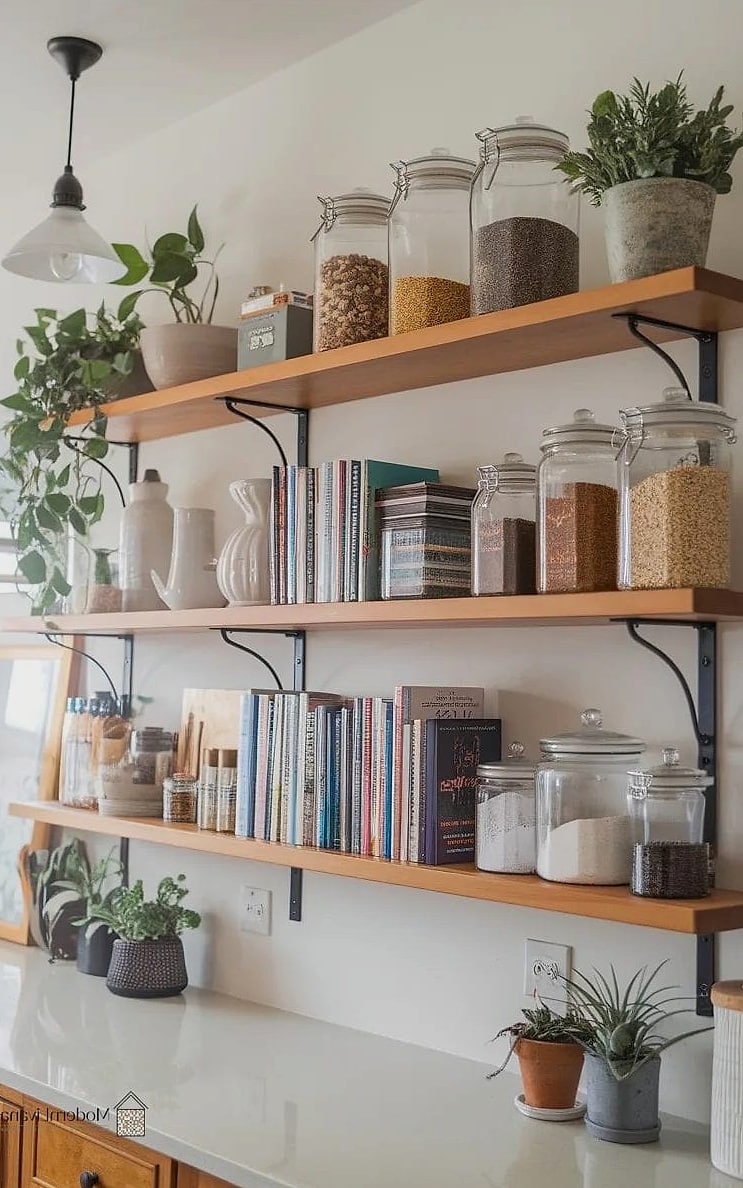
This is one of those ideas that instantly makes a kitchen feel lived-in and warm. A row of cookbooks mixed with a trailing pothos or small herb pots adds color and personality without much effort.
Rotate the greenery seasonally if you want to keep things fresh, swap in a small pumpkin or pinecones in fall, or fresh flowers in spring. It’s an easy, low-cost way to keep your shelves feeling current.
Two-Tier Floating Shelves for Extra Storage
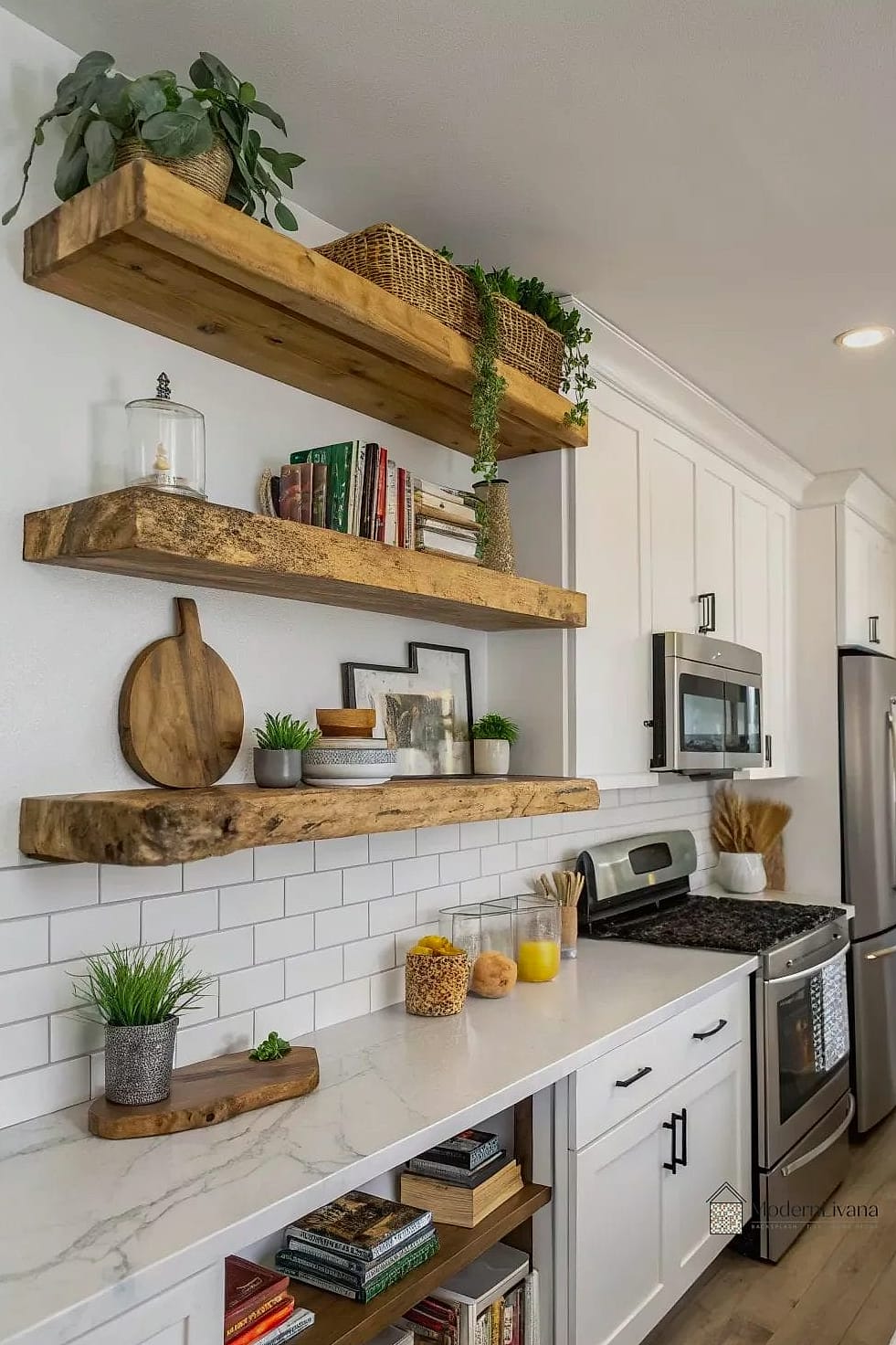
If you need more storage than a single shelf provides but still want that open feel, stacking two shelves close together maximizes vertical space. This works well in narrow kitchens where wall space is limited.
Keep heavier items on the lower shelf and lighter decorative pieces up top for both practicality and visual balance. It’s a smart family-friendly solution since kids can reach the bottom shelf for everyday items.
Shelves Above a Coffee Bar

Floating shelves are perfect for carving out a dedicated coffee station. Mugs hang from hooks underneath, while the shelf above holds your coffee maker’s accessories, filters, or a small plant.
This setup is popular because it’s both functional and Instagram-worthy. Baskets or small bins on the shelf keep loose items like coffee pods from looking messy.
Floating Shelves with Hidden Storage Underneath
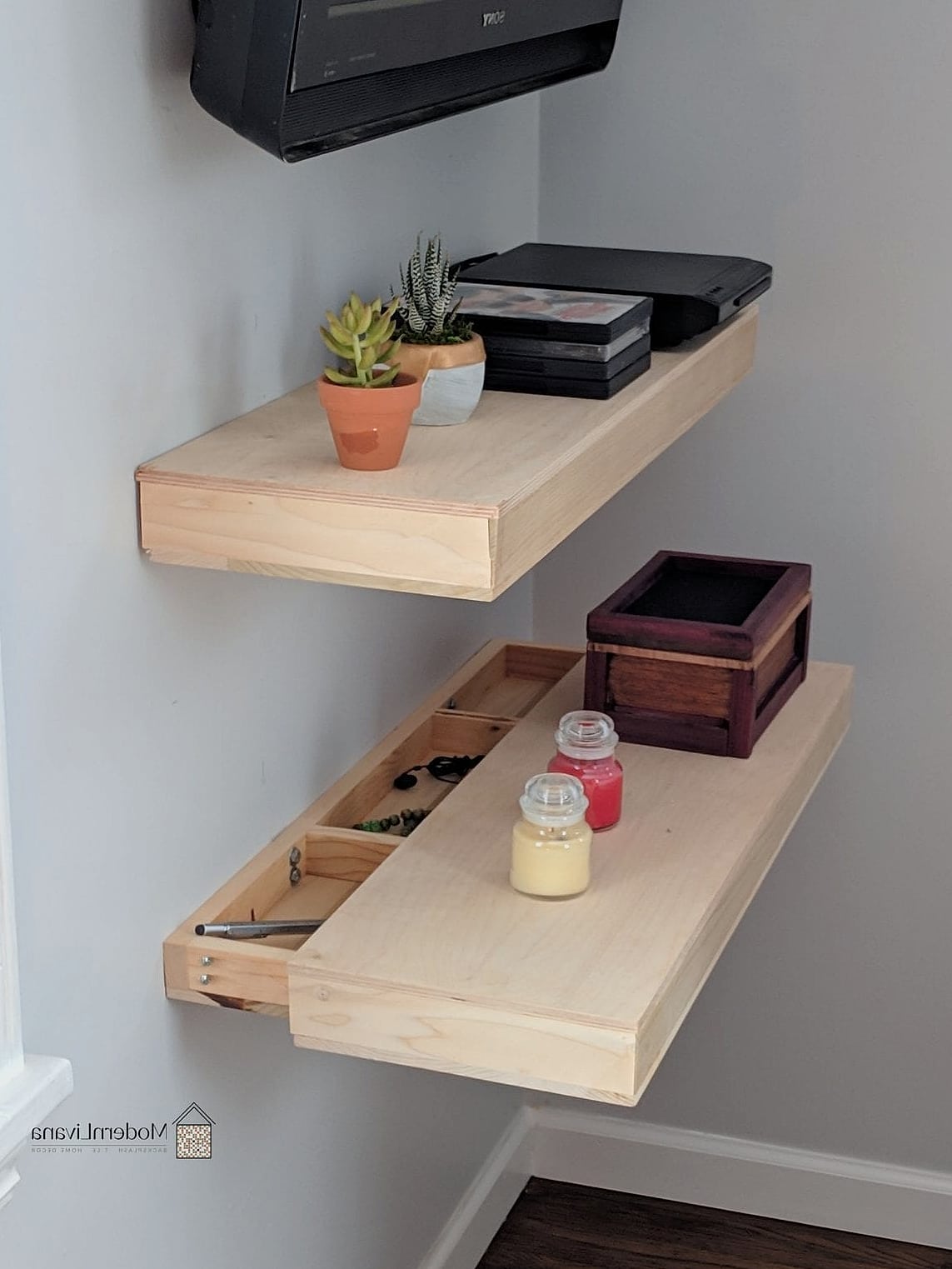
Some designs incorporate a thin drawer or hidden compartment within the shelf itself. It looks like a simple floating shelf from the front, but it offers a spot to tuck away smaller items you don’t want on display.
This is a great option if you love the open shelving look but still want somewhere to hide things like extra napkins or takeout menus. It’s not the easiest DIY project, but plenty of pre-made versions exist if you’d rather skip building one yourself.
Wraparound Shelves for a Full Wall Statement

Instead of a single shelf or two, some kitchens commit to a wraparound design that spans an entire wall or wraps around a corner. It’s a bigger commitment, but it creates serious visual impact.
This works best in kitchens with high ceilings, since you’ll have the vertical space to stagger multiple shelves without things feeling cramped. Keep styling minimal here, when you have this much shelf space, less is often more.
Floating Shelves in Place of a Backsplash
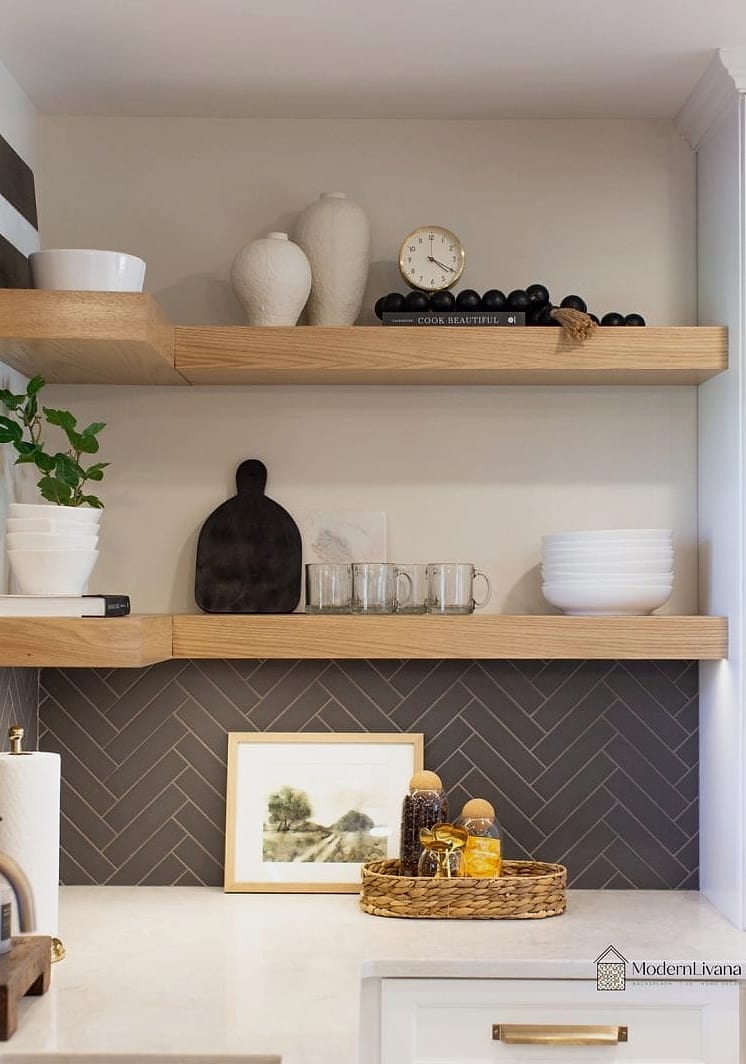
Rather than tile, some kitchens use a floating shelf as a functional divider between the counter and upper cabinets. It doubles as both a design element and a spot for spice jars or olive oil bottles you use daily.
This is a practical choice for anyone who cooks often and wants ingredients within arm’s reach. Just be sure the shelf material can handle occasional splatters, sealed wood or metal both hold up well here.
Painted Shelves to Match Your Cabinetry
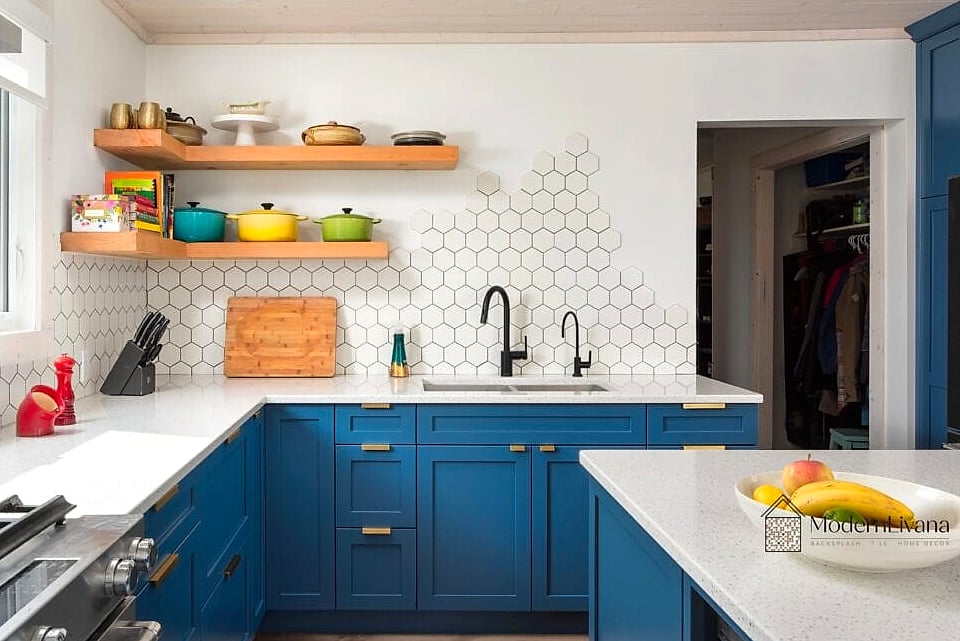
If you already have colorful cabinets, painting your floating shelves to match creates a cohesive, intentional look rather than an afterthought. Sage green, navy, and terracotta are popular choices right now.
This is a budget-friendly upgrade if you’re repainting cabinets anyway, just grab extra paint and knock out the shelves in the same weekend. It ties the whole kitchen together without much added cost.
Shelves with Exposed Steel Brackets
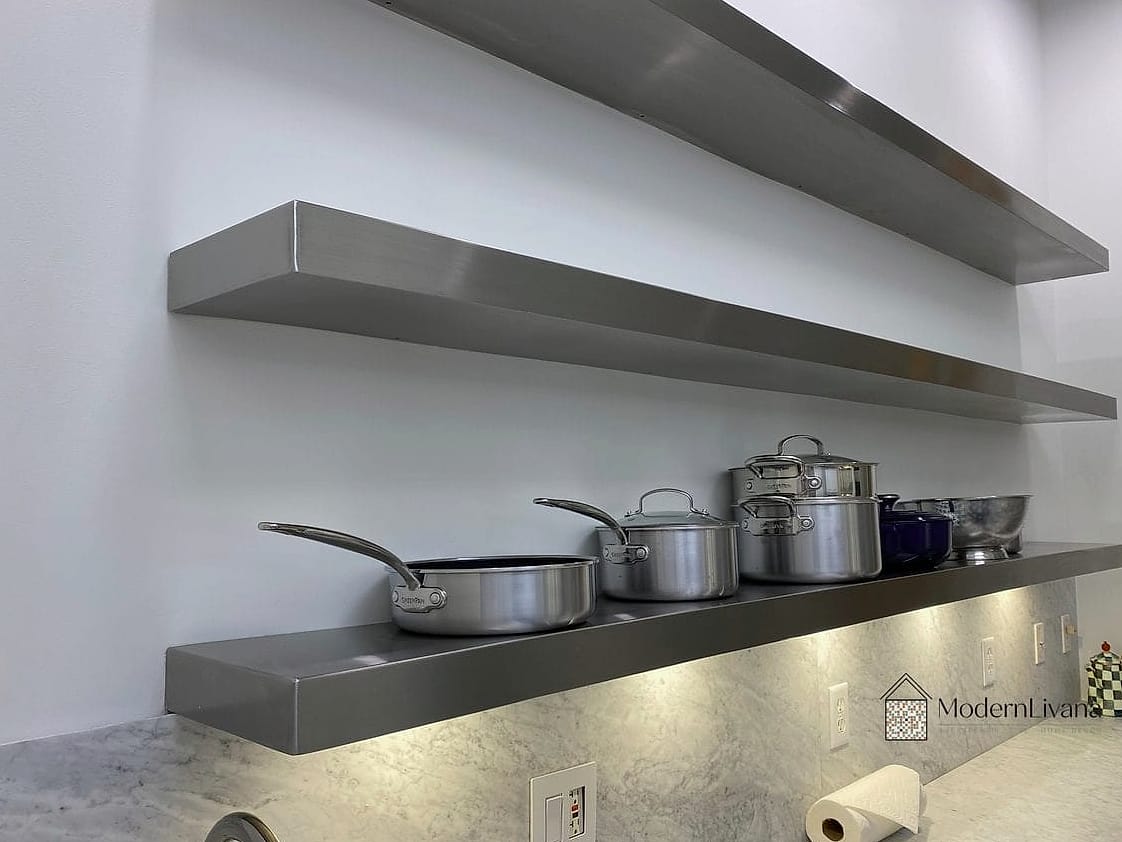
Sometimes the hardware becomes part of the design instead of something to hide. Exposed steel or iron brackets under a wood shelf give off a bit of an industrial-meets-farmhouse vibe that’s hard to replicate any other way.
This look pairs especially well with black fixtures and brushed brass hardware. It’s also a fairly straightforward DIY project since you’re not trying to conceal any mounting hardware.
Floating Shelves for Small Kitchen Appliances
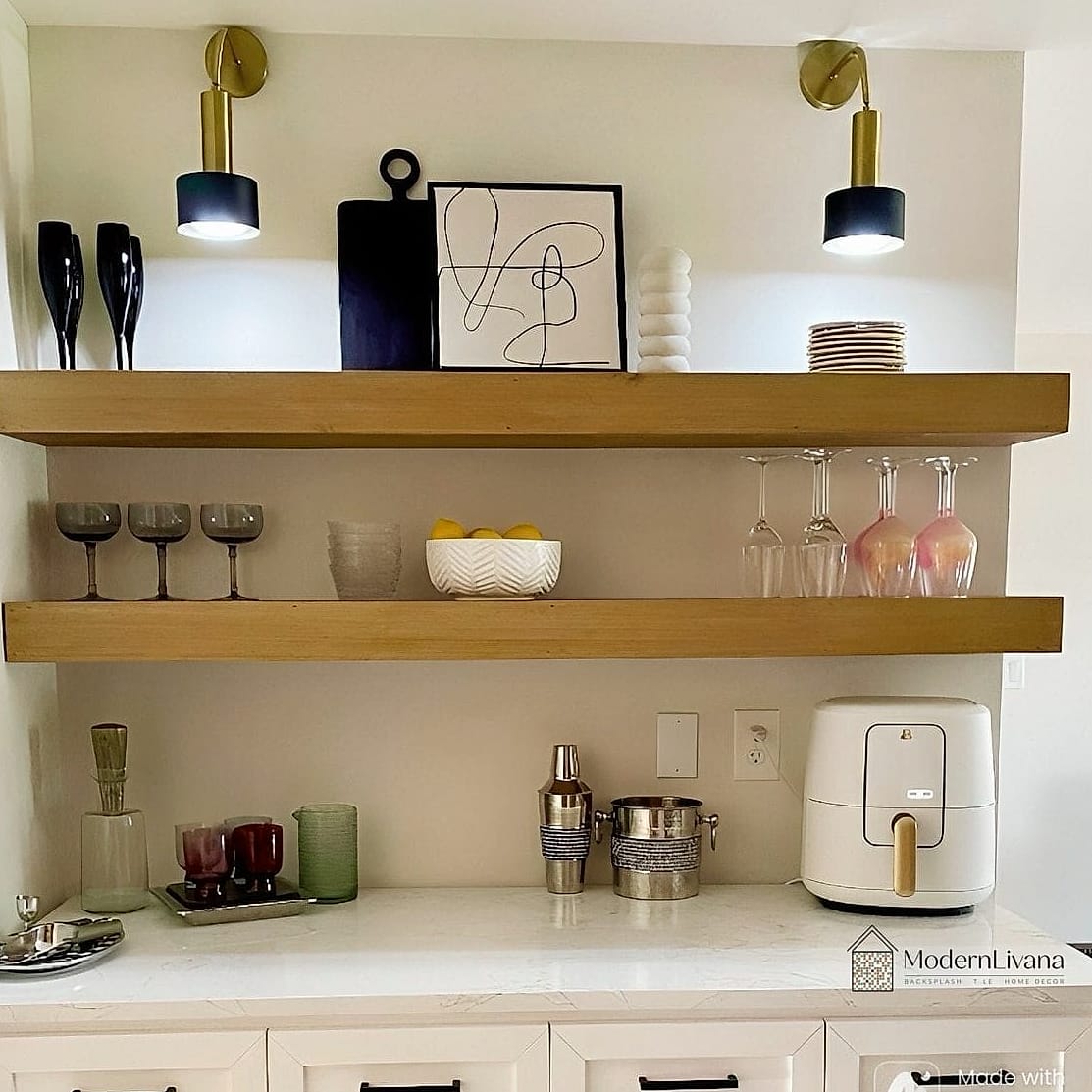
Instead of cluttering your counters, a dedicated shelf for smaller appliances like a stand mixer or toaster keeps things accessible but out of the way. This is especially helpful in small kitchens where counter space is at a premium.
Make sure the shelf is rated to hold the weight of heavier appliances, a stand mixer can be surprisingly heavy, so this isn’t the spot for a flimsy shelf.
Shelves with a Textured Finish
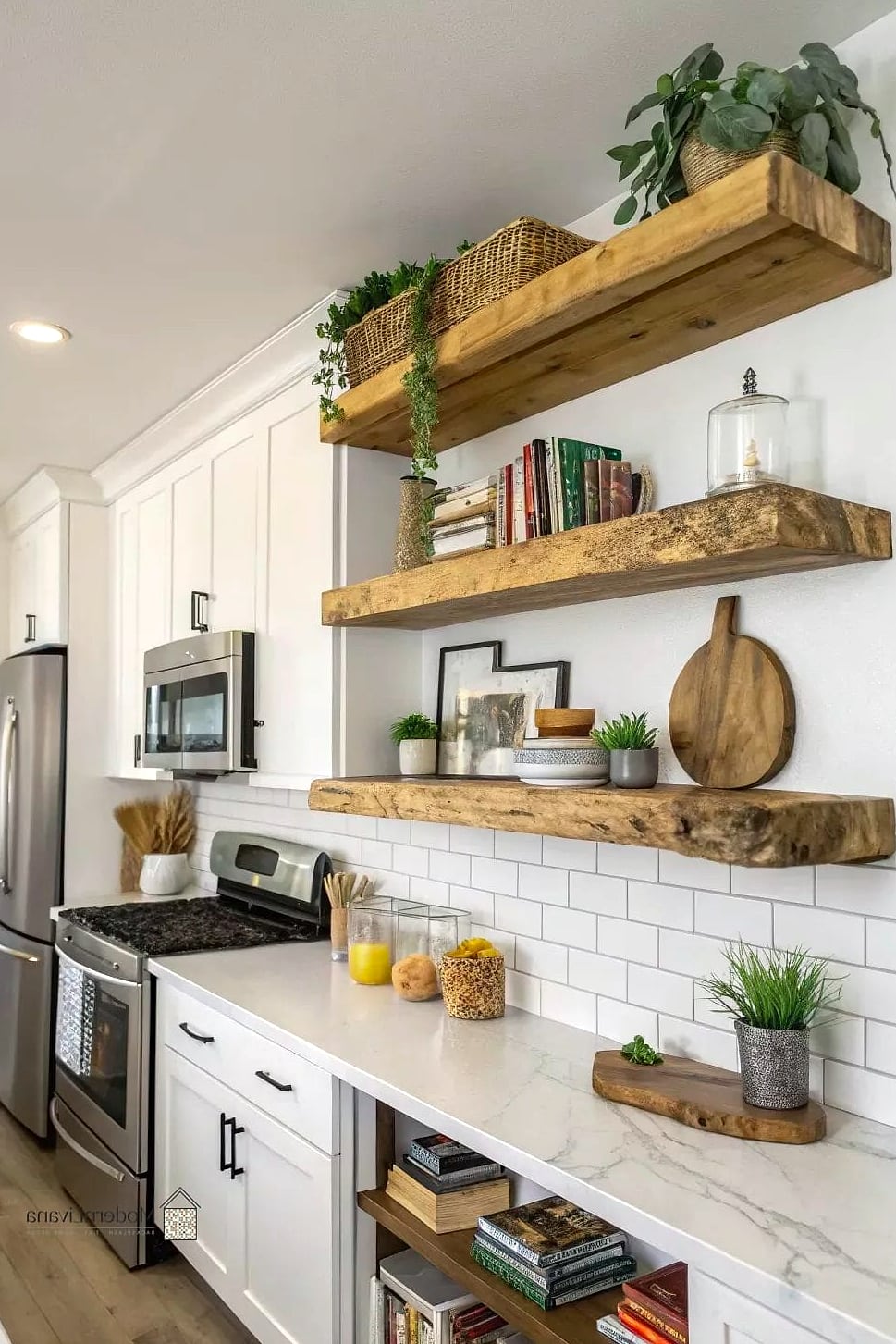
Textured wood, like wire-brushed or hand-planed finishes, adds depth that a smooth shelf just doesn’t have. It catches light differently and gives the wood a more artisanal, handmade quality.
This is a nice option if your kitchen already has other textured finishes, like a tiled backsplash with dimension or a textured tile floor. It helps everything feel intentional rather than mismatched.
Floating Shelves for Open Pantry Storage

If you don’t have a walk-in pantry, floating shelves can act as a stand-in. Stack canned goods, jars, and baskets for a functional, budget-conscious alternative to built-in pantry cabinets.
Clear glass jars for dry goods like pasta, rice, and flour look tidy and make it easy to see when you’re running low. It’s a small system that makes a real difference in day-to-day organization.
Shelves Paired with a Mosaic Tile Backsplash
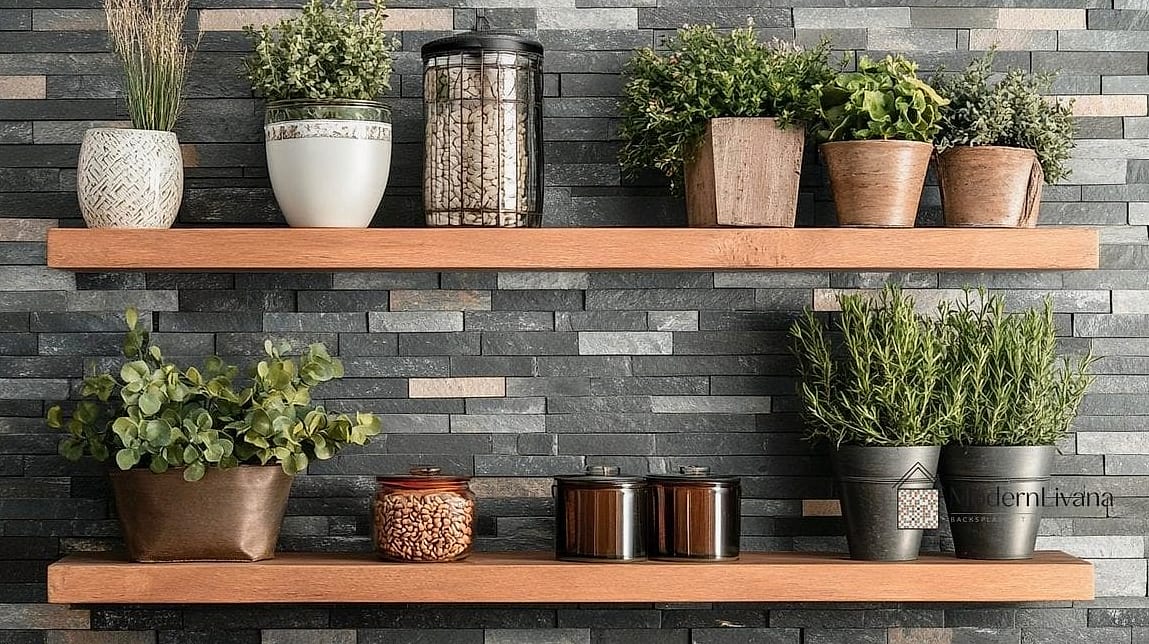
A patterned mosaic tile backsplash behind simple floating shelves creates a nice balance, one element is busy, the other stays calm and functional. It keeps the kitchen from feeling overdesigned.
Stick to a plain wood or white shelf here so the tile stays the focal point. This combination is popular in kitchens going for a slightly more eclectic, collected-over-time feel.
Floating Shelves in a Butler’s Pantry

If you’re lucky enough to have a butler’s pantry or secondary prep space, floating shelves are a great way to display glassware, serving pieces, or your everyday coffee mugs without cluttering the main kitchen.
Since this space usually gets less daily wear, it’s a good spot to experiment with a bolder shelf material, like blackened steel or a bold painted color, without worrying about heavy maintenance.
Shelves with Built-In Wine Storage
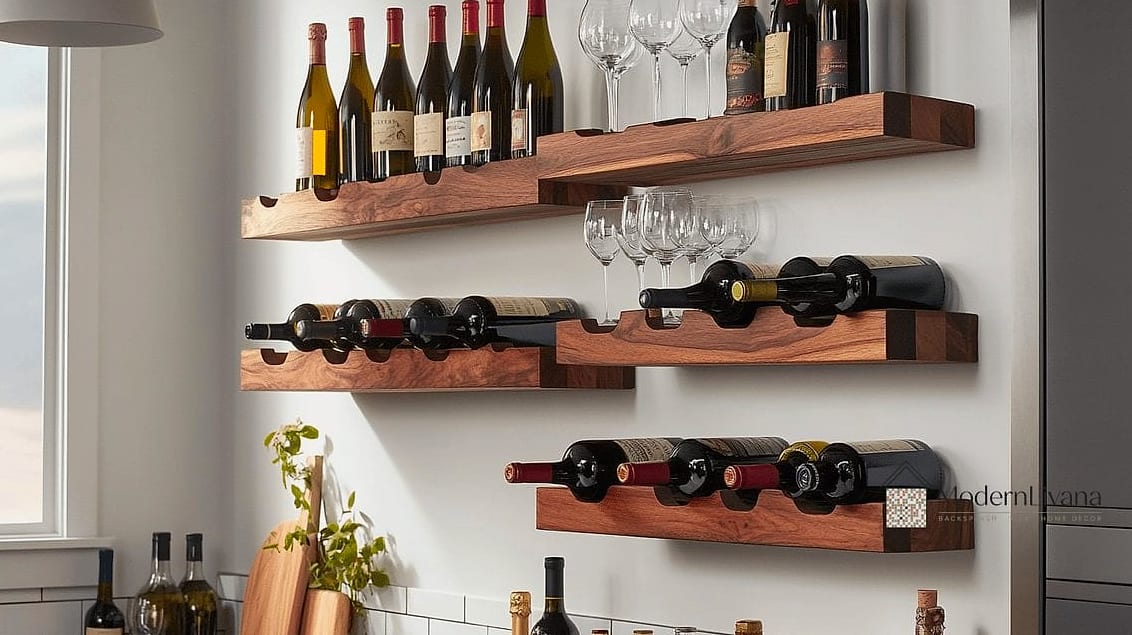
Some floating shelf designs include a slot or rack specifically for wine bottles, either underneath the shelf or built into the bracket itself. It’s a space-saving alternative to a full wine rack or fridge.
This works nicely near a dining area or open-concept kitchen where you’re already entertaining guests. Just keep bottles away from direct sunlight or heat sources to protect them over time.
Floating Shelves for a Kids’ Snack Station

Lower floating shelves, installed at a height kids can actually reach, are a genuinely useful addition for busy families. Stock them with bins of snacks, water bottles, and lunch containers so kids can grab what they need independently.
Plastic bins or woven baskets keep things from looking chaotic, and it teaches a bit of built-in organization since everything has a designated spot.
Shelves with a High-Gloss Finish
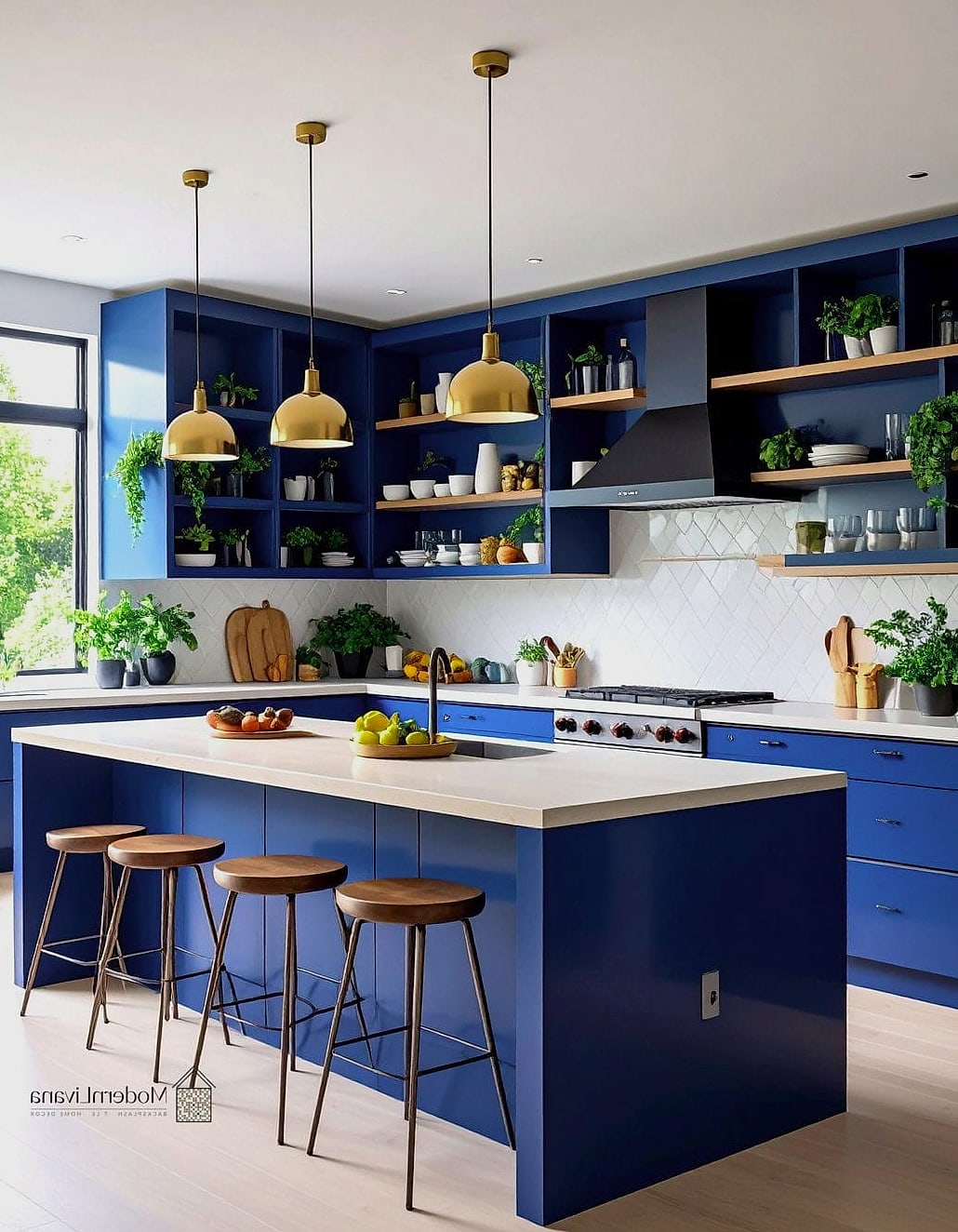
While matte finishes get a lot of attention lately, a glossy lacquered shelf can look striking against a matte backsplash or cabinetry. The contrast in finishes adds subtle visual interest without adding more color or pattern.
This finish does show scratches and water spots more easily, so it’s better suited for decorative shelves rather than ones holding daily-use dishes.
Floating Shelves as a Half Wall Divider
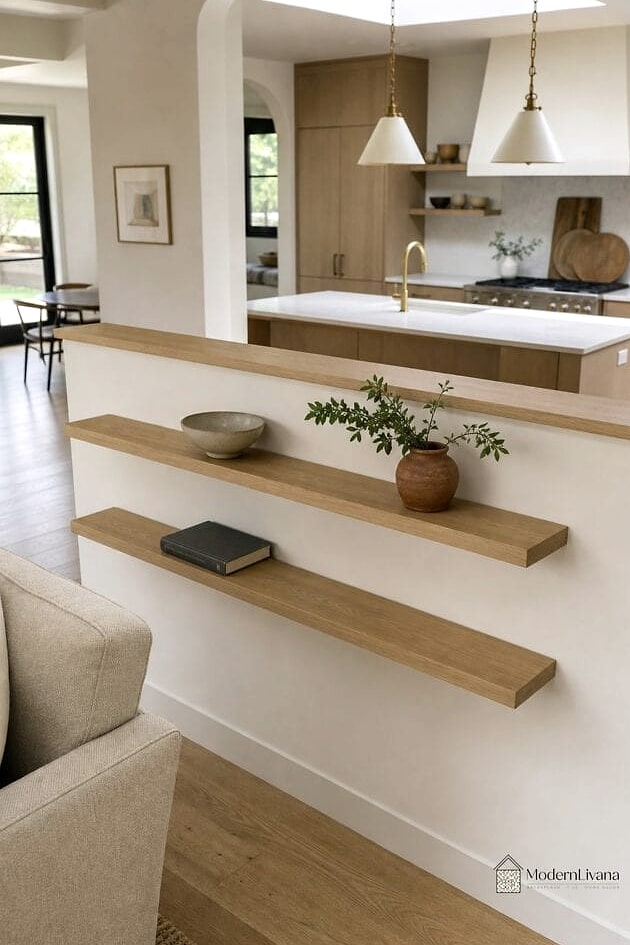
In open-concept kitchens, a run of floating shelves can act as a soft divider between the kitchen and dining or living space, without fully closing off the room the way a wall would. You still get some separation and storage without sacrificing that open, connected feel.
This is a bigger structural project, so it’s worth consulting a contractor if you’re not experienced with wall-mounted installations at this scale.
Peel-and-Stick Wood Shelves for Renters
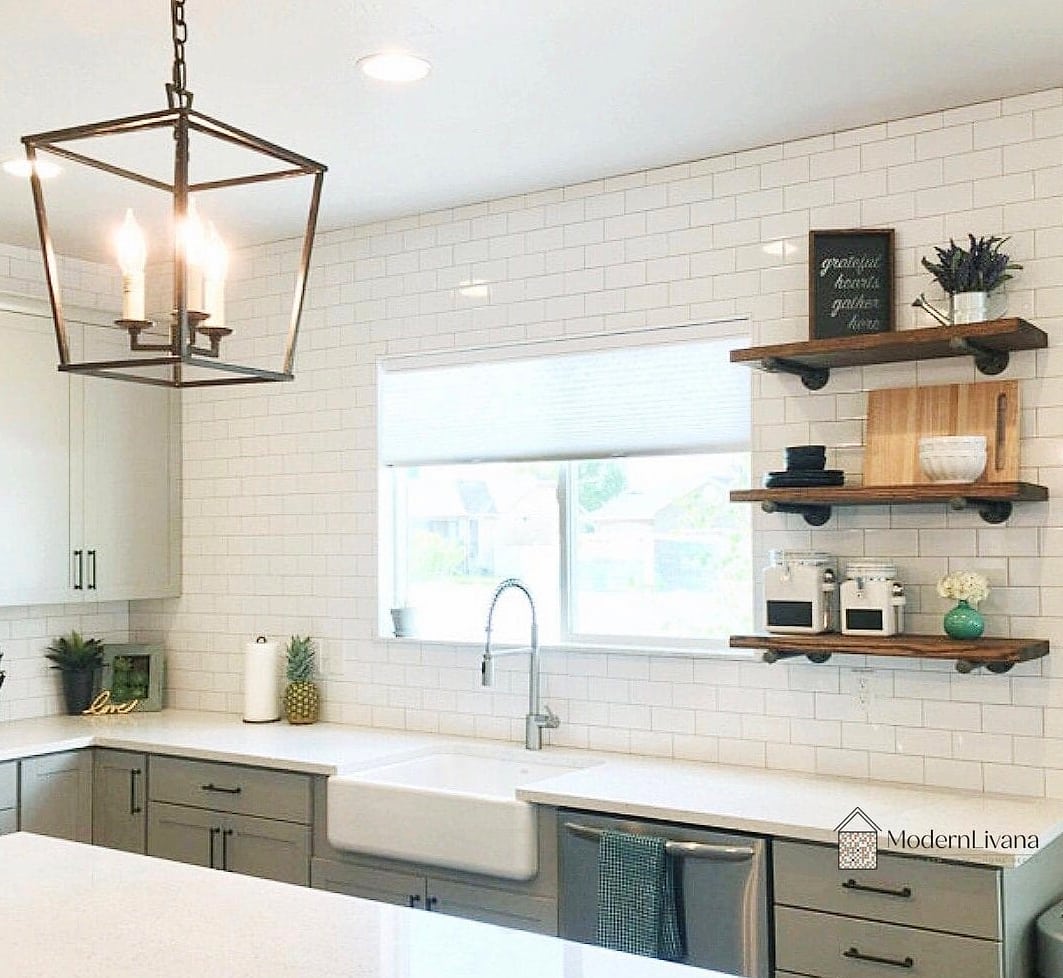
If you’re renting and can’t commit to permanent installation, there are peel-and-stick and tension-mounted shelf systems that require zero drilling. They’re not as sturdy as traditional floating shelves, so they’re best for lightweight decor rather than heavy dishware.
This is a great starter option if you want to test out the open shelving look before committing to it in a future home.
Floating shelves aren’t for everyone, and that’s okay. But if you’ve got a kitchen wall that feels a little flat, or you’re just tired of digging through cluttered cabinets, one of these ideas is probably worth trying. Start small with one shelf if you’re unsure, you can always add more once you see how it fits your space and your daily routine.