24 White Kitchen Ideas That Are Stylish and Practical
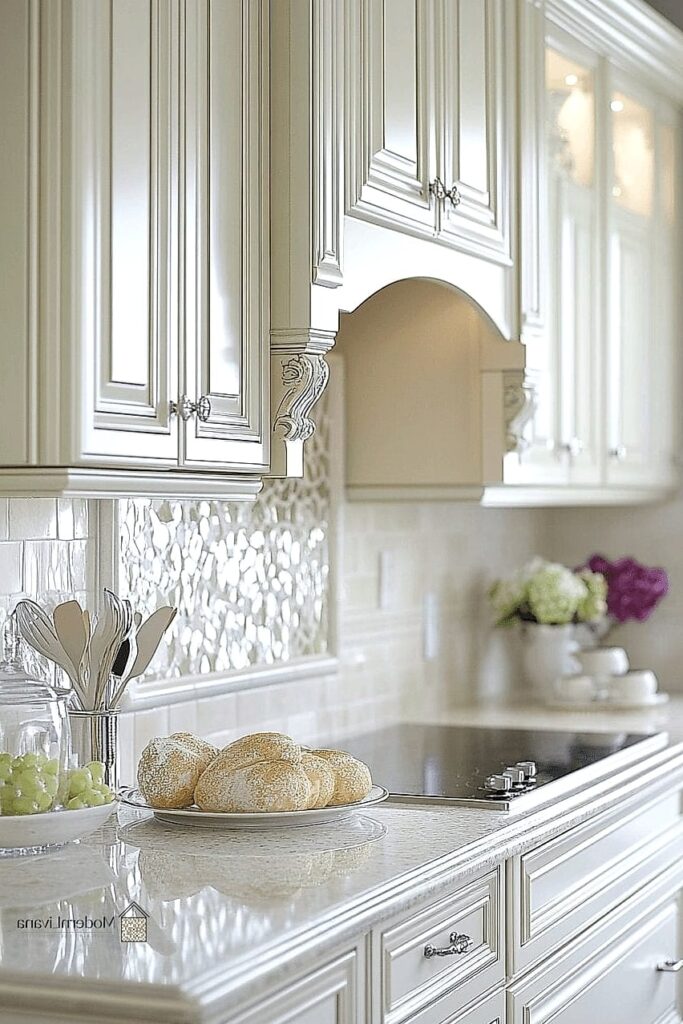
- All-White Shaker Cabinets
- White Cabinets with a Warm Wood Island
- Marble Countertops for Classic Elegance
- Glossy White Cabinets for a Modern Look
- Matte White Cabinets for Softness
- White Subway Tile Backsplash
- Zellige Tile for Texture and Character
- Open Shelving Instead of Upper Cabinets
- Black Fixtures for Contrast
- Brushed Brass Hardware for Warmth
- White Kitchen with Black Countertops
- Waterfall Edge Island
- Two-Tone Cabinets with White on Top
- Farmhouse Sink in White
- White Kitchen with Natural Stone Flooring
- Layered Lighting for Depth
- Built-In Pantry Storage
- White Kitchen with Greenery
- Herringbone Tile Backsplash
- White Cabinets with Glass Fronts
- Hidden Appliance Garage
- White Kitchen with a Bold Range
- Textured Cabinet Fronts
- Monochromatic White Kitchen with Layered Textures
24 White Kitchen Ideas That Are Stylish and Practical
White kitchens never really go out of style, and there’s a good reason for that. They bounce light around, make small spaces feel bigger, and give you a clean backdrop for pretty much any style you want to layer on top. If you’re weighing a full remodel or just want to refresh what you’ve got, here are 24 white kitchen ideas that actually hold up in real life.
All-White Shaker Cabinets
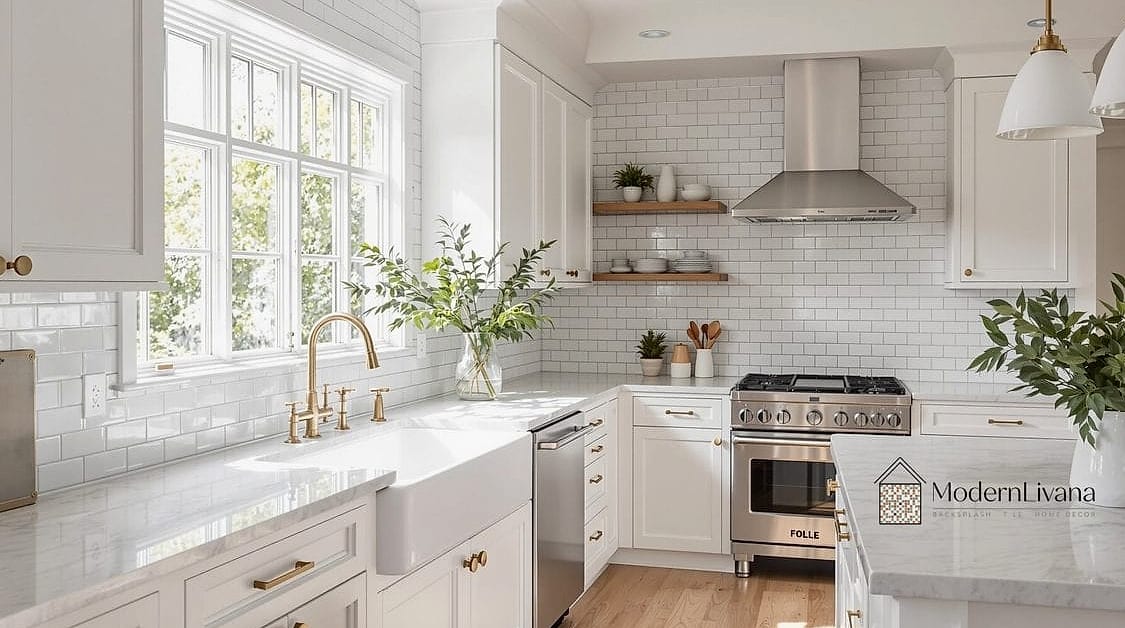
Shaker cabinets are the backbone of so many white kitchens, and it’s not hard to see why. The simple recessed panel looks good in a farmhouse kitchen, a modern one, or anything in between.
They’re also forgiving to keep clean since there’s no ornate detailing to trap grease and dust. Pair them with brushed brass or matte black hardware depending on the mood you’re going for.
Budget-wise, shaker doors are one of the more affordable cabinet styles to source, whether you’re buying stock cabinets or having them custom built.
White Cabinets with a Warm Wood Island
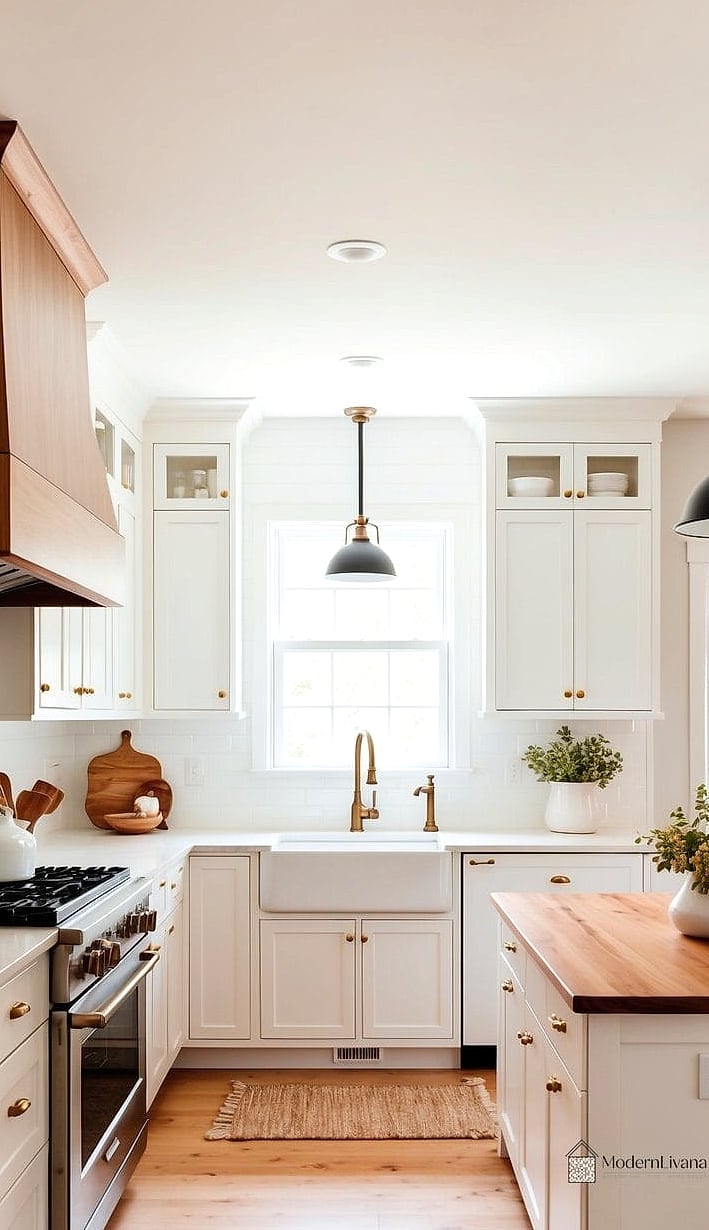
Breaking up all that white with a wood-toned island keeps the space from feeling too sterile. It adds warmth and gives your eye somewhere to land.
This works especially well in open-concept kitchens where the island doubles as a visual anchor between the kitchen and living space. Butcher block on top of a wood island is a popular combo, though quartz works too if you want more durability.
It’s a great middle ground for people who love white kitchens but don’t want the whole room to feel like a blank canvas.
Marble Countertops for Classic Elegance
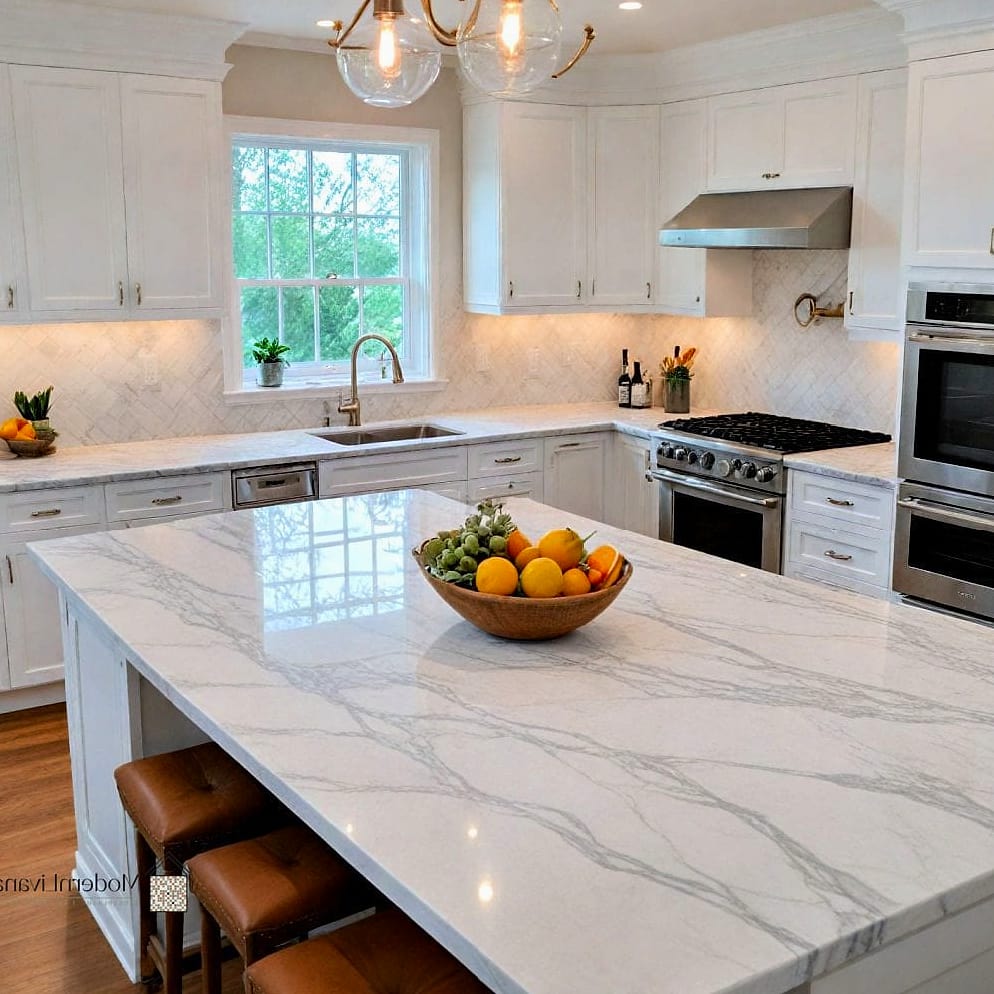
Nothing says classic quite like real marble. The soft veining against white cabinetry feels a little bit luxurious without trying too hard.
Marble does require more upkeep than other stone options since it’s porous and can stain if you’re not careful with wine or acidic foods. Sealing it regularly helps, and honestly, a lot of homeowners come to love the patina it develops over time.
If you like the look but not the maintenance, quartz with marble-inspired veining gets you 90% of the way there with way less worry.
Glossy White Cabinets for a Modern Look
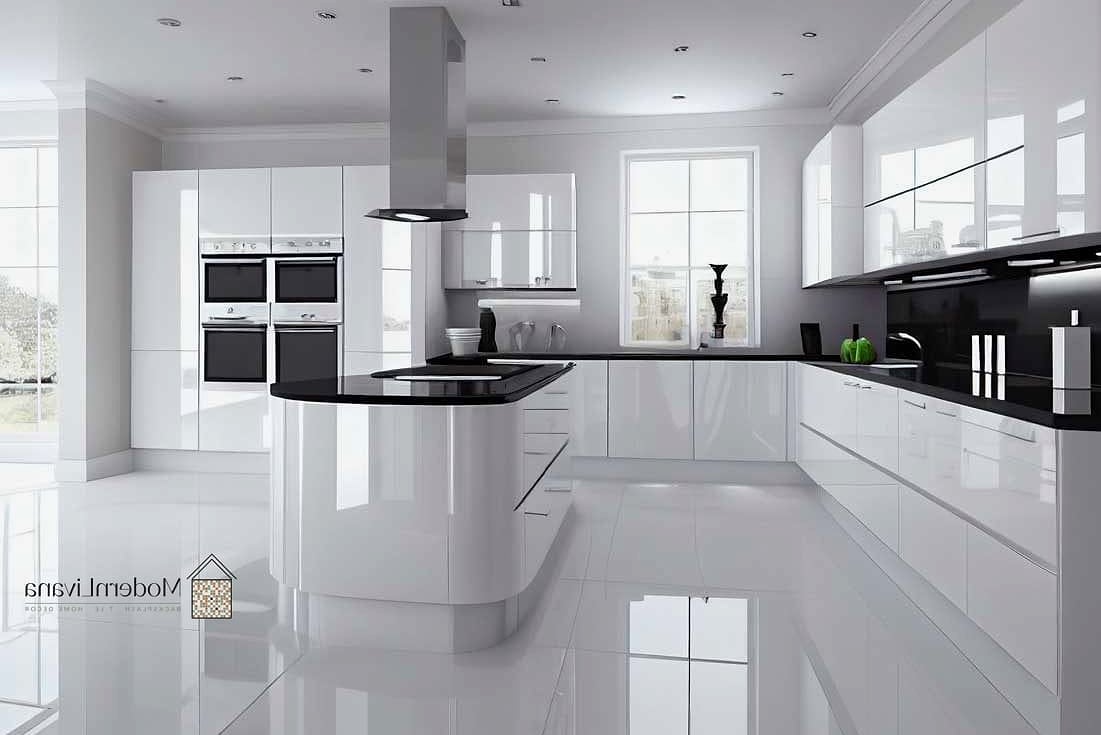
High-gloss cabinet fronts give a kitchen an almost lacquered, showroom feel. They reflect light beautifully and tend to read more contemporary than matte finishes.
This style works best in kitchens with clean, minimal hardware or even handleless cabinets for a streamlined effect. One thing to know going in: glossy surfaces show fingerprints and smudges more than matte ones, so you’ll want to wipe them down more often.
It’s a fantastic choice for anyone drawn to sleek, modern design and doesn’t mind a little extra cleaning.
Matte White Cabinets for Softness
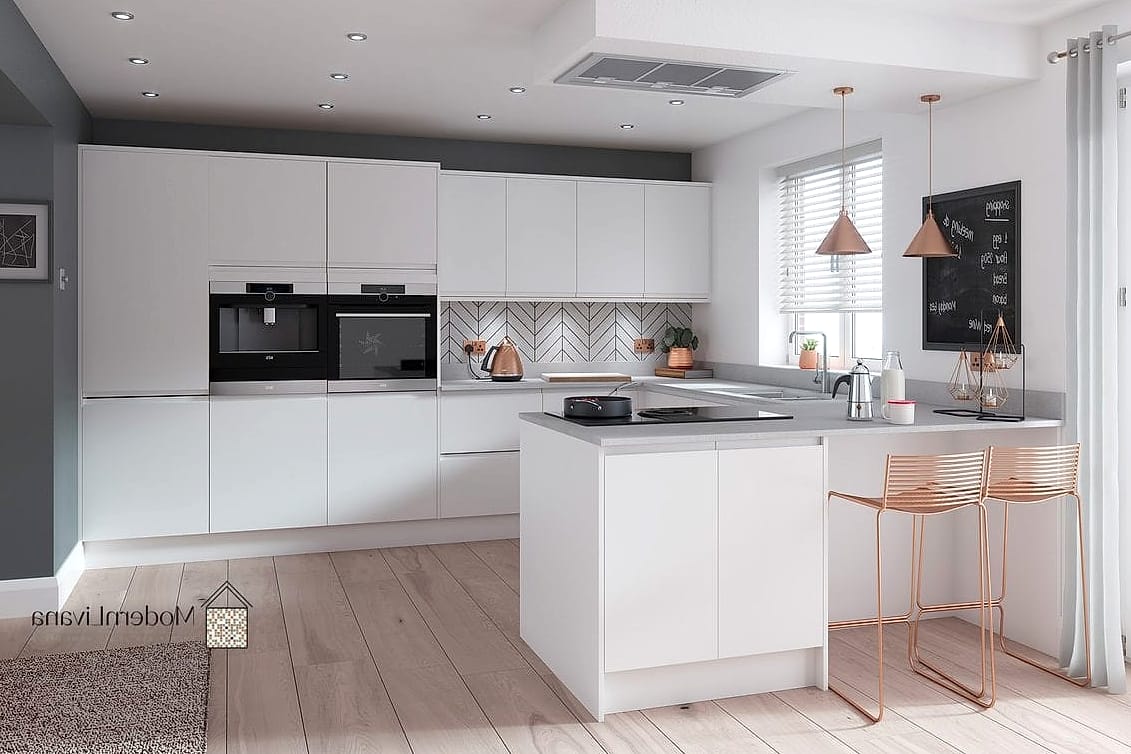
On the flip side, matte finishes have become hugely popular for their soft, understated look. They hide smudges better than glossy cabinets and feel a bit more relaxed and organic.
Matte white pairs beautifully with black fixtures for a bit of contrast, or with warm wood tones for something cozier. It’s an especially good pick for families since fingerprints and little handprints don’t show up as easily.
If you’re torn between glossy and matte, think about how much cleaning you’re realistically willing to do.
White Subway Tile Backsplash
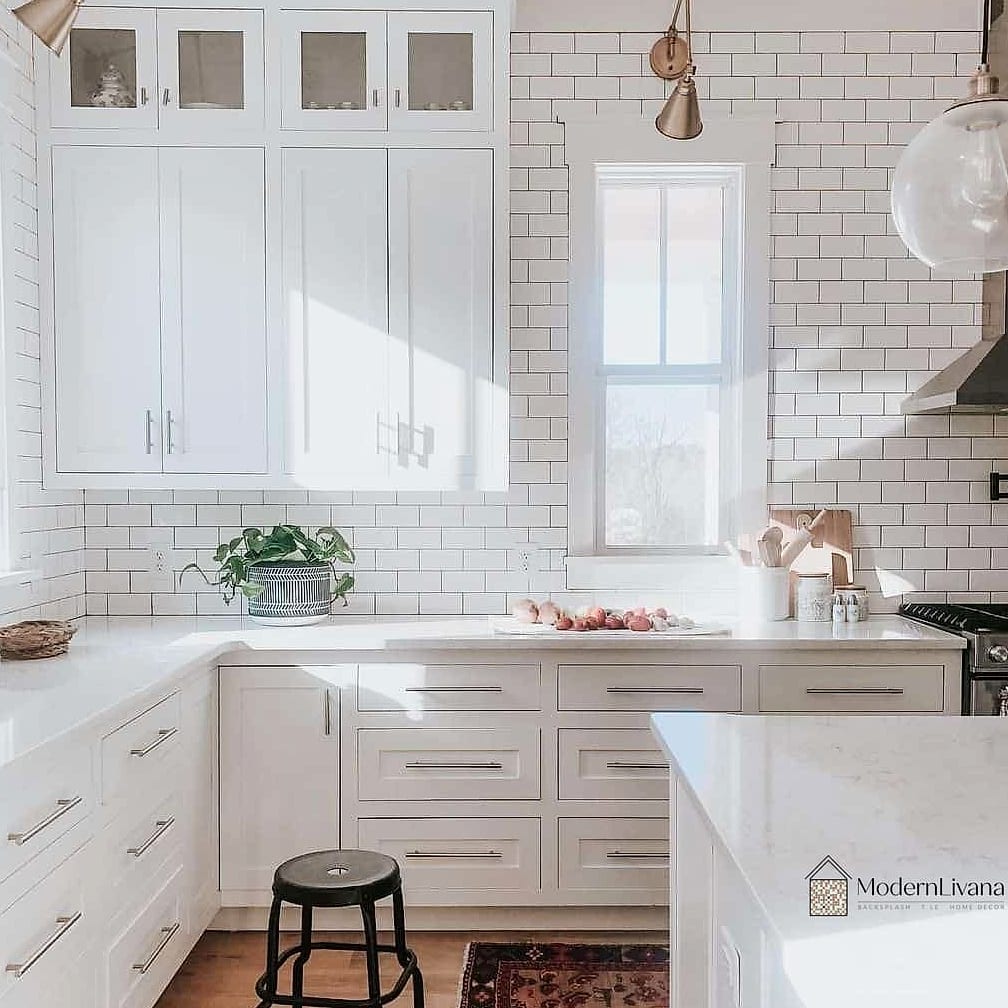
You really can’t talk about white kitchens without mentioning subway tile. It’s a classic for a reason: it’s affordable, easy to install, and looks good in nearly any kitchen style.
Try it in a herringbone pattern or stacked vertically instead of the standard running bond if you want something a little more current. Dark grout adds definition and hides stains better than white grout, which is worth considering if you cook a lot.
Peel-and-stick subway tile options exist too, which is a nice renter-friendly way to get the look without a full installation.
Zellige Tile for Texture and Character
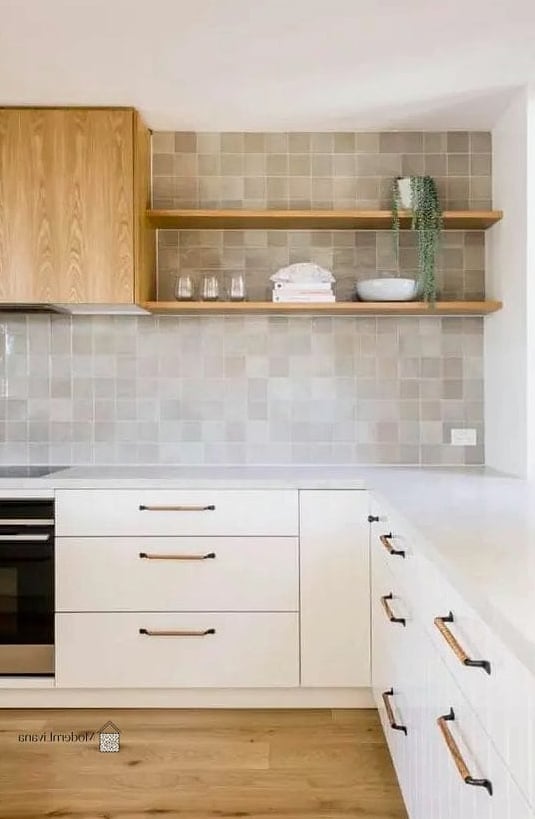
If subway tile feels too predictable, zellige tile brings texture and handmade charm to a white kitchen. Each tile has slight variations in color and shape, so the wall has this subtle, organic movement to it.
It works especially well behind a range as a statement backsplash. Just know that zellige tends to cost more than standard ceramic tile and can be trickier to install because of its irregular shape, so it’s often worth hiring a pro.
For anyone who wants their white kitchen to feel a little less cookie-cutter, this is the upgrade to consider.
Open Shelving Instead of Upper Cabinets
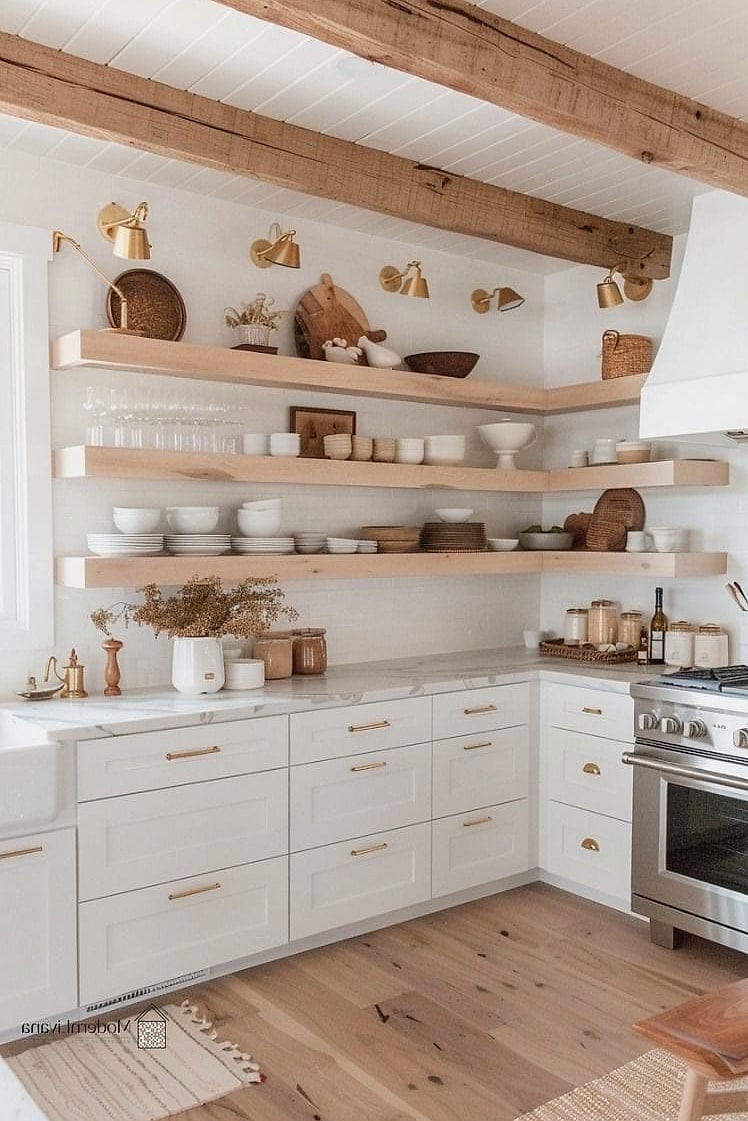
Swapping some or all of your upper cabinets for open shelving keeps a white kitchen feeling airy and light. It’s also a great way to show off pretty dishware, glassware, or a collection of cookbooks.
Floating shelves in wood or white work well here, depending on whether you want contrast or a more seamless look. The tradeoff is that everything on display needs to stay reasonably tidy since there are no doors to hide clutter.
This idea tends to work best in kitchens that get decent natural light, since shelves in a dim corner can feel more like storage than styling.
Black Fixtures for Contrast
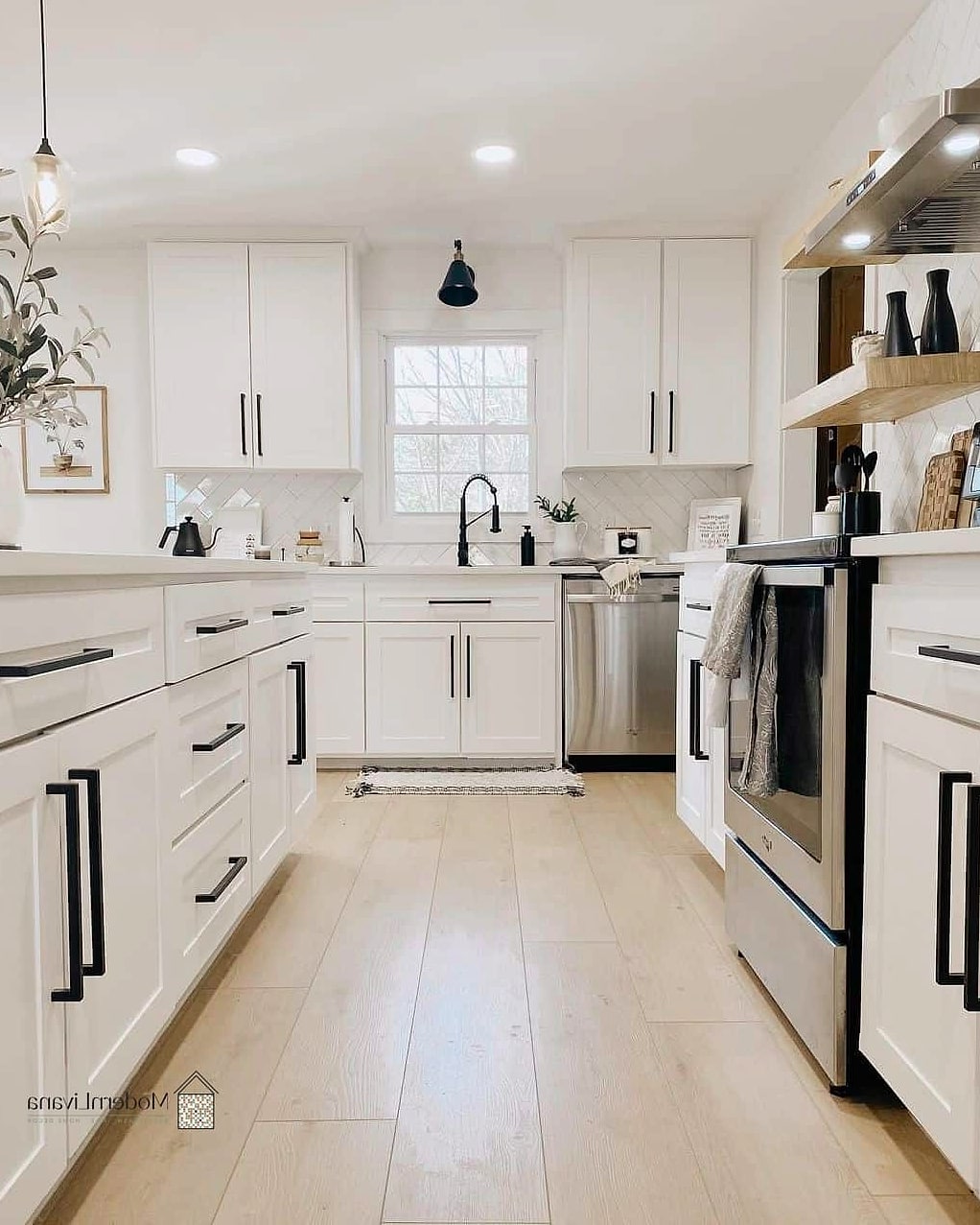
White kitchens practically beg for a little contrast, and black fixtures deliver that in a low-commitment way. A black faucet, black cabinet pulls, or black pendant lights over the island can sharpen up the whole room.
This combo has been trending for a while now, and it doesn’t seem to be going anywhere because it just works. It’s also an easy update if you’re not ready for a full remodel — swapping hardware and a faucet is a weekend project, not a demo job.
Just be consistent with your finish so the black elements feel intentional rather than random.
Brushed Brass Hardware for Warmth
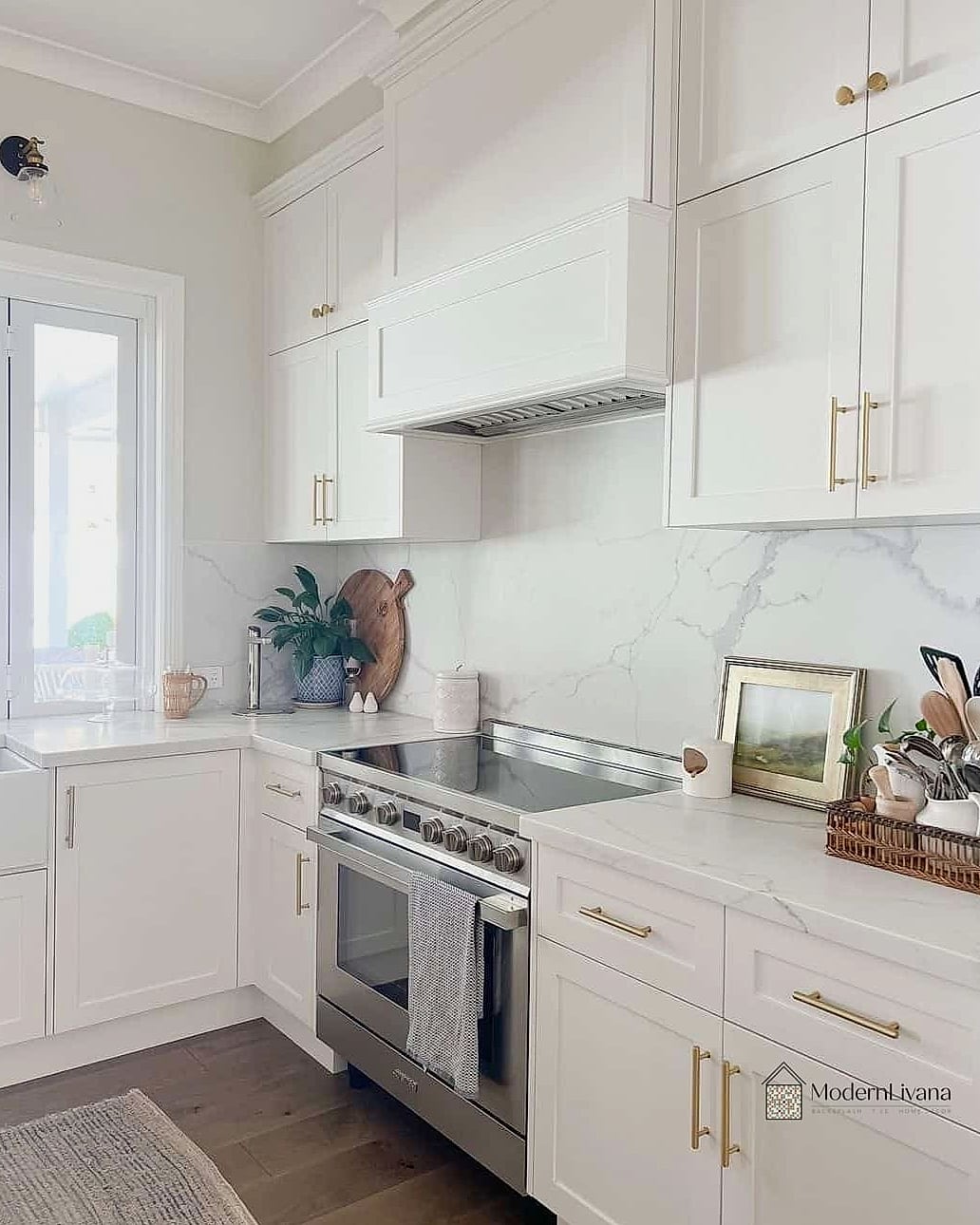
If black feels too stark, brushed brass hardware brings a softer, warmer contrast to white cabinetry. It has that quiet, expensive-looking quality without being flashy.
Brass pairs nicely with marble, warm wood tones, and neutral color palettes overall. Unlike polished brass, the brushed finish hides fingerprints and water spots much better, which matters in a room that gets used constantly.
It’s a small detail, but hardware really does change the whole feel of a kitchen.
White Kitchen with Black Countertops
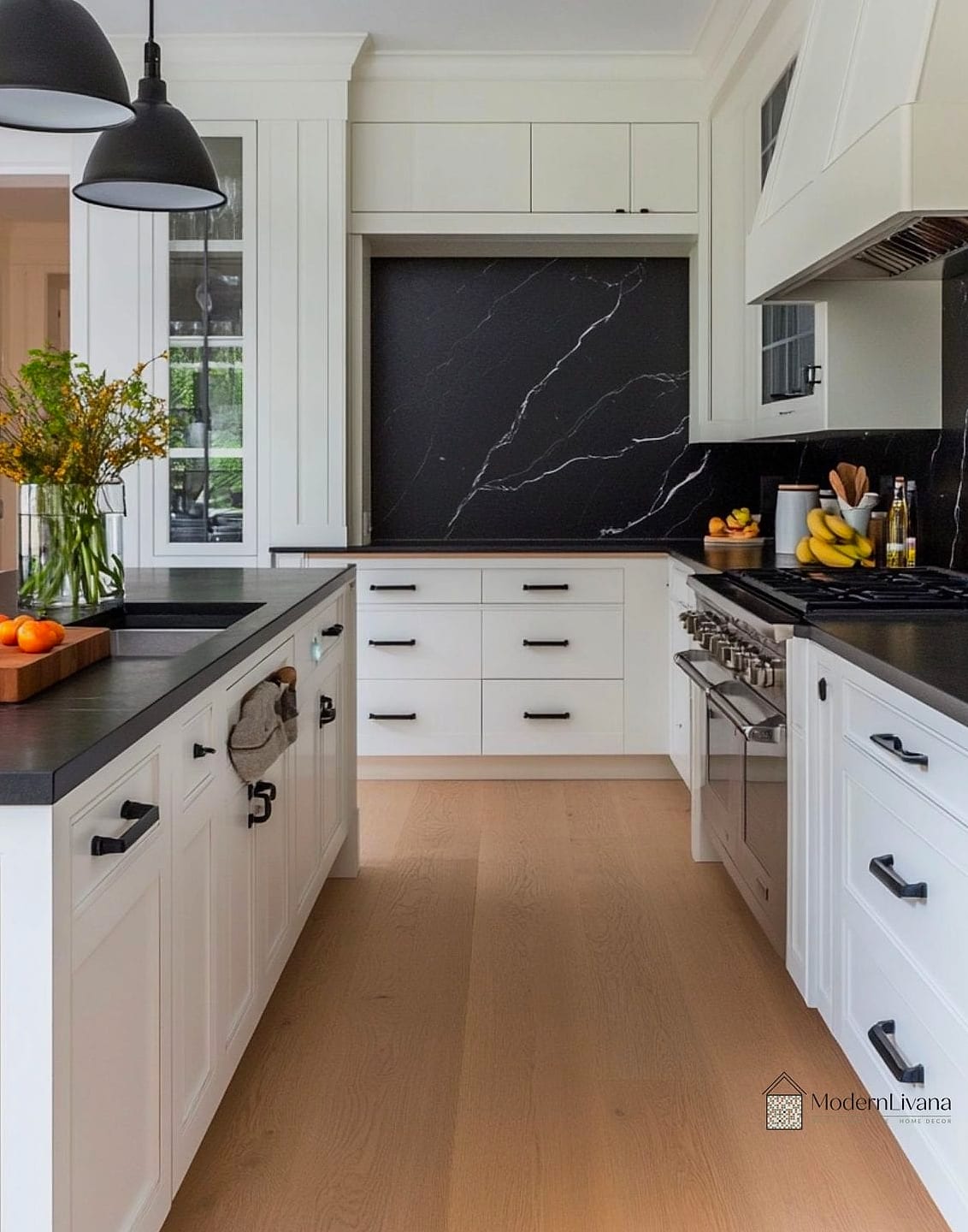
Flipping the usual formula, some white kitchens go with black or dark countertops instead of white or light stone. It’s a striking look that grounds the space and hides everyday mess better than light-colored counters.
Soapstone, black granite, or dark quartz all work well here. This combo tends to photograph beautifully too, which is part of why you see it so often in kitchen inspiration photos.
If you’re someone who cooks a lot and worries about stains and scratches showing, this might actually be the more practical choice over white counters.
Waterfall Edge Island
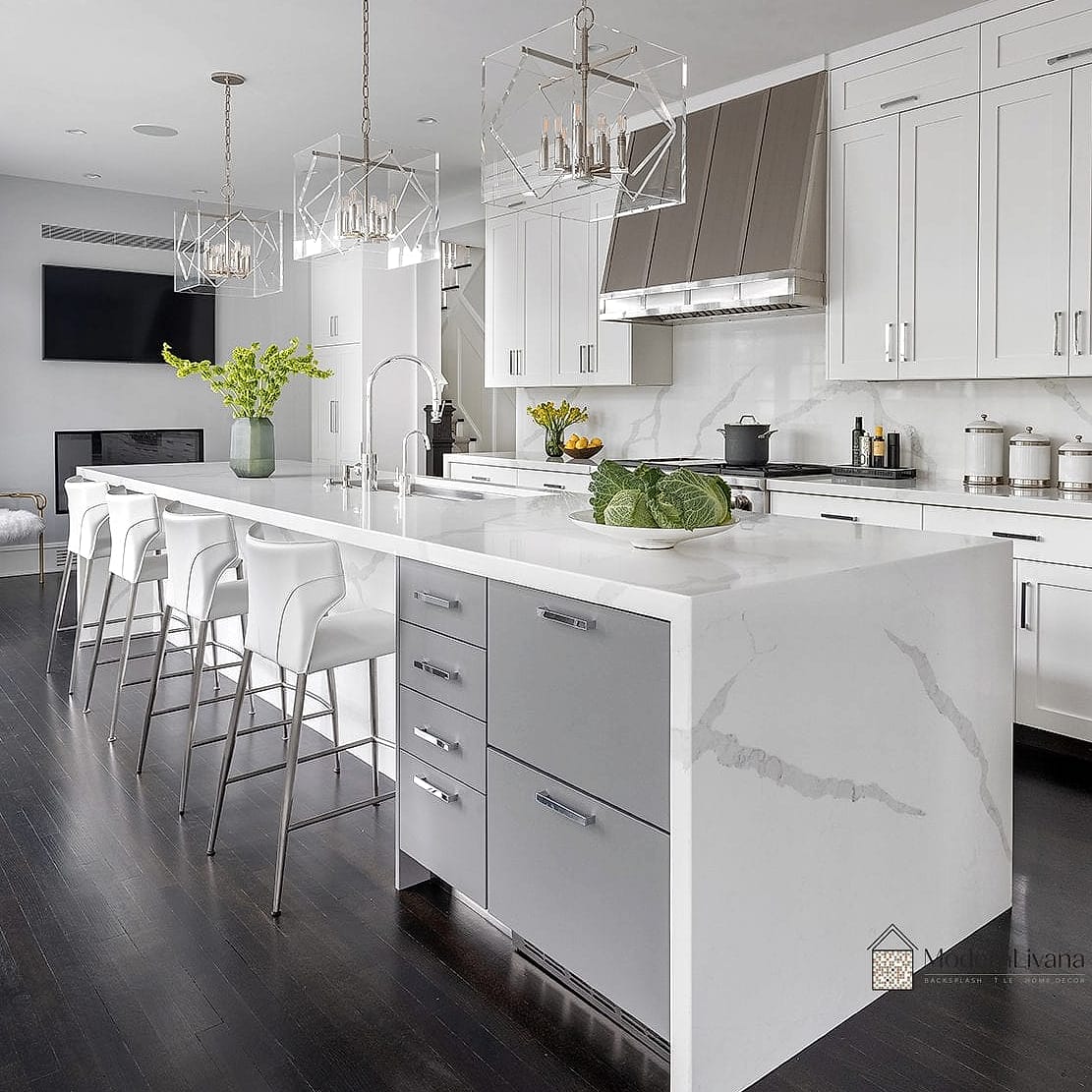
A waterfall edge, where the countertop material wraps down the sides of the island instead of stopping at the edge, gives a white kitchen a sleek, high-end look. It’s especially striking with marble or a quartz that mimics natural stone veining.
This detail tends to show up more in modern and contemporary kitchens, though it can work in transitional spaces too. It does add to the material and fabrication cost since you need more slab, so it’s worth budgeting for if it’s on your wish list.
Even a small island with a waterfall edge can make a kitchen feel noticeably more custom.
Two-Tone Cabinets with White on Top
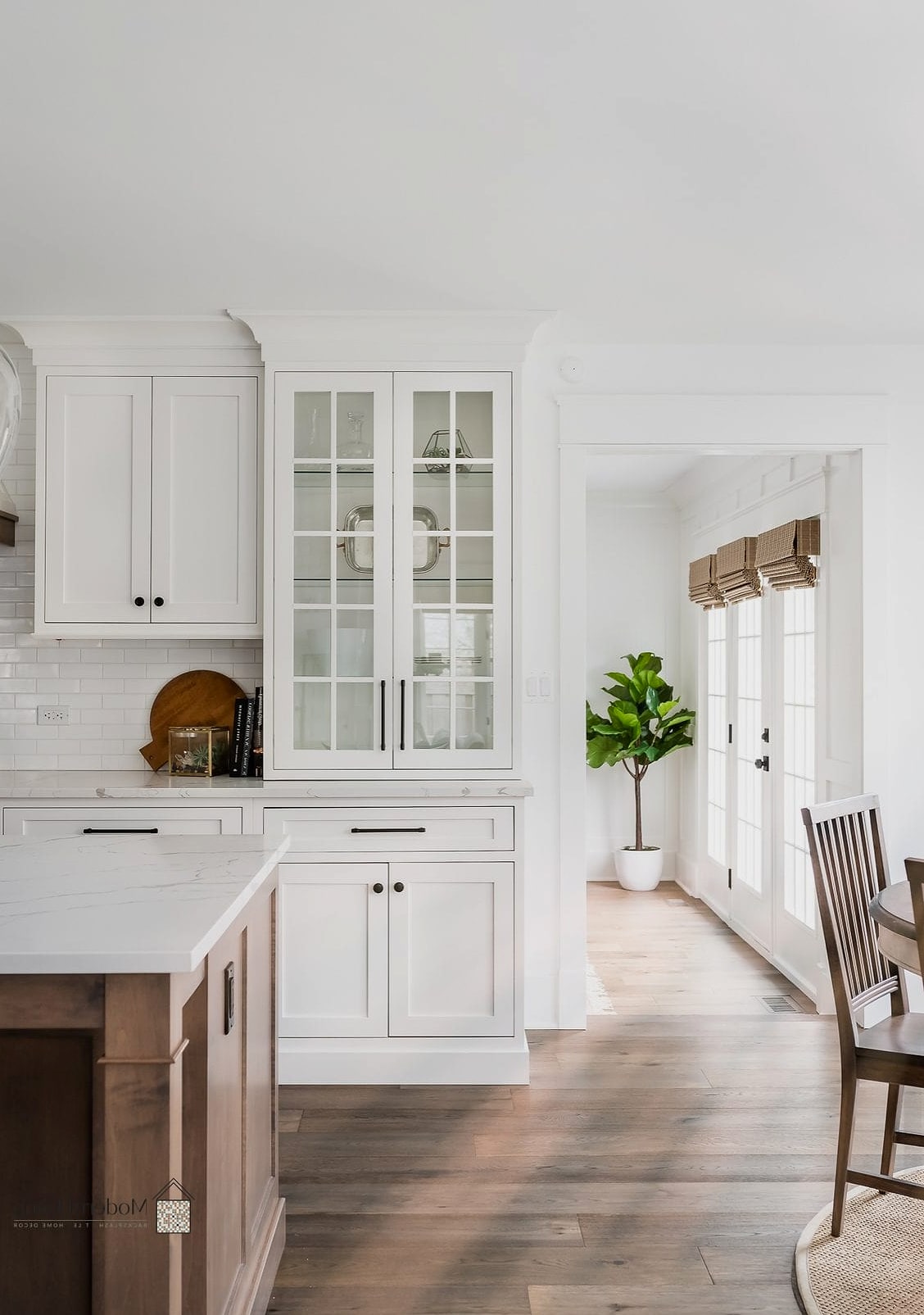
Two-tone kitchens have had real staying power, and white uppers with a contrasting lower cabinet color is one of the most popular combinations. Navy, sage green, and charcoal are common pairings that still let white do most of the visual work.
This approach adds depth and personality without going overboard, since the white cabinets keep things feeling light overhead. It’s also a smart option if you already have white uppers and want to refresh just the lower cabinets instead of replacing everything.
Painting just the island a different color is a lower-commitment way to try this look before going all in.
Farmhouse Sink in White
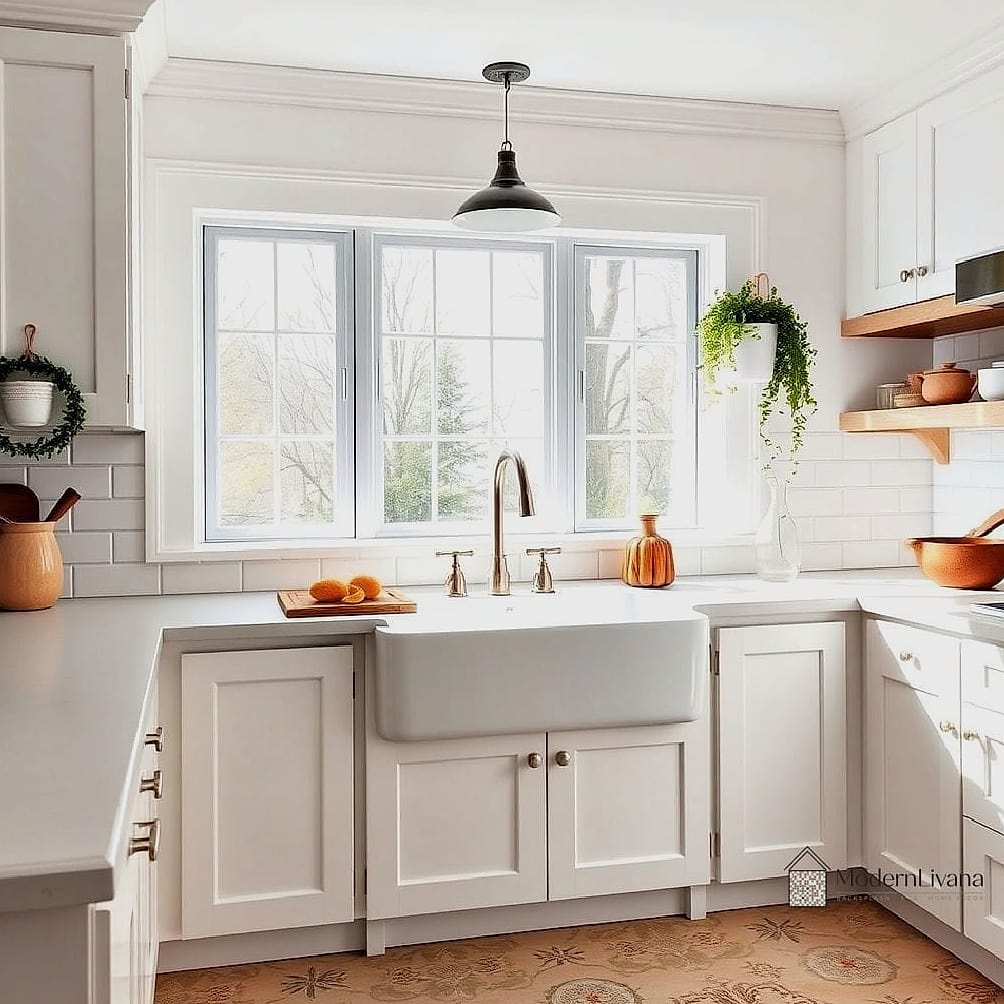
An apron-front farmhouse sink is one of those details that instantly signals a certain kitchen style. In white, it blends seamlessly with white cabinetry for a cohesive, classic look.
They’re deep and wide, which makes them genuinely useful for washing big pots and pans, not just decorative. Fireclay and cast iron are the two most common materials, and both hold up well over years of daily use, though cast iron needs a bit more care to avoid chipping.
This is a great pick for anyone who actually cooks and wants a sink that keeps up with them.
White Kitchen with Natural Stone Flooring
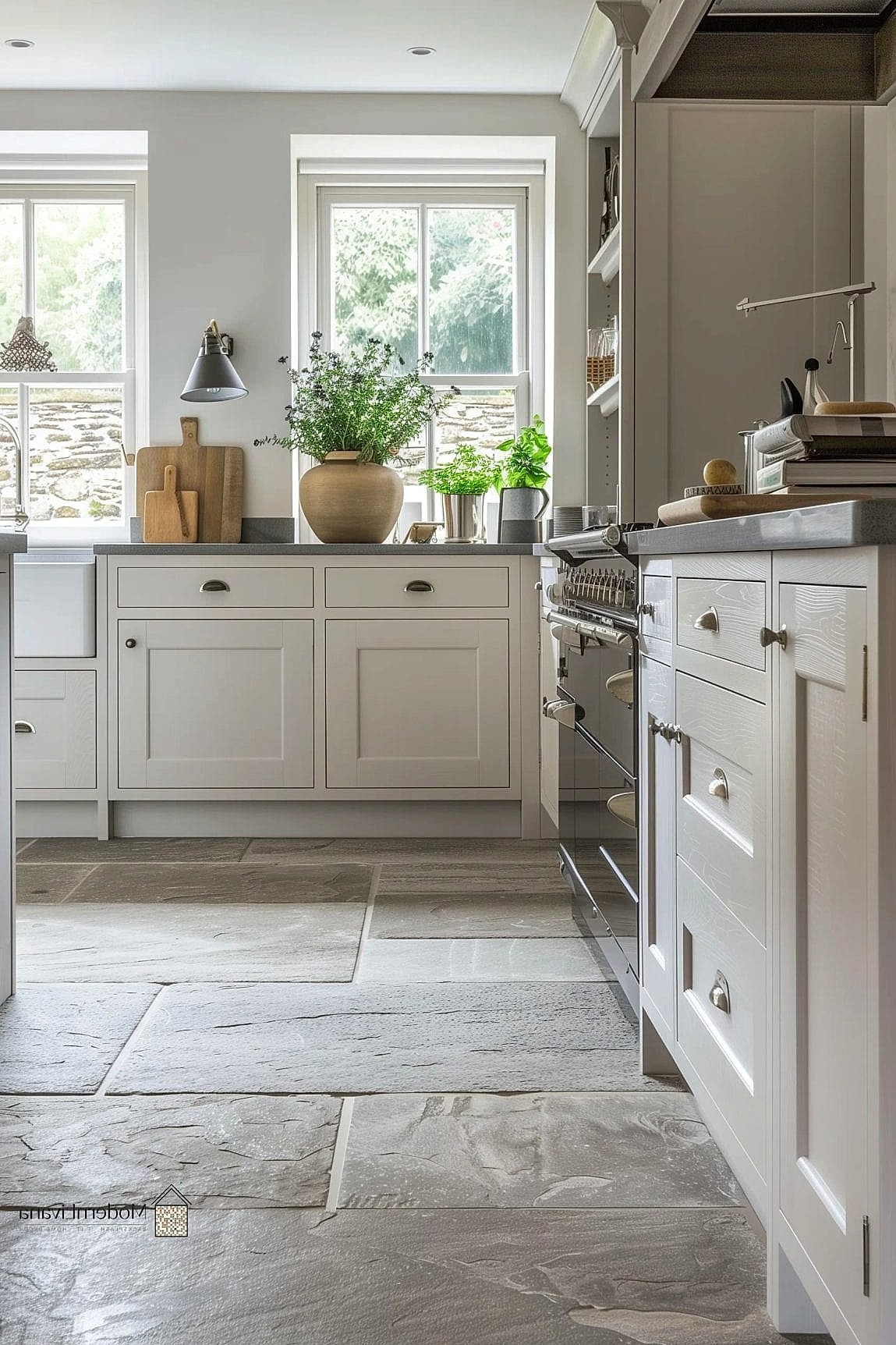
Natural stone flooring, like travertine or limestone, brings texture underfoot and pairs beautifully with white cabinetry. It has a slightly aged, European feel that a lot of homeowners are drawn to right now.
Stone floors do need sealing periodically to resist stains, and they can feel cold without radiant heating in colder climates. Large-format porcelain tile that mimics stone is a popular, lower-maintenance alternative if you love the look but not the upkeep.
Either way, this flooring choice adds warmth to a space that could otherwise feel a little too crisp.
Layered Lighting for Depth
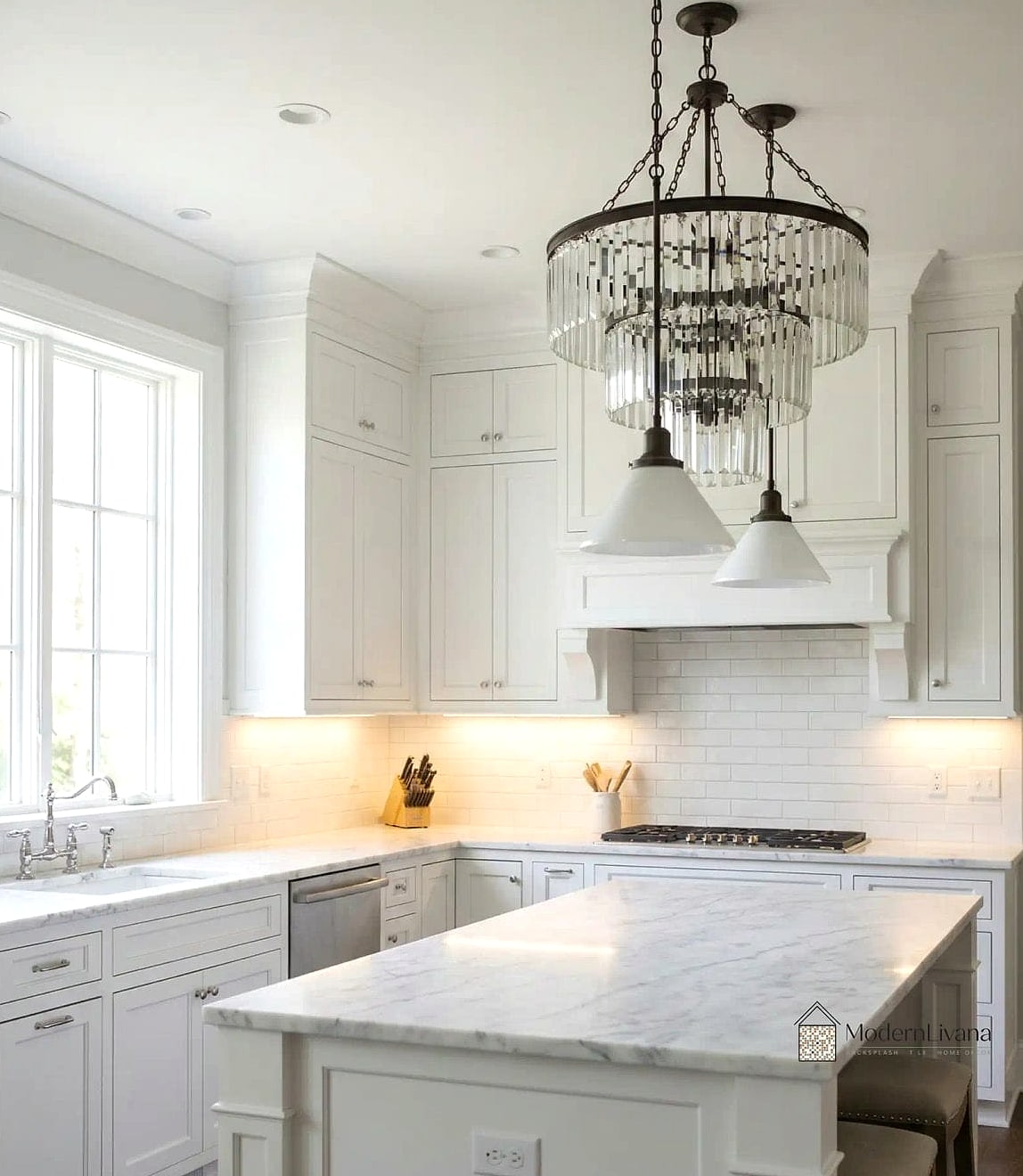
Good lighting design makes a bigger difference in a white kitchen than almost anywhere else, since white surfaces reflect and amplify whatever light hits them. Layering under-cabinet lighting, pendant lights, and recessed cans gives you flexibility depending on the time of day and mood.
Warm-toned bulbs keep an all-white kitchen from feeling clinical, while cooler tones lean more modern and crisp. Dimmer switches are a small addition that make a big difference, letting you go from bright task lighting to something softer in the evening.
If your kitchen only has one overhead light right now, this is genuinely one of the most impactful upgrades you can make.
Built-In Pantry Storage
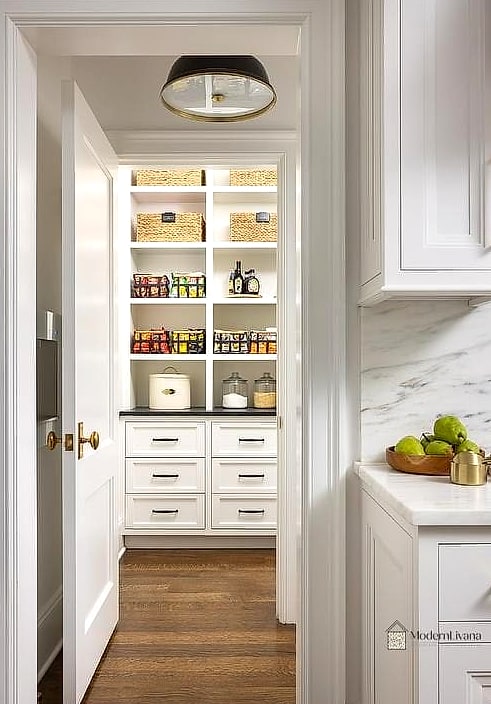
A built-in pantry, whether it’s a walk-in closet or a bank of tall cabinets, keeps a white kitchen looking clean by giving everything a place to disappear to. Clear bins, labeled baskets, and pull-out drawers make the inside just as functional as the outside looks put together.
This is especially helpful for families who go through groceries fast and need a system that doesn’t fall apart after a busy week. Even a smaller kitchen can benefit from a slim pantry cabinet tucked into an unused corner.
The goal is simple: keep the white cabinets looking uncluttered by giving clutter somewhere else to go.
White Kitchen with Greenery
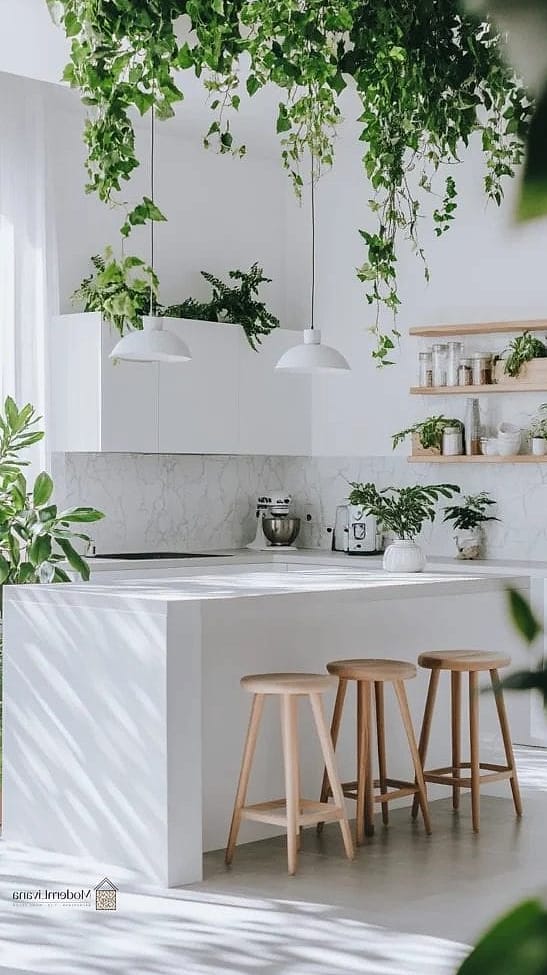
Adding plants to a white kitchen is such an easy, low-cost way to make the space feel alive instead of stark. A few herbs on the windowsill, a trailing plant on top of the cabinets, or a simple vase of fresh flowers on the island all do the trick.
Greenery also softens all those hard surfaces and straight lines that tend to dominate kitchen design. If you don’t have much of a green thumb, low-maintenance options like pothos or a snake plant are nearly impossible to kill.
It’s a small styling move, but it makes a white kitchen feel lived-in rather than showroom-staged.
Herringbone Tile Backsplash
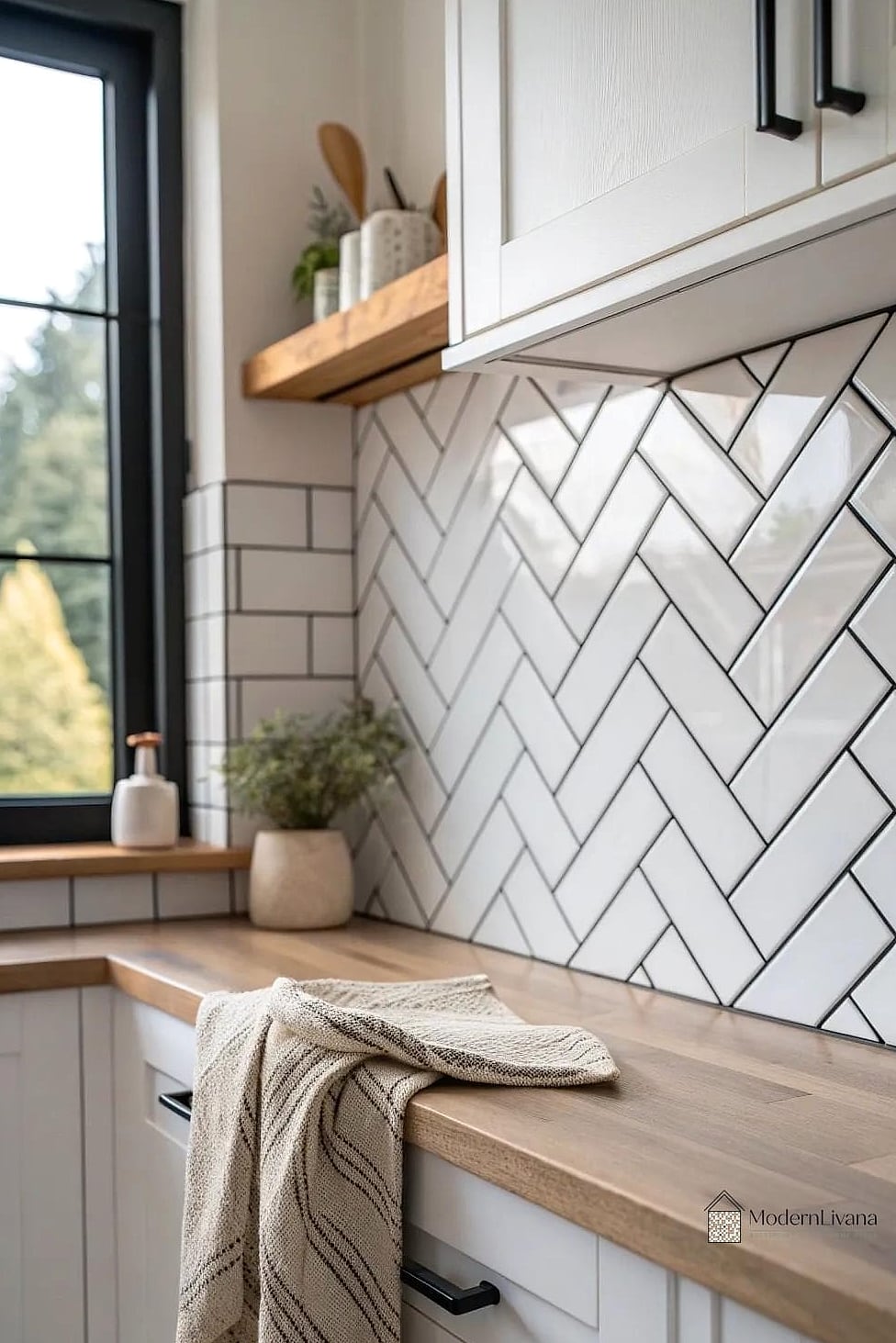
Herringbone patterns add movement and visual interest to a white kitchen without introducing new colors. Whether you use subway tile, marble, or ceramic, laying it in a herringbone pattern instantly elevates a basic backsplash.
This look tends to work especially well behind a stove as a focal point, even if the rest of the kitchen keeps things simple. Installation is a bit more labor-intensive than a standard layout, so factor that into your budget if you’re hiring it out.
It’s a great way to add texture and detail while keeping your overall palette clean and cohesive.
White Cabinets with Glass Fronts
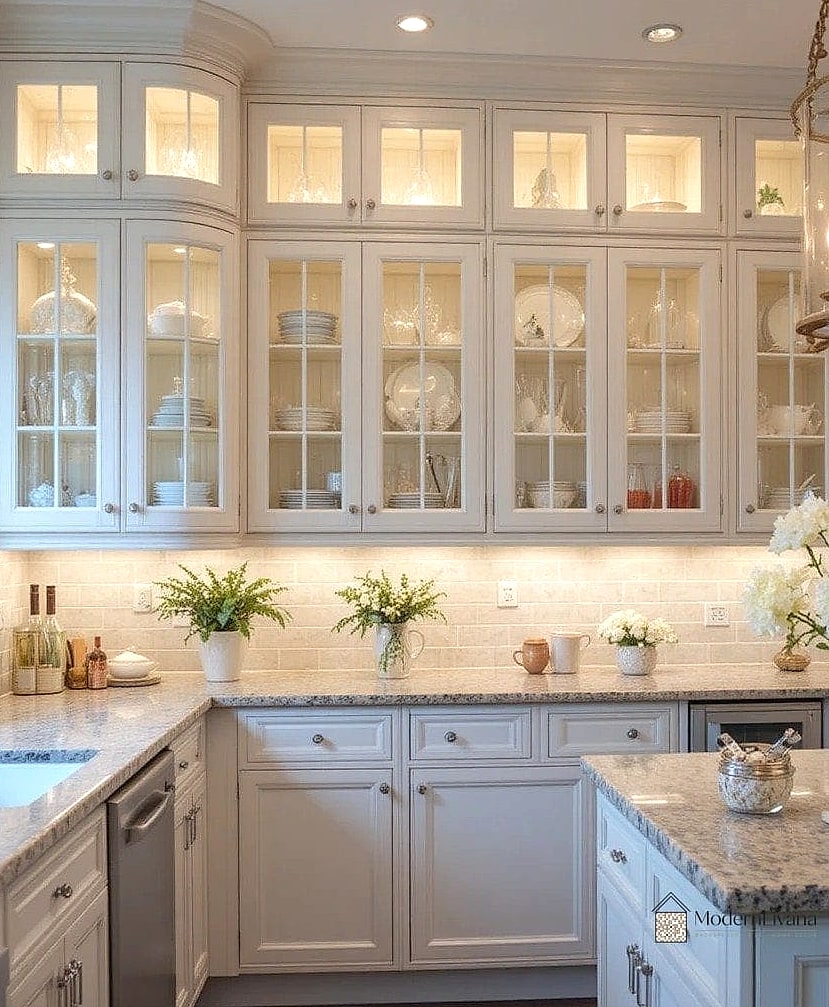
Swapping in a few glass-front cabinet doors breaks up a wall of solid white and adds a little dimension. It’s especially nice for displaying white dishware, glassware, or pretty serving pieces.
Frosted or fluted glass is a good option if you want the look without needing everything inside to be perfectly arranged. This idea works well combined with interior cabinet lighting, which makes the display pop, especially in the evening.
It’s a subtler alternative to full open shelving for anyone who wants a little visibility without giving up all their storage doors.
Hidden Appliance Garage
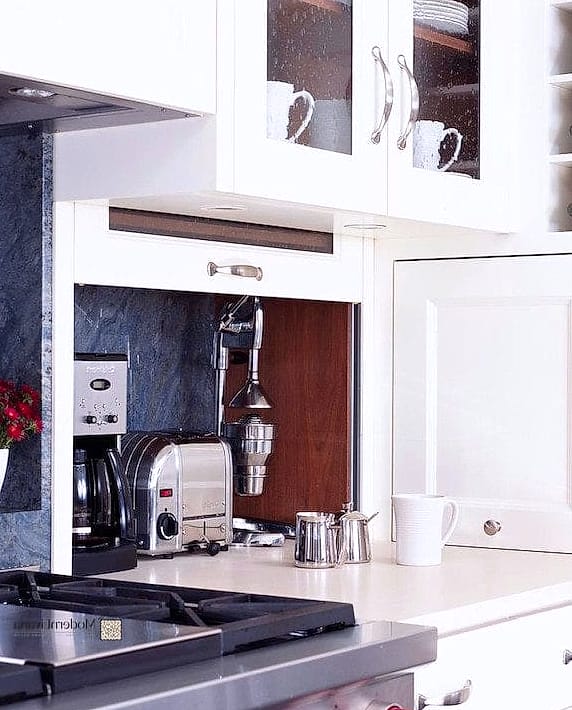
An appliance garage, a cabinet designed to hide countertop appliances like a coffee maker or toaster, keeps a white kitchen counter looking clear and calm. It’s a detail that shows up a lot in higher-end kitchens, but it’s absolutely something you can add to an existing setup with the right cabinet configuration.
This is especially useful for kitchens with a lot of small appliances and not a ton of counter space to spare. Keeping counters clear also just makes cleaning faster, since there’s less to move around and wipe under.
If a cluttered counter stresses you out, this is one of those upgrades worth prioritizing.
White Kitchen with a Bold Range
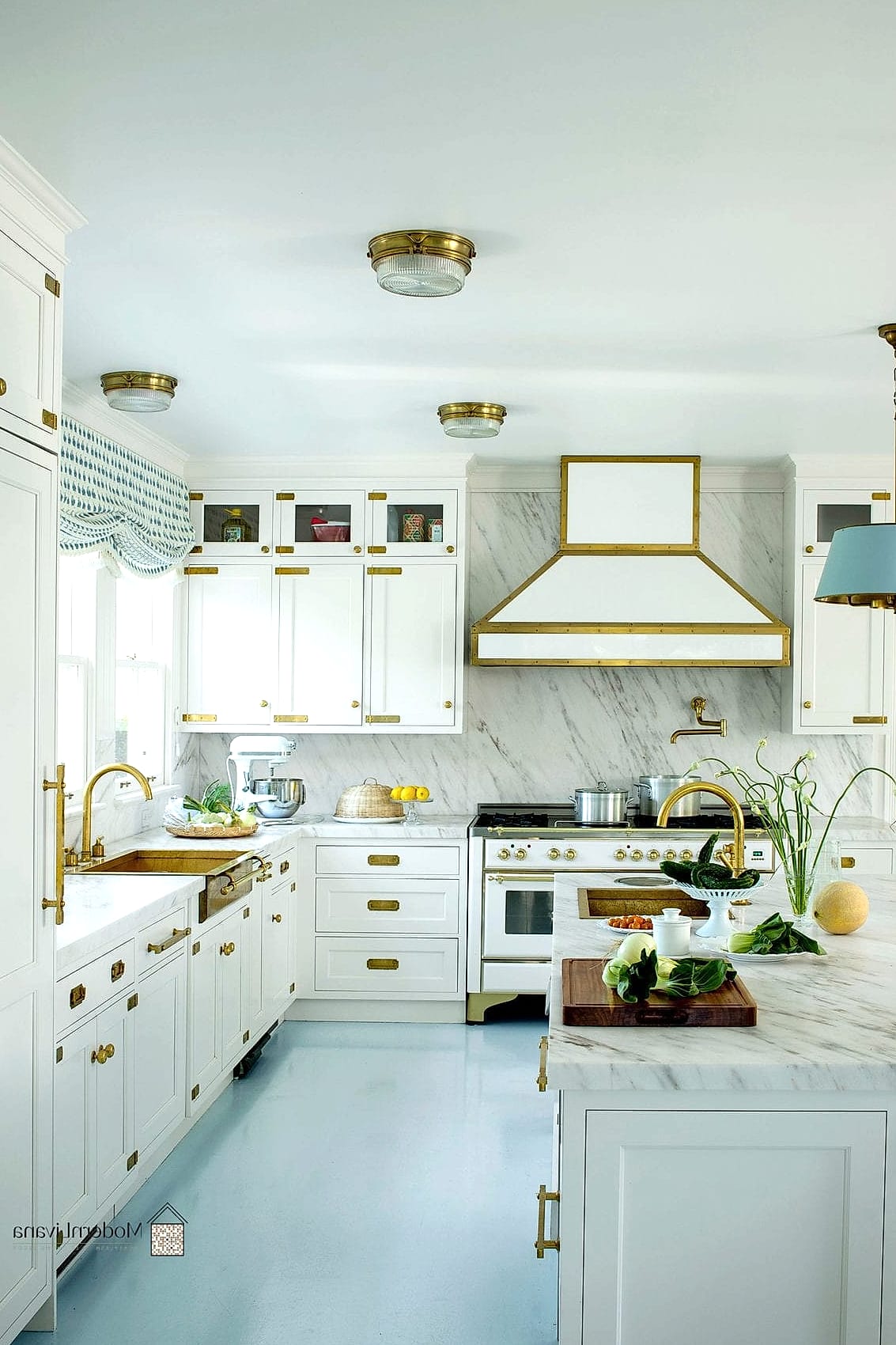
Sometimes the best way to make a white kitchen pop is with one bold, colorful appliance. A red, blue, or black range against all that white cabinetry becomes an instant focal point.
This works because white is such a neutral backdrop that it can handle a strong pop of color without feeling chaotic. It’s a commitment, since ranges aren’t cheap to swap out, but it’s a design move that gives a kitchen real personality.
If you’re not ready to commit to a colorful range, a stainless steel or black one still provides nice contrast against white surroundings.
Textured Cabinet Fronts
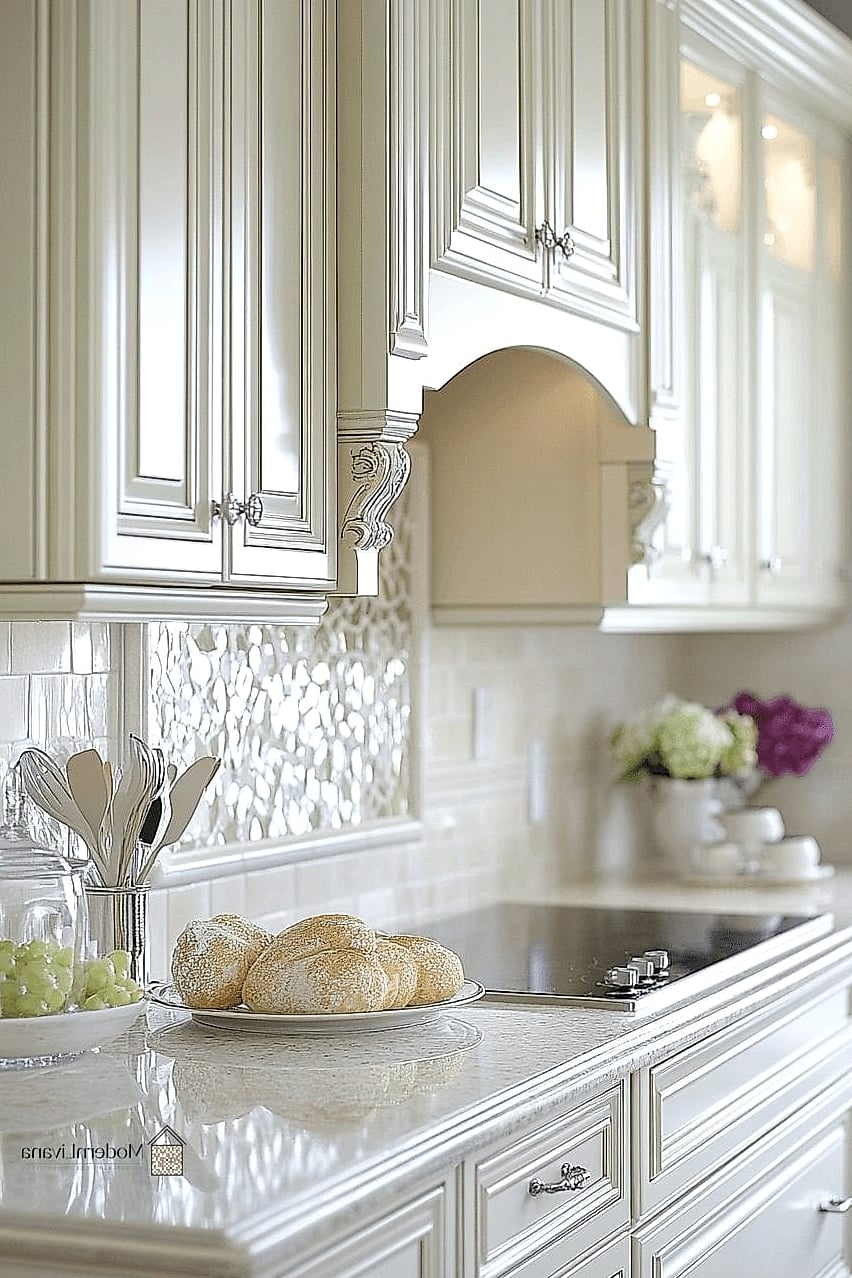
Beadboard, fluted, or reeded cabinet fronts add a tactile, textured element to white kitchens that flat panel doors don’t offer. This detail shows up a lot in coastal and modern-traditional kitchen styles.
It’s a nice way to add character to an island specifically, even if the surrounding cabinets stay simple and flat-fronted. Cleaning grooved or textured surfaces does take a little more effort than a flat door, so keep that in mind if you’re not big on detailed cleaning.
For anyone wanting their white kitchen to feel a bit more custom and less builder-grade, textured fronts are worth exploring.
Monochromatic White Kitchen with Layered Textures
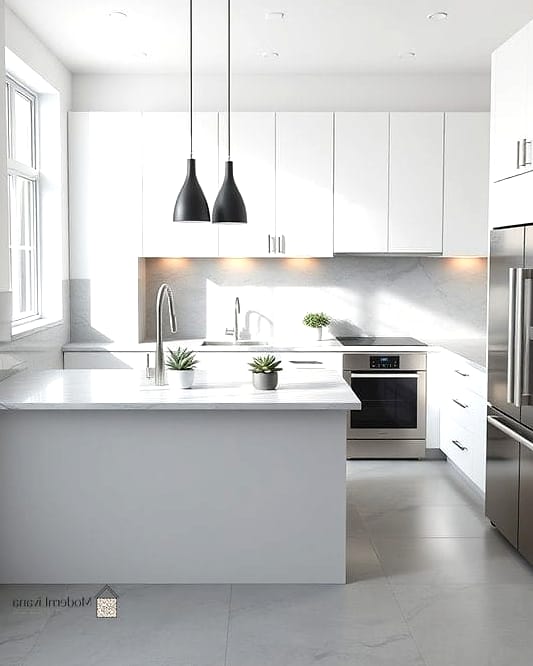
Going fully monochromatic, white cabinets, white counters, white backsplash, sounds risky, but it actually works beautifully when you layer in different textures and finishes. Think matte cabinets, a honed marble counter, and a subtly textured tile backsplash, all in the same color family but with visual variety.
This approach relies heavily on lighting and texture to keep the space from feeling flat, so it’s worth spending a little more time on those details. Adding a few black or wood accents, even something as small as bar stools or a light fixture, keeps it from feeling like one big white blur.
Done well, this is one of the most timeless, elegant takes on the white kitchen, and it tends to age better than trend-driven color choices.
Whether you go all-in on one of these ideas or mix a handful together, a white kitchen gives you a foundation that’s easy to build on for years to come. The best part is you don’t have to do it all at once. Swap the hardware this month, rethink the backsplash next year, and let the kitchen evolve as your taste does.