29 Victorian Style Kitchen Ideas That Will Change How You See Your Home
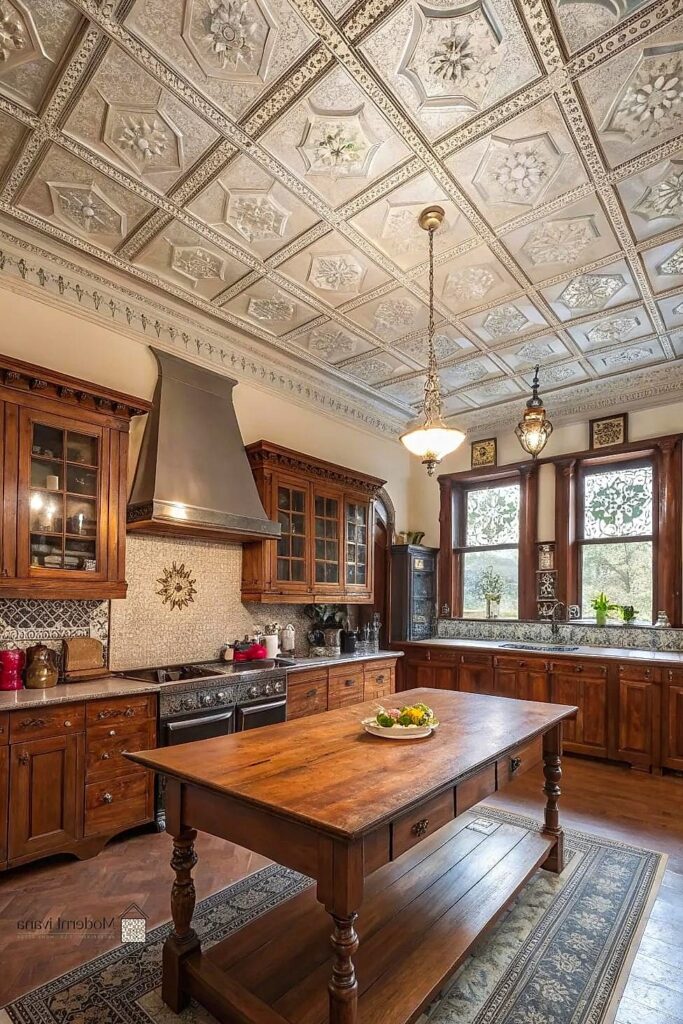
- Deep Emerald Green Cabinetry
- Ornate Cast Iron Range Hood
- Patterned Encaustic Floor Tile
- Marble Countertops with Veining
- Beadboard Wainscoting
- Brass and Glass Pendant Lighting
- Farmhouse Apron Sink with Vintage Faucet
- Botanical Wallpaper Accent
- Open Shelving with Vintage Dishware
- Herringbone Wood Flooring
- Dark Navy Lower Cabinets with White Uppers
- Fireclay Farmhouse Sink in Cream
- Decorative Ceiling Medallions and Trim
- Rich Mahogany or Walnut Island
- Stained Glass Window Accent
- Vintage-Inspired Range in Cream or Black
- Botanical Print Tile Backsplash
- Built-In China Cabinet or Hutch
- Oil-Rubbed Bronze Hardware Throughout
- Botanical Curtains Instead of Blinds
- Checkerboard Tile Floor in Black and White
- Antique Brass Faucet with Cross Handles
- Deep Burgundy Accent Wall
- Vintage Rug in the Kitchen
- Curved Cabinet Corners and Arched Openings
- Copper Pot Rack Display
- Lace or Crochet Table Linens
- Warm Cream Subway Tile
- Dried and Fresh Floral Arrangements
- Antique Brass Wall Sconces
29 Victorian Style Kitchen Ideas That Will Change How You See Your Home
Victorian kitchens get a bad rap sometimes, like they’re all doilies and dark wood paneling. But the real charm of this style is how it mixes ornate detail with genuine warmth. If you love the idea of a kitchen that feels collected, layered, and full of character instead of another all-white box, this list is for you. Here are 29 ways to bring that old-world richness into a space you’ll actually use every day.
Deep Emerald Green Cabinetry
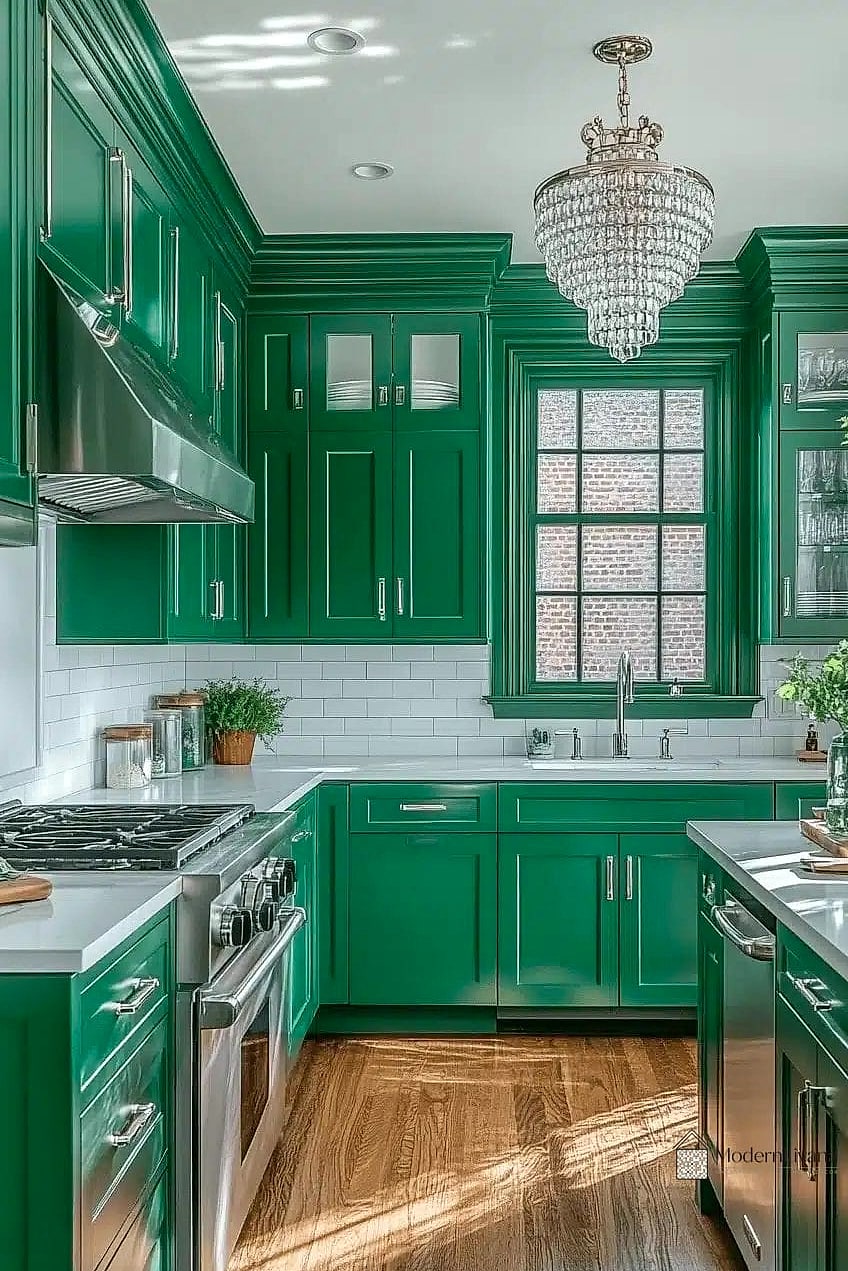
Victorian homes loved bold, saturated color, and emerald green cabinets bring that drama back in a way that still feels current. Pair them with brass hardware and you get instant richness without going overboard. This works especially well in kitchens with lots of natural light, since the green can read a little heavy in dim spaces. It’s a great pick for anyone who wants a statement kitchen but isn’t ready to commit to wallpaper everywhere.
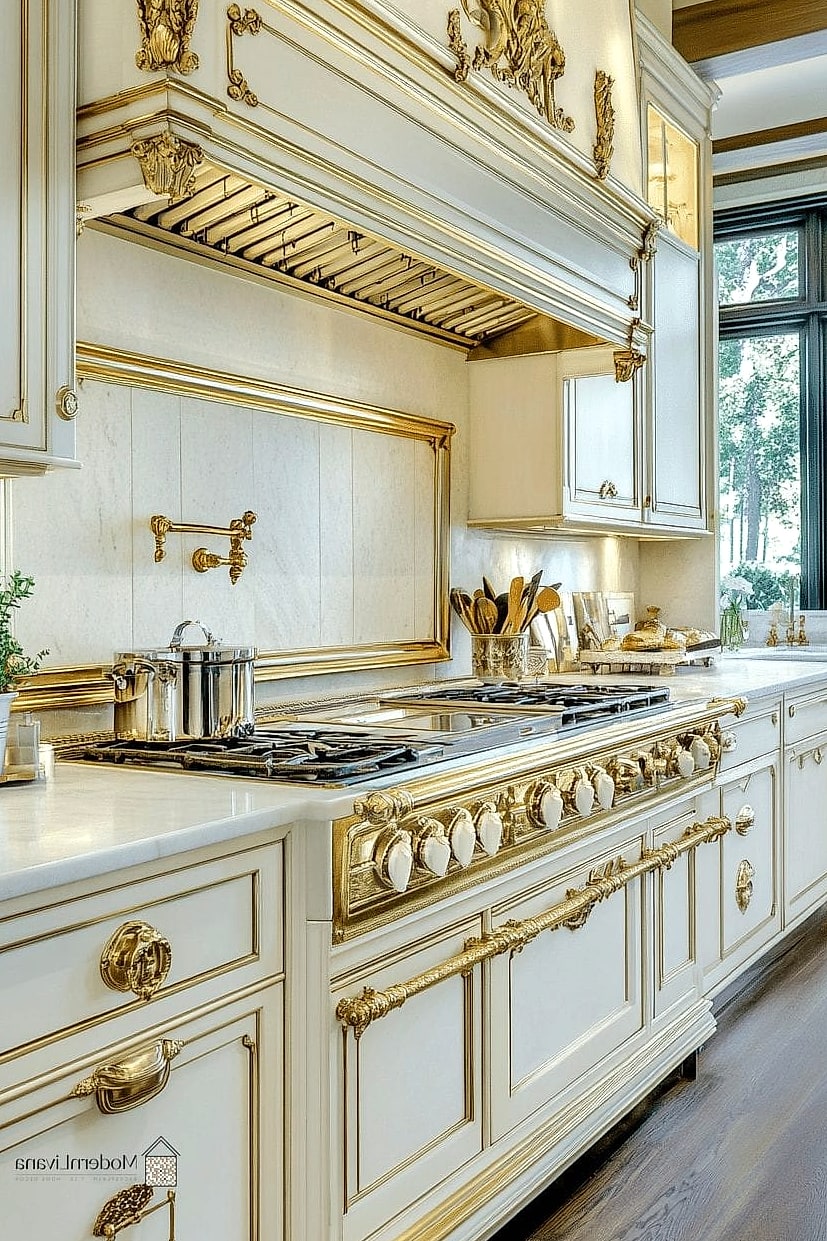
Ornate Cast Iron Range Hood
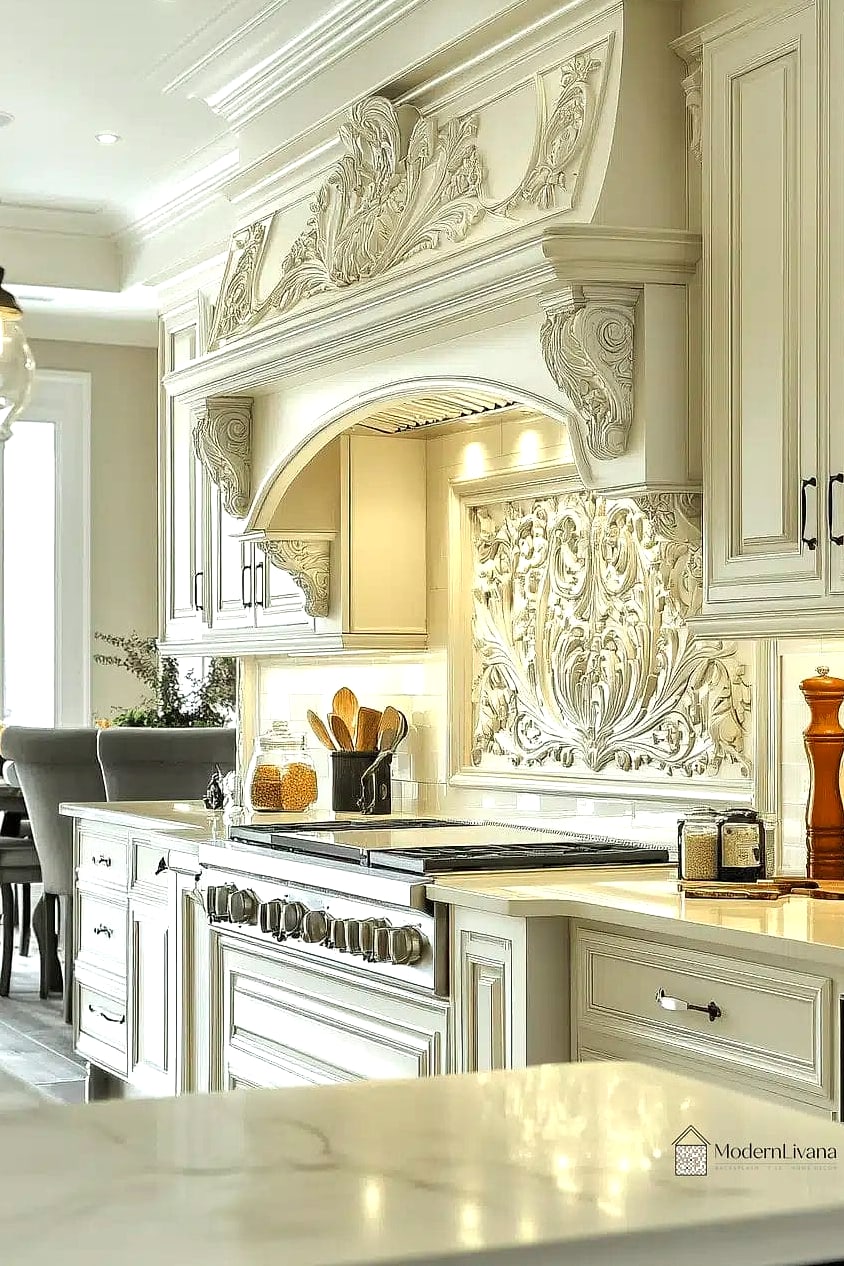
A cast iron or iron-look range hood with scrollwork detailing instantly signals Victorian style. It becomes the anchor piece of the whole room, almost like a piece of furniture rather than an appliance. These work best in kitchens with higher ceilings so the hood has room to breathe visually. Just know that iron finishes need occasional wiping down to avoid grease buildup dulling the shine.
Patterned Encaustic Floor Tile
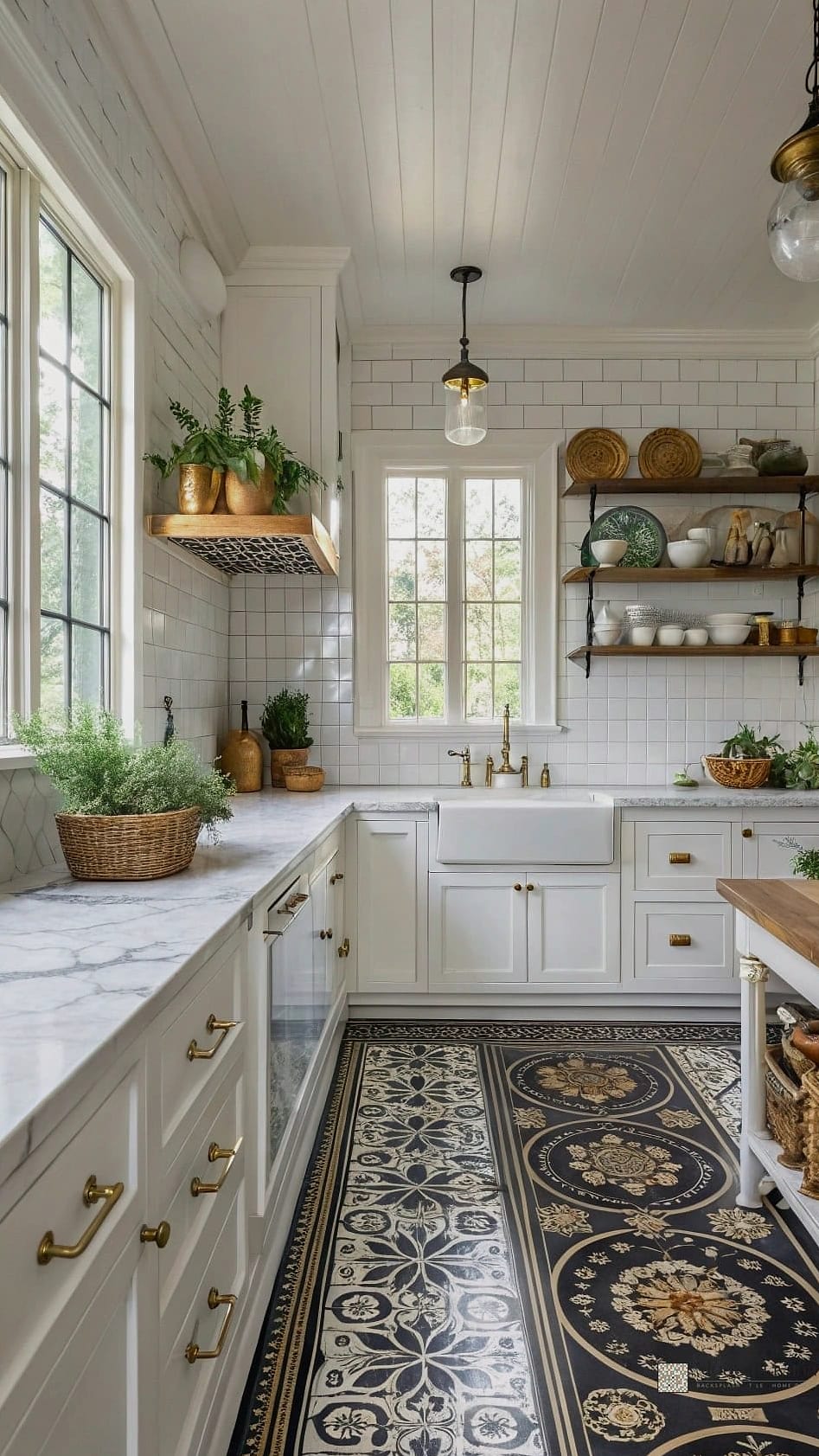
Encaustic tile with intricate geometric or floral patterns was everywhere in Victorian homes, and it’s having a real moment again. It adds texture underfoot in a way that plain tile just can’t match. Porcelain versions now mimic the look for a fraction of the cost and hold up better to daily traffic. This is a fantastic option for busy families since it hides scuffs better than you’d expect.
Marble Countertops with Veining
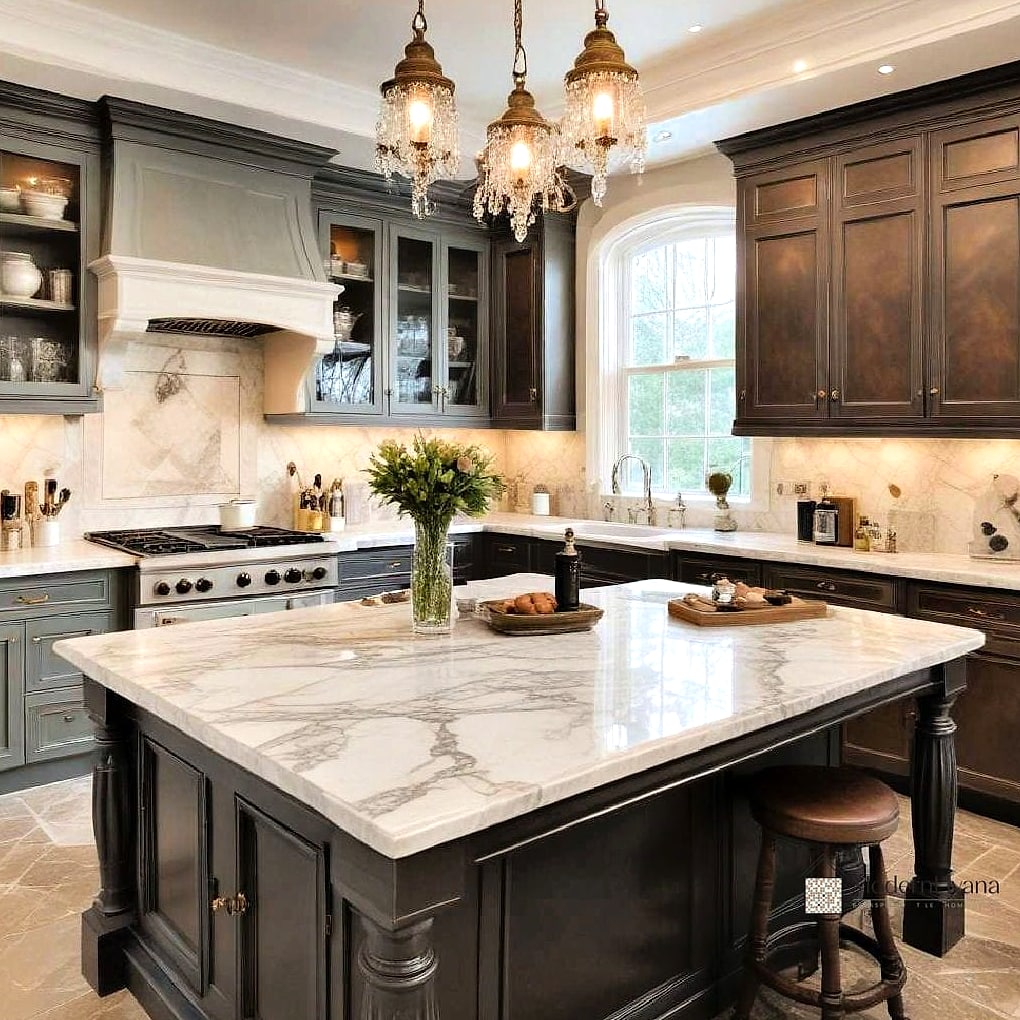
Nothing says old-world elegance quite like marble with dramatic veining running through it. Victorian kitchens weren’t shy about luxury materials, and marble delivers that in spades. It does require sealing and a bit more care than quartz, so it’s better suited to homeowners who don’t mind the upkeep. If you love the look but want something lower maintenance, a quartz with marble-inspired veining gets you 90% of the way there.
Beadboard Wainscoting
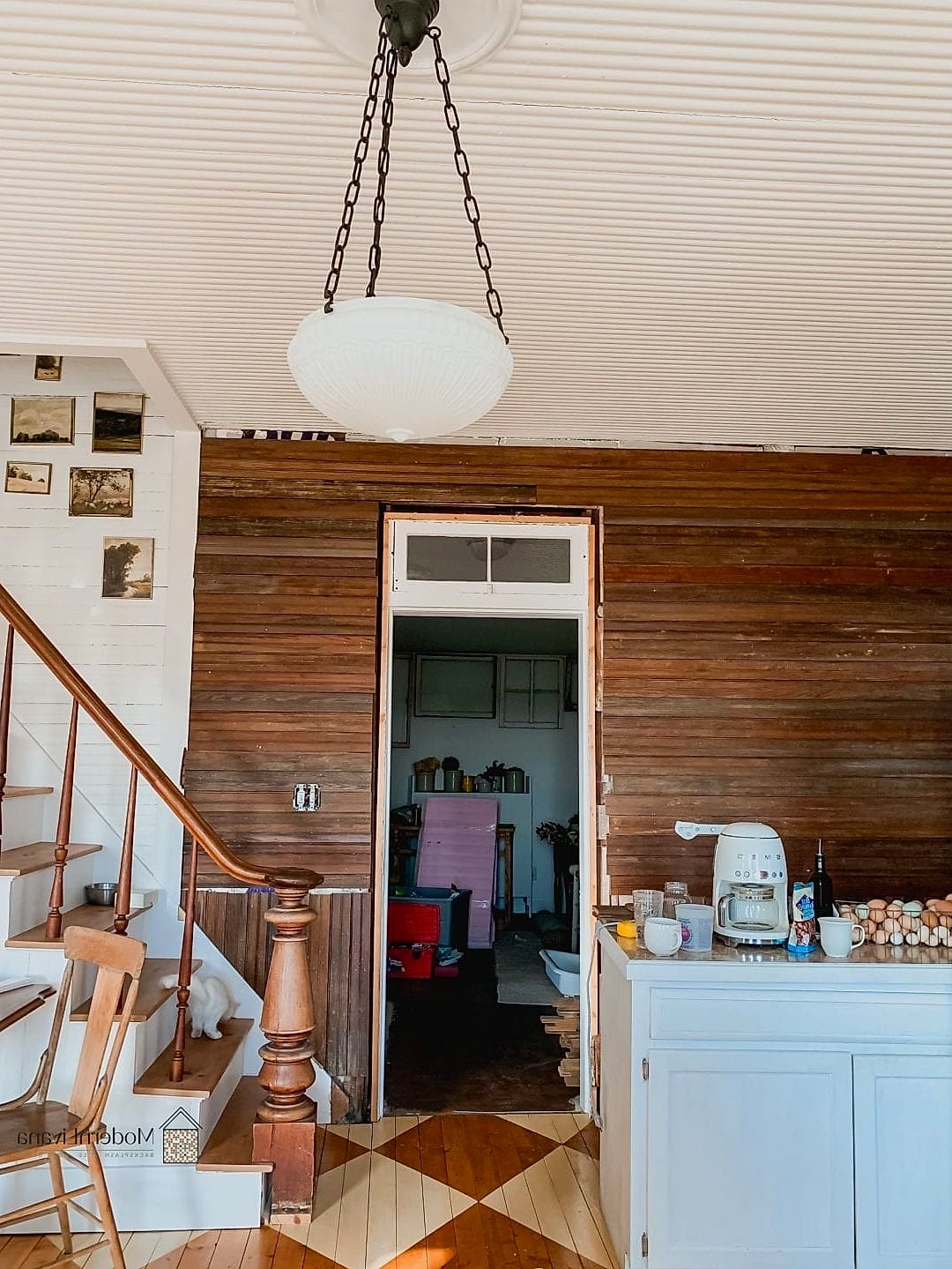
Beadboard paneling along the lower half of the walls is one of the simplest ways to add Victorian character without a huge budget. It brings texture and a cottage-like coziness that pairs beautifully with darker cabinet colors above. This is also a pretty approachable DIY project for anyone comfortable with basic tools. Paint it a soft white or cream for a classic look that won’t feel dated.
Brass and Glass Pendant Lighting
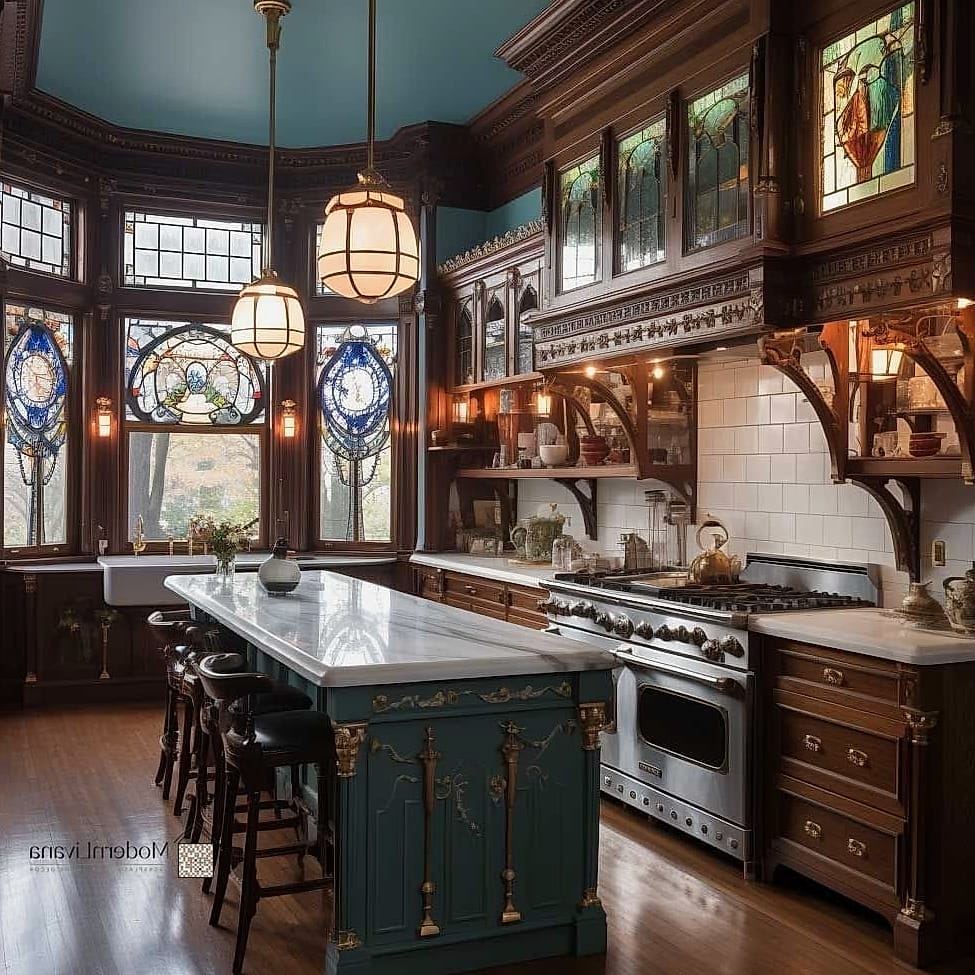
Layered lighting matters a lot in Victorian-inspired kitchens, and brass pendants with glass shades do a lot of heavy lifting. They cast a warm glow that feels romantic rather than harsh. Hanging a cluster of two or three over an island adds visual rhythm without cluttering the ceiling. Look for antiqued or unlacquered brass if you want that finish to develop character over time.
Farmhouse Apron Sink with Vintage Faucet
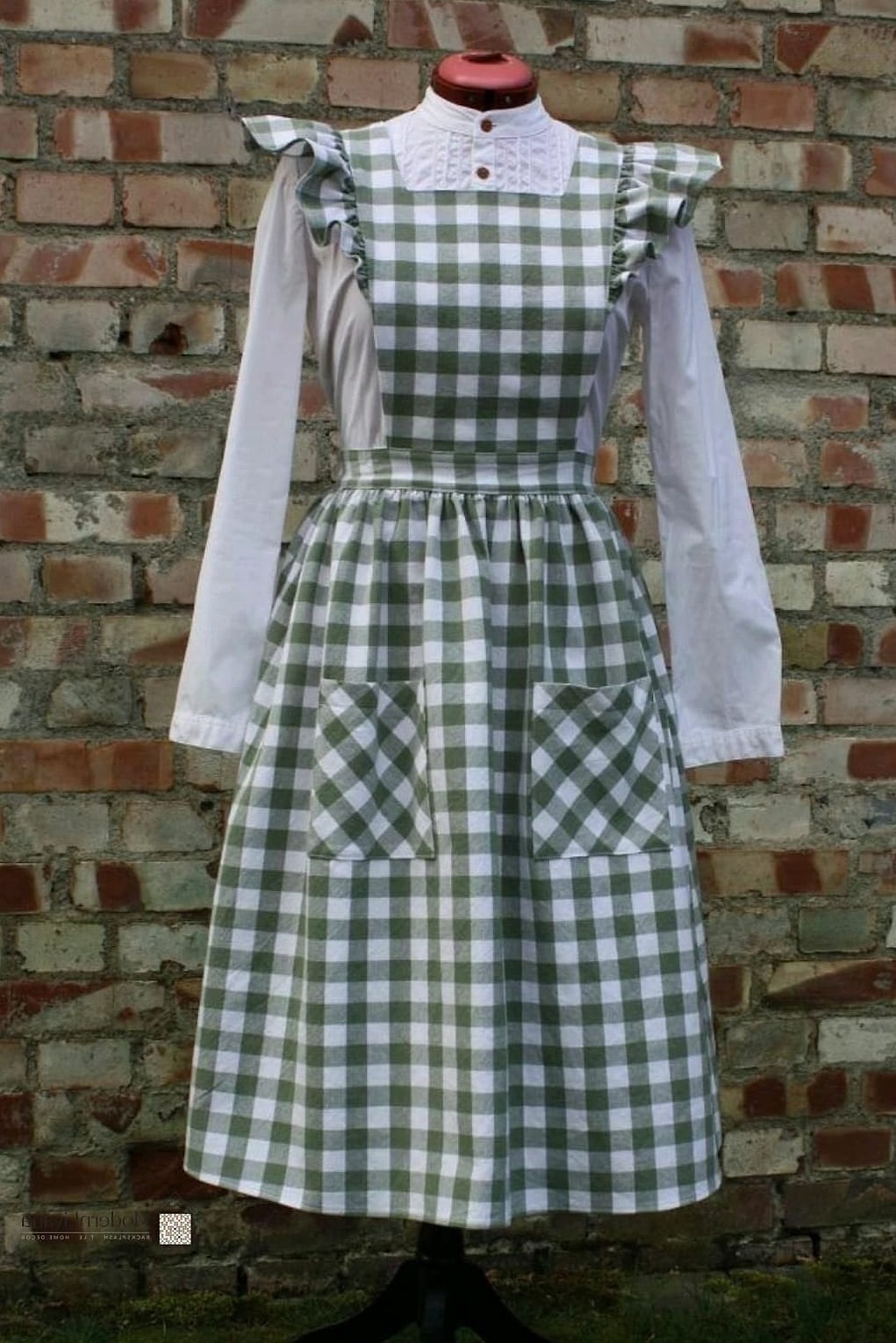
The deep apron-front sink has actually been around since long before farmhouse style claimed it, and it fits right into a Victorian kitchen. Pair it with a gooseneck or bridge-style faucet in brass or oil-rubbed bronze for authenticity. These sinks are surprisingly practical, offering more room for big pots and baking sheets. Just double check your cabinetry can support the extra weight before installing one.
Botanical Wallpaper Accent
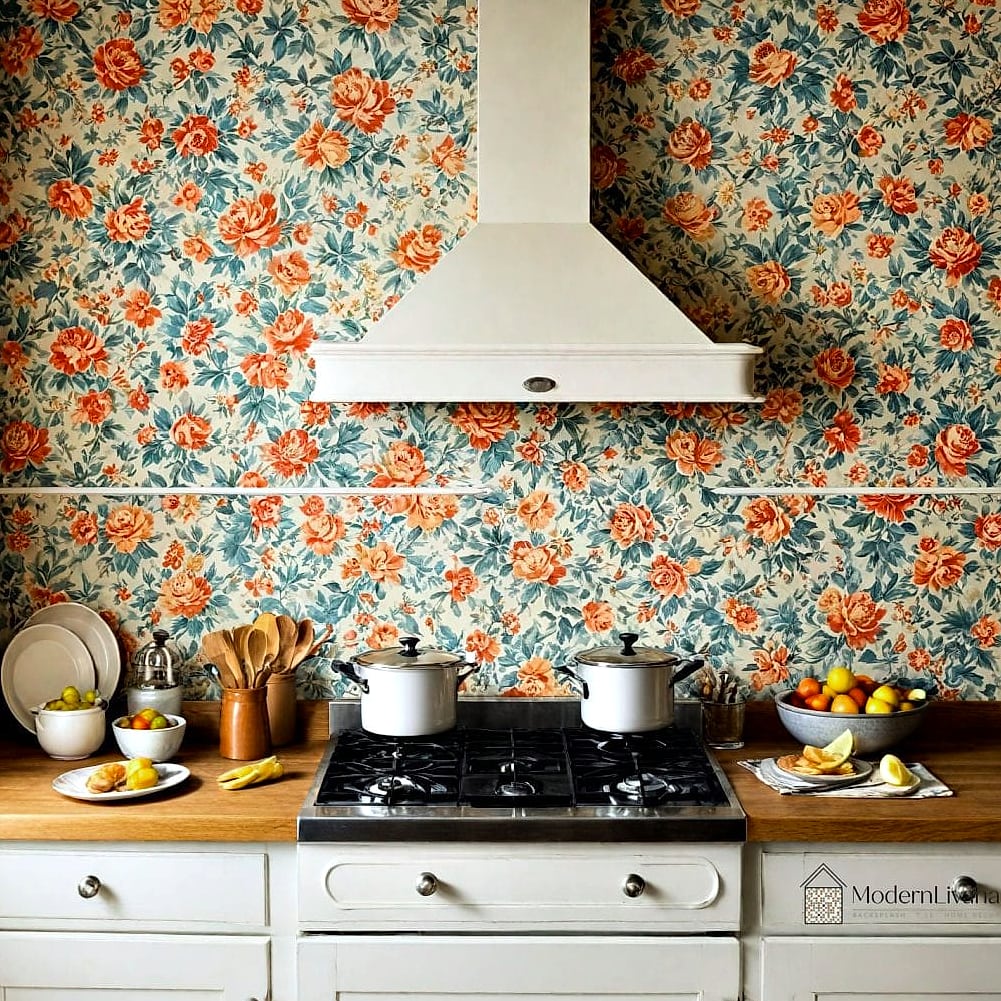
A single wall of botanical or floral wallpaper brings that Victorian love of pattern into the kitchen without overwhelming the whole room. Choose a paper with deep greens, burgundies, or navy tones for the richest effect. Peel-and-stick versions make this idea totally renter-friendly if you’re not ready for a permanent commitment. It’s an easy way to add personality behind open shelving or in a breakfast nook.
Open Shelving with Vintage Dishware

Skip a few upper cabinets and add open wood shelving to display collected china, glassware, or ironstone pieces. This is such a natural fit for Victorian style since that era was all about curated display. It also keeps everyday dishes accessible, which is genuinely practical. Just be prepared to dust a little more often since open shelves collect grease and dust faster than closed cabinets.
Herringbone Wood Flooring
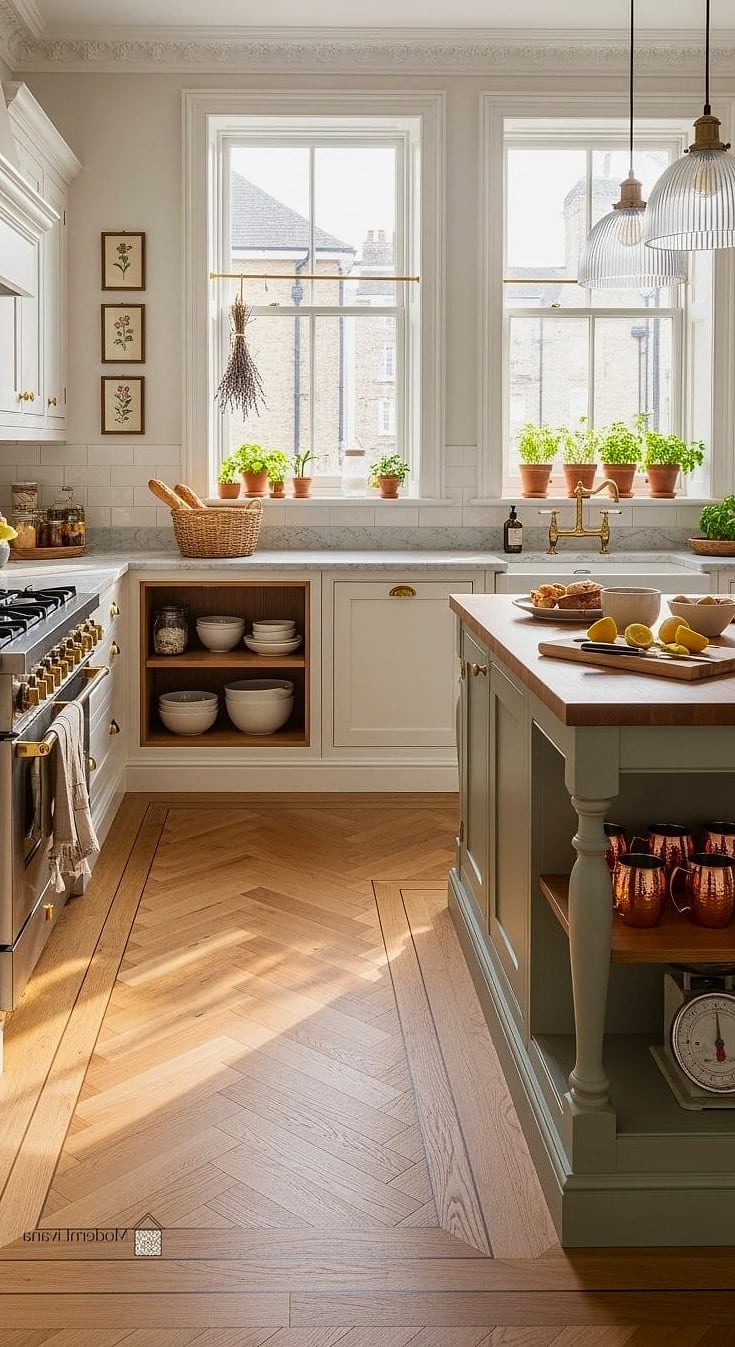
Herringbone patterned hardwood adds movement and craftsmanship underfoot, echoing the detailed millwork Victorian homes were known for. It reads as more formal than standard plank flooring, which fits the elevated feel of this style. This works in both large kitchens and smaller ones, since the diagonal pattern can actually make a tight space feel bigger. Engineered wood versions offer better durability if you’re worried about moisture near the sink.
Dark Navy Lower Cabinets with White Uppers
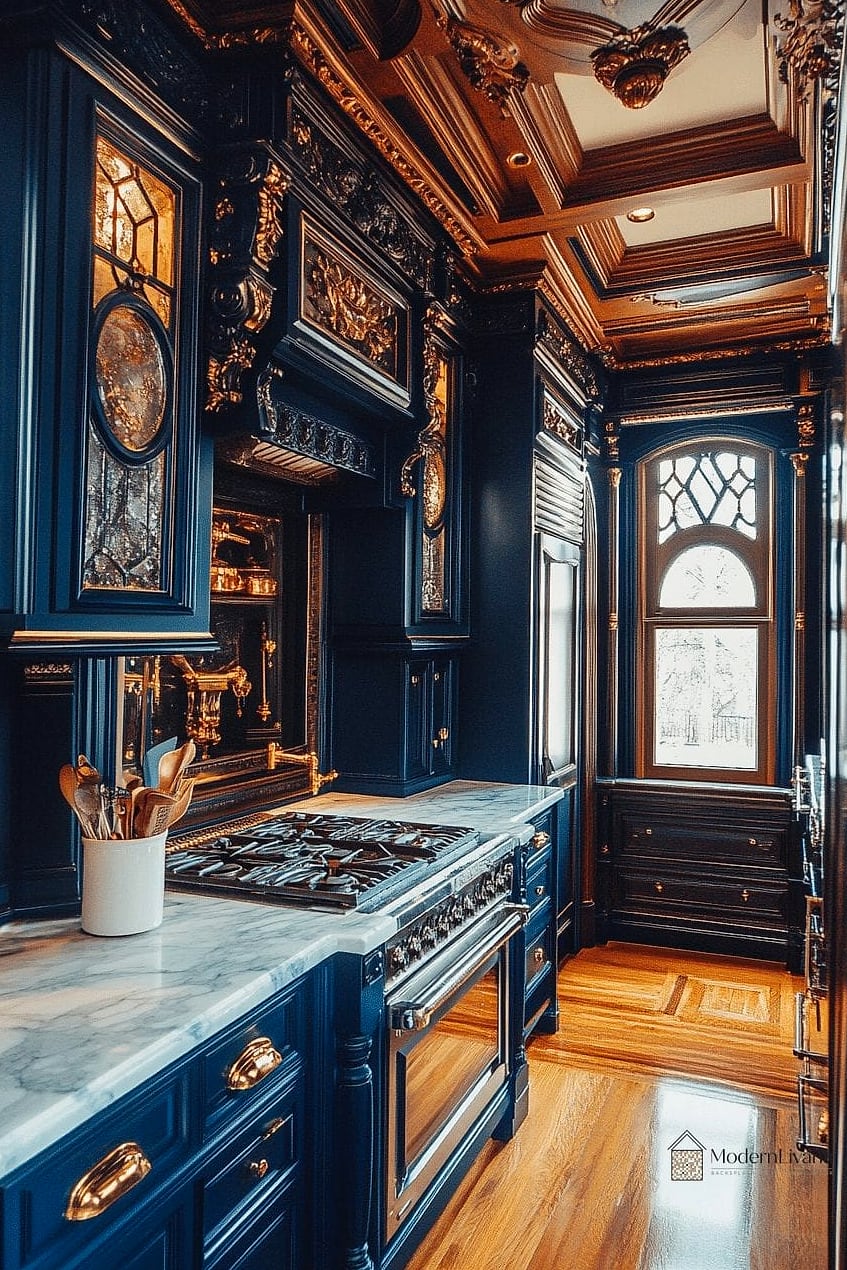
Two-tone cabinetry was common in older homes as a practical way to hide grime near the floor while keeping upper areas bright. Navy on the bottom with crisp white above gives a classic, grounded look that still feels fresh today. It’s a great compromise if you love bold color but worry about an all-dark kitchen feeling too heavy. Add brass pulls to tie the two tones together.
Fireclay Farmhouse Sink in Cream
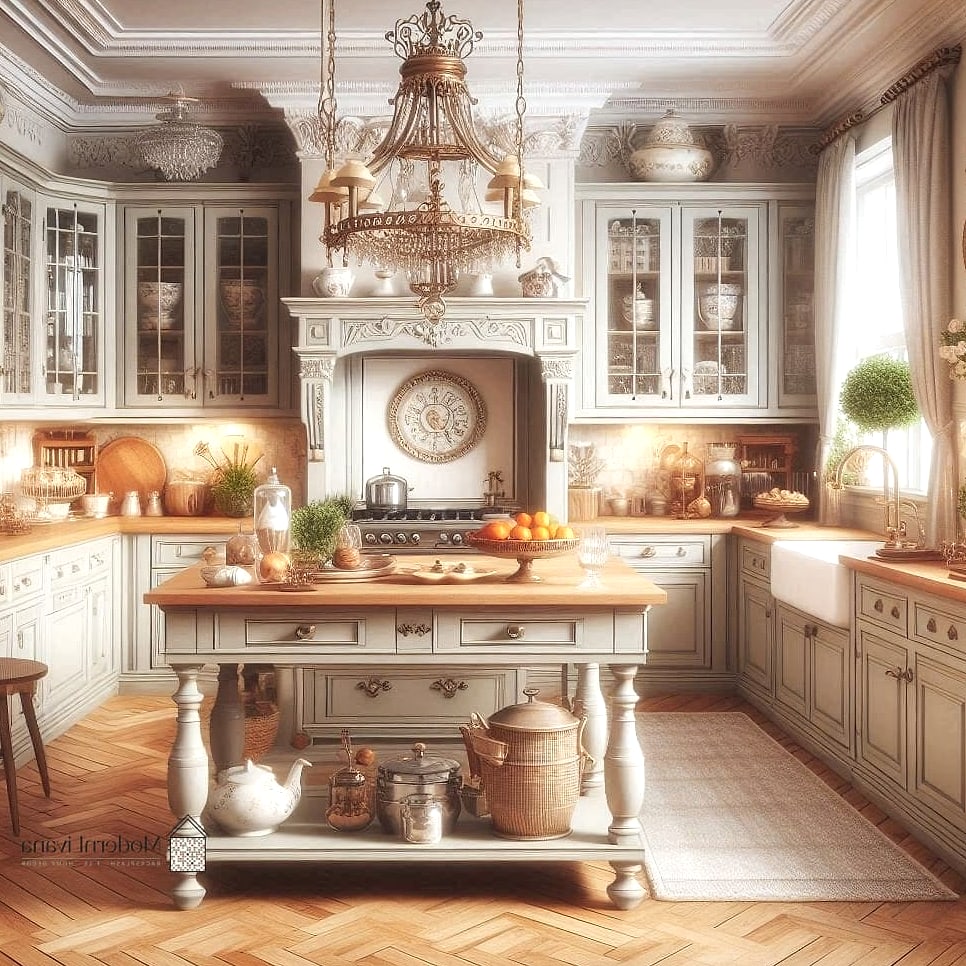
If a pure white sink feels too stark for your space, a cream or bone-colored fireclay sink softens things while keeping that classic farmhouse silhouette. Fireclay is genuinely tough, resisting chips and stains better than cast iron in a lot of cases. It’s a bit of an investment upfront, but many homeowners consider it worth it for the longevity. Pair it with a wood cutting board insert for extra prep space.
Decorative Ceiling Medallions and Trim
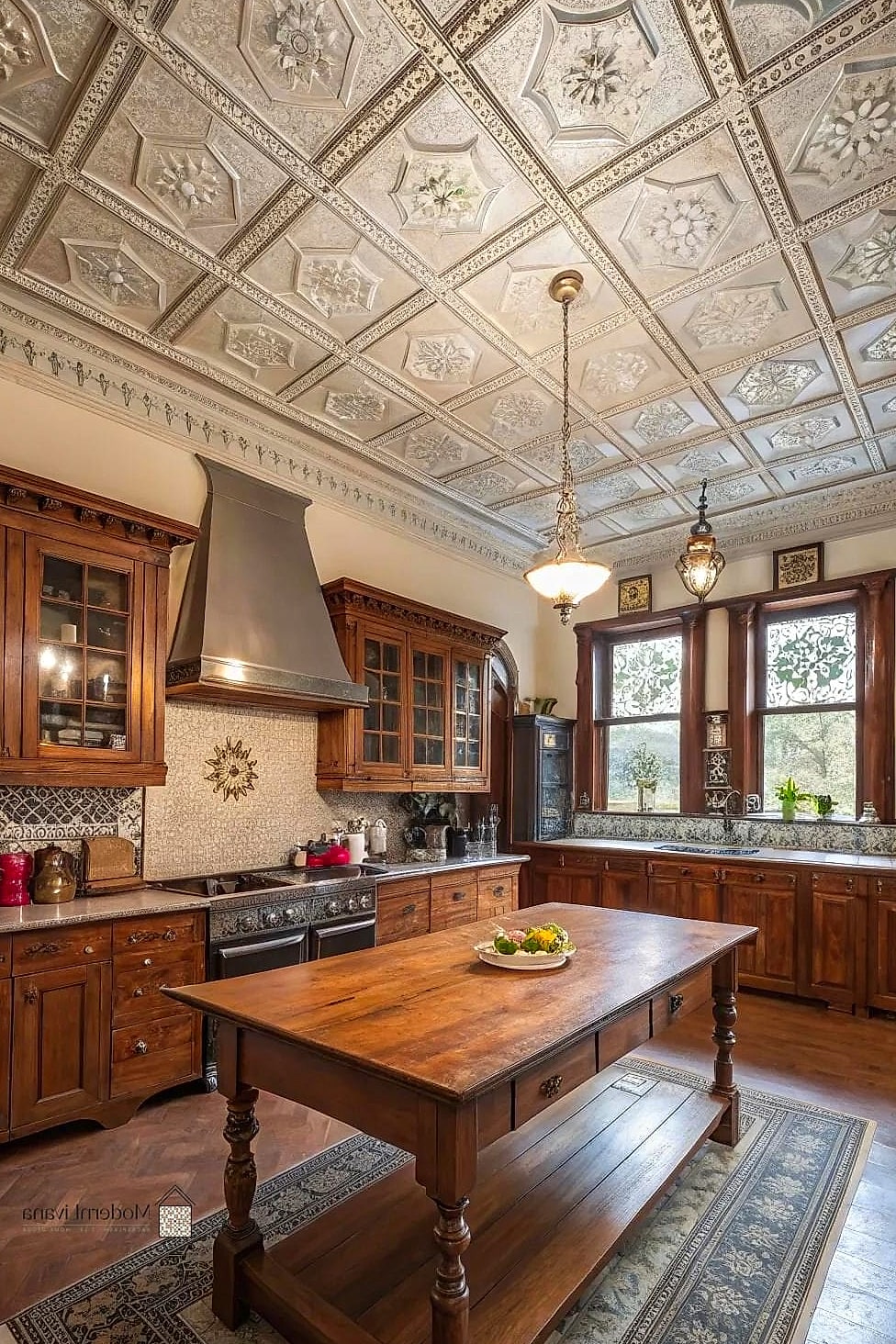
Victorian homes rarely left a ceiling plain, and adding crown molding or a decorative medallion above a light fixture brings that architectural detail back. This is a smaller-scale project that still makes a noticeable difference in how finished a kitchen feels. Lightweight polyurethane versions are much easier to install than the original plaster ones. It’s a subtle touch, but it’s the kind of detail people notice even if they can’t say why.
Rich Mahogany or Walnut Island
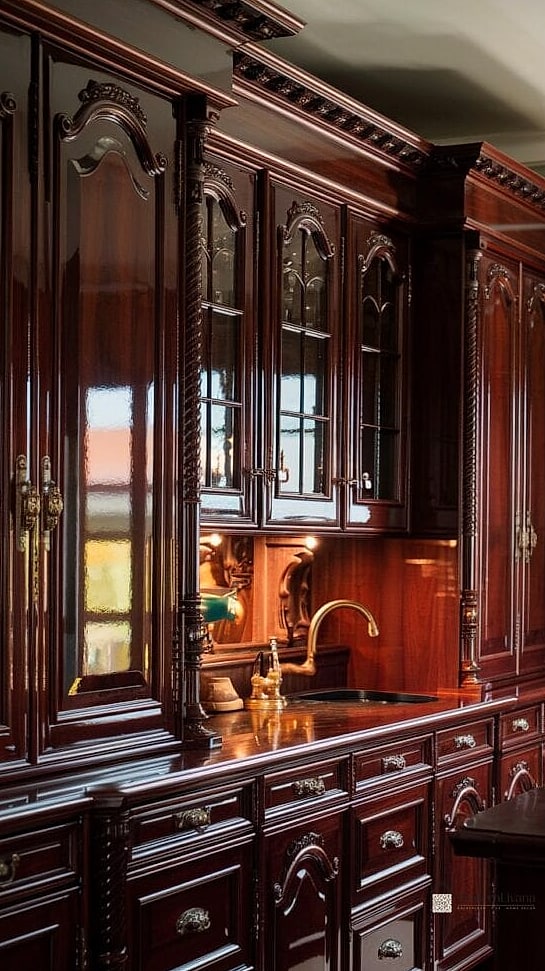
A dark wood island stands out beautifully against lighter perimeter cabinetry, almost like a piece of antique furniture rolled into the kitchen. Mahogany and walnut tones bring warmth and a sense of history to the space. This works particularly well when paired with a contrasting stone countertop like white marble or quartz. It’s a great focal point idea if you want one bold element rather than an entire dark kitchen.
Stained Glass Window Accent
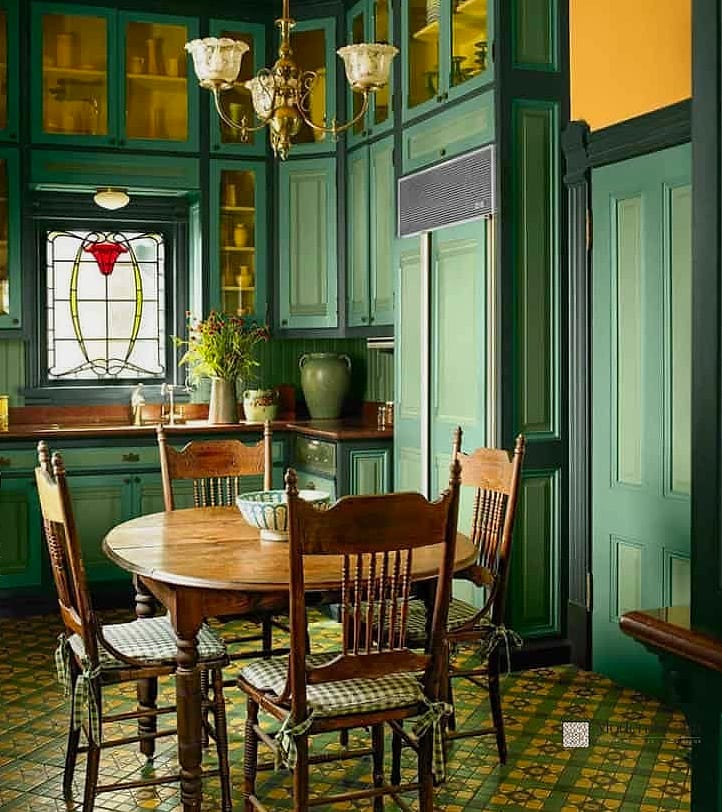
A small stained glass panel above the sink or in a transom window adds color and old-world charm in a way nothing else quite replicates. Even a modest piece can catch afternoon light beautifully. Custom stained glass can get pricey, but there are affordable faux options that mimic the look convincingly. This idea works especially well in kitchens that already lean traditional in their layout.
Vintage-Inspired Range in Cream or Black
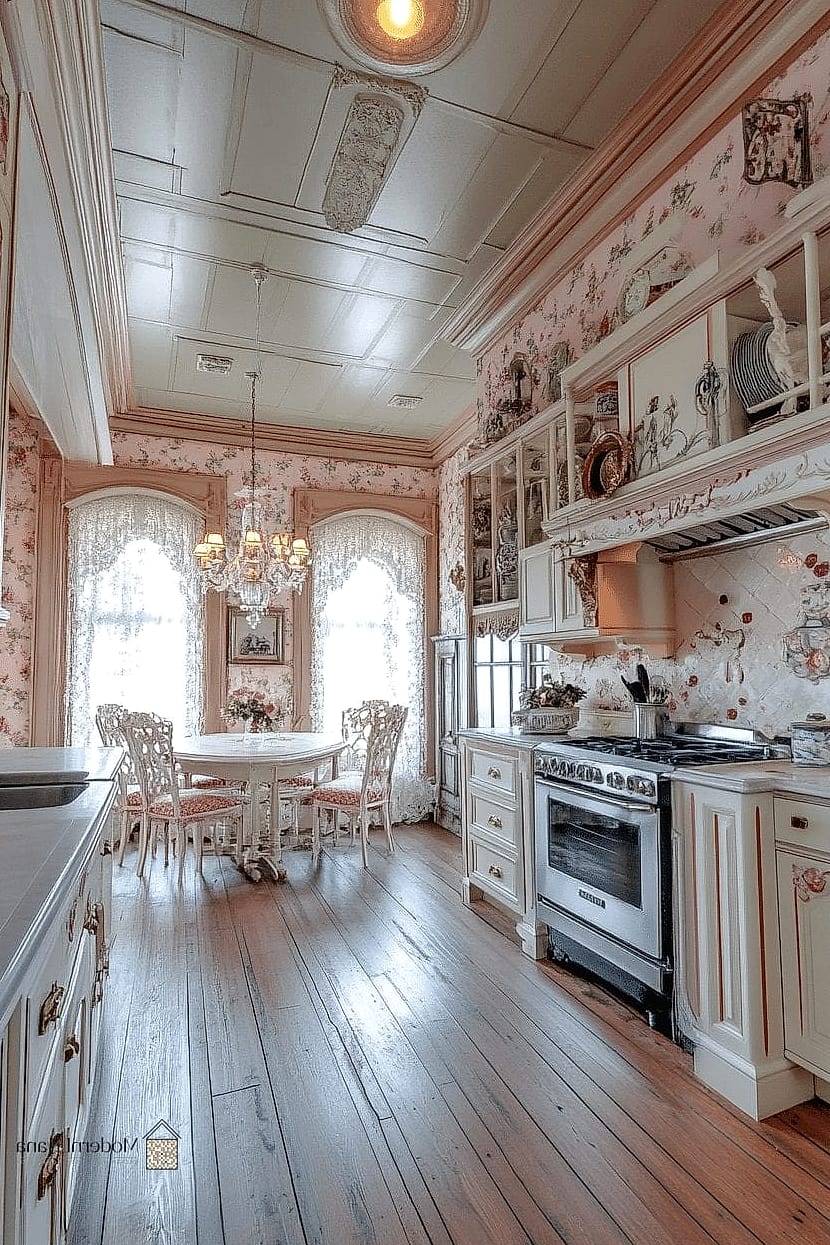
A range with rounded edges, brass knobs, and a vintage silhouette instantly sets the tone for the whole kitchen. Cream finishes soften the space, while black adds drama and contrast against lighter cabinetry. These ranges have come a long way in terms of performance, so you’re not sacrificing function for looks. It’s often the splurge item people build their whole Victorian kitchen design around.
Botanical Print Tile Backsplash
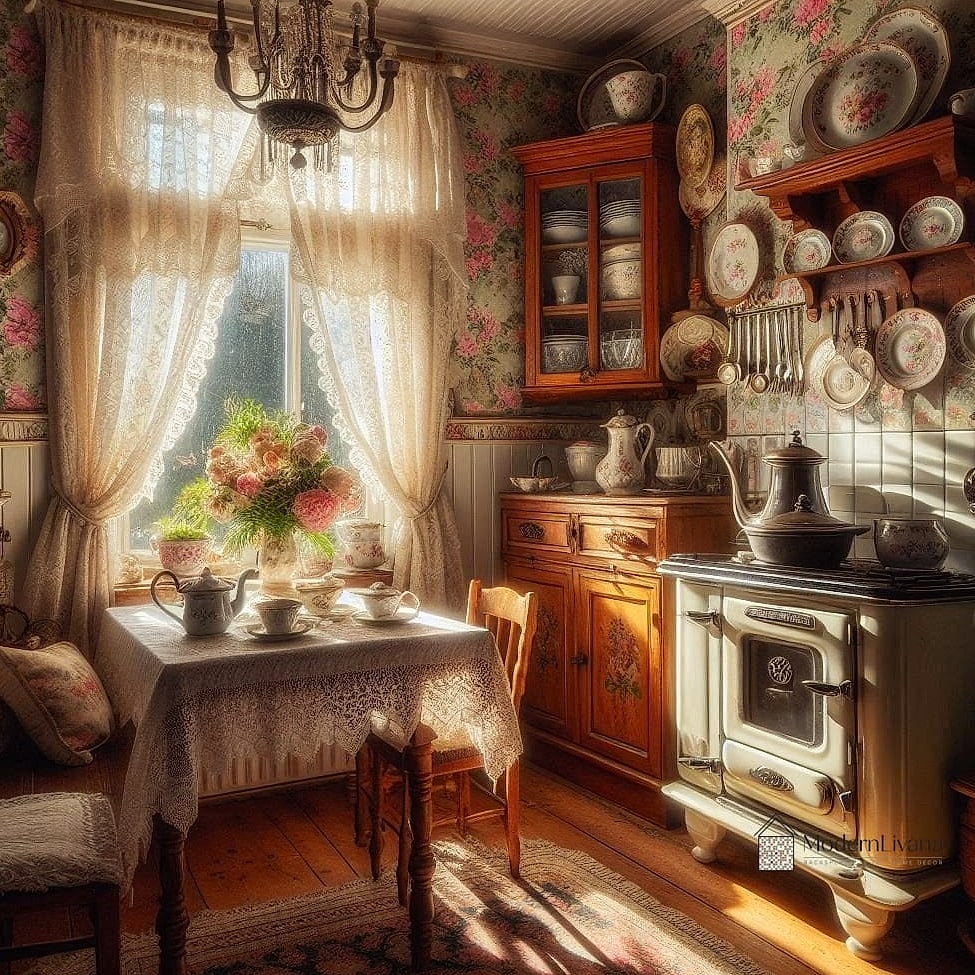
Instead of the usual subway tile, consider a backsplash with a botanical or Art Nouveau-inspired pattern. It brings pattern to eye level, which is where Victorian design really liked to show off. Ceramic tile with hand-painted details gives the most authentic feel, though printed porcelain tile offers a budget-friendly alternative. This pairs beautifully with simpler, unfussy cabinetry so the backsplash gets to be the star.
Built-In China Cabinet or Hutch
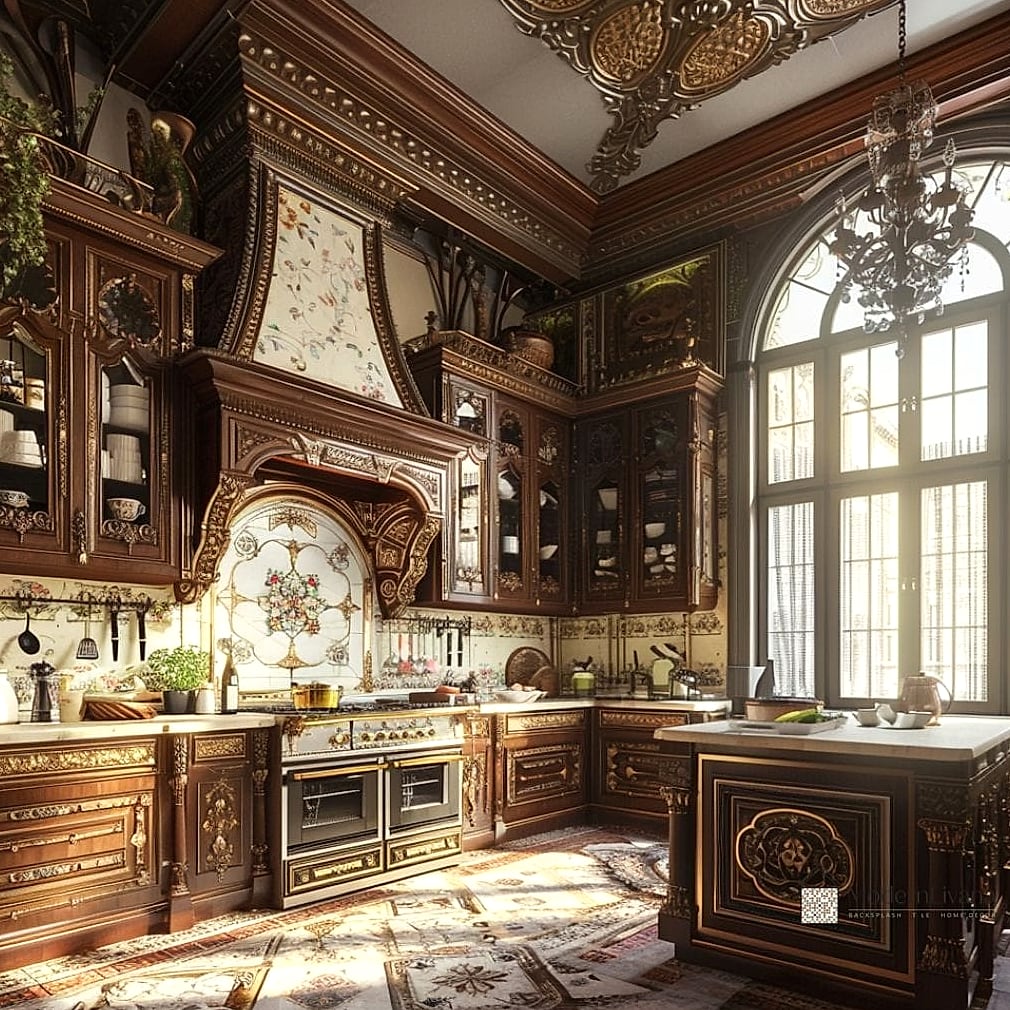
A built-in hutch with glass-front doors gives you a dedicated spot to display good china, teacups, or serving pieces. It’s such a practical nod to Victorian entertaining culture, when having a proper place for fine dishware really mattered. This also doubles as extra storage in kitchens that are tight on cabinet space. Add interior lighting inside the glass doors for a subtle, glowing display at night.
Oil-Rubbed Bronze Hardware Throughout
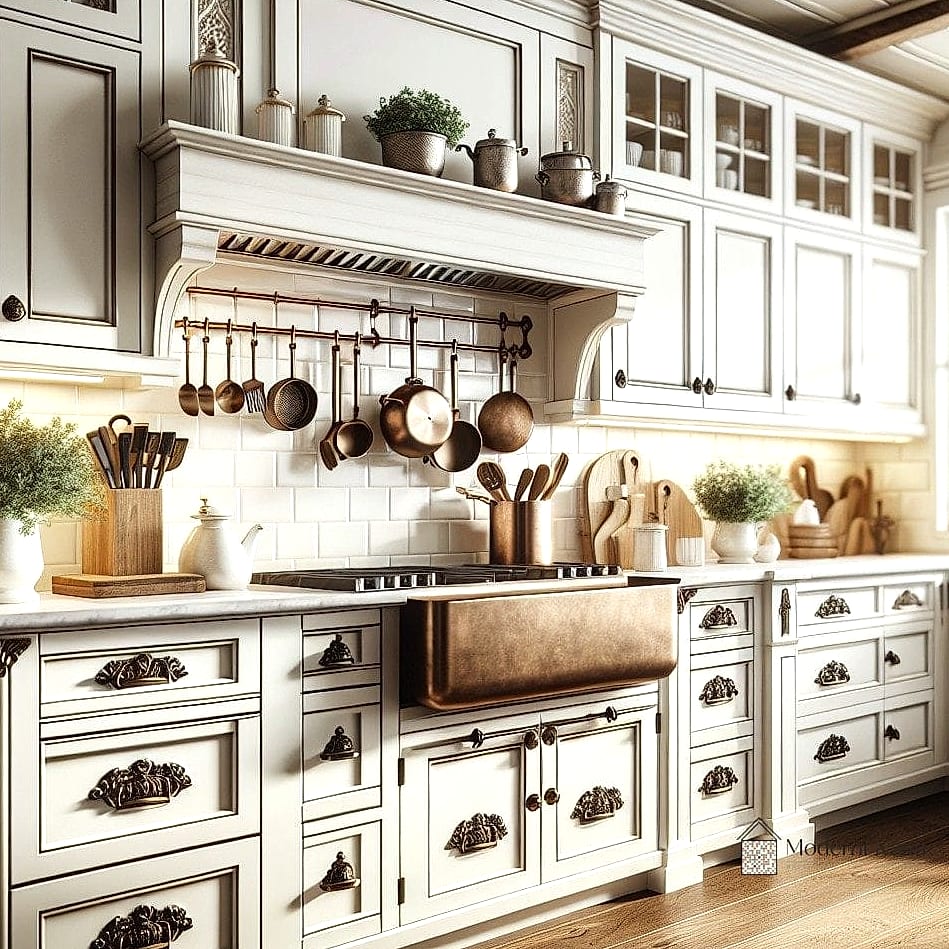
Swapping in oil-rubbed bronze knobs, pulls, and faucets ties together an entire kitchen’s hardware story without much cost. The finish has natural variation that ages gracefully, unlike some chrome finishes that show every fingerprint. It pairs well with almost any cabinet color, from cream to deep green to navy. This is one of the easiest and most affordable updates on this whole list.
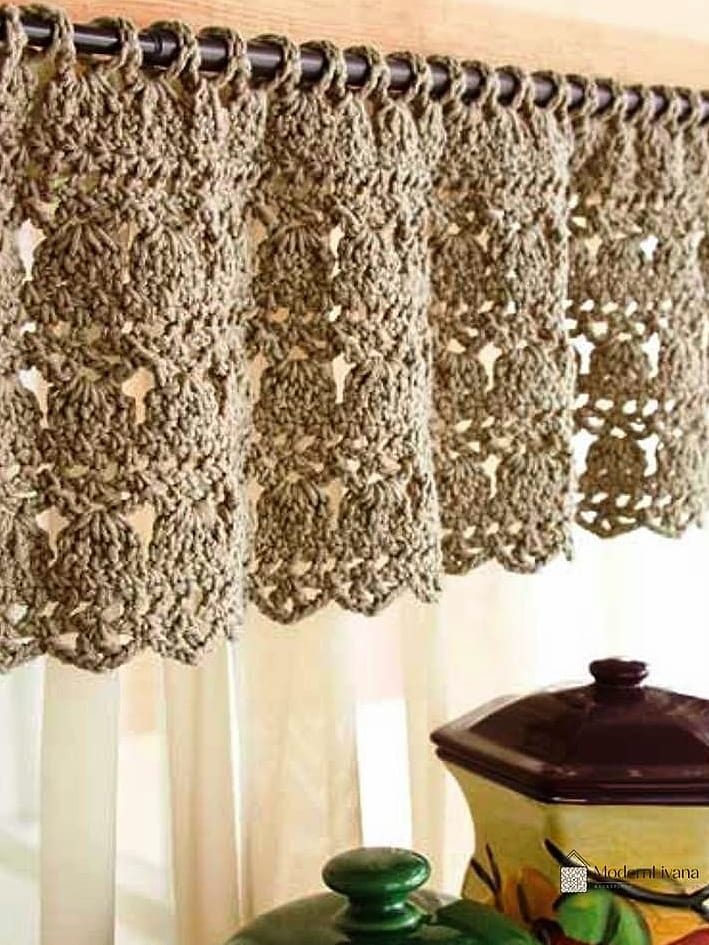
Botanical Curtains Instead of Blinds
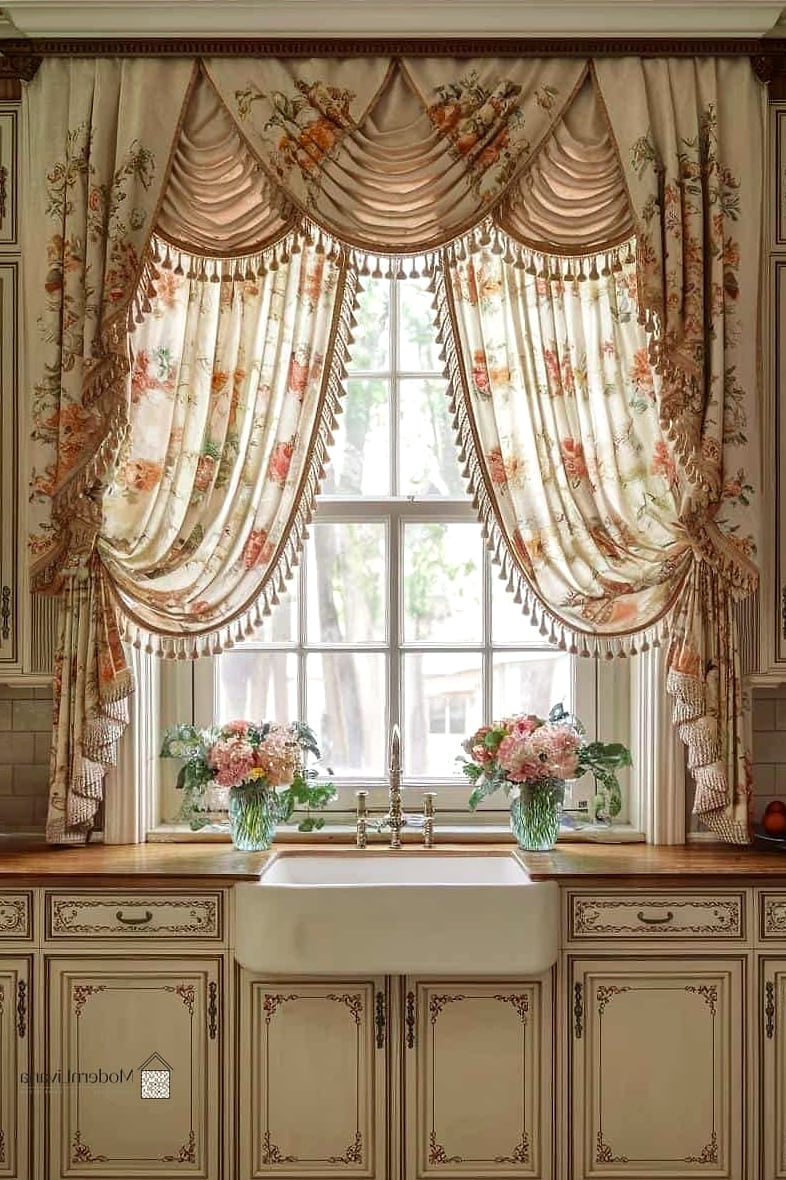
Fabric café curtains with a floral or botanical print soften windows in a way blinds simply can’t. They bring texture and pattern while still letting in plenty of light. This is a renter-friendly idea too, since curtain rods are easy to install and remove. Choose a linen or cotton blend for something that feels a little more elevated than basic cotton prints.
Checkerboard Tile Floor in Black and White

Classic black and white checkerboard tile has deep roots in Victorian and Edwardian kitchens alike. It’s graphic, timeless, and honestly just fun to look at. This pattern works in both large kitchens and small galley layouts, and it pairs well with almost any cabinet color. Matte finish tiles hide footprints and water spots better than glossy ones, which matters if you have kids or pets running through.
Antique Brass Faucet with Cross Handles
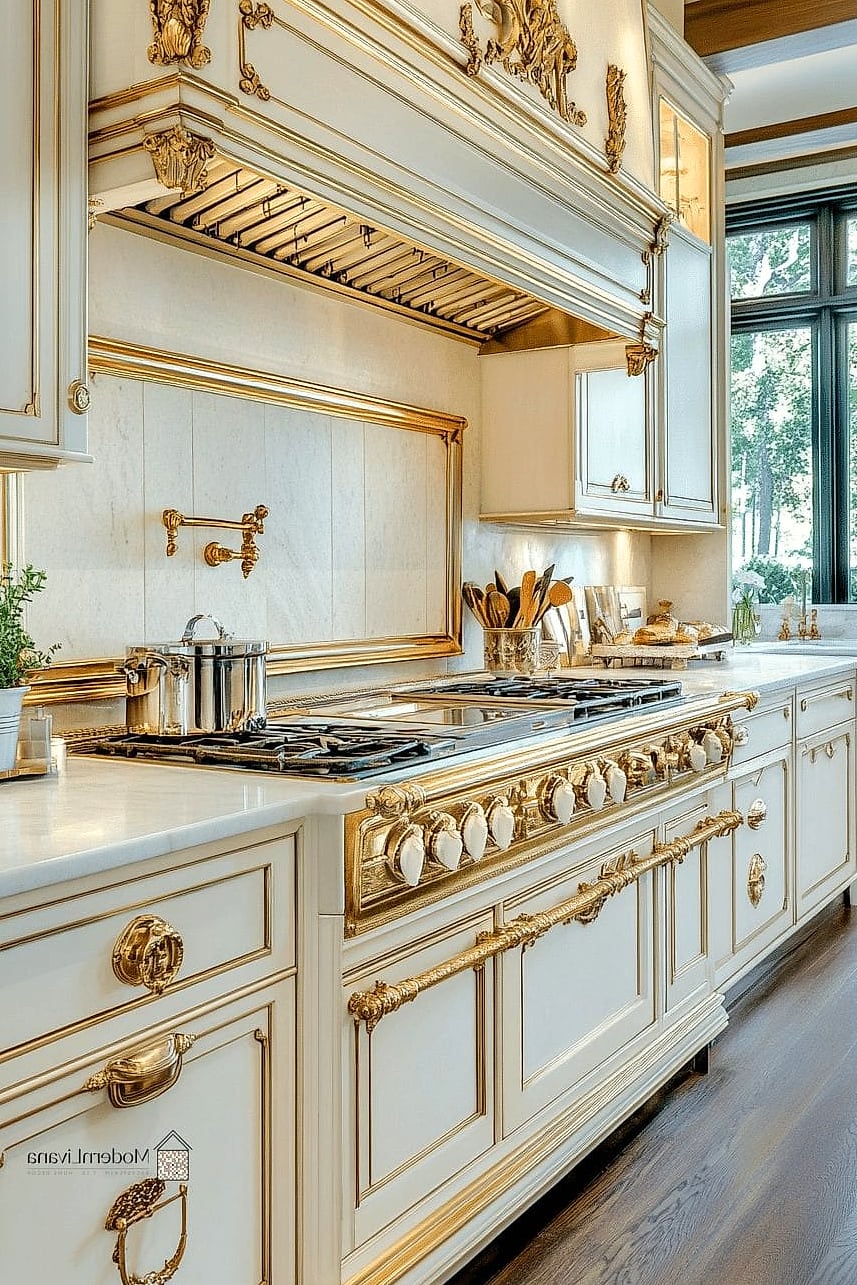
Small details like faucet handles matter more than people expect. A bridge faucet with cross handles in antique or unlacquered brass adds an authentic period touch at the sink. It’s a relatively small investment that punches above its weight visually. Just know unlacquered brass will develop a natural patina over time, which some people love and others prefer to polish away.
Deep Burgundy Accent Wall
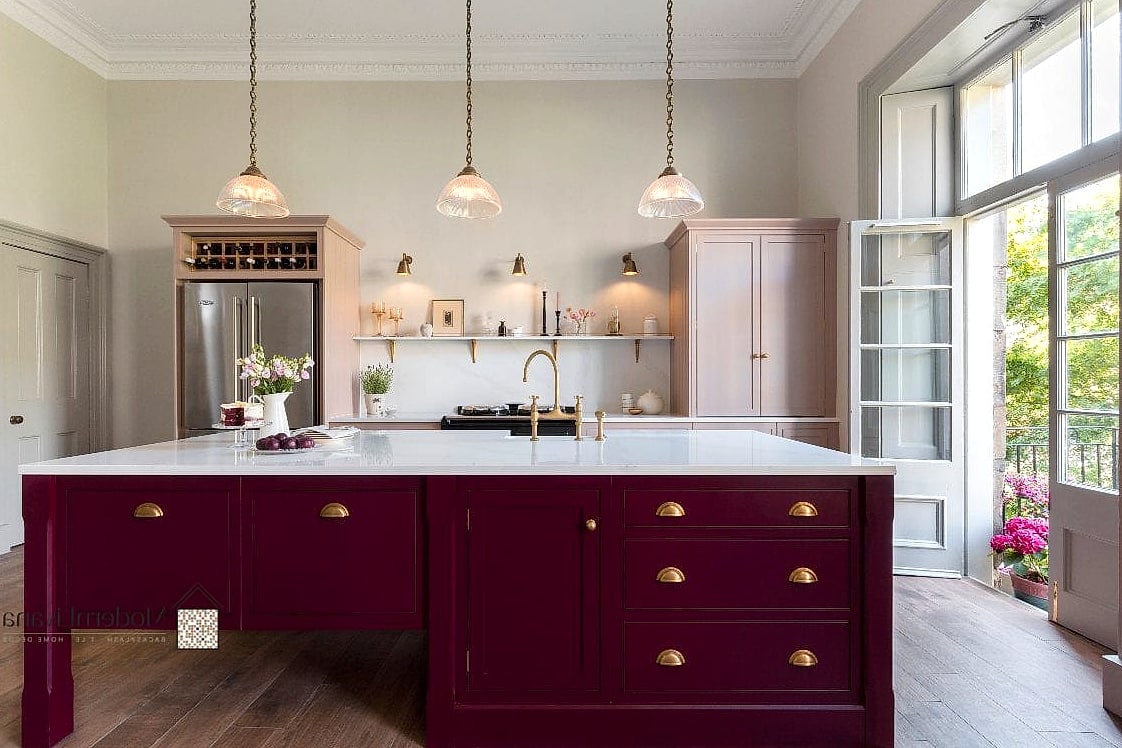
A burgundy or oxblood accent wall brings warmth and richness that plain white walls just don’t offer. It works especially well behind open shelving or in a dining nook attached to the kitchen. This color pairs beautifully with brass, dark wood, and cream cabinetry. If committing to a full wall feels like a lot, try it on just the lower half with wainscoting on top.
Vintage Rug in the Kitchen
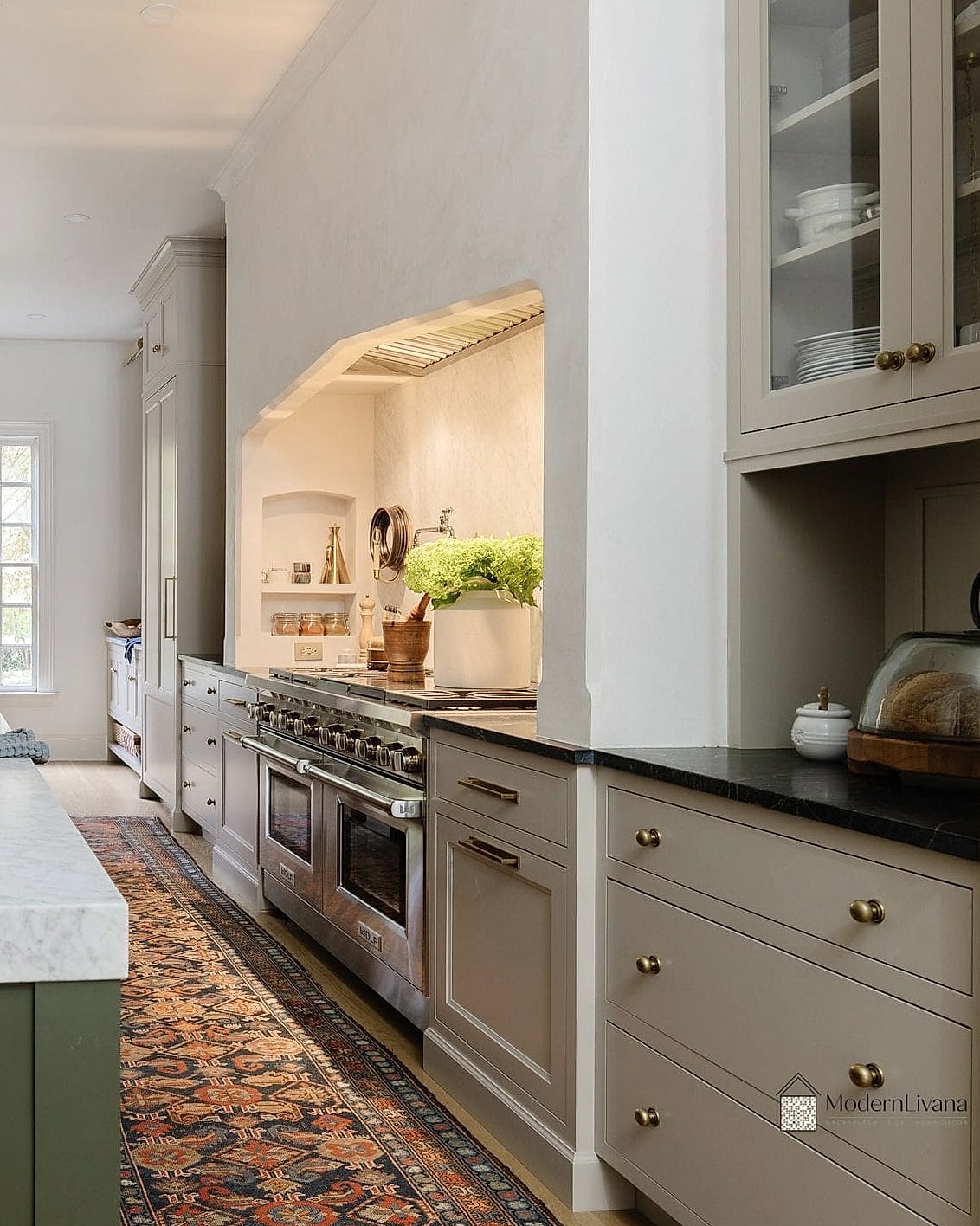
Layering a well-worn or antique-style rug into the kitchen adds softness and pattern underfoot, especially in front of the sink or stove. It’s a small styling choice that makes the space feel lived-in rather than staged. Look for low-pile options that are easier to clean if spills are a regular occurrence in your house. This idea works particularly well in kitchens with wood or tile flooring that could use some visual softening.
Curved Cabinet Corners and Arched Openings
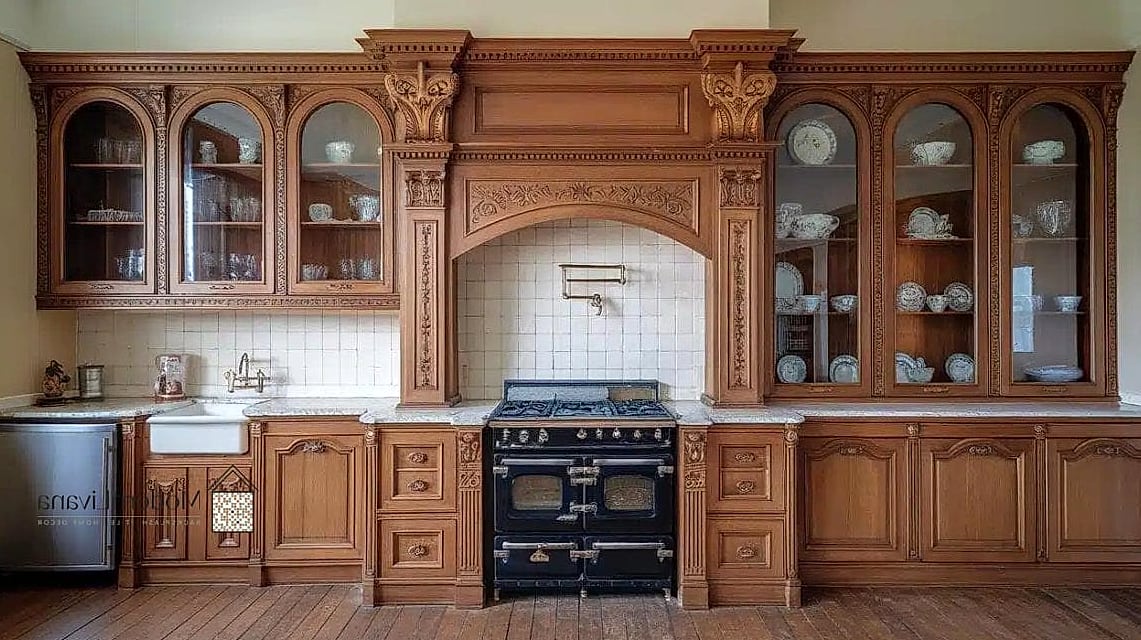
Soft, curved lines were common in Victorian architecture, and bringing that into cabinetry or an arched doorway between the kitchen and dining room adds real character. It’s a subtle architectural detail that breaks up all the straight lines typical in modern kitchens. This works especially well as a passthrough between spaces rather than a full renovation. Even one curved element, like an arched range niche, can shift the whole feel of the room.
Copper Pot Rack Display
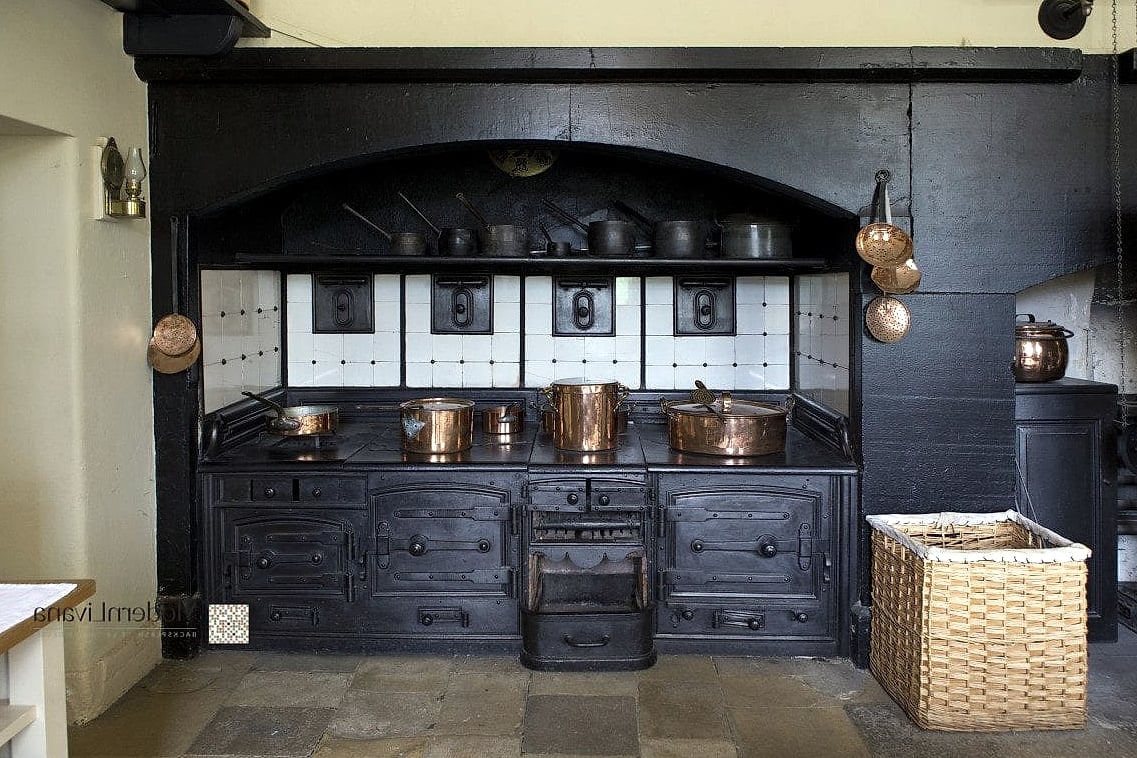
Hanging a copper pot rack does double duty as storage and decor, which is very in line with how practical yet decorative Victorian kitchens tended to be. The warm tone of copper pairs beautifully with cream, green, or navy cabinetry. It also frees up cabinet space, which is genuinely useful in smaller kitchens. Over time copper develops a soft patina, though you can polish it back to a shine if you prefer that look.
Lace or Crochet Table Linens
Bringing in lace-trimmed table runners or crochet doilies on open shelves is a small, inexpensive way to add texture and nod to the era. It works well on a breakfast table or layered under a fruit bowl on the counter. This is an easy seasonal swap too, since you can rotate linens for holidays or different times of year. It’s a detail that feels personal rather than store-bought, especially if the pieces are vintage or handmade.
Warm Cream Subway Tile
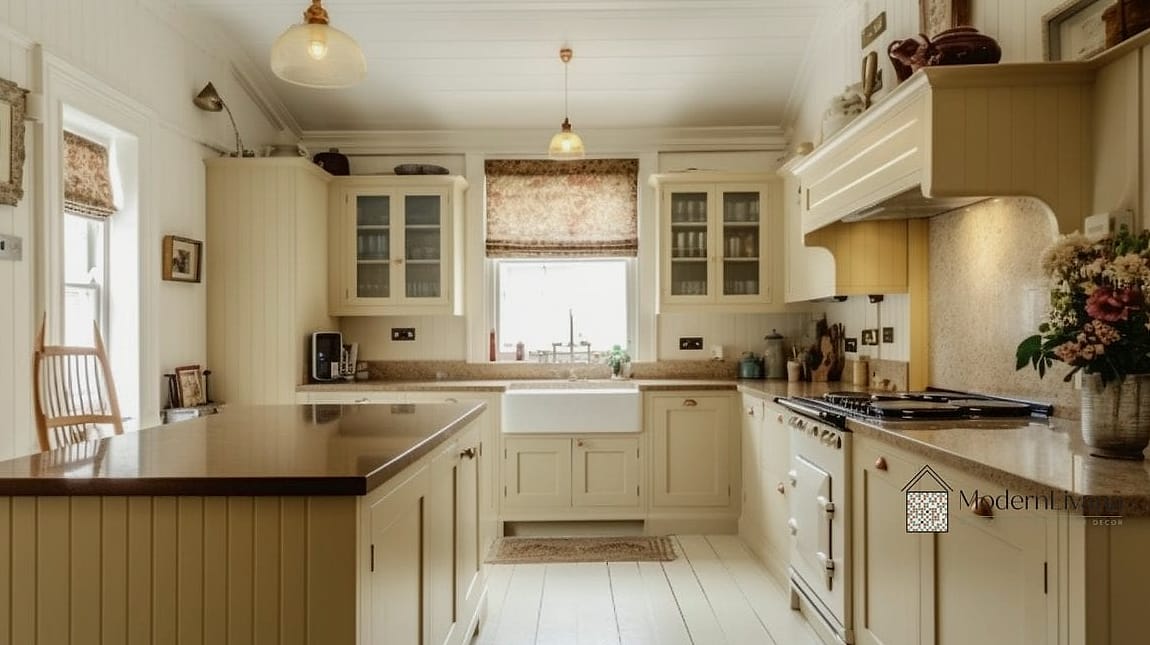
If classic white subway tile feels too crisp for a Victorian-inspired space, a warmer cream or ivory version softens the whole look. It still gives you that timeless, easy-to-clean backsplash option, just with more warmth. Pairing it with a herringbone layout instead of the standard brick pattern adds a bit more visual interest too. This is a great budget-friendly choice for anyone wanting the aesthetic without a big splurge.
Dried and Fresh Floral Arrangements
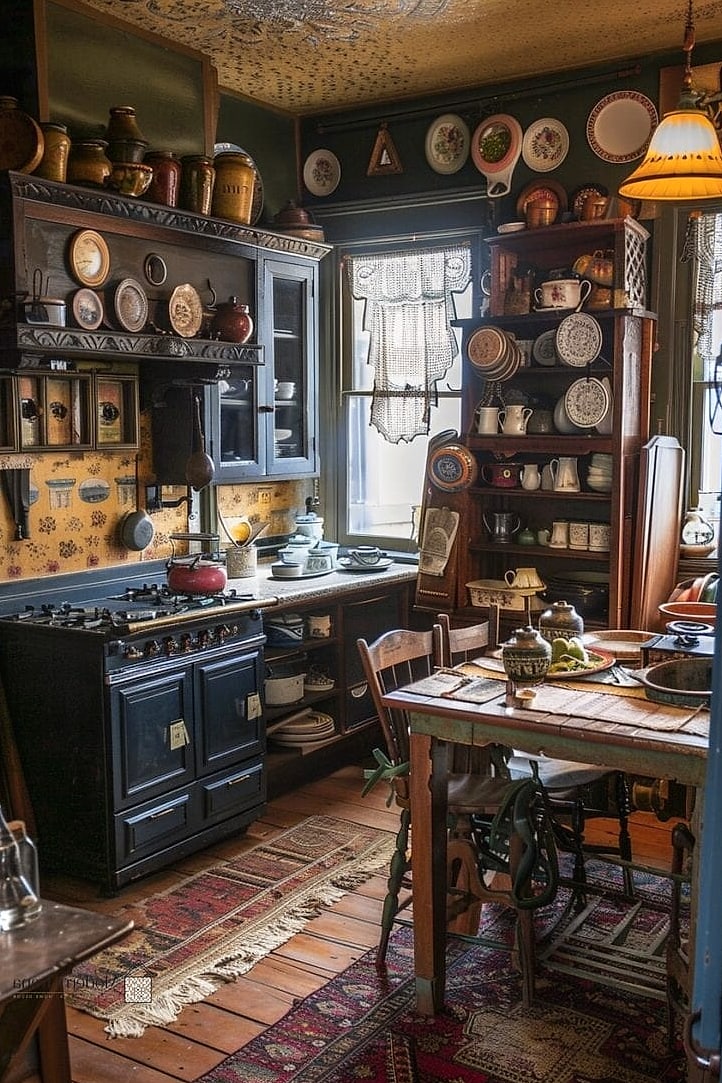
Victorian homes were rarely without flowers somewhere in the house, and a simple vase of fresh or dried blooms on the counter or table keeps that tradition alive. Dried florals like eucalyptus or pampas grass require zero maintenance and last for months. Fresh flowers add color and life, especially near a window with good light. It’s such a small addition, but it makes a kitchen feel finished in a way that’s hard to put your finger on.
Antique Brass Wall Sconces
Wall sconces flanking a range or window add a soft, ambient layer of light that overhead fixtures alone can’t provide. Brass finishes with fabric or glass shades feel especially fitting for this style. They’re also a smart practical choice for kitchens without a ton of ceiling space to work with. Installing a dimmer switch lets you shift the mood from bright task lighting to something cozier in the evening.
Putting together a Victorian style kitchen really comes down to layering, warmth, and a willingness to embrace a little pattern and color. You don’t need every single idea on this list to get the feel right. Start with one or two pieces that speak to you, whether that’s a bold cabinet color or a vintage-inspired faucet, and build from there. The best Victorian kitchens feel collected over time, not designed in a single weekend.