21 Backsplash for Butcher Block Countertops Ideas to Inspire Your Next Renovation

- White Subway Tile
- Zellige Tile in Soft Neutrals
- Herringbone Pattern Backsplash
- Classic Ceramic Tile in Warm White
- Natural Stone Mosaic
- Porcelain Tile That Mimics Marble
- Vertical Tile Installation
- Stacked Brick Layout
- Handmade Ceramic Tile with Texture
- Black Tile for Contrast
- Fluted or Ribbed Tile
- Neutral Color Palette Tile
- Glossy Subway Tile for Extra Light
- Matte Finish Tile
- Colorful Tile Accent Wall
- Peel-and-Stick Backsplash
- Large Format Tile
- Mixed Material Backsplash
- Textured Stone-Look Porcelain
- Bold Grout Color
- Full Wall Tile Behind the Range
21 Backsplash for Butcher Block Countertops Ideas to Inspire Your Next Renovation
Butcher block countertops bring so much warmth to a kitchen, but picking the right backsplash to go with all that wood can feel trickier than expected. You want something that complements the natural grain without competing with it, and honestly, there are more options out there than most people realize. Whether you’re working with a full renovation or just swapping out an outdated tile job, these 21 backsplash ideas for butcher block countertops will help you find the pairing that fits your space and your style.
White Subway Tile
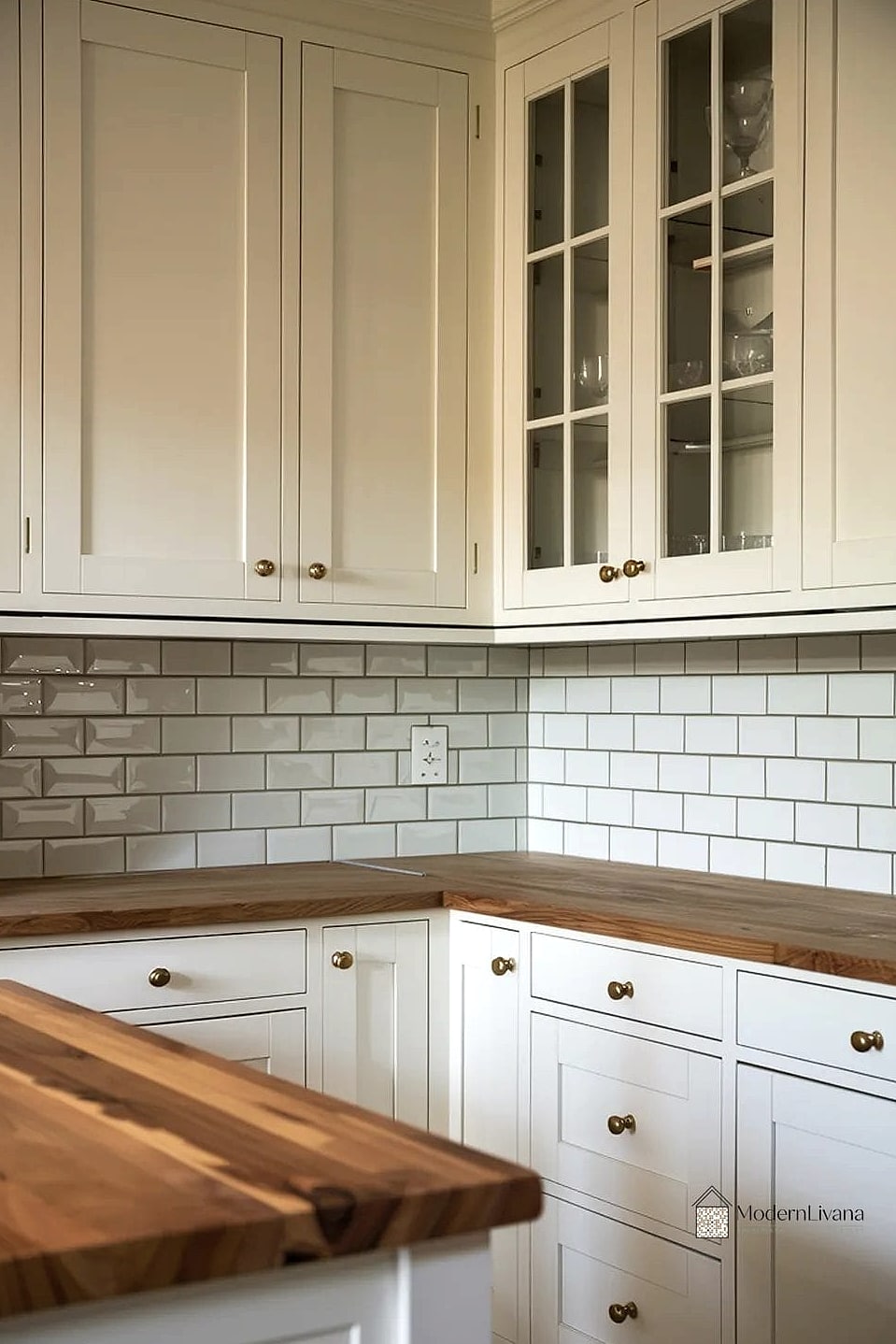
This combo is popular for a reason. White subway tile against warm butcher block creates a bright, classic contrast that never feels dated. It works in farmhouse kitchens, transitional spaces, and even modern ones if you keep the grout thin and the layout simple. Homeowners love it because it’s affordable, widely available, and easy to clean with just soap and water. If you want a little more texture, try a beveled subway tile instead of the flat version.
Zellige Tile in Soft Neutrals

Zellige tile has that handmade, slightly imperfect look that pairs beautifully with the organic feel of wood. Each tile catches light a little differently, which adds depth without overwhelming the countertop. This is a great pick if you want your kitchen to feel collected and personal rather than showroom-perfect. It’s a bit pricier and can be more involved to install, so budget for a professional if you’re not confident with uneven surfaces.
Herringbone Pattern Backsplash
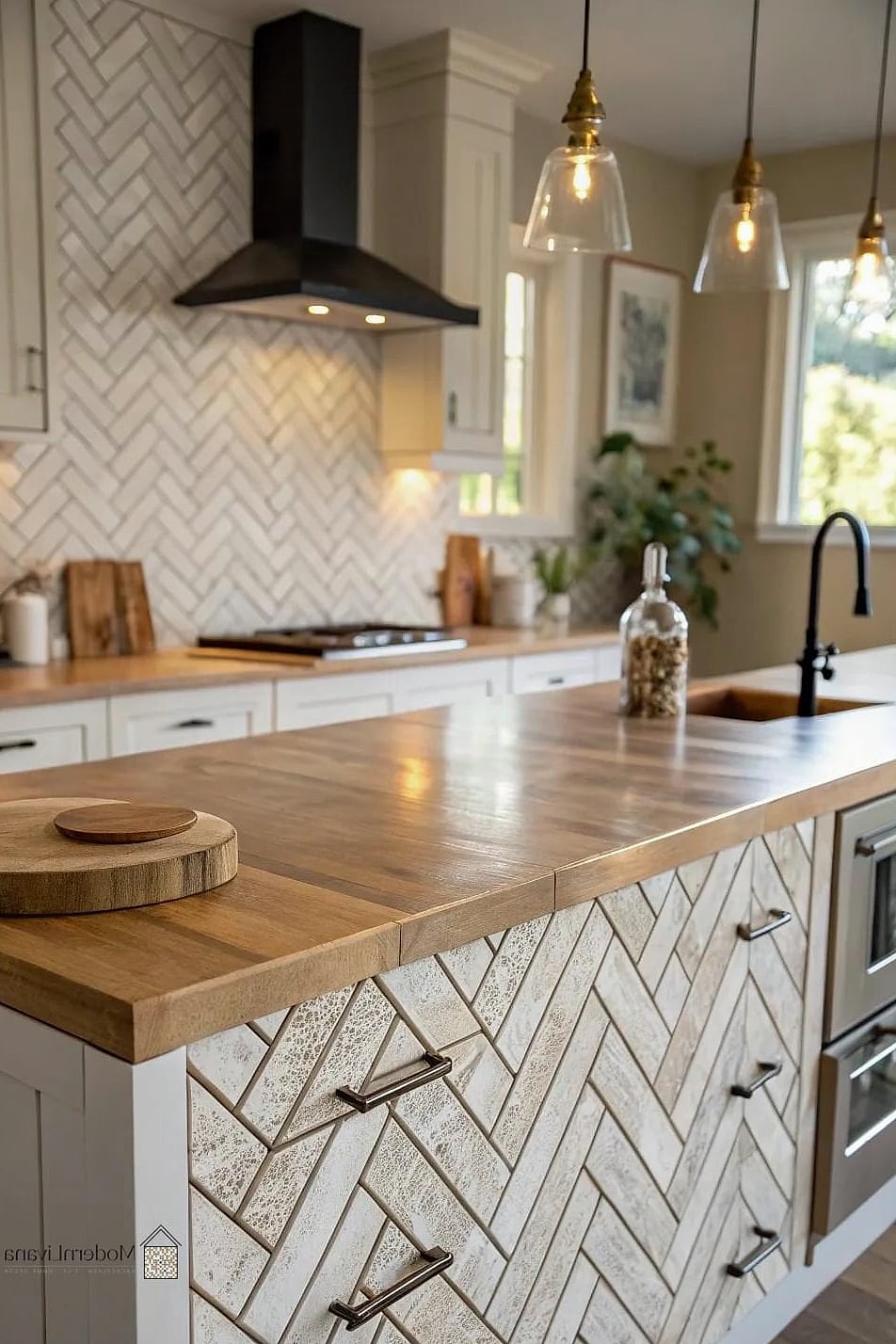
A herringbone layout instantly makes a kitchen feel more custom, even if you’re using a basic ceramic tile. The angled pattern adds movement that plays nicely against the straight lines of butcher block. This works especially well behind a stove or sink where you want a focal point. It does take longer to install than a straight-set pattern, so keep that in mind if you’re tackling it yourself.
Classic Ceramic Tile in Warm White
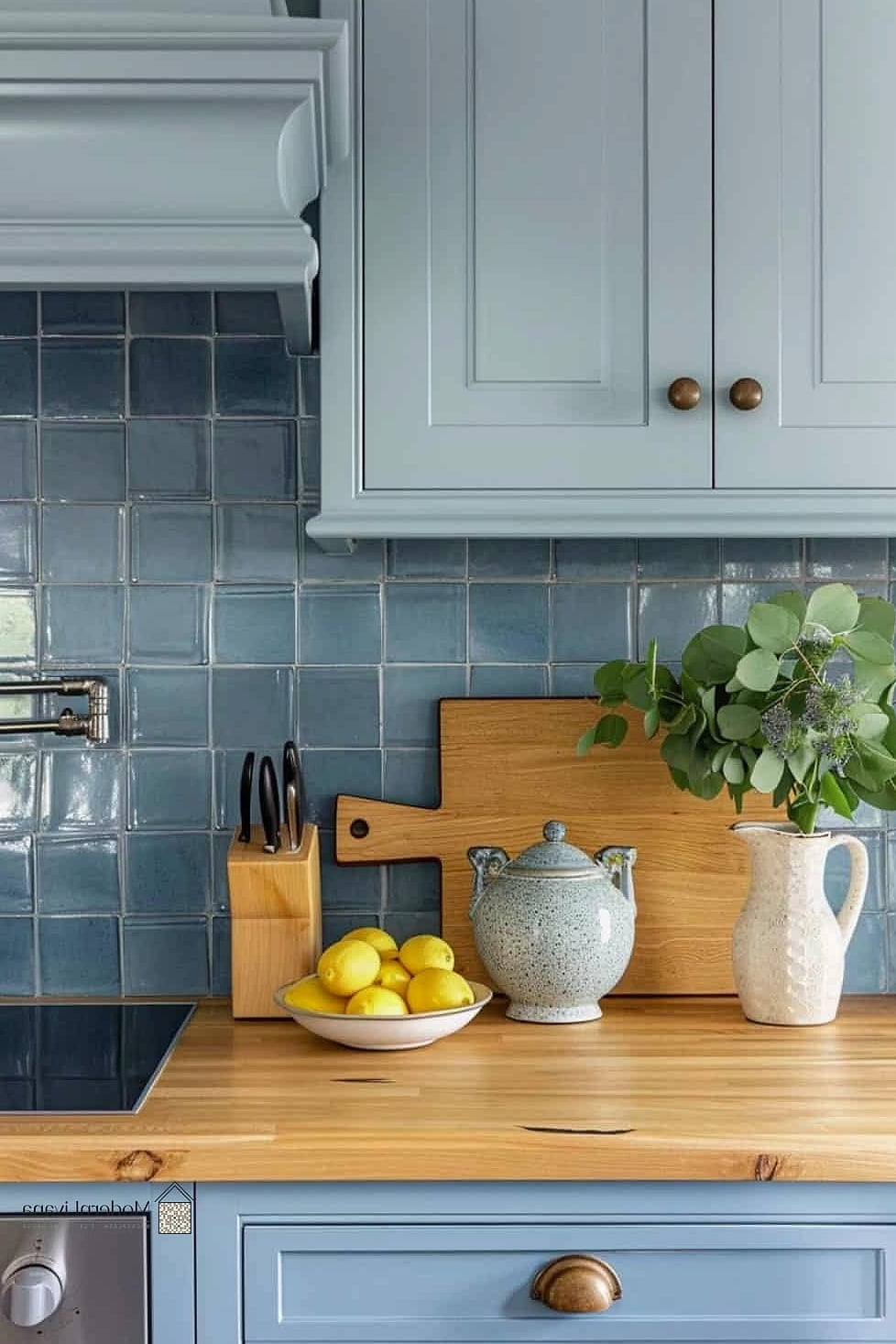
Not every backsplash needs to make a statement. A soft, warm white ceramic tile lets the butcher block do the talking while still giving your walls a clean, finished look. This is a solid choice for anyone who wants something timeless and low-maintenance. It’s also one of the more budget-friendly options on this list, which makes it easy to recommend for a first kitchen or a rental-friendly upgrade.
Natural Stone Mosaic
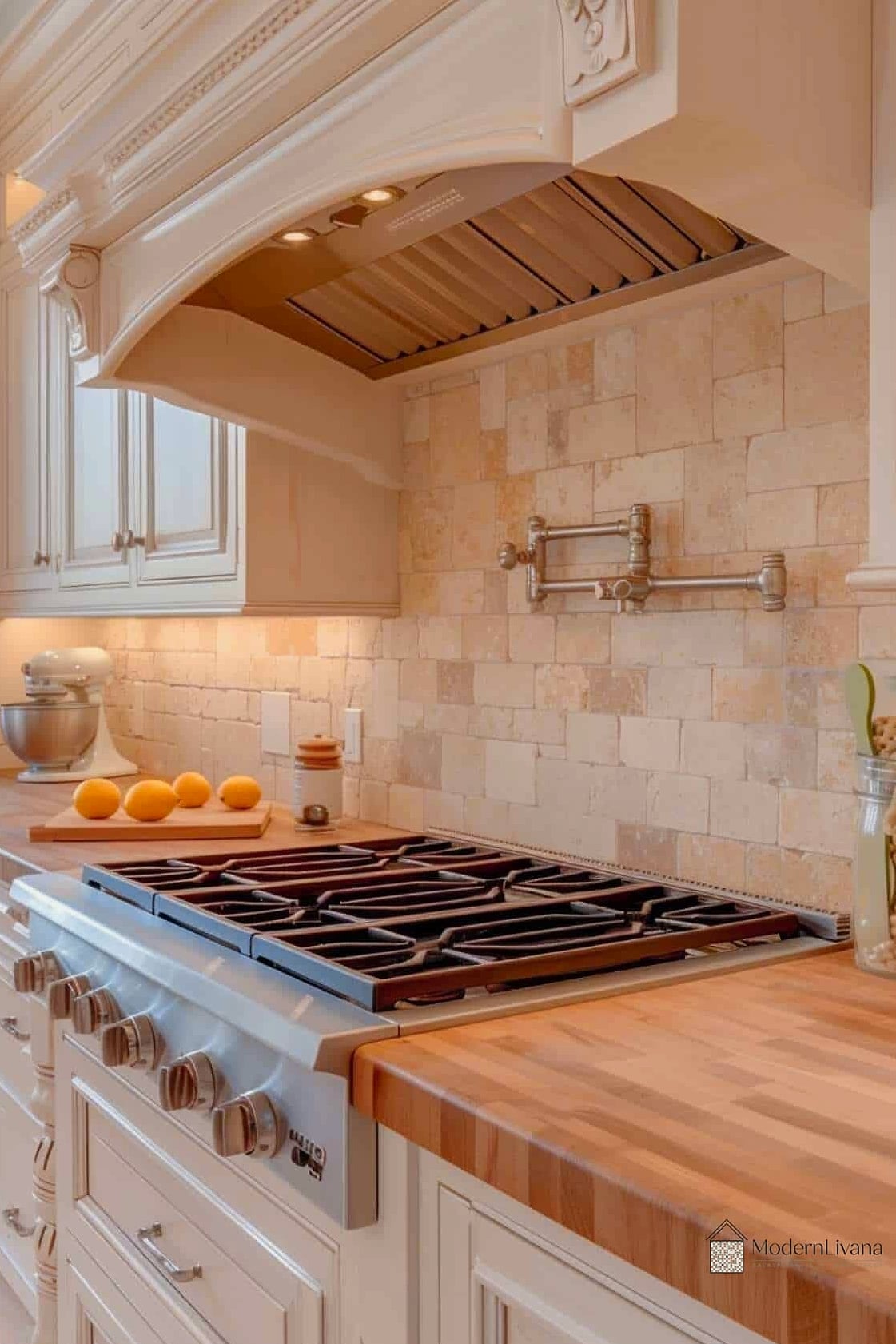
If you love the earthy feel of butcher block, a natural stone mosaic backsplash leans into that organic vibe even further. Think travertine, slate, or a mix of stone tones in a small-format mosaic. It adds texture and visual interest without clashing with the wood grain. Stone does require sealing to prevent staining, so factor that into your maintenance routine, especially near a busy cooking area.
Porcelain Tile That Mimics Marble
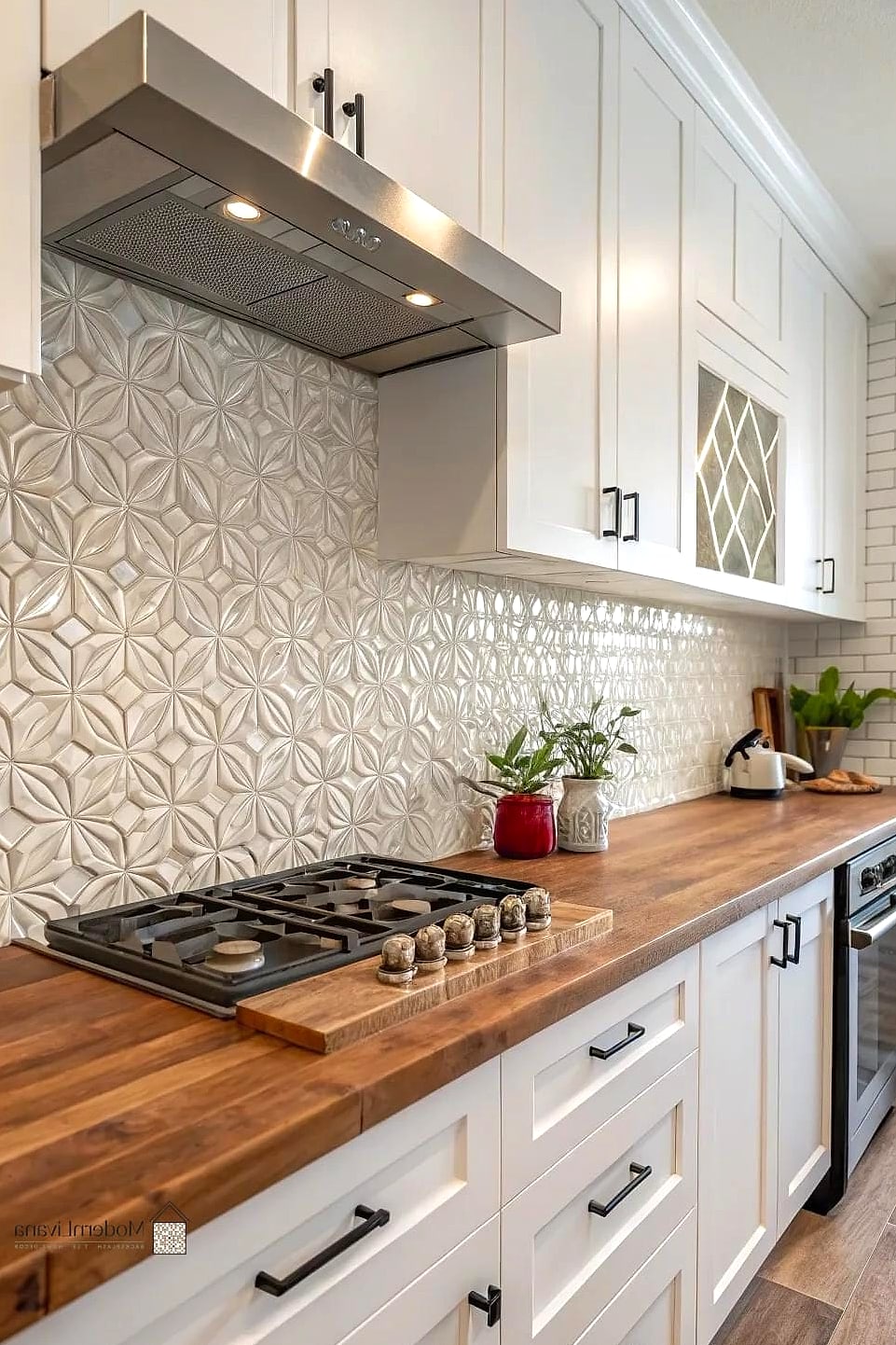
Marble looks incredible with wood, but real marble near a butcher block countertop can be a maintenance headache with all that moisture and staining risk. Porcelain tile that mimics marble gives you that same luxe veining without the upkeep. It’s more durable, more scratch-resistant, and honestly hard to tell apart from the real thing once it’s installed. This is a smart pick for anyone who wants a high-end look on a more practical budget.
Vertical Tile Installation

Turning your tile installation vertically instead of the usual horizontal layout is a simple way to make a small kitchen feel taller. It draws the eye upward and adds a subtle architectural detail. This works particularly well in narrow spaces between a butcher block counter and upper cabinets. Any basic subway or rectangular tile can be used this way, so it’s a budget-friendly trick that just changes the orientation.
Stacked Brick Layout

Instead of the traditional offset pattern, a stacked brick layout lines tiles up in neat, straight rows. It gives a slightly more modern, streamlined feel compared to classic subway patterns. This pairs nicely with butcher block in kitchens that lean minimalist or Scandinavian. Grout lines are more visible in this layout, so choosing a grout color close to the tile helps keep things looking clean.
Handmade Ceramic Tile with Texture
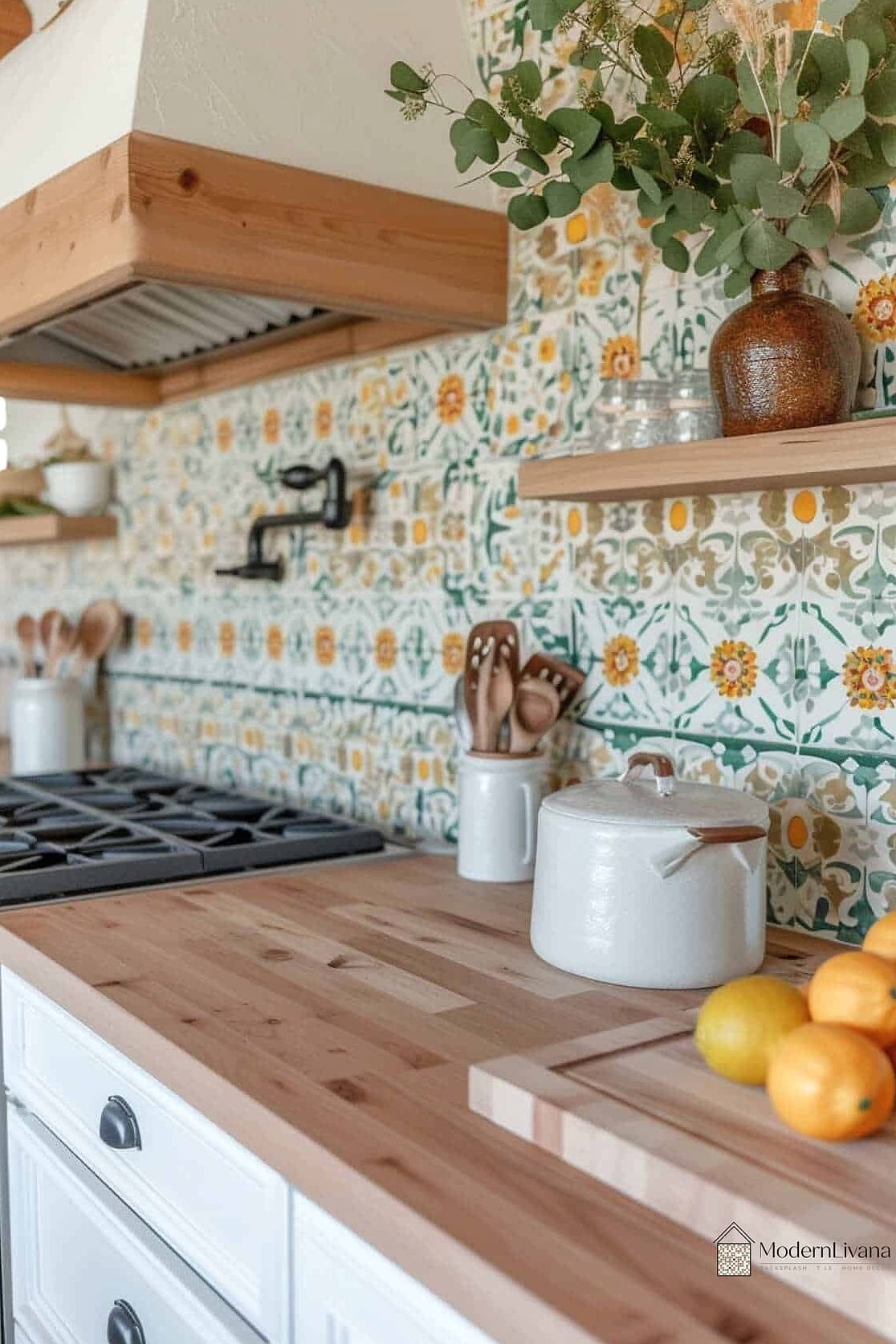
Handmade tiles have small variations in shape and glaze that give a backsplash a lot of personality. Against the natural imperfections of wood grain, this pairing feels intentional rather than mismatched. It’s a great option if your kitchen already leans toward an artisanal or eclectic style. These tiles tend to cost more per square foot, so many homeowners use them as an accent behind the stove rather than covering the whole wall.
Black Tile for Contrast
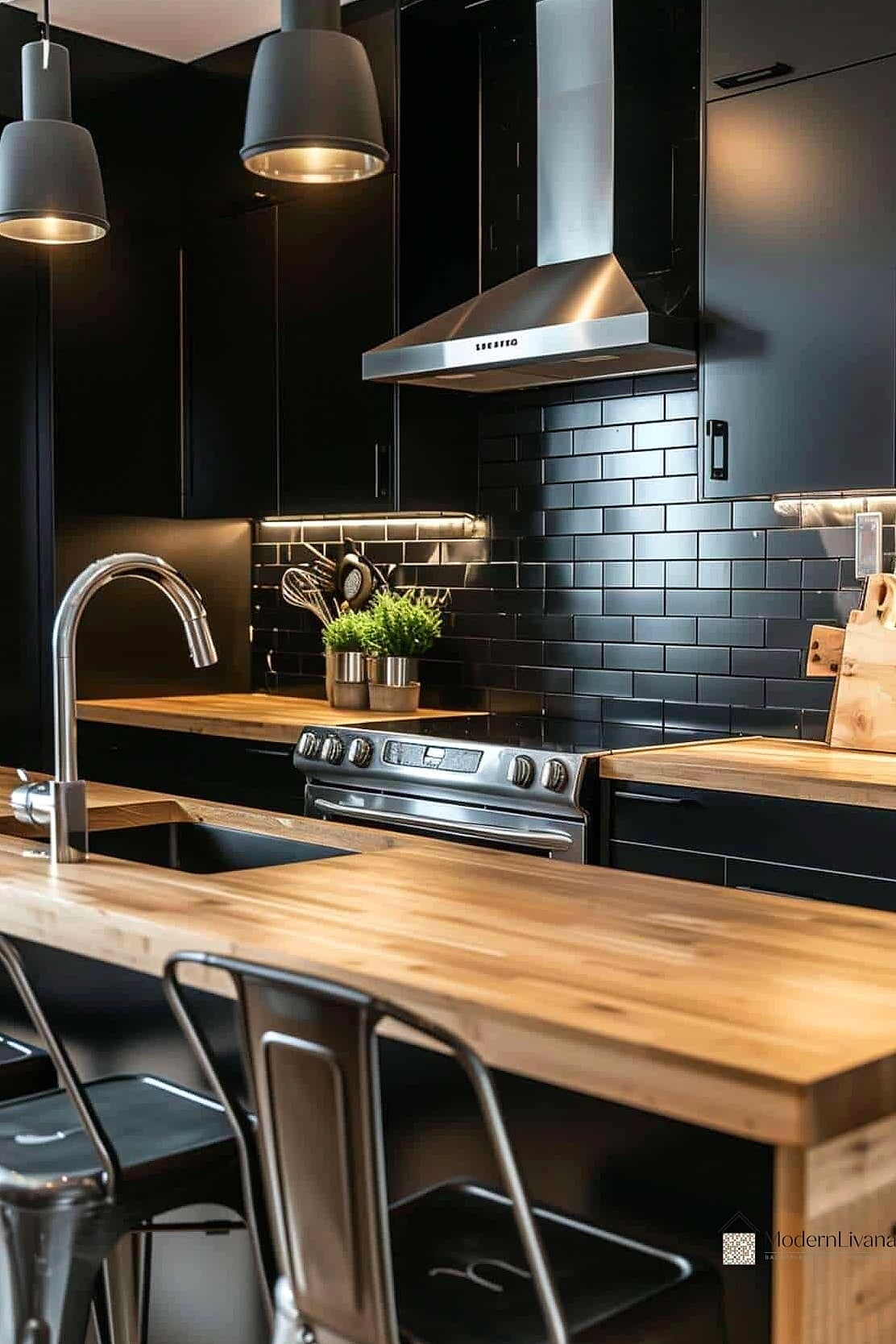
If your kitchen has a lot of light wood and white cabinetry, a black tile backsplash can add some much-needed contrast. Matte black subway tile or small-format black tile keeps things grounded and modern. This works especially well in kitchens with black fixtures or hardware, tying the whole look together. Just know that dark grout and dark tile show water spots differently than light tile, so a quick wipe-down after cooking keeps it looking sharp.
Fluted or Ribbed Tile
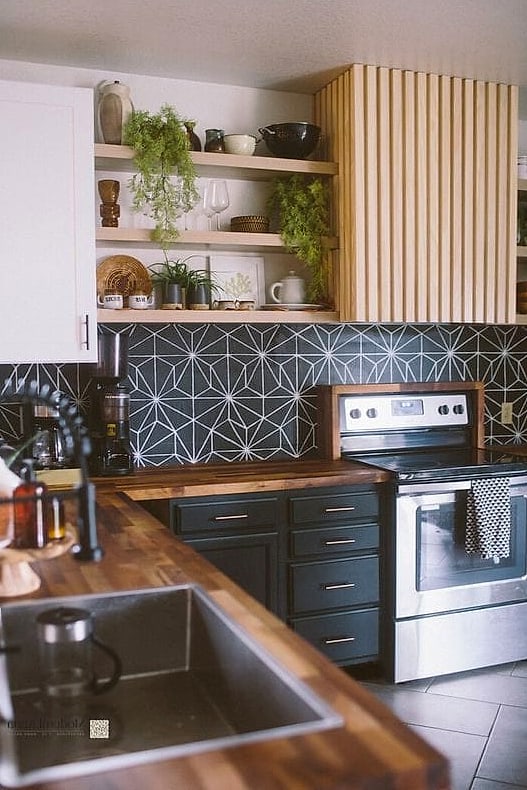
Textured tile with a fluted or ribbed surface has been showing up more in modern kitchen design, and it looks especially good with butcher block. The vertical grooves catch light in a way that flat tile just can’t, adding subtle dimension to the wall. It’s a slightly more current choice if you want your kitchen to feel fresh without going overly trendy. This tile style tends to be on the pricier side, so it’s often used as a feature wall behind the range.
Neutral Color Palette Tile
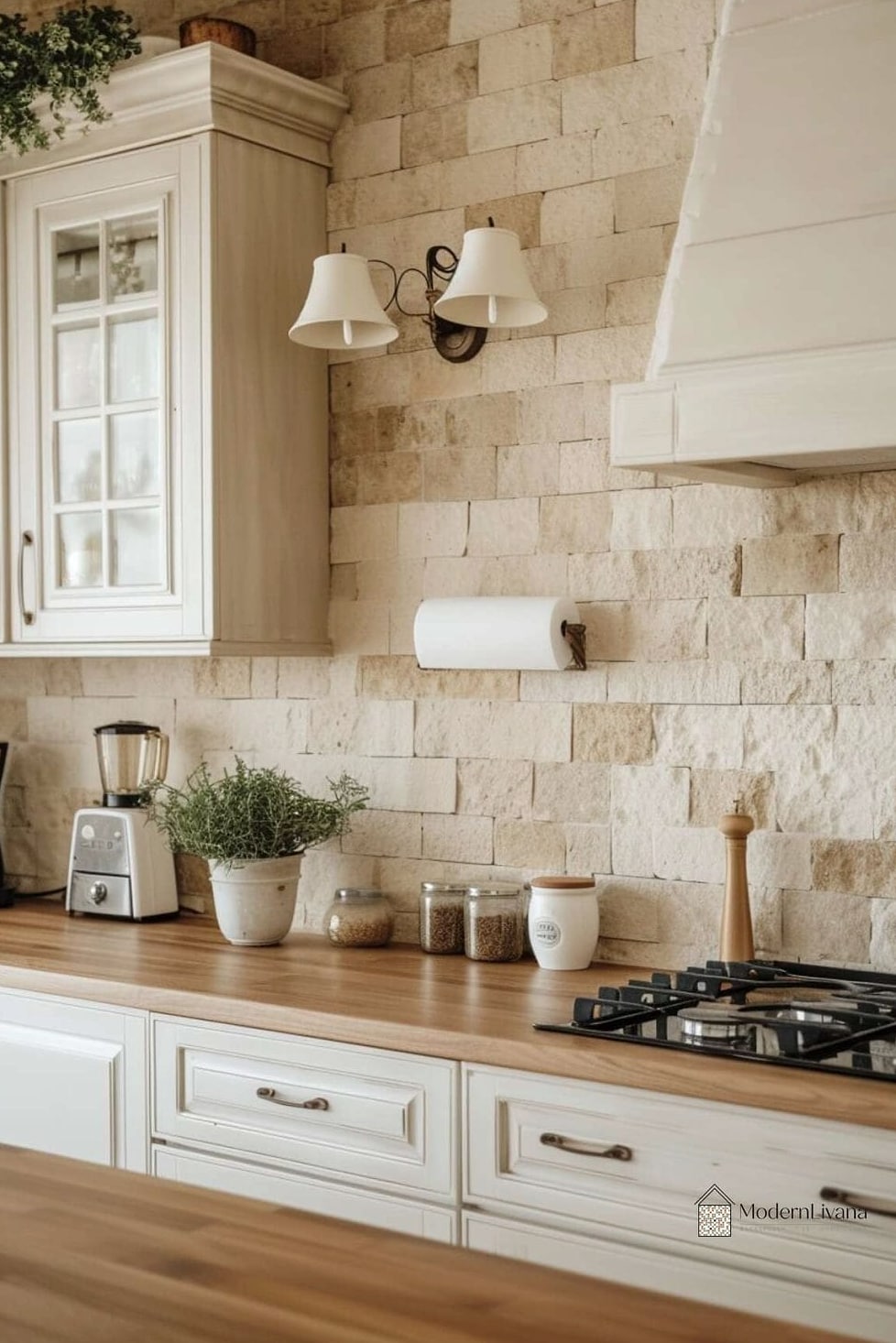
Sticking to a neutral color palette like beige, cream, greige, or soft taupe keeps the whole kitchen feeling cohesive when butcher block is already adding warmth. This is an easy option for anyone who wants their kitchen to feel calm and put together without a lot of visual noise. Neutral tile also ages well, meaning you won’t feel the urge to redo it every time trends shift. It’s a safe bet if you’re planning to sell your home down the road too.
Glossy Subway Tile for Extra Light
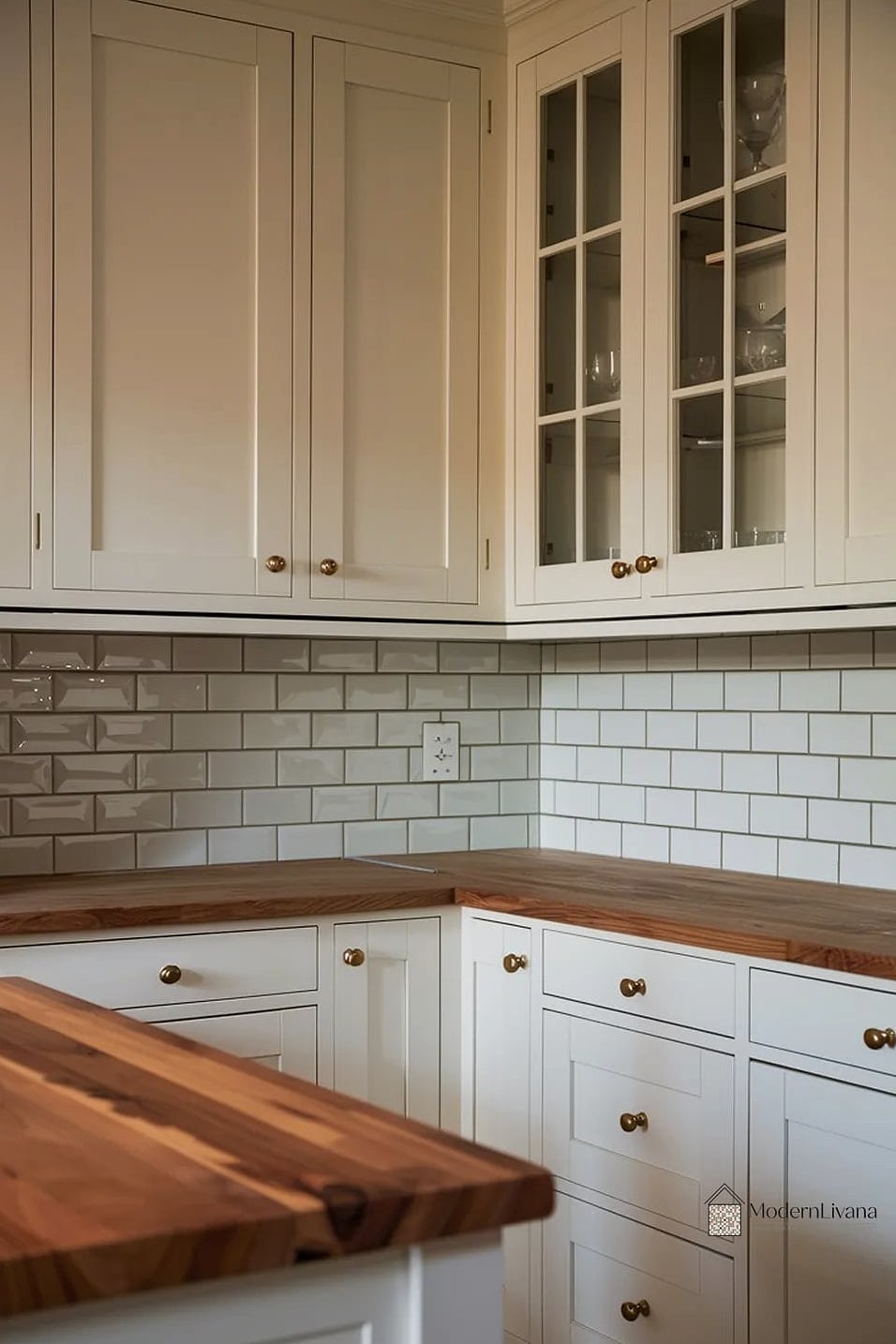
A glossy finish reflects more light around the kitchen, which is especially helpful in spaces with limited natural light. Paired with butcher block, the shine keeps things from feeling too heavy or rustic. This is a good option for smaller kitchens or ones without a lot of windows. Glossy tile is also a bit easier to wipe down since grease and splatters don’t cling to it the way they can on matte surfaces.
Matte Finish Tile
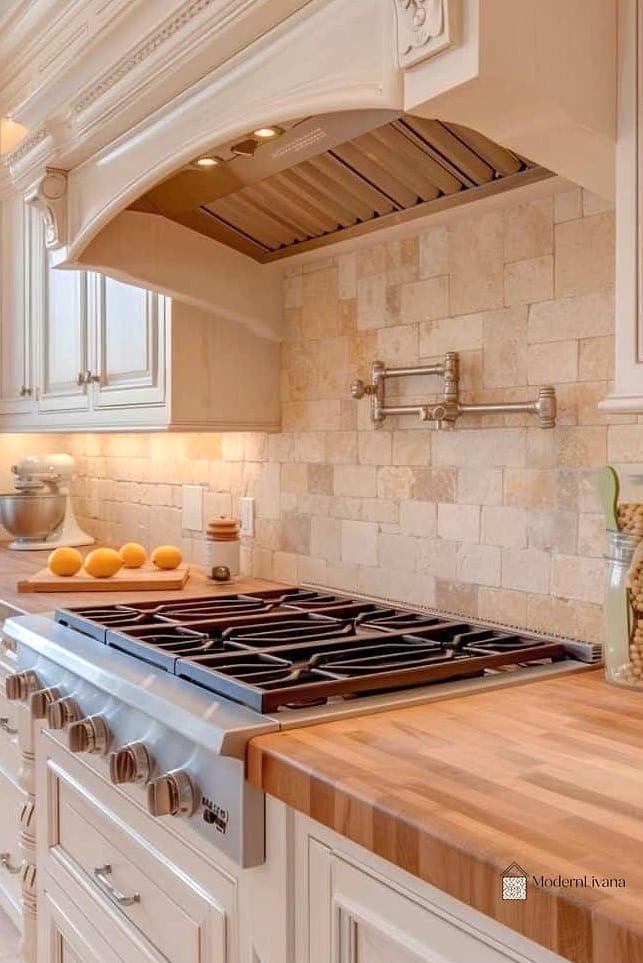
On the flip side, a matte finish tile brings a more grounded, understated feel that some homeowners prefer over shiny surfaces. It softens the look of the kitchen and complements the natural, unfinished quality of butcher block really well. Matte tile has become especially popular in modern farmhouse and Japandi-inspired kitchens. Just keep in mind that matte surfaces can show fingerprints a little more, so a gentle all-purpose cleaner is your friend here.
Colorful Tile Accent Wall

If you’re someone who wants a little personality in your kitchen, a colorful tile backsplash can be a fun way to do it without committing to a bold wall color. Sage green, terracotta, or muted blue tiles all pair surprisingly well with warm wood tones. This works best as a focal point behind the stove or sink rather than wrapping the entire kitchen. It’s an easy way to make a rental or starter kitchen feel more like yours, especially if you go with a peel-and-stick option.
Peel-and-Stick Backsplash
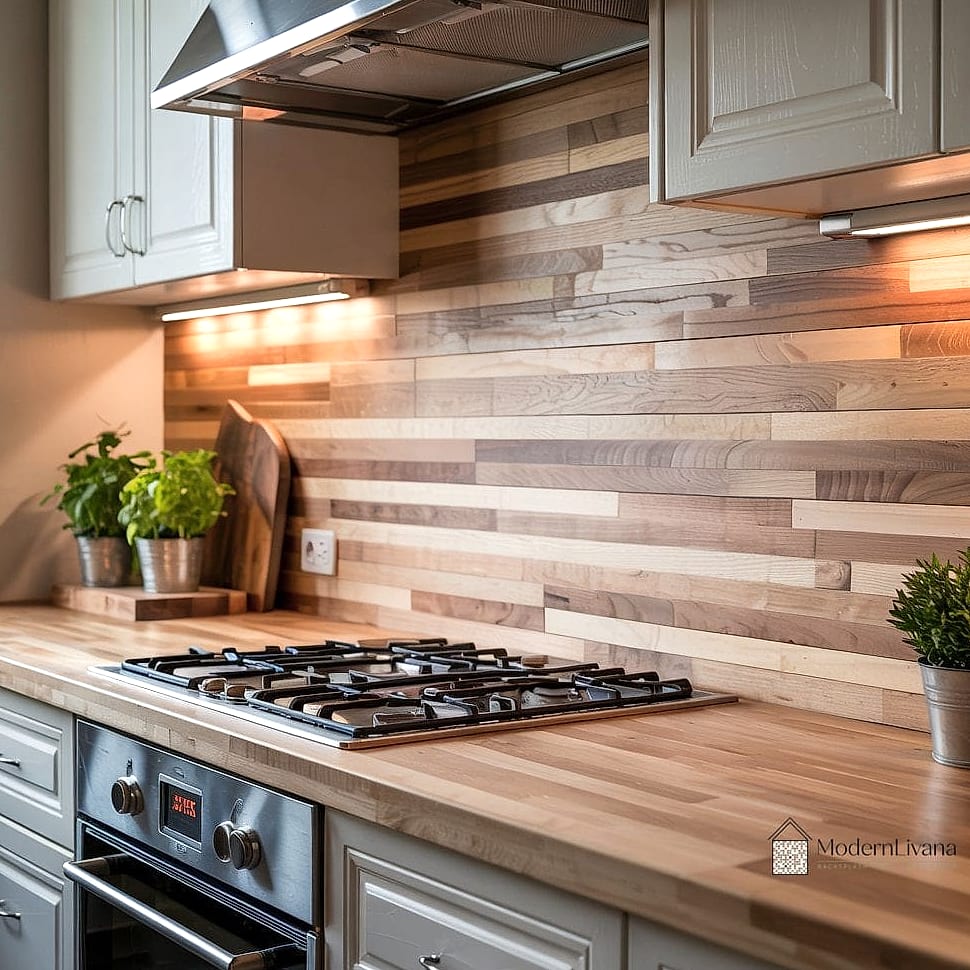
Speaking of peel-and-stick, this is one of the most renter-friendly ways to update a kitchen backsplash without any demo or grout involved. Modern peel-and-stick tiles have come a long way and can genuinely look like real tile from a few feet away. It’s budget-friendly, DIY-friendly, and easy to remove if you move or change your mind. Just make sure your wall surface is clean and smooth before applying for the best results.
Large Format Tile
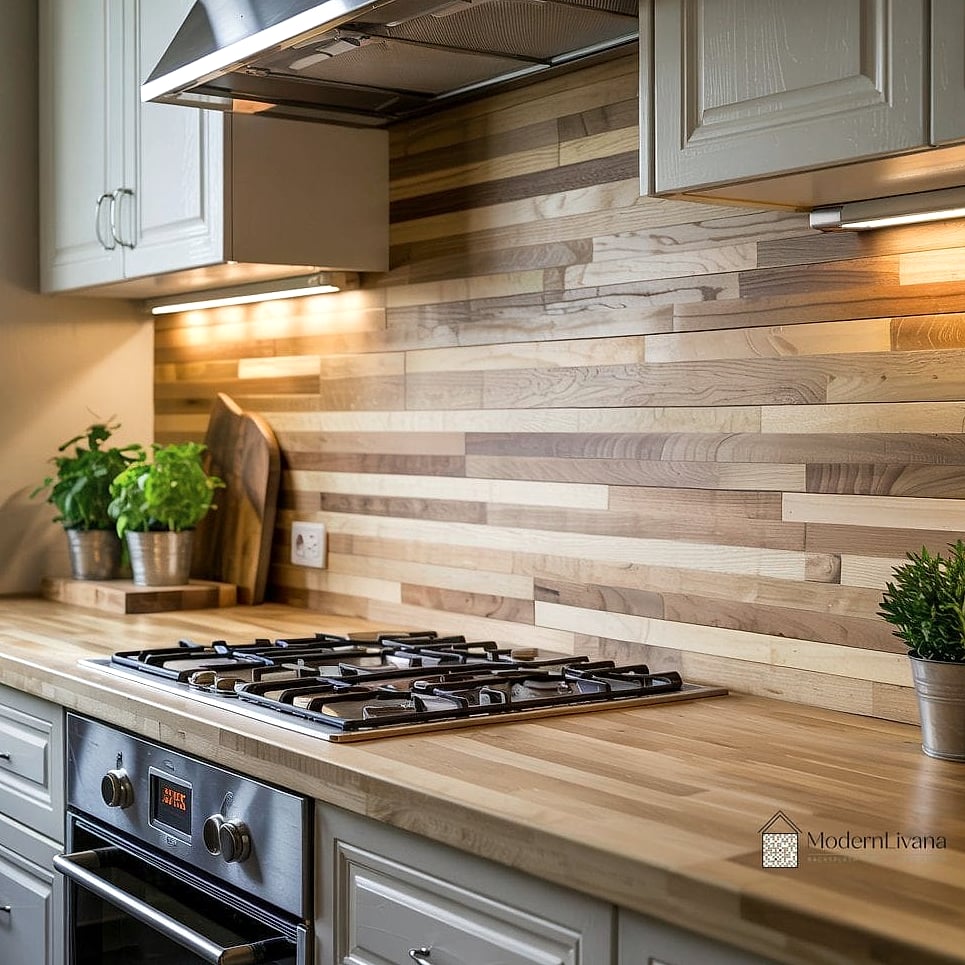
Large format tile means fewer grout lines, which gives the wall a cleaner, more streamlined appearance. This pairs nicely with butcher block in kitchens that want a more modern, low-fuss aesthetic. Fewer grout lines also mean less grime buildup over time, which is a nice bonus for busy households. Installation can be trickier with bigger tiles, so this is one where hiring a pro might save you some frustration.
Mixed Material Backsplash

Combining two materials, like tile paired with an open shelf or a wood accent strip, can add extra character to your kitchen. This works well if you want to break up a large wall or highlight a specific cooking zone. Pairing tile with a floating shelf also gives you a spot to display plants, cookbooks, or seasonal decor. It’s a more custom-feeling approach that doesn’t require redoing your entire backsplash to get a fresh look.
Textured Stone-Look Porcelain
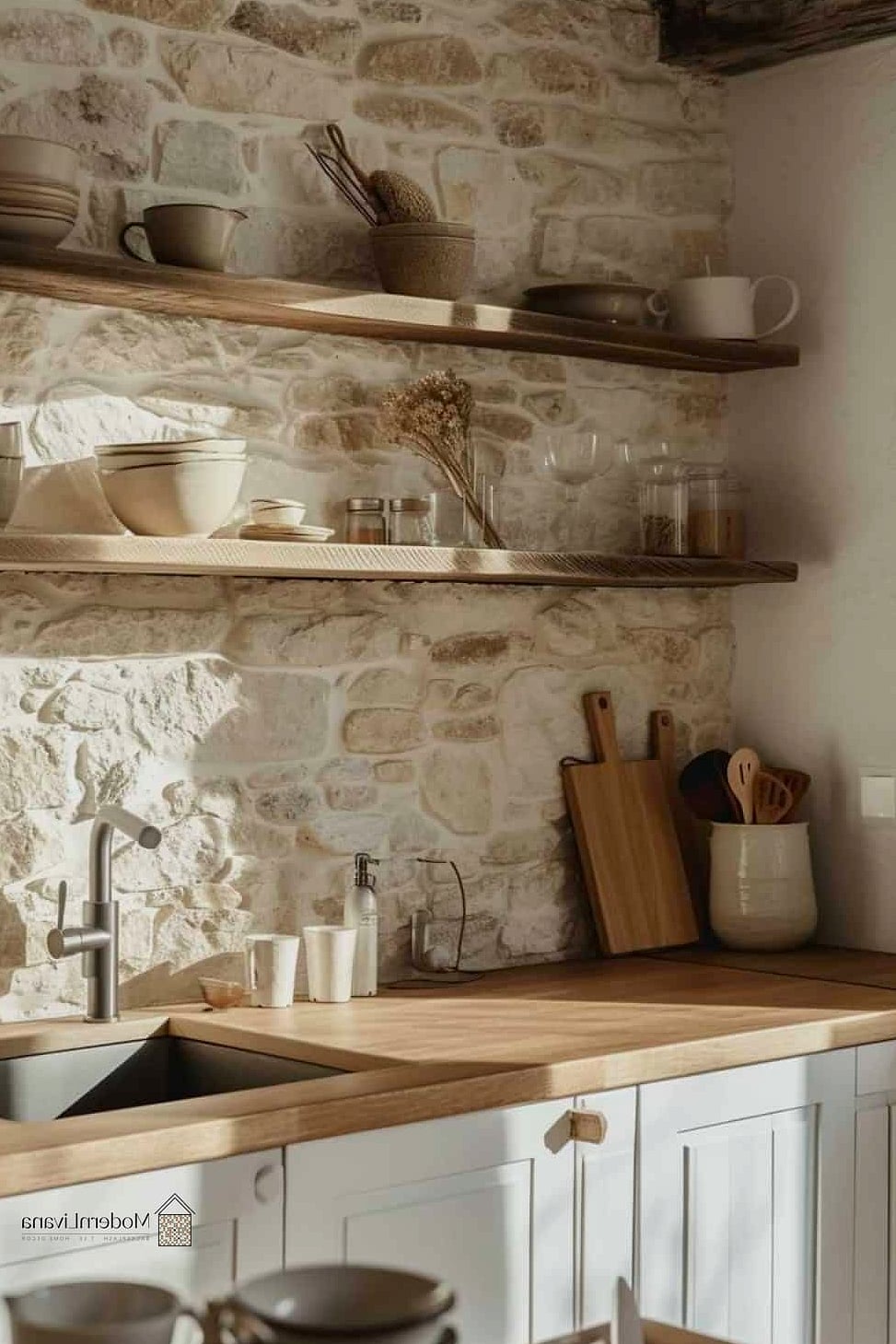
Stone-look porcelain tile gives you the rugged, natural texture of real stone without the sealing and staining concerns. It’s more durable for high-traffic kitchens and holds up well against splashes near the sink or stove. This is a great in-between option if you love the look of natural stone but want something more low-maintenance alongside your butcher block. It also tends to be more budget-friendly than actual quarried stone.
Bold Grout Color
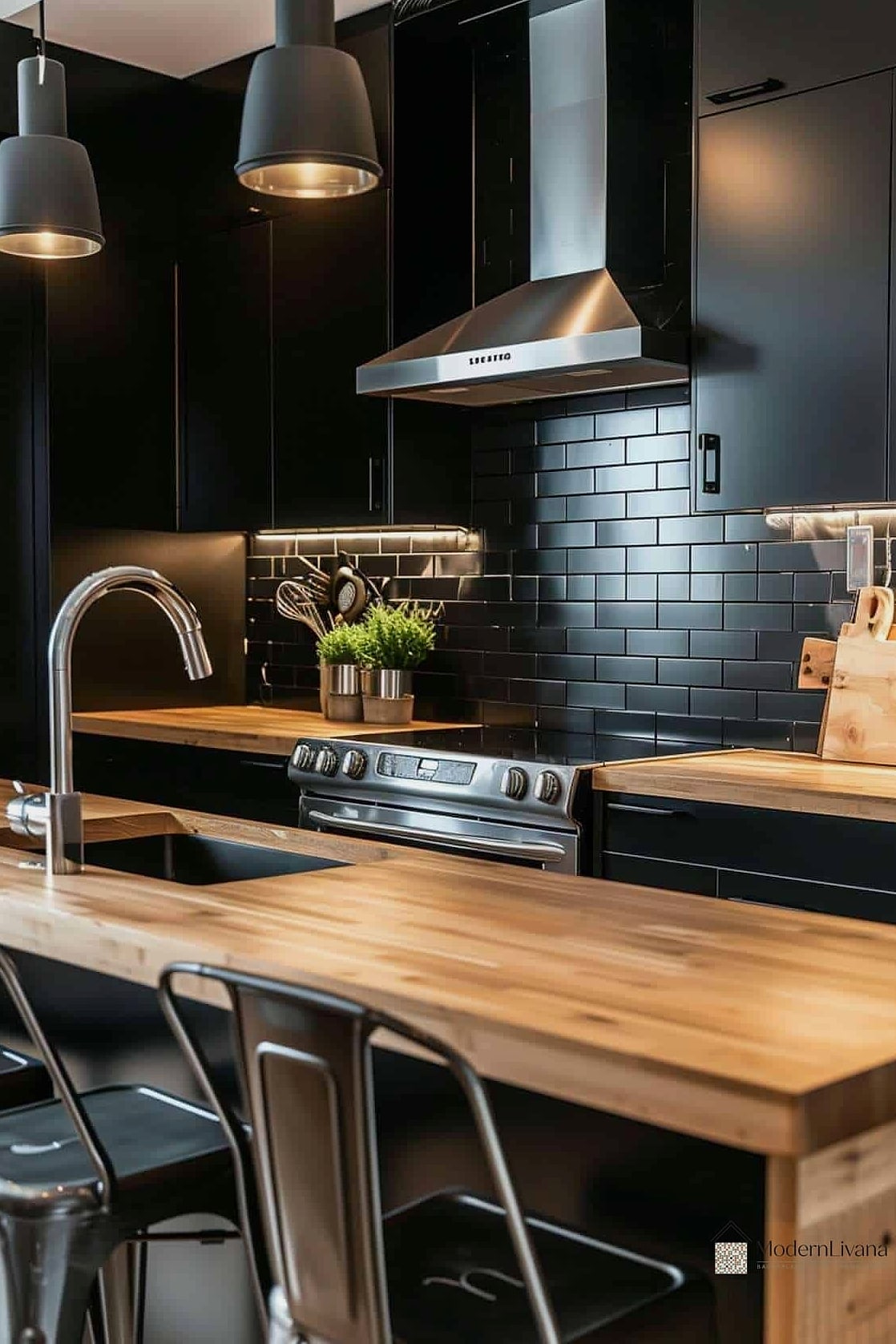
Sometimes the tile isn’t what makes a statement, it’s the grout. Choosing a bold or contrasting grout color, like charcoal or navy, against a simple white tile can completely change the look of your backsplash. This pairs really well with butcher block because it adds a modern edge while keeping the rest of the kitchen simple. It’s also one of the more affordable ways to add personality since you’re not changing the tile itself, just the grout choice.
Full Wall Tile Behind the Range

Instead of a standard backsplash height, extending tile all the way up to the ceiling behind the stove creates a dramatic, designer-style look. This works especially well with butcher block since the wood grounds the space while the tile becomes the visual highlight. It’s a great option for kitchens with a statement range or hood you want to show off. This approach does use more tile, so it’s worth factoring into your renovation budget upfront.
Choosing a backsplash for butcher block countertops really comes down to how much contrast or harmony you want between the wood and the wall. Some of these ideas lean subtle, letting the countertop stay the star of the show, while others bring in color, texture, or pattern to create more visual interest. Whatever direction you go, keep your kitchen’s lighting, size, and daily use in mind, since the best backsplash is one that looks great and holds up to real life.